Showing posts with label investors. Show all posts

Friday, December 2, 2022

Venture Capital Firms: Rash Investing in FTX (2022)


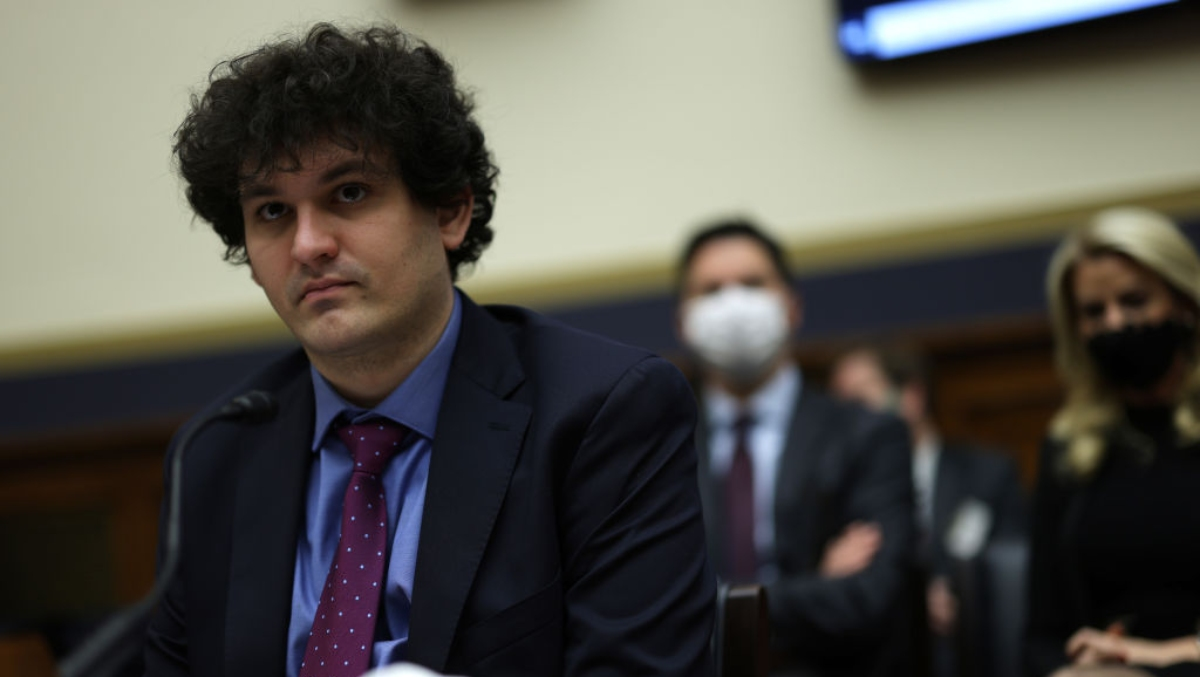
(Larg investor of FTX)
ABSTRACT

            In the world of crypto currency and venture capitalist firms,’ ethics is not a term you might think of being especially important. Mr. Bankmen CEO of FTX swindled investors and mismanaged billions of customers money and eventually caused the failure of his company.  FTX and venture capitalist both fail when you grade them against the theory of individualism, they may have not broken laws, but they did not maximize profits. When FTX collapsed in on itself it also took with it many peoples life savings with it and with that their dreams and happiness there for FTX and venture capitalist fail to pass the ethical theory of Utilitarianism. Mr. Bankmen and the venture capitalist were motivated to make as much as possible and to them it did not matter so they were not motivated to do right because it is right, so they fail the theory of Kantianism. If businesspeople always used ethics to help them make their decisions events like the failing of FTX could be avoided.

ETHICS CASE CONTROVERSY

It all started when a Bahamas based cryptocurrency exchange company, FTX, was founded in May 2019 by Sam Bankmen. In the world of cryptocurrency Mr. Bankmen was seen as a savant that had complete understanding of the new and uncharted market of cryptocurrency. FTX’s goal was to try to make an easy and safe way for people to buy and hold and sell cryptocurrency. At their peak, they had over a million users. Sam Bankmen marketed his company aggressively through numerous different commercials. They ranged from comparing FTX to every major invention in history to having professional athletes endorse the company.
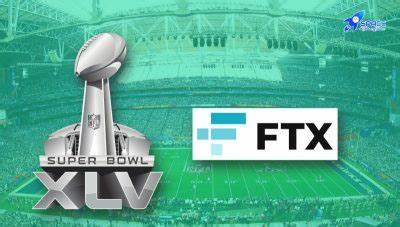
(FTX ad ran at the super bowl)

The ads put an emphasis on how safe and easy it was to use and now looking back at these statements it is extremely ironic. Mr. Bankmen’s aggressive marketing tactics also crossed over into his strategies when finding investors. His so-called pitch to potential investors was not really a pitch but a take it or leave it offer. Investors that heard Mr. Banksmen’s pitch stated that Mr. Bankmen believed that investors should only support and observe. This is where the FTX’s story becomes strange. Investors, after hearing Mr. Bankmen’s pitch, did not completely avoid this company like the plague but even more surprisingly invested with extremely little research into the company. The large venture capital’s firms that were investing should have the experience and knowledge not to just trust a person’s word but to conduct in depth research. It seems that they were blinded by the opportunity to be an early investor in a new market the New York Times
said, “Investing in FTX gave them a piece of the hottest start-up in an emerging sector that promised to be as big as smartphone apps or the internet itself.” (Griffith, Erin, and David Yaffe-Bellany) New York Times, 11 Nov. 2022). Venture Capital firms completely went away from their due diligence and hard-core review procedures that they got involved in when it came to FTX. They fell in love with this “unique” investment, and it ended up having a detrimental impact on their balance sheets. If investors took the time to investigate FTX’s company’s practices, they all would have turned away from the potential investment. Mr. Bankmen also was the CEO of Alameda Research which is a trading firm that came out November 2, 2022. This trading firm held five billion dollars’ worth of FTT coins, these are FTX’s own coins, and this discovery served as the spark to the powder keg that was FTX. On November sixth the world’s largest crypto currency exchange, Binance, said they were going to liquidate all the holdings of the coin FTT due to their concerns about risk management. This news sent shock waves throughout the crypto currency world causing mass liquidation of the coin. The problem with that is FTX did not actually have the money to give back and found itself in a crisis where they needed to find six billion dollars to give back to customers. During this the price of a FTT coin plummeted eighty percent in just two days. FTX started to look for ways out of the situation they found themselves in, so it had turned to one of its competitors. Binance announced on November eighth that they had made a deal to acquire FTX. They also released that it was still non-binding and did not release the purchase price. After this announcement FTX was going to be bailed out from the predicament that they had gotten themselves into. Only a day later, on November ninth, Binance announced that they would be pulling out of the deal due to their concerns on how the company was run and most importantly how the customer’s finances were being handled,  John J. Ray III a CEO who specializes in bankruptcy had this to say "Never in my career have I seen such a complete failure of corporate controls and such a complete absence of trustworthy financial information as occurred here," Ray said in a filing on Nov. 17(O'Halloran, Suzanne O'Halloran Fox Business, 28 Nov). This action thrust FTX back into its original position but with the add on of people questioning how their money was managed. November tenth the Bahamas securities regulator froze the remaining FTXs assets and California Department of Financial Protection, and Innovation started an investigation. Mr. Bankmen also took to twitter to inform the world that FTX did not have the capital to fulfill all the customers’ requests. He blamed the over leveraging of the company on “poor internal labeling.” (REIFF, NATHAN Investopedia 18 Nov. 2022) He also said that Alameda would slow down their trading. On November eleventh Mr. Bankmen would step down from his position as CEO and John J. Ray III would take his place as well as the company filing for Chapter 11 bankruptcy protection. When this was filed one hundred and thirty other companies were engaged in the proceedings. Soon after the filings took place, FTX stated that they were victims of “unauthorized transactions.” Third party business analysis believes that in a hack four hundred and seventy-seven million dollars was stolen. After this was discovered, the Securities Commission of the Bahamas, decided on November 18
th that FTX had to move all crypto assets to the regulator’s wallet to help protect everyone. Currently FTX is involved in civil lawsuits and one class-action lawsuit. The failure of FTX will most certainly leave a permanent stain on the crypto currency market and investors that invested in it without the research to see all the warning signs. Some economists have compared the FTX debacle to the collapse of Enron in October 2021.

(Timeline)

STAKEHOLDERS

(FTX's crypto currency) 
                   All those who engaged in FTX, were left with a bad taste in their mouths and less money in their pockets. The stakeholders that were hurt the most in the fall of FTX was the average person who was trying to invest in their future and ended up losing their hard-earned money, like Terri Smith an architect in Seattle who may have lost everything from this situation. Investors are left with depleted accounts and a limited hope of getting anything back once the bankruptcy proceedings happen. FTX did not only burn regular investors, but they did so to many venture capital firm such as Temasek and Sequoia, which stand to lose large amounts of capital.

INDIVIDUALISM

(Past CEO of FTX)
When you look at the case of FTX and the Venture Capital firms that were involved through the scope of individualism, it is hard to fully explore with the information that is currently available. At the time of this writing there are no criminal charges brought against any FTX employees. This lines up with one of the main points of individualism of attempting to maximize profits while staying within the laws. In this instance, FTX was attempting to create the most profit it could and just ended up failing. As far as we know, no laws were violated therefore FTX played by the rules of individualism and just unfortunately went under. When looking at the venture capitalist firms and how they interact with the ideas of individualism it can be looked at in two separate ways. On one hand an argument can, be made that the firms were trying to stay ahead of technology and become an early investor of a brand-new market and did not know how to research an investment like this. In this way the firm was trying to make the most profit and no laws were broken, therefore they followed the ethics of individualism. On the other hand, it could be said that one of the major jobs of an investment firm is to know every aspect of where their money is invested. They were not looking to make the most profit but were just gambling on the perceived golden boy of the crypto world. As of now, FTX only halfway follows the ideas of individualism by failing to maximize profits and the investment firms that invested without investigating the company that they invested in, did not follow the ideas of individualism due to their oversight not only not maximizing profit but actually minimizing it. The massive investments by the Venture Capital market inadvertently represented to the average investor that this was a “solid” investment based on the regular principles usually adhered to by them.

UTILITARIANISM

Looking at FTX and all its doings, it is quite clear that this business was not run under the ethical guidelines of utilitarianism. Utilitarianism is the middle ground between egoism, where you are only looking out for your own happiness and altruism, where you only look out for others happiness. When a company is operated under the guidelines of utilitarianism, the company is not only looking out for themselves but also for everyone involved. FTX showed, with their less than desirable management of themselves and their customers’ investments that they were only looking out for themselves. When Mr. Bankmen did not allow anyone else to help make decisions on his company’s board, he embodied an egoism ethical standpoint and was only looking out for his own interests. The way Mr. Bankmen conducted himself outside of his business also shows that he was only looking out for his own happiness when he used his image as a crypto golden boy to convince investment firms to blindly toss money at his company without proper research. Mr. Bankmen does not fit into utilitarianism clearly and he was known to only be looking out for his own happiness not the happiness of his users or investors. His willingness to lie and swindle people to complete his own agenda of making the most profit for himself proves this. His ethics fit an egotist model due to the fact he was only concerned in what happened to him and not how any of his own actions affected anyone else. Venture capital firms that heavily invested should have been able to see that the CEO of the company they had invested in only cared about his own net worth and happiness and did not care how he increased it.

KANTIANISM

                        Kantianism is an interesting way to approach a business ethical dilemma. Kantianism is based around acting rationally, helping, and allowing people to make their own decisions, respecting people’s decisions and everyone’s individual needs. Finally, to be motivated to do the right thing because it is right. Mr. Bankmen and FTX, under the light of acting rationally did not act in a rational manner, when Mr. Bankmen refused to allow outside help of people that have more experience that could have helped him avoid running his business into bankruptcy. During the operation of FTX people were allowed to make their own decisions if they wanted to invest or if they did not, but Mr. Bankmen did not help them by withholding invaluable information on how FTX was being run and how FTX sister company Alameda held five billion dollars’ worth of FTX own coin. This information would have most certainly changed how investors would have made their decisions, therefore FTX did not allow investors to make their own decisions but coerced them into a decision by withholding essential information about themselves. The only point where a case could be made in FTXs favor, is that they respected people’s decisions and needs. Investing always has an inherent risk involved in it so when a person invests their money in any investment, they also must accept all the risks involved in it as well. In this way, FTX respected everyone’s decisions of taking a risk in this situation. It just did not pan out in a favorable fashion. If you look at the motivations of FTX it is crystal, clear that they were not motivated by the right thing but were motivated to just make the most profit for themselves no matter the amount of people that would be burned by their business plan. They were not motivated to help their investor’s or to improve the new emerging market space, which is crypto, therefore they were not motivated to do the right thing because it is right. Mr. Bankmen did not use Kantianism ethical guidelines to help run his company.

VIRTUE THEORY

                       Some people would describe FTX as generally distrustful and dishonest. Learning and moral leadership are not terms that are used to describe FTX. It is quite the opposite. If you want to look at FTX as a trustworthy company, you must do your proper research on who runs the company and that is Mr. Bankmen. This individual was also the CEO of another investment company. This company also held five billion dollars of the crypto coin FTT. FTT is FTXs own crypto currency made for their exchange in most circumstances this would not be a problem but both companies shared a CEO. This was seen as an extremely shady way to do business and was done to boost the perceived numbers of their own coin. When looking to see if this is an honest company, you must look at how they managed users and how they secured investments for themselves. FTX was well known for partnering with many super star athletes such as Shaquille O'Neal, Trevor Lawrence, David Ortiz, and Tom Brady and even running a Super Bowl ad. The ads that FTX released to the public openly stated how easy and safe their platform is. The ads were not honest to their customers about all the risks involved in investing but made it sound like there was no risk and that anyone could do it with no research on what they were doing. Hearing investors stories that heard Mr. Banksmen’s pitch to invest in his company all share the same few traits. The pitch was often described as not a pitch but a take it or leave it offer to the investment firms and Mr. Bankmen felt strongly against having outside help when making decisions about the company. FTX was extremely dishonest and used the inexperience of the investment firms in the crypto currency market to pull the wool over their eyes and take them for a ride. They had no say in it. Mr. Bankmen was notorious for refusing to allow investors a spot at the table to voice the ideas and concerns. He would not learn from people that had more experience, which could have made the company better, but he remained stuck in his ways and would not accept the help offered. The moral leadership of Mr. Bankmen is not present at any of his companies that he ran. He did not care about anything but how to increase his personal net worth.

JUSTIFICATIED ETHICS EVALUATION

            When you are running an investment firm whether that is in regular stock and securities or forging a path into a new and unclaimed market of crypto currency, the goal should be the same and it is to provide a trustful experience. FTX and Mr. Bankmen failed to provide anything that is even remotely related to the word trust. From the start Mr. Bankmen used extremely aggressive and questionable business tactics. Mr. Bankmen was a predator to all his customers with his promise of a safe exchange platform, but he was unable to provide this. He was unable provide this due to his perceived expertise and not allowing investors to have a say on the decisions with the company and provide insight from there past experiences. The incident that kicked off oversight and poor management was that Mr. Bankmen caused the failure of the company. It was even stated in a tweet that “poor internal labeling” was the cause to all the leveraging and liquidity problems that tore apart the company. If Mr. Bankmen allowed his investors, that have had countless years of experience to help him, I believe that he would have a trustful strong company that is opening a new market and giving everyone the ability to invest with it. If you were to look at it from Mr. Bankmen’s perspective, it might seem a little different. He could have viewed this situation as no one has experience running a company in a crypto currency company and his aggressive business practices could just be him fully believing that he is trying spread the new world changing innovation. In the end Mr. Bankmen and FTX did not follow any ethical guidelines and were only looking out for themselves. It did not matter who they destroyed in the rise to the top. 

CONCLUSION

The way business was conducted for everyone involved in FTX was an unfortunate display of what happens when business is done in complete disregard of any ethical thought. Mr. Bankmen’s desperate crawl to the top not only destroyed his dream of a safe and easy crypto currency exchange but also installed a new distrust for the whole market of crypto currency. It also made venture capitalist firms extremely weary of supporting any of these companies in the future. This will stunt the growth of this new market and limit new innovations in this field. In the end, the way FTX treated their customers and investor’s put a negative view on their whole industry and it all could have been avoided if any ethical thought were used.


REFERENCES 

Griffith, Erin, and David Yaffe-Bellany. "Investors Who Put $2 Billion Into FTX Face Scrutiny, Too." The Collapse of FTX, The New York Times, 11 Nov. 2022, www.nytimes.com/2022/11/11/technology/ftx-investors-venture-capital.html.

REIFF, NATHAN. "The Collapse of FTX: What Went Wrong with the Crypto Exchange?" , edited by VIKKI VELASQUEZ, Investopedia, 18 Nov. 2022, www.investopedia.com/what-went-wrong-with-ftx-6828447#:~:text=Cryptocurrency%20exchange%20FTX%20collapsed%20in%20early%20November%202022,portions%20of%20the%20company%20but%20quickly%20backed%.


Taranto, Steven, and Isabel Gonzalez. "FTX collapse: Tom Brady, Stephen Curry, Shohei Ohtani among sports figures named in class-action lawsuit." , CBSSPORTS, 16 Nov. 2022, www.cbssports.com/nfl/news/ftx-collapse-tom-brady-stephen-curry-shohei-ohtani-among-sports-figures-named-in-class-action-lawsuit/#:~:text=Those%20three%20are%20part%20of%20a%20group%20of,who%2.

Peterson-Withorn, Chase. "Exclusive: These FTX Investors Stand To Lose The Most From The Crypto Exchange’s Implosion." The fall of FTX, Forbes, 10 Nov. 2022, www.forbes.com/sites/chasewithorn/2022/11/10/exclusive-these-investors-stand-to-lose-the-most-from-ftxs-implosion/?sh=1c04ca326700.

ROBERTS, JEFF J. "SBF in criminal jeopardy: How and when he could face justice." , Fortune Crypto, fortune.com/crypto/2022/11/18/sbf-in-criminal-jeopardy-how-and-when-he-could-face-justice/.


O'Halloran, Suzanne O'Halloran. "FTX bankruptcy unique, losses hard to determine: Ken Feinberg." , Fox Business, 28 Nov. 2022, www.foxbusiness.com/markets/ftx-bankruptcy-unique-losses-hard-to-determine-ken-feinberg.


Monday, December 6, 2021

Anonymous Developers: The ‘Squid Game’ Crypto Scam (Oct 2021-Nov 2021)

Anonymous Developers: The ‘Squid Game’ Crypto Scam (Oct 2021-Nov 2021) 

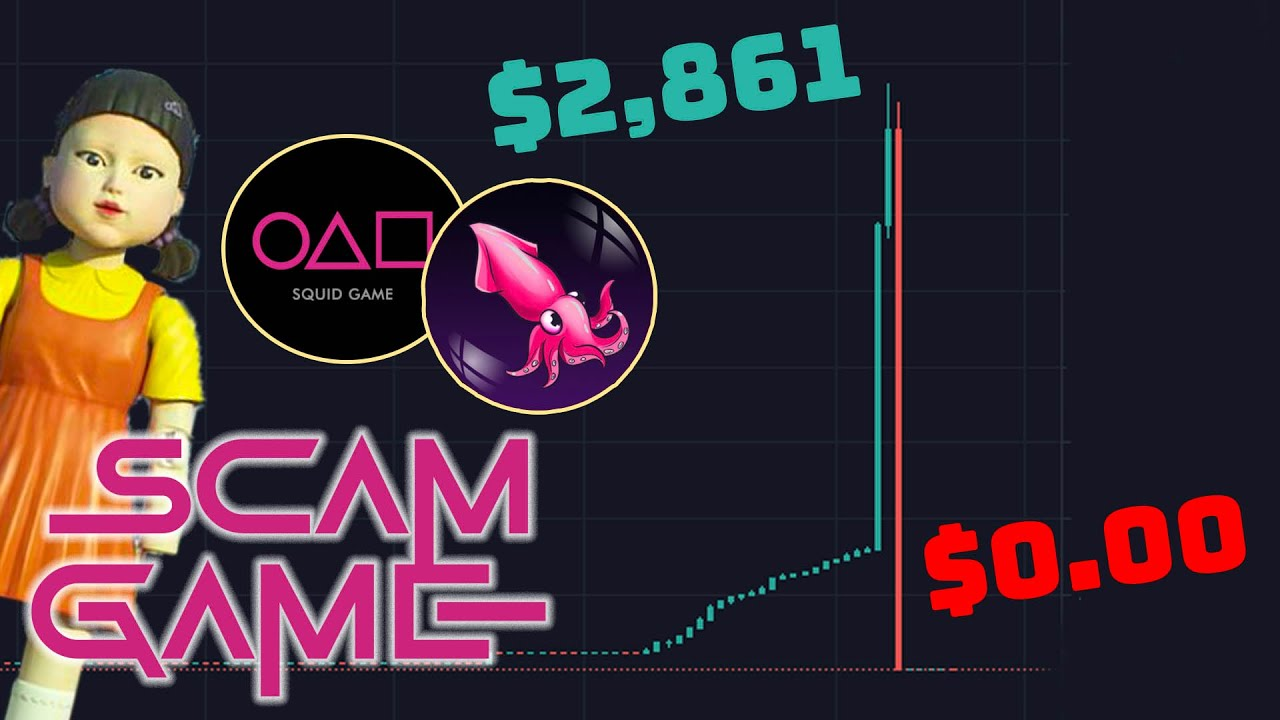
This photo shows an accurate candle stick chart including the rug pull

that took place to bring the value of the coin nearly to $0. 


Abstract


For ages, people have been fascinated with the idea of being able to get rich quick-- the ability to do little to no work and make a steady income is many individuals' dream. In the past year, this dream has become a reality for many people. sometimes just with the click of a button. Cryptocurrency has been among top headlines in the news for quite some time after Bitcoin’s price per coin shot to the moon, making investors multi-millionaires. In response to the spotlight being pointed at all cryptocurrencies as being a way to ‘get rich quick’, other types of cryptos started appearing out of thin air. However, many of these virtual currencies are created by anonymous developers and turn out to be scams which lose investors thousands of dollars. In this crypto craze, rose what was called ‘Squid Game Token’. These witty crypto creators made a coin that was advertised as a video game currency that could be used to multiply your investment if you compete in the online games and win. After a new show releasing on netflix and quickly gaining popularity this crypto currency didn't need much advertisement to gain traction. Only 2 weeks after this coin was released to the public the price increased from below a cent to over $2,000. This was a shock to many investors as they had multiplied their investment by an insane amount of money. When these investors went to sell their coins for their profit, they were unable to transfer the funds to actually collect their profit. The squid games team took their social media offline and weren't answering concerns of investors, basically leaving them out to dry. The initial website was taken down leaving no trace of the scam available to be reviewed. This is a very important issue to be reviewed as cryptocurrency investing is on the rise. It is important to investigate before you invest and make sure your funds are secure before becoming involved in some risky investment. 


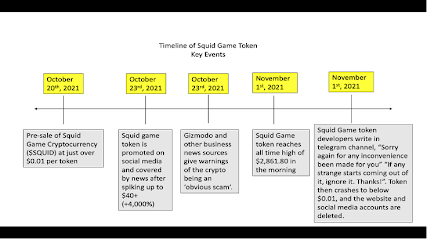
This is the timeline of the case including important events that took place before during and after the controversy.

Case Controversy

The Squid Game Cryptocurrency was created by developers in late October after the Korean TV drama ‘Squid Game’ became the top show on Netflix in over 90 countries. The developers of the token took advantage of the hype behind the popular show and saw potential for profit. When the show was at its peak, the developers built a community behind the investor’s hopes of the “next big cryptocurrency that will make you rich”. Since the show was so popular, many retail investors thought that there was no potential for loss-- but they were very wrong.

Developers started their malicious plan by building onto the hype created by the drama series. The token was promoted on social media platforms such as Instagram, Twitter, and Reddit. As recognition quickly grew, devs created a website called “squidgame.cash”,  and formed a Twitter account with more than 57,000 followers and a Telegram channel with over 71,000 subscribers. Whilst gaining this social capital, the developers of the Squid Game cryptocurrency released the pre-sale of the token “on decentralized exchanges ‘PancakeSwap and DODO, both which are based on Binance Smart Chain” at just over a penny on October 20th, 2021. (Chen, CoinDesk).

The cryptocurrency quickly soared to $40+ (+4,000%) on October 23rd; just 3 days after presale was listed for the token. At this point, news outlets and social media platforms were releasing stories about the new crypto growth. However, it wasn’t all good press… Professional traders and business news outlets released multiple reports stating that there is a high probability the Squid Game Coin was a scam:


Gizmodo pointed out numerous signs it was a scam, including its (now disappeared) website being filled with spelling errors. Another red flag: Investors could buy -- but not sell -- SQUID. CoinMarketCap also warned potential investors that SQUID was probably a scam, displaying a warning to "exercise extreme caution" if they bought the crypto. (Valinsky, CNN Business)


The biggest red flags of this case were the inability to sell, and the constant broken English on the website and Twitter/Telegram accounts. You may ask, why would you buy an imaginary currency that you can’t sell? Well, the developers claimed that when they were designing the token, they decided to “limit people from selling the token as an ‘anti-dumping’ measure”, to prevent big shareholders from pumping up the value of the coin by buying lots of coins, and then selling off, tanking the value (Shumba, Markets Insider). This was a massive problem that investors didn’t seem to care about. The only thing on their mind was the fear of missing out on the next big money-maker.

         Although several reliable outlets claimed the Squid Game crypto was an ‘obvious scam’, the volatile prices continued to soar. By the morning of November 1st, “as the crypto peaked at more than $2800, the anonymous creators of the company decided to cash in. They sold off their holdings, shut the project’s website down, and made off with millions.” (Binder, Mashable). With the crypto market value reaching $2800, that means over a ‘23 million percent growth’ according to Cheng from Washington Post. When the developers cashed in their tokens, it made the market value fall far below a penny ($0.0008) since they owned the vast majority of Squid Game tokens in the market. Shortly after running with $2.2-$3.3 million, “[the developers] tried to divert blame elsewhere:

‘Sorry again for any inconvenience been made for you,’ the message read. ‘If any strange starts coming out of it, ignore it. Thanks!’” (Cheng, Washington Post).

This was the last post to the Telegram channel and all social media before the platforms and website were deleted. This situation left investors confused and drained of funds as the token was rendered worthless.

         The scam used by the Squid Game developers is called a ‘rug-pull’ scam. A rug pull scam in cryptocurrency is when “a token’s creators abandon the project by exchanging many virtual coins for real-world cash”. (Cheng, The Washington Post). This maneuver quickly drives the market value of the cryptocurrency to zero and leaves investors with worthless virtual coins. Although other tokens have scammed investors through a rug-pull scam such as ‘SaveTheChildren’ and ‘SafeTrade’, SQUID “fell by more than 100% in the space of just 5 minutes, dropping from $2856 to $0.0008.”, making it the biggest rug-pull in cryptocurrency history. (Layram, Bankless Times). 

Squid games' popularity grew very fast giving investors a false sense of credibility about this crypto currency. Here are some people dressed as characters on Halloween showing they loved the show and wanted to support that. Having a huge marketing event like halloween and the actual show on Netflix that they didnt have to pay for made a huge impact on their profits. The creators of this coin used other peoples hard work to scam willing investors.

Stakeholders

The stakeholders in the Squid Game cryptocurrency scam includes the developers, the news outlets and social media outlets that promoted the coin, the investors, and all people interested in learning to invest in cryptocurrency. The anonymous developers saw an unethical business opportunity in the Squid Games popularity and took advantage of investors. The developers were the mastermind behind the rug-pull and managed to get the market value per coin high enough that the news and social media increased recognition and social capita which encouraged inexperienced, desperate investors to cave in. The news outlets and social media accounts that promoted the coin may or may not have known the risks involved and all the red flags that were shown, but they increased the popularity of the coin. Investors lost hundreds and some even thousands because of the scam. If they bought SQUID for $0.01 during pre-sale on October 23rd, they still would have lost money. The investors were directly affected by the scam. In addition, I’d say that people wanting to learn how to invest in crypto are stakeholders. After hearing of massive scams on a cryptocurrency that sounded interesting and was promoted on news, the new investors may get scared of the risks and run for the hills.


Individualism


An individualist view emphasizes the moral worth of an individual. Individualists promote the actions of one’s goals and the value of independence. They make the individual the primary focus starting with focusing on the needs and wants of that person. It promotes the belief that the individual is responsible for their own need and shouldn’t rely on anything or anyone else. When applying individualism to business rather than just self-interest and an individual in society, the main goal is for the business to profit. The obligation is to maximize profit following the law. Something or someone who supports individualism would consider being better than others for personal benefit. If a business had an individualist view, they would encourage employees to outperform their coworkers to better secure the personal benefits. In the Squid Game scam individualists would say that the creators had personal benefit. Due to the fact that it was fraud it wasn’t necessarily by the law within itself. Investors unfortunately in this situation are at a loss regardless because they were scammed. Unintentionally, they ultimately benefited the creators. As the media publishes more and more news articles, there are realizations coming out that there was clear evidence of this scam coming from the start.  This deception was part of personal gain. It was working to create ways to persuade people into purchasing tokens that were based off a brand-new hit Netflix series. Individualists would view this as morally and lawfully not the best way to achieve self-interest. Although it does have a personal gain for the individual which in this case would be the creators of squid games, morally, fraud is unethical. Fraud in the view of individualism is impermissible. If the creators of squid games took the 10% they had released in the rules of the games after the 90% went to the winner, that would be permissible in the ethical theory. Individualists believe that what is morally required would be using ethical and lawful ways to succeed and achieve personal gain. As Milton Freidman viewed, “the only obligation the business person has is to maximize profit for the owner or the stockholders within the law of the land.” (Salazar 10) 


Utilitarianism


A utilitarian would view the actions taken by the developers of Squid Game as immoral because society as a whole was negatively impacted, thus creating unhappiness for all except the developers. According to the theory of morality by utilitarianism, society should advocate actions that promote happiness and pleasure in everyone. Other actions taken that do not produce such results are considered immoral, and thus the developer's actions to create such a game to take 2 million dollars away from both the investors and the players goes against the theory of utilitarianism. However, the actions taken by the treasury department to urge Congress to create rules to regulate cryptocurrency such as stable coin seems like an action a utilitarian would take because society as a whole would feel much safer about investing in cryptocurrency since these laws would somehow prevent fraudulent acts when passed.


Kantianism

The Kantian ethical theory is an example of a deontological moral theory. The rightness or wrongness of actions doesn’t depend on their consequences but whether they fulfill their duty. Kant believed that there was a supreme principle of morality, and he referred to it as the categorical imperative. The biggest difference between Kantian and utilitarian views on the issue is looking at the consequences. “Kantianism does not make decisions based on consequences,” (Salazar 21). The categorical imperative determines what our moral duties are. The way you can judge if Kantian’s idea of ethics would agree with a certain action is asking yourself if everyone in society did this would it be ok? Kantianism doesn’t look at the consequences, it looks at the will of the person behind the action.

“Kant tells us that we should act only according to those maxims that could be universally accepted and acted on,” (DesJardins 38) Coming off that there is no way that if every person created a scam cryptocurrency and manipulated the market as well as false advertise that we would have a functioning society. This would cause many issues with the economy as well as people’s economic situation. Kantian also believed that the action you take must be taken because it is the right action and agrees with moral correctness. This obviously didn’t qualify as moral due to the creators deceiving many investors to take all their money in the end.

All in all, Kant would not agree with the ethical decisions made by the squid token team. But who ever said criminals are going to abide by ethics, they don’t even want to abide by the law as it is? This is truly an interesting topic to observe using different ethical theories as each theory has a different way of approaching it. In this situation if the person in charge of this operation had the same ethical beliefs as Kant, it would be viewed as unethical, and they would have never created it in the first place. From the beginning they had to have bad intentions for this to be pulled off correctly the way they did it without getting caught.  

Virtue Theory

Virtue theory takes on a more character-based approach to knowing between right and wrong. This knowledge is learned mainly through life experience and stresses honesty, courage, self-control, temperance, fairness, and justice. Virtue theory is not based on just decision making, but character. Virtue theory is unique because it means being yourself and acting as the good virtues and moral character you have, over just doing it through analyzing and trying to have good virtues. In reference to the case, virtue theory is a great way to analyze the Squid Game scam because acting rationally and consistently doesn’t necessarily mean having good virtues. Virtue theory can be applied to all the stakeholders in the scam:

The Developers: The developers were risk-takers in chasing profits at the expense of scamming investors/supporters. Developers had no temperance, self-control, honesty, or fairness. They posed as the developers of a new and promising cryptocurrency that could be the next big money-maker for people who wanted to invest.

News Outlets and Social Media Pages: At the start of the Squid Game crypto’s expansion and massive growth, news outlets and social media pages were quick to cover the story and share it to the world. By doing this, they showed no temperance or self-control. The journalists may have thought that they were showing honesty and courage by spreading the information, but they didn’t research the history of the coin well enough and continued to spread information that encouraged people to invest. Some outlets such as Gizmodo used courage, honesty, and fairness/justice to spread helpful information, pointing out that the coin was a scam and help others.

Investors: All investors in the cryptocurrency were negatively affected by the scam. They failed to show self-control and temperance by investing money into a random cryptocurrency that they didn’t do enough research on. Ultimately, they were left with pennys and didn’t receive justice and fairness in their investment.

People Who Are Interested In Investing: The new investors or people who are trying to learn about investing in cryptocurrency could have had their trust and reliability in crypto broken after this scam. Situations like this can easily scare off the new investors after they see developers and companies break the honesty, courage, self-control, fairness, and justice that they are supposed to uphold.


The developers and marketing team of the cryptocurrency clearly are in the wrong and failed to show the virtues that make up a good person. The failure to show honesty and fairness to investors were clear indicators that the developers had bad virtues. Many sources had the courage to promote valid information in regards to the case whilst others had no self-control in spreading bad information. Ultimately, developers were at fault for the investor’s misfortune and got away with $2.2 - $3.3 million at the expense of their own character’s good virtues.


Action Plan 


The current issue being studied in this case is the self-serving acts of the squid game cryptocurrency developers in late October of 2021. The developers tricked investors into buying a worthless token without any history on the ‘company’. This issue can be prevented in the future through more cryptocurrency regulation and investors making more researched, safe financial decisions. Squid Game Cryptocurreny was created with a goal in mind for their investors and the creators themselves. It would create more transparency to investors by creating a mission statement of their platform. A mission statement would be very beneficial to let out the plans and goals for Squid Game Cryptocurrency. A suggestion would be that Squid Game Cryptocurrency has a mission statement that states they are trying to help people benefit in investing at a low price or selling high which helps them earn and profit off of their investments. Along with this mission statement, a company should have core values that are outlined for them to follow. The  main core values that are relevant to SQUID game developers should be Honesty; They should be honest to their customers and investors about the status of the company in order to maintain trust between them and the customers. Trust - they need to maintain an image of being trustworthy since investors would trust them to maintain, and return their money back if needed. Accountability -  Developers need to accept any responsibility for any mishap, while disclosing any results in a transparent way in order to maintain respect customers have for their company. Integrity - to customers the practice of honesty, consistency, and uncompromising adherence to strong moral and ethical principles. These core values developed have a lot to do with ethics and the correct morals. We can ensure ethical productivity and monitoring of ethics in the future to prevent this problem from occurring again by changing cryptocurrency policies and regulations to prevent fake coins from being sold and make it harder for the scammers to get away with investor’s money. With this mission and core values, the company will ensure that customers believe in the company’s morals and the goals of the company. The plan will maintain the connection between the company and the customer while ensuring the customers feel a sense of pleasure and happiness about the company.


Daniel Lupo, Zachary List, Malina LaCapra, Emmanuel Kwarteng


References

Ruby Layram·Blockchain·November 1, 2021·2 min read. “Is the Squid Game Crash the Biggest Pump and Dump in Crypto History?” Bankless Times, November 1, 2021. https://www.banklesstimes.com/2021/11/01/is-the-squid-game-crash-the-biggest-pump-and-dump-in-crypto-history/. 

Cheng, Amy. “'Squid Game'-Inspired Cryptocurrency That Soared by 23 Million Percent Now Worthless after Apparent Scam.” The Washington Post. WP Company, November 2, 2021. https://www.washingtonpost.com/world/2021/11/02/squid-game-crypto-rug-pull/.

Binder, Matt. “'Squid Game' Cryptocurrency Turns out to Be a Scam, Creators Run off with Millions.” Mashable. Mashable, November 2, 2021. https://mashable.com/article/squid-game-cryptocurrency-scam.

Shumba, Camomile. “'Squid Game' Token Goes Offline after Skyrocketing 75,000% - and That Means the 'Scam' Is over, Coingecko Says.” Business Insider. Business Insider. Accessed November 12, 2021. https://markets.businessinsider.com/news/currencies/the-squid-game-token-scam-website-socials-offline-coingecko-crypto-2021-11.

Valinsky, Jordan. “Squid Game Crypto Plunges to $0 after Scammers Steal Millions of Dollars from Investors.” CNN. Cable News Network, November 1, 2021. https://www.cnn.com/2021/11/01/investing/squid-game-cryptocurrency-scam/index.html.

Shen, Muyao. “Squid Game Token Crashes; Developers Say They've Left the Project.” CoinDesk Latest Headlines RSS. CoinDesk, November 1, 2021. https://www.coindesk.com/markets/2021/11/01/squid-game-token-crashes-developers-say-theyve-left-the-project/.

Benjamin, Patrick. “The Creators of a Squid Game Cryptocurrency Scam Have Made off with £2.5m.” Dazed, November 2, 2021. https://www.dazeddigital.com/science-tech/article/54658/1/the-creators-of-a-squid-game-cryptocurrency-scam-have-made-off-with-2-5m.

“Squid Game Price Today, Squid to USD Live, Marketcap and Chart.” CoinMarketCap. Accessed November 12, 2021. https://coinmarketcap.com/currencies/squid-game/.