Thursday, December 17, 2020

Whole Foods CEO on the Obesity Epidemic

 Whole Foods CEO Controversial Statements

By Josh Ross


Abstract:

Few examples in recent news point to a similar case in which Whole Foods CEO John Mackey found himself in. A titan in healthy living publicly criticizing the American people for their inability to make the correct decisions in regards to their health. He was met with obvious rebuttals pointing out the flaw in his argument, which lacked research and what seemed to be an inability of all the facts. 

All four major ethical theories would analyze the case in different ways. Utilitarians main goal in morally acceptable actions is whether they maximize happiness. They would view Mackey's comments as unethical as he did not aim to maximize the good things in the world, only emphasizing the bad. Kantians judge actions based on the motivations behind an individual's actions. They would find him unethical in his comments if his motivation was not of good intentions. Lastly, Virtue theory would look at the lack of gratitude and empathy Mackey displayed as he lacked in both giving a solid indication of his character. Individualism states that an individual must look to maximize profit within the law. Adam Smith also stated that actions made by an individual must be made out of good will. Both would deem his actions as unethical as they lacked the correct motivation and did not attempt to maximize profit.  In his position, John Mackey could have provided value to the american people but instead chose to slander the nation for its “poor decisions”. This not only becomes a mark of his reputation, but a mark on the name of Amazon and its subsidiary, Whole Foods. 

Company Background:


Whole Foods Market, Inc. is an American multinational supermarket chain with headquarters located in Austin, Texas. The company was originally started as a healthy alternative to the prototypical grocery store. All of their products are free of hydrogenated fats and artificial colors. They also hold the title of being a USDA certified grocer in the United States serving only organic products. 

The business began in 1979 when current CEO John Mackey and his business partner Renee Lawson took out a small loan and opened a small vegetarian grocery store in Austin. They originally named the store Saferway, changing to the iconic Whole foods two years later. The company began to expand in the early 1908s opening stores in first Houston and Dallas and then by 1990 having stores in five locations in the southern United States. The company went public with its Initial Public Offering in 1992. 

Whole Foods has grown substantially since their IPO in the early 90s. They currently have just over 500 stores located across the United States and Canada employing close to 100,000 people. Amazon purchased Whole Foods in 2017 making them a subsidiary of the E-commerce giant. The purchase was valued at $13.8 billion causing the stock price of Whole Foods to see rapid gains. 

To this day Whole Foods has held the image and values that they CEO John Mackey set out to create almost fifty years ago. The company motto states, “Whole Foods, Whole People, Whole Planet.”  The company is now listed on the Fortune 100 list and is the leading natural grocer in the United States. Many Whole Foods locations have developed all natural cafes and juice bars which has only helped to strengthen their image and business model which they will hold into the foreseeable future. 

The Case:

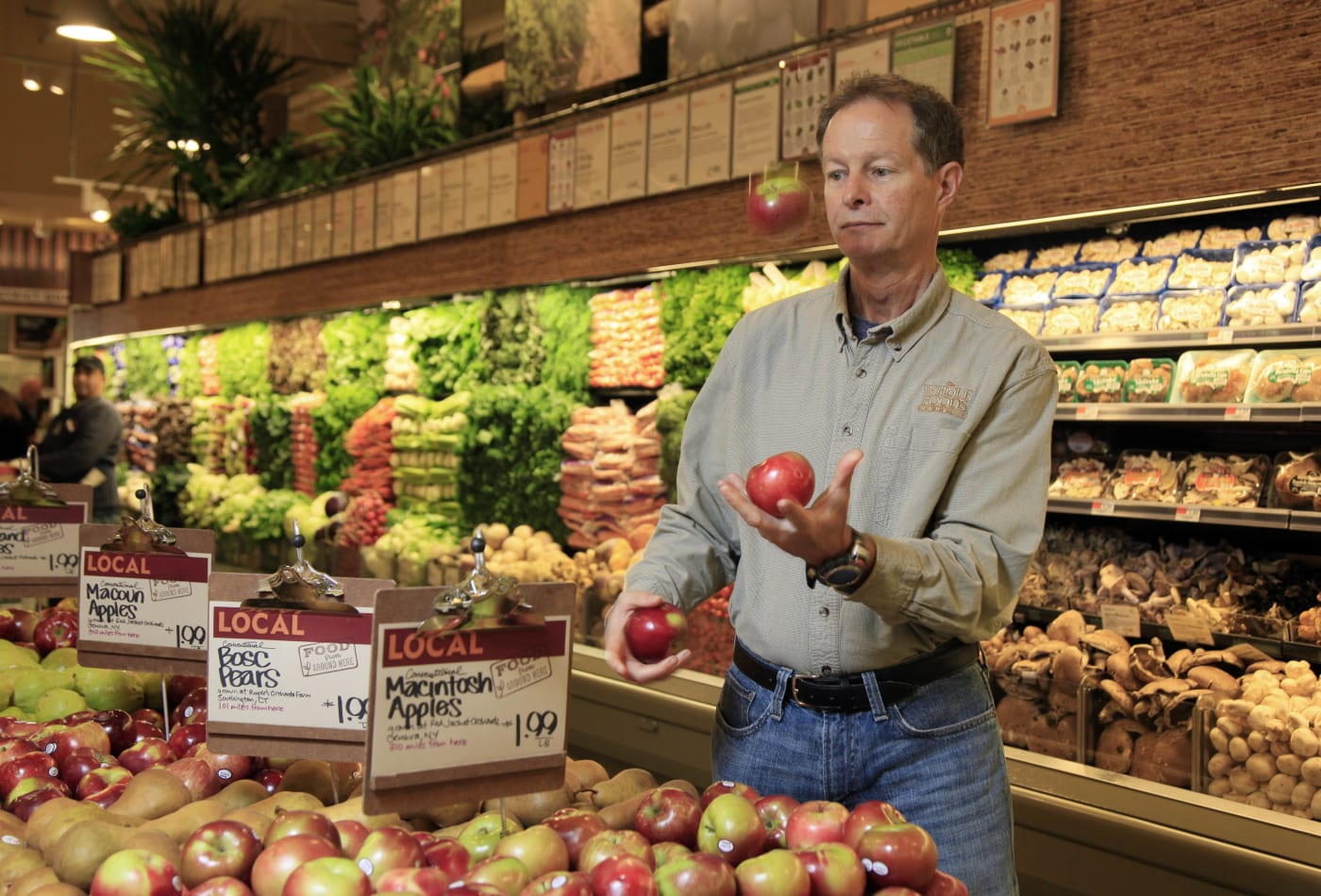
John Mackey is one of the co-founders of Whole Foods and is the current CEO, a position he has held since the inception of the company in 1978. On September 24, 2020, John Mackey sat down for an interview with the New York Times, who painted him in a very specific light stating “who espouses a high minded version of capitalism, sold his grocery store amazon.” In the interview, Mackey made some very controversial comments about the state of obesity in America. 

In one instance, Makey stated that, “poor decisions” is the fuel for the ever growing obesity pandemic in the world and more specifically the United States. He then went on to state that “the whole world is getting fatter, and America is leading the charge.” Then citing the reason as ‘ignorance” and “poor decisions”. He also cited a link between the state of the Coronavirus in the United States. Frequently citing that the obesity levels in the United States are making the pandemic much worse. 

As expected, Mackey was met with severe backlash following the releases of the interview by the New York Times. Many people were outraged over his comments. Journalists David Gelles cited the issue of affordability and accessibility for many people in urban and impoverished areas. In response to this, Mackey stated that, “I don't think there's an access problem. We have opened up stores in poor areas.” Contrary to his statement, research shows about 2.3 million Americans live more than one mile away from a grocery store and do not own a car. On top of this, Whole foods prices were “15% higher than those of rival grocery stores” according to Morgan Stanley.

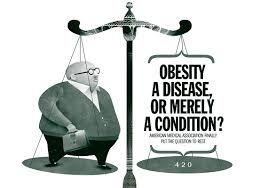
Mackey has not taken back any of his comments or followed up with an additional statement. At the heart of his comments lies the topic of Obesity as a disease, or obesity as a choice. Clearly stating his opinion, Mackey believes that obesity is a choice. Essentially poor decisions lead to poor results. Obesity is the result of one's poor decisions and so called ignorance leading them to become part of an ever growing statistic. Contrary to his opinion is the view of the medical community. In 2013, the American Medical Association made the choice to formally recognize obesity as a disease. They went on to state that obesity requires, “treatment and prevention efforts.” Other prominent medical societies support this decision. These include the National Institute of Health which declared obesity a disease in 1998 and the AOS which did the same in 2008. The medical community has held this opinion for over twenty years so it is interesting for Mackey to publicly state his opinion as it clearly contradicts the work of many well educated individuals.

As a subsidiary of Amazon, it is hard to point to any indicators that would show as a result of Mackey's comments. Amazon's stock price has soared over the past six months and whole foods has held revenue and total sales consistent with their previous numbers amidst the Coronavirus Pandemic. Moving forward it will be interesting to see if Mackey makes a public apology or follow up statement. This seems unlikely as Whole Foods has a very specific target market that will not view the company less favorably after his statements. Also, they will not lose customers from the demographic that Makcey may have offended because they were most likely not customers in the first place. 
Stakeholders:

After being bought by Amazon for $13.8 billion in 2017, the success of Whole Foods is now the success of Amazon and vice versa. Amazon will feel the effects positive or negative that Whole Foods experiences. With Amazon being the biggest monopoly in the world, negative actions of Whole Foods will only affect them little but nevertheless they will be affected.  With Amazon involved come their shareholders. The actions of Whole Foods and their employees affect the shareholders of Amazon as their stock price is now indicative of Whole Foods Inc. In regards to this situation, Mackey’s comments don't seem to have hurt many people involved . This could change in the future as you may see a company revolt within Whole Foods employees who don't agree with his statements. This would in turn affect Amazon and their shareholders. Although this would be unlikely knowing Amazon’s history with workers right and their ability to join or form a Union. 

Utilitarianism:

Utilitarianism asks to view actions based on the good that they bring. A Utilitarian attempts to maximize the good in the world while minimizing the bad. In the case of Whole Foods and John Makcey, the main issue is Obesity. While Mackey was correct in stating that obesity is a major problem in today's global society, a Utilitarian would find Mackey’s actions to be unethical.

John Mackey holds an important position in the Obesity crisis whether he knows it or not. As the leader of the nation's largest health food supermarket he has the ability to push people in the right direction. From his position of power and credibility, he has the ability to change peoples lives. His actions were unethical because instead of maximizing the good, he chose to emphasize the bad, Yes, Obesity is a problem, he is not wrong. Where he went wrong was in the statements on personal decision. Not only does this statement contradict the medical community but it also points out the bad in the world. If Mackey was a Utilitarian and wanted to maximize the good in the world, in that interview he would have stated Obesity as a problem and the need for a solution, and then he would have given the world his solution. This would be ethical action as he sees a problem, the need for a solution, and gives one. This could have been as simple as providing a sample meal plan and exercise routine for people to follow to help get them active and in shape. Mackey could have easily maximized the utility of his actions and brought good to the nation but sadly he chose not to. 

Kantianism:

A Kantian thinker would find issues with the insufficient thought process in this case. A major difference between Kantianism and Utilitarianism is that, “Kantianism does not make decisions based on consequences”(Salazar 21). While a Utilitarian would look to evaluate consequences to aid them in making a decision, a Kantian would not. Kantians evaluate based solely on the will of the person behind a given action. When John Mackey stated that Obesity is solely the cause of poor decisions, he was in fact practising bad will. “Kant tells us that we should only act according to those maxims could be universally accepted and acted on” (Desjardins 38). In the making of every decision, one must remember Kants words and strive to ask themselves that same question. In the case of John Mackey, he should have asked himself whether or not Obesity is universally recognized as a disease or choice? If Mackey had in fact asked himself this question before speaking, he would have found resounding evidence contrary to the claims that he made in his interview with the New York Times. “The 2013 decision of the American Medical Association to recognize obesity as a complex, chronic, disease that requires medical attention.” It has been made clear by multiple medical societies that obesity is in fact a disease and not a choice. 

Mackey has not publicly apologized or issued another statement after coming under fire for his recent statements..“Truth telling could, but lying could not, be made universal law” (Salazar 38).Many people have stated that they simply do not have access or the ability to even make the right decisions even if they wanted to. Mackey stated that he believed that there was not an access problem, meaning people just make poor decisions. Looking at the data provides evidence against Mackey's claim. Morgan Stanley stated that, “2.3 million Americans live more than one mile away from a grocery store and do not own a car.” And in regards to Whole Foods prices, “15% higher than those of rival grocery stores''. There simply is an access problem with data to back it up that Mackey simply chose to dismiss. Kant's theory of truth applies well to this situation as Makceys dismal of fact and the opinion of the medical society is unethical as it violates the theory of lying which could never be universal law.  

Virtue Theory:

When analyzing a situation a Virtue Theorist places utmost emphasis on the means instead of the ends.  The outcome simply doesn't matter. Strong emphasis is placed on a group or individuals character and how their actions reflect it. Mackey showed poor character in the statements that he made regarding obesity.

“Act so as to embody a variety of virtuous or good character traits and so as to avoid vicious or bad character traits” (Salazar 22). There are a few important character traits that Mackey violated. Two being Empathy and Gratitude. Mackey showed no empathy towards people with genetic predisposition to obesity and impoverished living conditions. While it is true that poor decisions can and will lead to being unhealthy, it is also true that genetics play a large role in obesity. Mackey lacked empathy towards people with genetic conditions such as diabetes that may make them obese. People in poverty also can simply not afford to eat a clean and healthy diet as Mackeys implies they must. Eating clean is not cheap, and people living paycheck to paycheck have to allocate their money to more important things. 

Another important trait in judging one's character is Gratitude. From the statements he gave, it is hard to identify Mackey as having any gratitude or being gracious in the slightest. He is the CEO of the world's largest health food supermarket and was recently bought out by the largest company the world has ever known. It is evident by his statements that he thinks he's better than the people he is talking down to giving a good indication of his overall character. 

Individualism:

An individualist would deem Mackey's statements to be a failure. The theory of Individualism can be understood through the works of Adam Smith and Milton Freidman. Adam Smith believed in the theory of Individualism and the theory of the Invisible Hand. Essentially meaning that when people make decisions that benefit their own good will it will also be beneficial for society as a whole. He added that in order for this to work, “It must be set against a backdrop of morality” (Salazar 8). Meaning that in order for society to gain from individual actions, Individuals must be motivated by good will. Friedman argued that a business only goal was to maximize profit within the rules of the law. To Friedman, nothing was off limits as long as maximizing profits was goal number one and staying within the law was the backdrop. 

Adam Smith would take issue with Mackey's motivation. Smith also stated, “Humanity, justice, generosity, and public spirit are the qualities most useful to others.” Mackey in particular lacked humanity and overall public spirit in his interview. He called out millions of people with disease and pinned them for “poor judgement and bad decisions”. When analyzing from Friedman's theory, you only question whether an individual looked to maximize profit. In this case the goal was most definitely not to maximize profit as Mackey's statement would have been much different if it was. If profit was the main goal, Makcey would have outlined a plan to get obese people into Whole Foods to help them lead a healthier life. Both sub theories of Individualism would deem Mackey's actions unethical as they did not try to maximize profit and they were carried out with intentions of goodwill. 

Justified Ethics Evaluation:

In my opinion, John Mackey's statements were not only unethical but extremely unprofessional. Makcey could have avoided the situation all together with minimal thought and effort. Not only did he face severe backlash, but also gave the Whole Foods brand and its owner Amazon bad publicity. In his position, Mackey could have voiced his concern for the ever growing problem of obesity, and then given people a plan of action. Given his credibility, he could have easily given people a simple plan of action to kickstart their journey to living a healthy lifestyle. What he chose to do instead provided no value to himself or anyone following. 

 It will be tough for Mackey to offer any rebuttals to the critics he was met with. This is simply due to the fact that he ignored fact and the general public opinion and chose to speak out of his own self interest. As I stated, Obesity is simply not a choice but a disease that must be met with treatment. Mackey's ignorance of this fact will make it almost impossible for him to challenge any of his critics. His claims also contradict data. Whole Foods prices are priced significantly higher than those of other stores, indicating that there is an access problem. 

Most CEO’s placed in Mackeys position would have chosen to act differently. They would have acted in a respectable manner that would help to strengthen their own personal image as well as the image of their brand. It should be clear to you that John Mackey acted unethically. His comments not only provided no value to himself but the nation as a whole. 

Action Plan:

It is hard to blatantly say that Whole Foods and its CEO is facing a crisis. This is in part due to the nature of the controversy. In this case, there is no possibility of a lawsuit or further action. The only followup from the interview has just been statements from the public stating their rebuttals to Mackey's claims. While it is too early to tell, Mackey’s comments may have little to no effect on the success and image of Whole Foods. Despite this, it would still be in John Mackesy best interest to make some changes to his personal values as well as the company’s.

As stated directly from the Whole Foods website under their Mission and Values tab, “Out purpose is to nourish people and the planet. We’re a purpose driven company that aims to set the standards of excellence for food retailers. Quality is a state of mind at Whole Foods Market.” While stated as their motto, their CEO does not uphold this value. A few simple changes to his values would establish his values consistent with that of the companys. My recommendation to him would be to look at the positive or negative impact that his statements have and whether they bring value to the people that hear them. As previously stated in regards to Utilitarianism, his comments provide no value and don't attempt to maximize the good that he could do. If I were in his position, I would have given my best effort to help people who struggle with obesity to help fight it. Mackey should provide people with a three step action plan to help get them started, here would be my recommendation;

  • Step 1: Outline why obesity is an ever growing issue and how it is detrimental to your health and your future. As a part of step one, provide factual evidence as to why you should get healthy/lose weight (Life expectancy, Mood Enhancement, etc.)

  • Step 2: Give people an example workout plan (Varying experience levels), and sample nutrition plan outline what foods to stay away from when losing weight (Carbs/ Artificial Sugars/ Processed foods). 

  • Step 3: Provide incentive for people to get started. Run special promotions; Get 25% off your first purchase when you sign up for a Whole Foods membership.

It is my recommendation that Mackey makes a plan or one similar available to the public sooner rather than later. This is what should have been done in the first place, but it would still be in his best interest to do it now. Making something like this available to the public would align Mackey’s personal values with the company’s and exhibit ethical behavior according to all four major ethical theories. 


References:

“Mission & Values.” Mission and Values | Whole Foods Market, www.wholefoodsmarket.com/mission-values.

Morris, Seren. “Outrage as Whole Foods CEO Says Ignorance and Poor Choices Cause Obesity.” Newsweek, Newsweek, 25 Sept. 2020, www.newsweek.com/whole-foods-american-obesity-1534272.

Pesce, Nicole Lyn. “Whole Foods Founder Blames Obesity Crisis on 'Ignorance,' Not Food Prices- 'We've Opened Stores in Poor Areas'.” Market Watch , 24 Sept. 2020, www.marketwatch.com/story/whole-foods-founder-says-were-getting-fat-making-the-coro Navirus-worse-2020-09-24.

Rosen, Howard. “Is Obesity A Disease or A Behavior Abnormality? Did the AMA Get It Right?” Missouri Medicine, Journal of the Missouri State Medical Association, 2014, www.ncbi.nlm.nih.gov/pmc/articles/PMC6179496/.

“Whole Foods CEO: Poverty + Ignorance = Obesity.” ConscienHealth, 28 Sept. 2020, conscienhealth.org/2020/09/whole-foods-ceo-poor-people-stupid-choices-obesity/.

Writer, Contributing. “WEIGHT RESPONSIBILITY: Obesity Is a Choice, Not a Disability.” The Mindful Word, 28 Mar. 2019, www.themindfulword.org/2015/weight-responsibility-obesity-choice-not-disability/. 

DesJardins, Joseph. An Introduction to Business Ethics. New York City: The McGraw-Hill Companies Inc, 2014.

Salazar, Heather. The Business Ethics Case Manual. n.d.


Wednesday, December 16, 2020

Apple Facing Lawsuit over Slowing down older Phones (12/2/20).

 Abstract: 

        On December 2nd, 2020 it had been reported that Apple is now facing lawsuits all over Europe for their practices of slowing down older iPhone models with software updates to increase sales in newer models. The company has cases filed in Belgium, Spain, and expect to see more cases filed in Portugal and Italy in the coming weeks, furthermore they have just recently settled multiple lawsuits in the United States for engaging in the same practice. 

This case will examine a variety of ethical theories including Individualism, Utilitarianism, Kantianism and even Virtue Theory, as well as evaluate each case to see if the company was actinging ethically or not. Starting with Individualism, Apple was in fact acting ethically in this case as their primary goal was to maximize profit. Meanwhile, according to Utilitarianism, Apple’s actions are highly unethical as they are not spreading happiness but creating harm on their customers and those who sell Apple products. In accordance with Utilitarianism, Kantism also views Apples’ actions unethical as they are not motivated by good will. Finally Virtue Theory also sees Apples actions as unethical because they fail one the four categories of business virtues being that they did not exercise fair practices.  


Ethics Case Controversy:


Apple is a leading developer and manufacturer in the technology industry and is most famous for their vast selection of Iphones. But what many customers are slowly realizing is the inconsistency in their products over the years specifically their performance. Within the past week many reports have surfaced indicating that Apple is now facing serious lawsuits and allegations all over Europe and the number of claims filed are estimated to continue to increase. The legal action they are facing is over there highly “controversoal practice of slowing down older iPhones”(CNNLondon). The advocacy group who is behind the lawsuits against Apple is known as the “Euroconsumers”. The Euroconsumers are an organization that works to protect consumer rights and ensure fair markets all over Europe. In a statement from the Euroconsumers the “class action lawsuits cover up to 2 million iPhone 6, 6 Plus, 6S, and 6S Plus devices”(CNNLondon). These devices are consumers residing in Portugal, Spain, Belgium, and Italy. Previously the two parties attempted to resolve the issue but ultimately never came to an agreement which is what led to the lawsuits being filed. The purpose of the lawsuits is that the Euroconsumers are seeking compensation for each consumer of an average of $72.30 per device. 


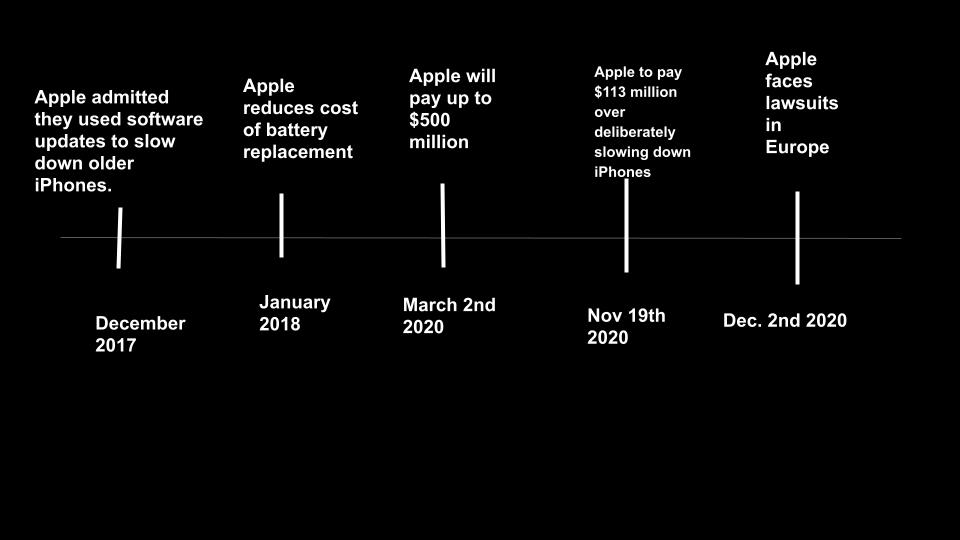
This is not the first time Apple has faced legal action in regard to similar actions as just back in March they settled a lawsuit accusing them of “slowing down older iPhone models to compel users to buy new ones”(CNN March). The settlement could cost Apple up to $500 million, where each affected consumer is available for compensation of $25 per device. You must file a claim in order to receive compensation but another major part of the settlement is that Apple will pay a minimum of $310 million regardless of the amount of claims. Back in December of 2017 Apple admitted that they used software updates to slow down older iPhones in response to consumer backlash and tech analysts who stated the updates were affecting the performance of the iPhones in a negative way. During this time was also when many consumers started to believe Apple was doing this in attempts to force users to upgrade to the latest models constantly. But Apple responded and apologized with a statement saying the practice was “aimed at addressing issues with older lithium-ion batteries that would make the phones suddenly shut down to protect their components”(CNN March). In addition they also later released an apology statement where they announced the price reduction in battery replacement from $79 to $29. 

Below are images of all the possible affected devices included in both U.S. and European lawsuits against Apple. Meanwhile back on November 19 2020 it had been reported Apple will pay “$113 million to settle an investigation over how Apple was not transparent about its iPhone battery problems”(CNN Business 113). These battery problems led to devices unexpectedly shutting down, and in response to the issue Apple pushed a software update in December of 2016 which negatively impacted the overall performance of older models. As each year has passed Apple continues to rack up new lawsuits every year and all of them have one thing in common and it is that their software updates are designed to slow down older versions to increase customer upgrades.  


Stakeholders: 

The stakeholders in the Apple lawsuits include all the employees, employees families, customers, sellers, and even competitors. The customers are the stakeholders who are most affected as they are the ones using Apples devices. The consumers are the ones who are being treated unethically as they are being pressured into spending more money on defective products. Furthermore, it is very common for families to all have the same line of cellular devices and in many cases the exact same model. Therefore many families were all affected and possibly at the same time making it an even more of an inconvenience. Meanwhile while this scandal was becoming public knowledge Apple faced heavy backlash and many of their employees were the ones who had to deal with it, especially those who worked in customer service at any of their vast locations throughout the world. In addition those who sell Apple products are also being treated unethically because they were most likely unaware of the situation and defects of certain models. As a result of this they were not only selling but because they promoted the products and this can come back to harm the seller regardless of if they are actually part of Apple or not. As a culture we need our cellular devices for everyday life. They have become an essential part of it and because of the situation, Apple as well as their other sellers will most likely lose more customers over the scandal which is rightfully deserved for Apple not so much the sellers. 


Individualism: 

There are three main ways in which the idea Individualism is based upon, the first is in accordance to Miltion Friedman, who believed “the only goal of business is to maximize profit for the owner or stockholders within the law”(Salazar 2). The next main idea was founded by Tibor Machan, where his definition of Individualism is “The only direct goal of a business is to profit, and the primary obligation of the business person is to maximize profit within the law(Salazar 3). Machans ideas are most commonly known as Classical Individualism. Finally it is important to keep in mind while profit is the only goal under these ideas, but regardless they still believe that business needs to be socially responsible while doing so. 

This now ponders the question of how Individualists view Apples practices? In summary Apple is actually following the theory as their primary goal was profit and that is the only goal under Individualism. In January of 2018 Apple reduced the price of a battery replacement in response to the issue at hand, Tim Cook later noted the revenue for 2018 was partly hit as a result of the price change. But Apple's practices of slowing down older iPhones is not socially responsible, it is extremely harmful and something to keep in mind when purchasing Apple products in the future. The negative connotation that could  be attached to Apple products could seriously deter many customers which will also lead to loss in profit, thus failing the primary goal of Individualism. According to Individualism, consumers are being treated ethically, as Apple's primary goal to maximize profit did work at the time. But they were able to do so through the use of slowing down older iPhone models with software updates to push customers to buy upgrades earlier than they needed too. Technically speaking Apple did not break any direct laws that state they are not allowed to engage in this type of practice, therefore under Individualism ideas Apple was not in the wrong. 


Utilitarianism: 

Utilitarianism beliefs are founded upon the idea of happiness. Their ideas believe that “Happiness or pleasure are the only things of intrinsic value” and that we are to “maximize happiness in yourself and others and do so impartially”(Salazer 2). While trying to attain the goal of happiness, Utilitarianism also considers all affected parties and how each will be affected without increasing harm or pain on another party. The affected parties of this scandal are known as the Stakeholders. The stakeholders who were most affected were the customers of Apple. Back in 2015 was when the iPhone 6 models were introduced to the iPhone family at a starting retail prince of $649. In addition it is very common for people to purchase these phones with financing and understandably so. But Apple does allow consumers to purchase new iPhones regardless if the consumer's current phone is fully paid off or not. As a result of this some consumers ended up with two Iphones not paid off and the newest model they purchased a year ago randomly shuts off and the only option is a new one. Although the effects are not seen or felt right away, in the long run they are especially fiscally speaking. Meanwhile the second group of stakeholders, the employees, benefited from the company doing so well which increased some benefits as an employee. But they also were the ones who had to deal with angry consumers, and give consumers answers to problems they do not have. Lastly, we have the sellers of Apple products, and at the time they did benefit as overall profit was increasing in the sale of Apple products. But again when it became public knowledge of Apples despicable actions resulted in severe backlash in those who sold Apple products because they are associated with the company but it was unfortunately something the sellers could not control. The effects of Apple's practice of slowing down older iPhone models has a trickle down effect on the stakeholders as over time it did not spread happiness in fact they did the complete opposite. 


Kantism:

Kantism business ethics has four main principles: act rationally, allow and help people make rational decisions, respect people and their individual needs and differences and finally to be motivated by good will. Actions that come from good will are ones where you are acting rationally and are rightly motivated to do so. These ideas were first developed and adopted by Immanuel Kant who lived from 1724 to 1804. In addition the ideas of Kantism explicitly state it is wrong to manipulate and or exploit people for a personal advantage. Immanuel Kant was a very smart man as he created a test that decides if an action is to be permissible or not under Kantism, this test is known as the Categorical Imperative or Law of Rationality. The most important part of the Categorical Imperative is The formula of Humanity in which you are never to use someone as just a means both parties must benefit from the action. 

According to the theory of Kantism, Apple’s practice of slowing down older model iPhones fails the categorical imperative because they are using their own customers as a mere   means for only the companies benefit. The results of the practice really increased Apple's profit over time as the software updates purposely slowed down but also the batteries in the devices could not withstand the newer models software. Instead of Apple making this public knowledge and offering an alternative solution to consumers to keep them happy they tried to cover up the issue and used it as a chance to increase overall profit of the business. Another example is when Apple offered a price reduction for the cost in battery replacements. But the only reason the iPhones needed a battery replacement was because they could not support the new software that Apple promoted and offered for all iPhones. Apple’s actions go completely against the theory of Kantism, and the company must find a different, ethical way to increase their profits. 


Virtue Theory:

Virtue Theory is a set of business ethics ideas which are based upon Aristotle Ethics. There are four cardinal virtues of character in business and they are as follows; courage, honesty, temperance, and justice. In addition, Virtue Theory also is based upon something known as the Doctrine of the Mean, where it is believed to find the mean between extremes. This translates as finding the perfect feeling point, but not living in moderation(Salazer 2). 

After examining Apple's case it is clear through Virtue Theory, it is clear Apple was not acting ethically. First, they were not acting courageous because they took advantage of their customers. In addition they were given multiple chances to do what was right and come forward but they choose not too. The second virtue, Honesty was not adopted and applied to their practice because they did not make their customers aware of possible battery issues or that the new software updates will slow down certain models. Furthermore when Apple did choose to come forward it was too late for the knowledge to have a positive effect on the situation for consumers. The third virtue, temperance measures if Apple had reasonable expectations and desires and in their case they did not. Unfortunately Apple’s desire in this case was to increase profit which is understandable, but their expectations that using this technique was fair to consumers is not reasonable expectations for a business to have. The last cardinal virtue, justice measures for “fair practices, good ideas, hard work, and quality products”(Salazer 6). Apple was not just to their consumers, and sellers. Their practice was unethical and not hard work, it was a manipulative act to drive up profit. Apple’s ideas and business practices are highly frowned upon in accordance to the Virtue Theory. 


Justified Ethics Evaluation: 

In my opinion, Apple’s actions were highly unethical and unprofessional. Apple could have avoided their battery issue completely if they came forward in the first place and planned a proper solution to the problem. Instead Apple chose to use this opportunity to take advantage of their customers, hoping no one would question or notice that it was the software updates that were causing the cell phones to slow down. Apple has been one of the leading companies in the electronic industry and have the necessary skills, experience, and leadership to be able to produce a fair solution for both Apple and their consumers. Apple neglected their customers and ignored any risk, putting their customers at harm for profit. 


Company Action Plan:

Apple is up against major allegations and so far they continue to lose every court case they have been involved in regarding this issue. They have two lawsuits in the U.S. one was investigated by 34 states. In addition they will have to pay a minimum of $310 million because of that investigation. In November 2020 they settled another lawsuit where they will have to pay $113 million for purposely slowing down older iPhone models. These lawsuits are well deserved compensation for the stakeholders affected by their actions. The company was aware of the battery problem and attempted to solve it through software updates and those did not work but they used their mistake to take advantage of their customers as they purposely slowed down older iPhone models.  Furthermore, when the customers began to realize what was happening Apple denied the allegations of purposely slowing down iPhones, but did admit to not disclosing the battery issue to the public. They later offered a price reduction in battery replacement which was one positive, but that did not help those who were affected before they implemented that practice. A large majority of consumers paid full price for a battery replacement or worse had to purchase a new model and did not receive any form of compensation for those actions. Apple did not hold themselves accountable for their actions, they ignored the needs of their customers and violated their rights, all to increase profit. The end result of their actions is costing Apple a fortune, and as more cases are filed it is increasingly more likely that their consequences have just started coming. 


Timeline:


Ryan Martin 


References: 

Ziady, H. (2020, December 02). Apple faces lawsuits in Europe over slowing down older iPhones. Retrieved December 15, 2020, from https://www.cnn.com/2020/12/02/tech/apple-iphone-slowing-europe-lawsuit/index.html

Kelly, S. (2020, November 19). Apple to pay $113 million over deliberately slowing down iPhones. Retrieved December 15, 2020, from https://edition.cnn.com/2020/11/19/tech/apple-battery-settlement/index.html

Iyengar, R. (2020, March 02). Apple will pay up to $500 million to settle lawsuit over slowing down older iPhones. Retrieved December 15, 2020, from https://edition.cnn.com/2020/03/02/tech/apple-lawsuit-settlement-slow-batteries/index.html

"Euroconsumers' International Forum 2020 - 19 November 2020." Euroconsumers. Web. 15 Dec. 2020.https://www.euroconsumers.org/

“Apple IPhone 6S 64GB.” Direct Office, www.directoffice.co.ke/shop/apple-iphone-6s-64gb/. 

"Kodiak Lecture Notes - 2020 " Kodiak. Salazar. www.kodiak.com

Nation wide recall of Leafree Sanitizer (2020)

  After delving into the world of hand sanitizer for my case on LeaFree hand sanitizer regarding their
packaging, I found many pitfalls. I was able to find a variety of sources that covered my topic, along with other hand sanitizing brands that are facing similar heat. Although there is very limited information on Corgi Med as a company, I do know that they manufacture products from Yangzhou Olande Cosmetic Co. Ltd. (China)
  Corgi Med released their LeaFree Hand Sanitizer in summer 2020 but quickly recalled it due to the packaging that stated “edible alcohol.” The negligence from their packaging could have potentially led to extreme medic
al conditions. Medical conditions such as a lack of coordination, slow or slurred speech, drowsiness, coma and death
    Due to Corgi Meds quick recall on the mislabeling of their sanitizer, there have been no filed lawsuits. However the mislabeling was negligent and inhumane. I will analyze the LeaFree hand sanitizer case according to the theories of Individualism, Utilitarianism, Kantianism and The Virtue Theory to determine whether the company was acting ethically or unethically. According to Individualist, Corgi Med was ethical in its action with the goal to gain profit. However from a Utilitarian standpoint the mislabeling of the product would be considered unethical because it could have harmed stakeholders. Kantian ethics would also disagree with Corgi Med because the harmful mislabeling of their product would not pass the categorical imperative test. Kant would say that Corgi Med benefited at the expense of their stakeholders. There is a possibility that Corgi Med labeled the product “Edible” to make it more marketable. Virtue theorists would also state that Corgi Med is unethical since their actions do follow their main virtues that are courage, honesty, temperance and justice.


Controversy
Early summer of 2020 in the heights of the coronavirus pandemic, when hand sanitizers were on backorder, Corgi Med launched to market a hand sanitizer Manufactured by Yangzhou Olande Cosmetic Co. Shortly after being on the market Corgi Med made a voluntary recall on September 3rd, 2020. The company’s reason for announcement, according to the FDA article, was because the product was labeled as “Edible Alcohol” The FDA along with several other sources stated the serious health risks that can arise due to the mislabeling. Alcohol toxicity such as drowsiness, lack of coordination, coma or death. NBC, another news source states “toxicologists say methanol should never be used in hand sanitizer, because it could poison people who drink it as a substitute for other forms of alcohol.” It is a critical time in the world of health and many people rely on safe sanitizers and disinfectants. Corgi Med jeopardized the health, safety and trust of their consumers by mislabeling their product. Although there is no current evidence that supports  a lawsuit against Corgi Med, is this case still deemed ethical?
Timeline of events 


Stakeholders
The Stakeholders in my Corgi Med case include Yangzhou Olande Cosmetic Co. (the manufacturer for Corgi Med) Corgi Med itself, and their direct consumers. Direct consumers would be considered family members, friends, kids and anyone else that used the product. These direct consumers are the stakeholders being treated unethically. Consumers of Leafree products may not understand the severe health risks that could arise from ingesting sanitizer products. Young children who accidentally ingest sanitizer products and adults who drink these products as an alcohol substitute are most at risk.  Yangzhou Olande Cosmetic co, the manufacturer for Corgi Med would also be considered a stakeholder because of profits lost from the recall. There is also potential that Corgi Med changes manufacturers in the future.
Individualism
Milton Friedman's theory of Individualism states that the only goal of the business is to profit within constraints of the law. Individualism starts with the fundamental premise that the human individual is of primary importance in the struggle for liberation. 
    Using this theory to analyze my case, I can conclude that an Individualist would believe that Corgi Med followed the theory because their primary goal was to profit. Corgi Med used specific labeling that would perhaps make their product more marketable and in return, profitable. Although the product being labeled “Edible” is misleading, Corgi Med is still within bounds of the law. 
The main concern in my case was the potential health risks that could arise from ingesting the sanitizer. Corgi Med voluntarily recalled their product and the FDA put out a statement of risk, stating “Ingesting hand sanitizer, which is intended for topical use, may result in alcohol toxicity.” Along with several other symptoms. (FDA.gov)
Utilitarianism
According to An Introduction to Business Ethics, utilitarianism at its most basic structure is to maximize happiness for all. ( Desjardins 35) In other words the action would be considered right insofar as it promotes happiness, and that the greatest number should be the guiding principle of conduct. 
With consideration for all, the stakeholders that were most affected were the consumers. “Utilitarian's tell us that we can determine the ethical significance of any action by looking to the consequences of that act.” (Desjardins 29) A utilitarian would view this case as unethical because consumers were subjected to serious health risks due to the mislabeled product. If Corgi Med had done their research they would have understood the negative effects of their action. Corgi Med violated the stakeholders approach by putting to market a potentially harmful product.
Kantianism
Kantian ethics was developed by the philosopher Emmanuel Kant and is primarily focused around duty rather than emotions or end goals. All actions are performed in accordance with some underlying maxim or principle, it is according to this that the moral worth of any action is judged.  The four principles of Kantian ethics is to act rationally, to respect people and to be driven by goodwill and duty, looking to do the right thing. The categorical imperative is the primary formulation of Kant’s ethics and tests whether an action is permissible or impermissible. Permissible means that the action is accepted morally and if it is impermissible then it is therefore wrong to do. (Case Manual, Heather Salazar) A formulation attached to the categorical imperative is The Formula of Humanity. This formulation of the CI states that we should never act in a way that we treat humanity, whether in ourselves or in others, but always as an end in itself.
    The case regarding Corgi Meds hand sanitizer is considered impermissible according to Kant's ethics and therefore does not pass the CI test. By purposefully labeling the product “Edible” to make the product more marketable, the company was putting consumers' health at high risk. Corgi Meds' case does not pass any of the four principles when they brought their product to market.  However, when Corgi Med made the decision to voluntarily recall all LeaFree sanitizers, they then conformed to the principles of Kantianism.
Virtue Ethics
Virtue ethics is one of  three major approaches in normative ethics. Virtue ethics is person rather than action based: it looks at the virtue or moral character of the person carrying out an action, rather than at ethical duties and rules. A moral person is someone who possesses virtue and shows it in his or hers actions. The admirable character traits are called virtues, their opposites are vices. Typical moral virtues include courage, temperance, justice, prudence and truthfulness. Examples of vices include dishonesty, greed and selfishness.
Applying the Virtue Theory to the Corgi Med case, I don't believe the company was acting courageous because they put their consumers' health at high risk. However, it was courageous of the company to do a voluntary recall on their product after the fact. Honesty was applied in this case because Corgi Med announced their recall publicly and was willing to take back all of their mislabeled products. The third virtue is temperance, which is defined as moderation or self restraint. I don't believe Corgi Med met reasonable expectations when putting the sanitizer to market. Corgi Med was not just for putting their consumers' health at risk to make their product more marketable. However, Corgi Med showed empathy and compassion by voluntarily recalling their product. The last moral virtue is prudence. Prudence is the ability to be wise in practical affairs, as by providing for the future. Corgi Med was far from wise in this case therefore they lack this virtue.
Action Plan
Safety alert
Although there have been no lawsuits against Corgi Med for distributing a sanitizer labeled “Edible Alcohol” There is still great concern. The primary concern being the health and safety of their consumers. Corgi Med was negligent by bringing a product to market that poses health threats just to make their product more profitable. Thankfully on September 3rd 2020 Corgi Med announced a voluntary nationwide recall for their LeaFree Sanitizer. Corgi Med did the right thing by recalling its mislabeled product, but there are some procedures I would suggest so that ethical issues do not arise again.
The first suggestion I have for Corgi Med, that I believe is the correct or ethical thing to do, is to send out a statement of apology. Consumers bought directly from Corgi Med which means they have their contact information from purchase. Corgi Med could also release a public statement of apology if direct contact is an issue. This would show consumers that Corgi Med is empathetic and has a customer first attitude. Corgi Med as a company would also benefit from a statement of apology because it would give them a chance to preserve their consumer relationships and avoid negative buzz. By trying to mend and preserve their client relationships, it will in turn make Corgi Med more profitable in the future.
The second suggestion I have for Corgi Med is to recreate a product label that is FDA approved. Corgi Med failed to do this by mislabeling their LeaFree sanitizer. Although Ethyl is the principal ingredient in alcoholic beverages like beer, wine or brandy, it is extremely dangerous to consume. During May 1- June 30, 15 cases of people reportedly ingesting alcohol-based hand sanitizer were hospitalized. Of those 15 cases, 4 patients had died. Corgi Med needs to create a strong warning label in order to prevent serious injury. Along with adding a warning sign, the company should also include the manufacturer on its packaging. According to an article by Frontier Label, “The manufacturer of the product should be listed along with the distributor.” In this case LeaFree did not post the manufacturer. If Corgi Med were to use my suggestions, they would in turn be on the way to creating an ethical brand with honest products.
Isabella Lake- Western New England University