Friday, April 6, 2018

NCAA: Pay-to-Play Recruiting Scandal (2018)

Controversy: 

The NCAA is a multi-billion dollar governing organization that oversees over 1,100 different colleges and universities, as well as over half a million athletes across North America. Their main core values include amateurism, education, and fairness / sportsmanship. During the week of February 23rd, the FBI came out with their results on a long investigation on some of college basketball’s top programs and how they managed to land some of these top recruits. Schools such as the University of Arizona, University of Washington, North Carolina State University, University of Kentucky, amongst many others are under fire after an FBI investigation recently discovered that they had paid these top recruits and their families a lump sum of money to come play basketball for their respective schools.

Dennis Smith Jr. (Dallas) attempts a layup as
Kyle Kuzma (Lakers) looks on
An FBI wiretap revealed over 3,000 conversation hours between Arizona head coach Sean Miller and AAU Director Christian Dawkins about the recruitment and payment of Deandre Ayton, the number 3 recruit of the class of 2017 and a highly sought out prospect in this year’s NBA draft, was reportedly paid around $100,000 to attend the University of Arizona. The wiretap also leaked multiple names of assistant coaches around the NCAA such as "Book" Richardson, from the University of Arizona, who was responsible for paying Ayton and other recruits to attend Arizona. He, along with 4 other assistant coaches were arrested in September after a two-year investigation into the bribes and other scandals in college basketball. Richardson was accused of accepting upto $20,000 in bribes and persuading athletes to sign with Dawkins and a certain financial advisor. While Ayton is the only player to receive a 6-figure payment, plenty of former college stars were being paid 5-figures during their experience at school such as Dallas Mavericks standout rookie, Dennis Smith Jr. who received “5-figure payment” during his time at North Carolina State University, and late-first round draft pick of the Los Angeles Lakers, Kyle Kuzma, who also received around $10,000 in payment during his time at the University of Utah. Many other players and schools were named during this investigation, leaving plenty of schools and coaches on the hot seat about their unethical methods of recruiting and keep both the FBI and the NCAA on close watch to hand out penalties. With this unethical recruiting, the coaches are breaking some of the core values instilled by the NCAA, amateurism and fairness. Once these players are paid, they lose the title of amateur - the NCAA acts as a stepping stone into professional sports, as well as getting paid, so the breaking of a core value that means so much to the organization is critical. Fairness is another value that these coaches break by unethically recruiting players, because it takes away competitiveness in recruiting. If a small school with less resources is trying to compete for a recruit with that of a school with an abundance of resources, who plans on using some resources to illegally pay that player, than it is unfair to the smaller school because it's almost that they didn't stand a chance. By these coaches illegally paying and unethically recruiting players, it creates an uneven playing field in the battle of recruiting and gives the edge to those who cheat.


Stakeholders:  


There are many stakeholders that are affected from this scandal, some will be affected minimally while others severely. The administration, coaches and players of the school that was involved in the scandal will receive large penalties, scaling from loss of scholarships, vacating wins and championships, dismissal of administration, fines and suspensions, to even a temporary ban from tournaments. This ultimately will cause less and less recruits to want to attend the school knowing they're under constant investigation and are facing penalites. The school itself will take a hit as the teams will not perform well due to all the penalties, leading for the fans to stop attending, networks to stop broadcasting and sponsors to stop endorsing, causing a downward spiral in profit for the program. They will basically have to start all over again from scratch if handed severe penalties, from having to find an entire new staff, gain recruits, earn the hearts of the fans back and lastly, gain the trust of the NCAA back. Ultimately, there are many stakeholders affected from this illegal form of recruiting, placing these schools in a difficult place to find out how to clean up such a mess, and proving a point that the NCAA doesn't mess around when it comes to their core values.

Individualism: 


Friedman’s theory of individualism discusses that, “the only goal of business is to profit, so the only obligation that the business person has is to maximize profit for the owner or the stakeholders.” The ethical rule of individualism however states that this should be done within the law, so an individualist would view this scandal as unethical, as the coaches were doing everything in their power to land a top recruit at their university, to hopefully win more games, sell more tickets, and give the schools a better name and more exposure, but they got the recruit by using illegal recruiting methods such as bribery and collusion. The coaches weren’t thinking about these allegations, only the profits. For example, if a school lands the number one overall recruit in the nation, then news outlets everywhere will want to cover the signing day story, broadcast stations will line up to show it on their network, fans will camp out for tickets as they want to witness the talent first hand, sponsors will want to do business as the school will be consistently in headlines. It almost creates a domino effect of profit by landing a top recruit, and from an individualist standpoint; if doing whatever it takes to land that recruit will turn a big enough profit, and its done legally and ethically, then it is okay, but in this case, it was done wrongfully and illegally, so it is wrong.

Arizona Head Coach Sean Miller heavily sweats through
his shirt as he coaches his team in an NCAA Tournament Game
(or because he is paranoid from his unethical recruiting methods?)

Kantianism: 


There are four basic principles to Kantianism; first is to Act Rationally, this means to don't act inconsistently in your own actions or consider yourself exempt from your own rules, next is to allow and help people to make rational decisions,  third is to respect people, their autonomy, and their individual needs and differences, lastly is to be motivated by good will, seeking to do what is right because it is right. One saying that goes with the Kantian theory is "the end doesn't justify the means."  One shouldn't manipulate, lie, or cheat others just to get your way from a Kant's view, one should act respectfully and honor other's choices. This case would be viewed unethical from a Kantian’s standpoint as the coaches did not act rationally in their recruiting tactics as they felt they needed to pay the player in order to just attend the school. They certainly did not help the recruit make a rational decision with forcing him to choose between other schools and a cash bribe, and they violated the recruit's autonomy by forcing external pressure on him to make a big and difficult decision. Lastly, the coaches did not allow for the players to make a rational decision as the players knew they were doing something wrong by accepting the cash bribe presented by the coaches to attend the school, therefore this method of recruiting is seen as irrational.

Utilitarianism: 


Utilitarianism involves two aspects, egoism and altruism. Egoism means to maximize your own happiness and Altruism is to maximize happiness in others. From a Utilitarian standpoint, the case should maximize happiness for all parties affected in the long run. One would find this case unethical as they were making the player and their families happy by giving them full scholarships and a lump sum of cash to choose this school and play basketball for basically only one year, and if they would land the recruit, the school and coaching staff would be ecstatic as they can increase their chances of success. But, the other schools and the NCAA wouldn't be happy as they were trying to be moral in their recruiting and the one school just cheated their way to landing a top recruit. They are also breaking the NCAA's core values and rules that have been instilled since the NCAA came into existence. In the long run, the only parties that would be happy are the recruits and their families that got paid, as the school will be subject to penalties, the NCAA will be furious as they have to hand out penalties and tighten their policies, and other schools will still be upset that they didn't land a top recruit and perhaps missed out on a chance at a national championship.


Virtue Theory: 


The Virtue Theory of business ethics focuses directly on the act itself and how it is unethical. A question that must be asked is, “what is the right thing to do in this situation?” It focuses on four characteristics: courage, honesty, temperance, and justice. It should be that the act was all in good character. From this theory's standpoint, this case would be determined as unethical due to it’s unethical recruiting tactics, and the violation of NCAA rules and recruiting standards. It is considered unethical because the NCAA adheres that it's athletes all obtain the status of amateur, therefore foregoing the privilege of being paid. In knowing this, the coaches who went behind the backs of the NCAA to pay these top recruits to attend this school, were not honest in how they were able to land such highly sought-after recruits, and it clearly was not the right thing to do. Clearly, when there is something that has people losing their jobs and people getting arrested and a multi-year long investigation, then there is something not in good character going on. This method of recruiting goes against all four characteristics and is not within good character so by the Virtue Theory, it is the wrong thing to do for both parties, the coach in offering a bribe, and for the player in accepting the bribe.


Bibliography:

Bonesteel, M. (2018, February 16). 'Hall of Fame coaches should be scared:' FBI's college basketball probe reportedly contains bombshells. Retrieved April 06, 2018, from https://www.washingtonpost.com/news/early-lead/wp/2018/02/15/three-dozen-top-ncaa-basketball-programs-reportedly-could-turn-up-in-fbis-investigation/?utm_term=.59e008e422a9
DiNitto Omnisport, M. (2018, February 23). Duke, UNC, Kentucky among colleges named in FBI investigation into recruiting scandal. Retrieved April 06, 2018, from http://www.sportingnews.com/ncaa-basketball/news/college-basketball-scandal-duke-north-carolina-michigan-state-andy-miller-christian-dawkins/1rbuw6zo74l1z1knjyb96x4prw
Murphy, B., & Irby, K. (2018, February 27). The FBI is investigating college basketball recruiting practices. Now Congress is too. Retrieved April 06, 2018, from http://www.mcclatchydc.com/news/nation-world/national/article202467669.html
Rapaport, D. (2018, February 24). Every current player implicated in the FBI's NCAA hoops probe. Retrieved April 06, 2018, from https://www.si.com/college-basketball/2018/02/24/college-basketball-scandal-fbi-probe-players-involved
Sherman, M. (2018, February 23). Everything you need to know about the college basketball scandal. Retrieved April 06, 2018, from http://www.espn.com/mens-college-basketball/story/_/id/22555512/explaining-ncaa-college-basketball-scandal-players-coaches-agents
Bonesteel, M. (2018, February 16). 'Hall of Fame coaches should be scared:' FBI's college basketball probe reportedly contains bombshells. Retrieved April 06, 2018, from https://www.washingtonpost.com/news/early-lead/wp/2018/02/15/three-dozen-top-ncaa-basketball-programs-reportedly-could-turn-up-in-fbis-investigation/?utm_term=.59e008e422a9

DiNitto Omnisport, M. (2018, February 23). Duke, UNC, Kentucky among colleges named in FBI investigation into recruiting scandal. Retrieved April 06, 2018, from http://www.sportingnews.com/ncaa-basketball/news/college-basketball-scandal-duke-north-carolina-michigan-state-andy-miller-christian-dawkins/1rbuw6zo74l1z1knjyb96x4prw

Murphy, B., & Irby, K. (2018, February 27). The FBI is investigating college basketball recruiting practices. Now Congress is too. Retrieved April 06, 2018, from http://www.mcclatchydc.com/news/nation-world/national/article202467669.html

Rapaport, D. (2018, February 24). Every current player implicated in the FBI's NCAA hoops probe. Retrieved April 06, 2018, from https://www.si.com/college-basketball/2018/02/24/college-basketball-scandal-fbi-probe-players-involved

Sherman, M. (2018, February 23). Everything you need to know about the college basketball scandal. Retrieved April 06, 2018, from http://www.espn.com/mens-college-basketball/story/_/id/22555512/explaining-ncaa-college-basketball-scandal-players-coaches-agents
Bonesteel, M. (2018, February 16). 'Hall of Fame coaches should be scared:' FBI's college basketball probe reportedly contains bombshells. Retrieved April 06, 2018, from https://www.washingtonpost.com/news/early-lead/wp/2018/02/15/three-dozen-top-ncaa-basketball-programs-reportedly-could-turn-up-in-fbis-investigation/?utm_term=.59e008e422a9
DiNitto Omnisport, M. (2018, February 23). Duke, UNC, Kentucky among colleges named in FBI investigation into recruiting scandal. Retrieved April 06, 2018, from http://www.sportingnews.com/ncaa-basketball/news/college-basketball-scandal-duke-north-carolina-michigan-state-andy-miller-christian-dawkins/1rbuw6zo74l1z1knjyb96x4prw
Murphy, B., & Irby, K. (2018, February 27). The FBI is investigating college basketball recruiting practices. Now Congress is too. Retrieved April 06, 2018, from http://www.mcclatchydc.com/news/nation-world/national/article202467669.html
Rapaport, D. (2018, February 24). Every current player implicated in the FBI's NCAA hoops probe. Retrieved April 06, 2018, from https://www.si.com/college-basketball/2018/02/24/college-basketball-scandal-fbi-probe-players-involved
Sherman, M. (2018, February 23). Everything you need to know about the college basketball scandal. Retrieved April 06, 2018, from http://www.espn.com/mens-college-basketball/story/_/id/22555512/explaining-ncaa-college-basketball-scandal-players-coaches-agents


DiNitto Omnisport, M. (2018, February 23). Duke, UNC, Kentucky among colleges named in FBI investigation into recruiting scandal. Retrieved April 06, 2018, from http://www.sportingnews.com/ncaa-basketball/news/college-basketball-scandal-duke-north-carolina-michigan-state-andy-miller-christian-dawkins/1rbuw6zo74l1z1knjyb96x4prw
Murphy, B., & Irby, K. (2018, February 27). The FBI is investigating college basketball recruiting practices. Now Congress is too. Retrieved April 06, 2018, from http://www.mcclatchydc.com/news/nation-world/national/article202467669.html
Rapaport, D. (2018, February 24). Every current player implicated in the FBI's NCAA hoops probe. Retrieved April 06, 2018, from https://www.si.com/college-basketball/2018/02/24/college-basketball-scandal-fbi-probe-players-involved
Sherman, M. (2018, February 23). Everything you need to know about the college basketball scandal. Retrieved April 06, 2018, from http://www.espn.com/mens-college-basketball/story/_/id/22555512/explaining-ncaa-college-basketball-scandal-players-coaches-agents
Bonesteel, M. (2018, February 16). 'Hall of Fame coaches should be scared:' FBI's college basketball probe reportedly contains bombshells. Retrieved April 06, 2018, from https://www.washingtonpost.com/news/early-lead/wp/2018/02/15/three-dozen-top-ncaa-basketball-programs-reportedly-could-turn-up-in-fbis-investigation/?utm_term=.59e008e422a9
DiNitto Omnisport, M. (2018, February 23). Duke, UNC, Kentucky among colleges named in FBI investigation into recruiting scandal. Retrieved April 06, 2018, from http://www.sportingnews.com/ncaa-basketball/news/college-basketball-scandal-duke-north-carolina-michigan-state-andy-miller-christian-dawkins/1rbuw6zo74l1z1knjyb96x4prw
Murphy, B., & Irby, K. (2018, February 27). The FBI is investigating college basketball recruiting practices. Now Congress is too. Retrieved April 06, 2018, from http://www.mcclatchydc.com/news/nation-world/national/article202467669.html
Rapaport, D. (2018, February 24). Every current player implicated in the FBI's NCAA hoops probe. Retrieved April 06, 2018, from https://www.si.com/college-basketball/2018/02/24/college-basketball-scandal-fbi-probe-players-involved
Sherman, M. (2018, February 23). Everything you need to know about the college basketball scandal. Retrieved April 06, 2018, from http://www.espn.com/mens-college-basketball/story/_/id/22555512/explaining-ncaa-college-basketball-scandal-players-coaches-agents

Bonesteel, M. (2018, February 16). 'Hall of Fame coaches should be scared:' FBI's college basketball probe reportedly contains bombshells. Retrieved April 06, 2018, from https://www.washingtonpost.com/news/early-lead/wp/2018/02/15/three-dozen-top-ncaa-basketball-programs-reportedly-could-turn-up-in-fbis-investigation/?utm_term=.59e008e422a9
DiNitto Omnisport, M. (2018, February 23). Duke, UNC, Kentucky among colleges named in FBI investigation into recruiting scandal. Retrieved April 06, 2018, from http://www.sportingnews.com/ncaa-basketball/news/college-basketball-scandal-duke-north-carolina-michigan-state-andy-miller-christian-dawkins/1rbuw6zo74l1z1knjyb96x4prw
Murphy, B., & Irby, K. (2018, February 27). The FBI is investigating college basketball recruiting practices. Now Congress is too. Retrieved April 06, 2018, from http://www.mcclatchydc.com/news/nation-world/national/article202467669.html
Rapaport, D. (2018, February 24). Every current player implicated in the FBI's NCAA hoops probe. Retrieved April 06, 2018, from https://www.si.com/college-basketball/2018/02/24/college-basketball-scandal-fbi-probe-players-involved
Sherman, M. (2018, February 23). Everything you need to know about the college basketball scandal. Retrieved April 06, 2018, from http://www.espn.com/mens-college-basketball/story/_/id/22555512/explaining-ncaa-college-basketball-scandal-players-coaches-agents
Bonesteel, M. (2018, February 16). 'Hall of Fame coaches should be scared:' FBI's college basketball probe reportedly contains bombshells. Retrieved April 06, 2018, from https://www.washingtonpost.com/news/early-lead/wp/2018/02/15/three-dozen-top-ncaa-basketball-programs-reportedly-could-turn-up-in-fbis-investigation/?utm_term=.59e008e422a9
DiNitto Omnisport, M. (2018, February 23). Duke, UNC, Kentucky among colleges named in FBI investigation into recruiting scandal. Retrieved April 06, 2018, from http://www.sportingnews.com/ncaa-basketball/news/college-basketball-scandal-duke-north-carolina-michigan-state-andy-miller-christian-dawkins/1rbuw6zo74l1z1knjyb96x4prw
Murphy, B., & Irby, K. (2018, February 27). The FBI is investigating college basketball recruiting practices. Now Congress is too. Retrieved April 06, 2018, from http://www.mcclatchydc.com/news/nation-world/national/article202467669.html
Rapaport, D. (2018, February 24). Every current player implicated in the FBI's NCAA hoops probe. Retrieved April 06, 2018, from https://www.si.com/college-basketball/2018/02/24/college-basketball-scandal-fbi-probe-players-involved
Sherman, M. (2018, February 23). Everything you need to know about the college basketball scandal. Retrieved April 06, 2018, from http://www.espn.com/mens-college-basketball/story/_/id/22555512/explaining-ncaa-college-basketball-scandal-players-coaches-agents

Wells Fargo Creates Millions of Fake Accounts (2017)


Controversy

Wells Fargo New York City Office Location

Wells Fargo & Company is an American multinational, publicly traded financial services company that is headquartered in San Francisco, California with main offices throughout the country.  By this point in time many citizens have become familiar with the scandal that has occurred at Wells Fargo Bank; however, the astonishing part of this scandal is that the company has continually acted fraudulently and unethically.  Recent reports as of late 2017 demonstrate that Wells Fargo now says that it has found a total of up to 3.5 million potential fake bank accounts and credit card accounts which is 1.4 million more than originally estimated.  Additionally, approximately 190,000 accounts received unnecessary fees which is 60,000 more than originally estimated.  The unethical behavior does not end here. It has been found that 528,000 customers were enrolled in unauthorized online bill pay, and up to 570,000 borrowers were forced into unnecessary auto insurance; about 20,000 of these customers potentially had their cars repossessed due to these insurance costs.  The primary motive behind the millions of fake accounts can be traced all the way up to the CEO and higher-level management.  John Stumpf, former CEO of Wells during the time and senior executives put tremendous sales pressure on the employees of Wells Fargo setting a target for the creation of eight accounts per customer.  This tremendous sales pressure was forced upon lower level employees at Wells Fargo resulting in the creation of millions of fake accounts which was done out of a fear that the average employee would lose his or her job if the demands of management were not met.  More recently, the stakeholders involved in this case have been focused on cleaning up the damage, holding the company accountable, and moving in the right direction.  However, accountability efforts have been futile. 

The response to the fake account scandal brings rise to a major issue in the United States associated with the banking industry which is holding accountability for unethical practices. A prime example of this issue is in the case of the Wells Fargo controversy.  There have been key governmental actions against Wells Fargo since the fake account scandal has taken place.  First, the company has been fined $185 million.  Secondly, there has been a growth cap placed on Wells.  The bank has dealt with and currently faces investigations as well as class action lawsuits.  These are steps in the right direction to mitigate the effects of Wells Fargo’s actions; however, they are not enough.  Individuals who hold the most responsibility including John Stumpf and senior management who oversaw the fraud must be appropriately indicted. While the employees at Wells who carried out the actions hold some level of responsibility, the ultimate responsibility must be targeted at Stumpf and high-level management, those individuals who essentially forced the employees and coached them to continually open up fake accounts in the names owf Wells Fargo customers.  When the statistics pertaining to profit is analyzed, the unethicality associated with this case becomes even more grueling.  John Stumpf and top-level management profited millions as a result of the surged stock price during the scandal of fake accounts.

Stakeholders

The repercussions of this scandal have had a detrimental financial and ethical impact on individuals within the Wells Fargo Company as well as members of the community across the nation and worldwide.  The Wells Fargo fake account scandal has affected and will continue to affect millions of stakeholders including the direct customers involved in the scandalous cases, the families and friends of these customers, the employees at Wells Fargo from the CEO John Stumpf all the way down to the low-level bank employees, as well as a detrimental impact on government and society and the trust in this country associated with Wall Street banking practices.

Individualism
Timeline of Wells Fargo stock price demise after news of fake account scandal

Milton Friedman’s theory of individualism states “the only goal of business is to profit, so the only obligation that the business person has is to maximize profit for the owner or the stockholders.”  This is the first premise of Freidman’s theory of individualism; it is coupled with the second principle that the goal of businesses should be to not only seek profit maximization but to achieve this goal within the constraints of the laws of society.  In analyzing the Wells Fargo fake account scandal from the ethical theory of individualism, the actions of the company and the direct perpetrators of the controversy including CEO John Stumpf and upper level management were ethically impermissible.  This is the case because while the company sought to maximize profits, it did not do so within the constraints of the law.  Wells Fargo Company broke the law by creating millions of fake accounts under customers names.  In evidence, according to the Consumer Financial Protection Bureau (CFPB), Wells Fargo was fined $100 million for the “widespread illegal practice of secretly opening unauthorized deposit and credit card accounts” (CFPB).  The Bureau also stated that Wells Fargo would pay an additional $35 million penalty to the Office of Comptroller of the Currency, and $50 million to the City and County of Los Angeles.  This demonstrates the direct violation of federal and state law committed from Wells Fargo as well as several of the consequences that the company faced.

Utilitarianism

The premise of the utilitarian ethical theory entails the notion that one should seek to maximize overall happiness and minimize overall pain.  In the case of the Wells Fargo fake account scandal, the actions committed were ethically impermissible under the utilitarian perspective because they produced greater overall unhappiness than happiness.  In analyzing the stakeholders involved in this case, the direct customers were most negatively impacted and unhappy because these were the individuals that suffered unnecessary fees and were forced to deal with the issue of fake accounts opened in their name.  Additionally, the scandal resulted in greater overall unhappiness for the company as well as the employees and management involved.  This is because the stock price plummeted after the scandal and the company was forced to pay millions of dollars in fines and has faced numerous lawsuits.  These issues have taken a detrimental toll on the company’s finances and reputation.  Furthermore, greater unhappiness than happiness resulted from the fake account scandal on the large scale of government and society.  Members of society now have to call on government officials to exert greater regulation in the financial services industry which results in increased financial efforts.  This scandal overall had a major detrimental impact on the large scale due to the fact that it has created a much higher level of mistrust in the financial banking industry.

Kantianism

One of the major principles of Kantianism is the Formula of Humanity which states “Act in such a way that you treat humanity in your own person or in the person of another, always at the same time as an end and never simply as a means” (Kant MM 429).  This portion of Kant’s theory states that individuals should never be used or exploited for simply serving as a method to achieve an end result.  In analyzing the Wells Fargo fake account scandal from the ethical theory of Kantianism, this case is most certainly ethically impermissible.  The actions of Wells Fargo go in direct violation of Kant’s Formula of Humanity because the company exploited and used customers through the numerous fake accounts, unnecessary fees, and unauthorized transactions in order to achieve maximum profits.  Wells Fargo management and all perpetrators involved did not act rationally because they committed and actually encouraged fraud.  Furthermore, Good Will is the idea of seeking to do what is right because it is the right thing to do.  Wells Fargo certainly did not follow Good Will.  Wells Fargo did not seek to do what was right for proper reasons.  In fact, Wells Fargo did what was wrong for the wrong reasons.

Senator Elizabeth Warren scolds John Stumpf for "gutless leadership" at hearing
Virtue Theory

The premise of virtue theory entails the idea that one should evaluate an action in respect to whether the action contributes to the individual’s or object’s virtues or whether the action contributes to its vices.  In business, there are four primary virtues including courage, honesty,  temperance, and justice.  In evaluating the fake account scandal of Wells Fargo under the virtue theory, it can be seen that the actions taken are unethical because each of the primary virtues are violated.  It is particularly helpful to analyze management’s role in the scandal.  The individuals who were supposed to be leaders at Wells Fargo did not act in a manner that exhibited courage.  This is because Wells Fargo employees feared the loss of their jobs if they did not meet sales expectations.  This also violates temperance because the sales goals by no means followed “reasonable expectations and desires” (Soloman 34).  Wells Fargo was not putting out quality services nor did they participate in fair practices which is demonstrated in their unethical actions that continued for years.  Additionally, John Stumpf, who profited over $200 million on Wells Fargo stock during the time of the scandal, was questioned by government official Elizabeth Warren.  Stumpf refused to admit his wrongful actions in the case of the account scandal and did not exhibit any type of statement that indicated he would provide restitution for the victims of the fake account scandal.


Works Cited
“Consumer Financial Protection Bureau Fines Wells Fargo $100 Million for Widespread Illegal Practice of Secretly Opening Unauthorized Accounts.” Consumer Financial Protection Bureau, www.consumerfinance.gov/about-us/newsroom/consumer-financial-protection-bureau-fines-wells-fargo-100-million-widespread-illegal-practice-secretly-opening-unauthorized-accounts/. Accessed on March 25, 2018.
“Elizabeth Warren Rips Into Wells Fargo CEO.” Online Video Clip. CNN. Cable News Network. Turner Broadcasting System, Inc. www.cnn.com/videos/cnnmoney/2017/11/25/consumer-financial-protection-bureau-richard-cordray-lon-orig.cnn/video/playlists/money-and-politics/.  Accessed on March 3, 2018.
Freed Dan. “Wells Fargo Uncovers More Fake Accounts in Drawn-Out Scandal.” Reuters. Reuters. August 31, 2017. www.reuters.com/article/us-wells-fargo-accounts/wells-fargo-uncovers-more-fake-accounts-in-drawn-out-scandal-idUSKCN1BB1QF. Accessed on Feb 26.
Hamilton Jesse. “Powell Says Wells Fargo’s Growth to Be Capped for ‘Significant Period’.” Bloomberg. Bloomberg LP. March 1, 2018.  www.bloomberg.com/news/articles/2018-03-01/powell-says-wells-fargo-s-growth-capped-for-significant-period. Accessed on March 3, 2018.
Heltman, John. “Fed Drops Hammer on Wells Fargo as Four Board Members Ousted.” American Banker, 2 Feb. 2018, www.americanbanker.com/news/fed-drops-hammer-on-wells-fargo-as-four-board-members-fired. Accessed on March 25, 2018.
Kristof Kathy. “CEO Sold Millions in Wells Fargo Stock Before Fraud Revelations.” CBS News. CBS Interactive Inc. October 14, 2016. www.cbsnews.com/news/wells-fargo-ceo-john-stumpf-sold-millions-in-company-stock-before-bank-fraud-revelations/.  Accessed on February 22, 2018.
Moyer Liz. “Wells Fargo Faces Grilling from Sen. Elizabeth Warren on Bungled Fee Refunds.” CNBC. CNBC LLC. February 14, 2018. www.cnbc.com/2018/02/14/wells-fargo-faces-grilling-from-sen-warren-on-bungled-fee-refunds.html. Accessed on March 3, 2018
Rapoport, Michael. “Wells Fargo: Where Was the Auditor?” The Wall Street Journal. Dow Jones & Company Inc. November 1, 2016. www.wsj.com/articles/wells-fargo-where-was-the-auditor-1478007838. Accessed on March 3, 2018.
Roberts, Deon. “Most of Wells Fargo Board Should Be Fired, Senator Says.” Charlotteobserver, Charlotte Observer, www.charlotteobserver.com/news/business/banking/article156969814.html. Accessed on March 25, 2018.


Chipotle Mexican Grill: Norovirus outbreak in Virginia (2017)


Chipotle Mexican Grill: Norovirus outbreak in Virginia (2017)

Controversy
First Chipotle opened
Chipotle Mexican Grill opened their first restaurant in 1993. Their goal was to show that food served fast didn’t have to be a “fast-food” experience. By combing classic cooking techniques with high quality raw ingredients, and extraordinary interior design, chipotle was able to bring together fine dining with quick service restaurants. The founder of Chipotle is Steve Ells, he opened up the first Chipotle near the University of Denver by using a loan of 85,000 from his father.  Steve and his father figured that in order to be profitable the restaurant must sell at least 107 burritos a day. Originally Ells planned on using funds from chipotle to open up a fine dining restaurant. After the first month Chipotle was selling more than 1,000 burritos a day. With success coming from Chipotle Ells no longer had the plan of opening up a new restaurant.  Chipotle currently has 2,408 restaurants and an average restaurant sale of 1.94 million. But Chipotle success hasn’t always been smooth sailing. In 2015 the chain restaurant had become involved in a problem were there was a spread of several different food related diseases that infected hundreds of customers in about a dozen states. The diseases that were being spread included E. coli, salmonella and noroviruses. The spread of these diseases and the constant bad publicity, had drove chipotle customers right out the door. The stock price before the incident was around $750, after this issue it was around $354. Things got so bad that stores were being shut down. Chipotle had recognized their mistakes and revaluated themselves and did what they needed to do in order to resolve this issue. After a while chipotle was able to get back on its feet and slowly making its way back to how things were when they were the top restaurant for Mexican food. Shortly after this incident occurred Chipotle found themselves in a déjà vu as a norovirus had broken out once again in a Virginia Chipotle in early July 2017.  Chipotles stock had dropped almost 6%.  This not being the first time that a norovirus had broken out, Chipotle was determined to find out the cause of this outbreak by conducting an investigation. From the investigation they concluded the company sick policy was the issue. CEO Steve Ells said “our leadership there didn’t strictly adhere to our company’s protocols” (Whitten). Simply Chipotle was not following the company’s safety guidelines. What was happening was Chipotle workers were being required to work when they were sick. In a online post a Chipotle employee shared that her manager made her work even though she told him she was sick. “My boss has told me that I have no option but to come in tomorrow, and it been heavily implied that my job will be jeopardy if I don’t come in” (Whitten). The ethical issue is that Chipotle employees and managers are not following the company safety protocol. Chipotle vows to serve quality and safe food, if an employee is serving food while they are sick or a manager is breaking the company’s health protocol, both are failing to fulfill the duty that they have to the customers.
Stakeholders
              The first stakeholders that were affected by this issue were the stockholders who had invested into the company. Chipotles stock had dropped 6% percent because of this incident. The next group of stakeholders affected were the customers. Between 19 and 21 million people per a year are infected with this virus. The Virginia customers who caught the virus are the customers who suffered the worst from this issue. Aside from actually getting the virus, the bad publicity caused a domino effect to the company. Customers eating at a Chipotle in Boston no longer want to eat there because they heard about the issue that occurred in Virginia and this made them fear that they might get sick from the food. The customers trusted that Chipotle would serve safe and healthy food. Chipotle failed to do this which broke the customers trust in the company. The next group of stakeholders affected are the employees. Its clear that the employees caused the issue, but what about the ones that had nothing to do with getting the customers sick. Not only are they blamed by the customers but they get a negative reputation for something they didn’t even do. The managers who forced the sick employees to work and disregarded safety protocol are notable stakeholders in the norovirus outbreak.
Individualism
Chipotles logo
Milton Friedman’s theory of individualism says that the only goal of business is to maximize profits but must be done within the law. Chipotle got to the point were food and safety wasn’t as big as getting the sales they needed to increase and get back to the way things where before all this happened. When customers started to get sick again there was research done to see what the cause was. It came out that employees were being forced to work when they were sick. Managers said that they had no one to replace them and they needed those employees there in order to make money. Managers also made them fear that they would lose their job if they didn’t come in to work. Chipotle is violating the rights that employees have to sick days. They are also violating the safety rights they have to the customers by serving them food made by someone sick. After this issue Chipotles sales declined 14.6% and net income went down 44%. The best thing for chipotle is to get back to focusing on the health and safety of the customers. They need to focus on making sure that all the food is safe and healthy. This include keeping a close eye on employees for illnesses and making sure the food has a sanitary location to be made and consumed. The public opinion of Chipotle after an incident like this is very harsh and is should be. Chipotle was so concerned about making a profit that they disregarded the rule that allows for employees to stay home when they are sick.  The public could no longer trust Chipotles health and safety of food.
Utilitarianism
Utilitarianism says that we ought to bring about happiness and pleasure in all beings capable of feeling it. The reason for this theory is that if happiness is the most valuable thing, then there is no difference between my happiness and yours morally speaking. Chipotle is ethically at fault under the utilitarianism theory. Chipotle should have been aiming to maximize long term happiness but they were only focusing on short term happiness. The only benefit from having an employee who is sick come into work is that the employee is working and the business won’t fall behind and Chipotle will be able to maximize their profits. Chipotle wasn’t thinking about all the long term things that could happen from bring a sick employee into work. For starters the consumers eating the food are going to get sick from the illness that the employee has. Chipotle was overlooking the long-term happiness of the customer and instead they were focusing on making Chipotle temporary happy.  Breaking the company’s protocol cost them customers, money, and trust from everyone. The stockholders were also effected long term. Chipotles stocks once again decreased a big amount. This caused investors to lose a lot of money. In long term the best thing for everyone is to let chipotle work out their issues to make sure that employees are following company protocol and that no sick employees are coming into work serving food. It may take a while before consumers start to make there way back to chipotle and investors start to invest into chipotle. But this will only happen if Chipotle is able to following their protocol  and get back to serving safe and healthy food.
Kantianism
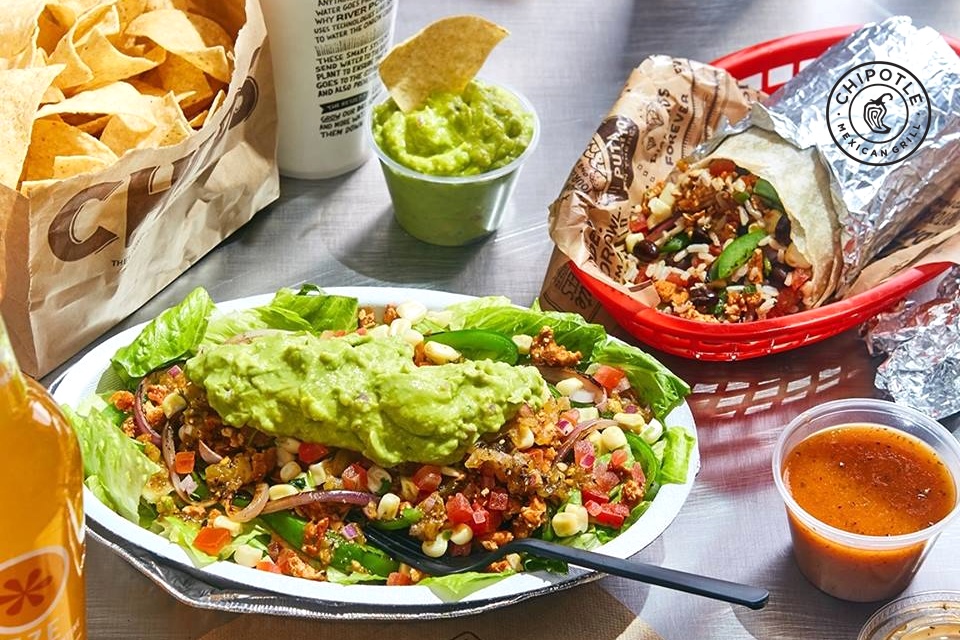
Image result for chipotle food
A meal at Chipotle
Kantianism basic principles are act rationally, allow and help people make rational decisions, respect others, do what is right because it is right. Chipotle was violating the principles. The first way they violated Kantianism is they did not allow or help people make rational decisions. When an employee was trying to call in sick the manager would not let him and threated the employee if he didn’t come in.  When the employee came into work it leads to him getting other people sick. Consumers did not have the rational information about the employee being sick to decide if they were going to eat at that restaurant. Another way that chipotle violates this ethical theory is the managers at the Virginia chipotle were not acting rationally. Out of all the stores at the time why were they only ones getting people sick. After the incident a few years back, you would think that all Chipotles are following all protocol. But the manager in Virginia wasn’t acting rationally, by making sick employees come in and work, which is why they weren’t following Kantianism theory. Under the formula of humanity, the managers of chipotle in Virginia did not act rationally. They were forcing employees to come into work sick and at the same time they weren’t following the company’s protocol. In order to conform to Kantianism Chipotle must fire the managers in Virginia and make sure that in the future all employees and managers will be following company protocol very closely.
Virtue Theory
In order to be considered ethical under the virtue theory one must act to embody a variety of virtuous or good character and avoid bad character traits. There are four virtues in business which are courage, honesty, temperance, and justice. Chipotle violates justice by serving food which was not healthy to eat. Chipotle failed to giver quality products to customers who got sick.  They also violated the honest virtue. Managers weren’t allowing employees sick days which is a bad treatment of employees. Chipotle did have courage because they were taking the risk of combining fine and fast food, as you can see from their success it was good decision. They also showed temperance by starting from nothing and becoming the successful company they are. Chipotle can become virtuous they just need to reevaluate their managers and make sure that in the future the food is safe to eat and that protocol is always being followed.

Work cited
Chan, Melissa. "Chipotle's E. Coli Outbreak Stumped U.S. Health Investigators." Time.Com, 2/1/2016, p. 1. EBSCOhost, search.ebscohost.com/login.aspx?direct=true&db=aph&AN=113543465&site=ehost-live.
"Chipotle Is Ready to Try to Win Back Its Customers." TheStreet, 13 Jan. 2016. Academic OneFile, http://0link.galegroup.com.wildpac.wne.edu/apps/doc/A439755788/AONE?u=mlin_w_westnew&sid=AONE&xid=c1ef38ce.
"Chipotle Store Reopens After Norovirus Scare." USA Today, n.d. EBSCOhost, search.ebscohost.com/login.aspx?direct=true&db=aph&AN=J0E055151578317&site=ehost-live.
Feeney, Nolan. "Chipotle Tweaking Food Prep Methods After E. Coli Outbreak." Time.Com, 28 Dec. 2015. EBSCOhost, search.ebscohost.com/login.aspx?direct=true&db=aph&AN=111997935&site=ehost-live.
Newman, Jesse and Julie Jargon. "CDC Expected to Declare End to Chipotle E. Coli Outbreak, Sources Say." Wall Street Journal (Online), 2/1/2016, p. 1. EBSCOhost, search.ebscohost.com/login.aspx?direct=true&db=aph&AN=112704054&site=ehost-live.
Rhodan, Maya. "Chipotle Blames Sick Employees for Norovirus Outbreak." Time.Com, 08 Feb. 2016, p. 61. EBSCOhost, search.ebscohost.com/login.aspx?direct=true&db=aph&AN=113504604&site=ehost-live.
Zlati, Meyer, et al. "Chipotle Upbeat on Earnings despite New Health Scare." USA Today, n.d. EBSCOhost, search.ebscohost.com/login.aspx?direct=true&db=aph&AN=J0E314949120217&site=ehost-live.


Big Pharma: Purdue Pharma is under scrutiny for being “Drug dealers” (2018)

Controversy:

Purdue pharma is the creator, producer and seller of the name brand opioid based drug known as OxyContin. This drug was created as a narcotic that serves to treat people who have both severe and chronic pain, it works is by altering how nerves within the body feel ans respond to pain. Throughout the course of the last few years this drug has had huge spikes usage and has resulted in many people overdosing and dying. In just the year 2015 33,000 confirmed deaths from overdoses on OxyContin.
A bottle of OxyContin clearly sporting Purdue Pharma Label
One of the main reasons that OxyContin has
made such a large impact on the amount of overdoses every year is due to the fact the Purdue pharma pushes its drugs very heavily on both doctors and hospitals. Purdue had large sales teams that were tasked with going to hospitals all over the country and explain to doctors all the so called great things that OxyContin can do for patients. However it was found out that they were actually "engaging in misleading marketing that overstated the benefits of opioids for treating chronic pain rather than short-term pain." In recent years many differed states have filed law suits against Purdue stating that they were significantly playing down the risks of addiction that OxyContin posed to people. Within the last year Purdue Pharma has laid off more than 50 percent of their sales force in an effort to save face with the numerous amount of other lawsuits they are being bombard with all having to do with there lack of stating the facts about the dangers of their drug while pushing it onto doctors at the same time. For example, in one study conducted by Purdue Pharma they stated that only about 1 percent of opioid users become addicted but then shortly after they were forced to come out and say that they used falsified information and that the number was actually much higher. Other methods such as this have also been used by Purdue, video campaigns that pictured someone who looked to be a doctor stating things such as "they don’t wear out, they go on working, and they don’t have any serious medical side effects.” have been streamed on national television. Purdue's deceptive ways of selling there drug has only recently been discovered. However, the damage done by Purdue has already been done. With millions of dollars in tax money gone to treating people who had become addicted to opioids and countless lives Purdue has built their empire on the lives of other people.

Stakeholders:

The stakeholders involved in this case include a large number of people. The biggest stakeholder would have to be the people being prescribed the drug, the individuals that become addicted and or die while using something that is supposed to benefit them. The second of that being Purdue pharma, the people who sell the drug. The individuals that can be grouped in with Purdue include the sales team, the workers hired by the company, the CEO and owners of the company ( The Sackler Family), and the people who own shares in the company. Another stakeholder would be the doctors and the hospitals that Purdue is marketing the drugs too. One of the last stakeholders would be the taxpayers who have to pay money for the damage that Purdue has done, such as the hospital bills that people acquire from overdosing on the drug.
This shows one of the cases were a state sued Purdue Pharma

Individualism:

Individualism stated by Milton Friedman, says that "the only goal of a business is to profit, so the only obligation that the bushiness person has is to maximize profit for the owner or the stakeholders." So based off of this case while looking at it through the ideals of individualism it is easy to say that Purdue pharma was acting as ethically as they could. The reason for stating this would be that Purdue was doing everything that they could to maximize profits for their company and the stakeholders. Although there methods of making money could be considered terrible they were still just trying to make as much money as they could.

Kantianism:

Kantianism stated by Kant is supposed to evaluate the case by looking at the intelligence behind the business itself. He would ask is what the business doing make sense? The way in which Kant would answer this question would be by looking at the moral justifications of the case.  While evaluating this case Kant would believe that Purdue was morally unjustifiable. The reason for this would be that Purdue knew that they were advertising a product that was unsafe while at the same time they were stating that it contained many dangerous side affect such as dependency. As well as the fact that it could be overdosed on quite easily. This also directly goes against Kants formula of humanity which states that people should be considered an ends and not a means. This suggests that you shouldn't use people to make money, instead you should provide them with a product that keeps them coming back for more

Utilitarianism:

The way in which someone would look at this case from a utilitarianism standpoint would be by viewing the overall happiness of all parties involved. This means that both he company itself and the customers of the company should all be happy and satisfied at the end of the day. While looking at this case it is easy to say that Purdue pharma is operating incorrectly. The reason for this would be due to the fact that the customers are not happy. The fact that they become addicted to the product and sometimes die due to overdosing proves that they are not content.

Virtue Theory:

Virtue Theory is based off of the question is a business ethically acting correctly and can be evaluated with four different characteristics, these include courage, honesty, temperance, and justice. While looking at this case through virtue theory it can be deemed unethical for several reason. The first being that of the fact that Purdue is telling people that their drug is safe and contains almost no side effects. However, at the same time the drug is killing thousands and thousands of people. While causing many others to fall victim to addiction. Purdue was not honest to the customers and to the doctors whom they were selling the drugs too.


Works Cited
Abuse, National Institute on Drug. “Overdose Death Rates.” NIDA, NIH, 15 Sept. 2017, www.drugabuse.gov/related-topics/trends-statistics/overdose-death-rates.

Abuse, National Institute on Drug. “What Science Tells Us About Opioid Abuse and Addiction.” NIDA, 27 Jan. 2016, www.drugabuse.gov/about-nida/legislative-activities/testimony-to-congress/2016/what-science-tells-us-about-opioid-abuse-addiction.

Axelrod, Jim. “Purdue Pharma, Maker of OxyContin, Backs off Aggressive Marketing amid Lawsuits.” CBS News, CBS Interactive, 12 Feb. 2018, www.cbsnews.com/news/purdue-pharma-oxycontin-maker-backs-off-aggressive-marketing-amid-lawsuits/.

“Capping Years of Criticism, Purdue Pharma Will Stop Promoting Its Opioid Drugs to Doctors.” Los Angeles Times, Los Angeles Times, 10 Feb. 2018, www.latimes.com/local/lanow/la-me-ln-purdue-marketing-20180210-story.html.

“Oxycontin Oral : Uses, Side Effects, Interactions, Pictures, Warnings & Dosing.” WebMD, WebMD, www.webmd.com/drugs/2/drug-2798/oxycontin-oral/details.


Reuters. “OxyContin Maker Purdue Pharma to Stop Promoting the Drug to Doctors.” The Washington Post, WP Company, 10 Feb. 2018, www.washingtonpost.com/national/health-science/oxycontin-maker-purdue-pharma-to-stop-promoting-the-drug-to-doctors/2018/02/10/c59be118-0ea7-11e8-95a5-c396801049ef_story.html?utm_term=.46084ef31fa4.


CLK Management & AMG services: Illegal payday loans (2016)


Controversy
Image result for scott tucker
Scott Tucker 
Scott Tucker is a well-known individual in the business world, however unlike most individual Tucker is known for all the wrong reasons. In February 2016 Scott Tucker was indicted and convicted on federal criminal charges for his role in an illegal payday loan business he started in early 2001. CEO of AMG services and owner of CLK Management, Scott Tucker made illegal high interest, low principle loans to nearly 4.5 million Americans nationwide.  Despite the fact Tucker continues to state he was just helping those in need of money fast, recent investigations of his operations showed his loans were anything but helpful and exploited people who were in need of money fast and had no where else to turn. Aside from the interest rates that reached nearly 700% there were also countless disclosed fees that were not clearly stated in their contract and in some cases were not presented at all.

As both AMG services and CLK management continued to grow at a substantial rate so did the amount of unwanted attention. Tucker knew this would be an issue and in 2008 managed to arrange an essentially fake sale of his business with the Miami Tribe that was based out of Oklahoma. This “sale” of his business allowed Tucker to retain management over his 3.5-billion-dollar company while shielding him from lawsuits because of the tribal immunity gained through the "transfer" of ownership. Aside from the illegal loans, and fake sale of his business the investigations also revealed Tucker had been understating his profits by the millions for years with not only his businesses income, but also his personal income. Tucker is now serving nearly 17 years in federal prison and many believe even that does not give justice to the millions of Americans lives he devastated.


Stakeholders
Image result for scott tucker pay day  loan
Example of extremely high interest loan found in Tuckers contract 
Although Scott Tucker finally received the sentence many believed he deserved it does not mean the stake holders necessarily won. Overall CLK Management and AMG Services stole billions of dollars from vulnerable people in need of short term cash to pay their bills which is why I believe the primary stakeholders are the victims who took these loans and experienced Tuckers lies first hand. One of the victims Walter Archer even went on to say “It was a relief to get the money, I knew everything would be paid and my kids wouldn’t be cold for the winter. Once they tried to take $900 out of my account without my permissions though I knew something was wrong.  In polite terms, they were trying to screw me over in every which way they could.” (Dirty Money).  This is just one example of millions, where an individual in need was targeted and lied to by Tucker and his greed driven company and had to pay the price. Aside from those who directly took the loan other stakeholders involved include the immediate family who had to face the unfair repercussions such as Walter Archers children mentioned in the example above. The final stakeholders although not commonly talked about include the near 600 employees of these companies who played a key part in the loan process. Despite the fact some may have had more important roles than others they were all important factors in the overall the process and have been affected in many ways including being labeled as unethical and in many cases also losing their job because of the illegal activity their company was involved in despite the fact they were just doing their job as they were told. 


Individualism
Friedman’s theory of individualism basically states the main goal of a business is to make as much profit as possible while staying within the law. Although Scott tucker and his business were very good at making profit, overall an individualist would most likely label this case as unethical. As noted above Tucker broke numerous laws and was even convicted on 14 different accounts including racketeering, wire fraud, and money laundering. This is not only illegal, but also most likely resulted in a net loss because of the billions of dollars himself and his company had to pay back to the government which goes against everything an individualist believes in.
Image result for scott tucker racing
Scott Tucker invested huge portions of his
 income towards his semi pro racing career.

Utilitarianism
Overall the core idea of utilitarianism is to maximize happiness in the greatest number of people possible and if that outweighs those who are not happy than it is still considered ethical. If a utilitarian was viewing this case, there is no doubt they would consider it to be unethical. The overall goal of Tucker and his company was to make a profit at the cost of others around him. This means for the nearly 4.5 million customers his company supplied loans to it only resulted in happiness for about the 600 employees within his company including himself and possibly a small percentage of the people who found the loan useful and the high interest rates not specified in the contract as reasonable. Although someone may argue the loans must have been beneficial to some of the consumers it still does not outweigh the millions of other people and their family’s that were lied to and put into financially unstable situations by Tucker and his company.

Kantianism
Kantianism is a theory that revolves around four main principles that state always act rationally, allow and help others to make rational decisions, respect people, their autonomy, and their individual needs and differences, and be motivated by good will. From a Kantian perspective this case would be viewed as unethical because Tucker did not respect the people he was doing business with, did not provide them with the information necessary to make rational decisions and above all used his consumers as a mere means to make profit. One core example of these issues can be seen in the legally binding contracts between Tucker and his clients which didn't even contain the correct information. This also goes against Kantian formula of humanity which states it is not morally permissible to use people as a mere means to an end. Tucker was clearly not motivated by good will and would not be viewed ethically by a Kantian.

Virtue theory
Virtue theory is based upon four core values which include courage, honesty, temperance, and justice. When analyzing this case from a virtue theory perspective it is also viewed as unethical. CLK Management, Scott Tucker, and AMG Services did not have the courage to tell their customers the truth about their loans. They were not honest with their contracts and lied directly to their consumers, the expectations they set were unreasonable for someone in a financial position so bad they needed a loan to begin with, and there was no justice involved for the victims these companies targeted which all shows how unethical this business truly was from a virtue theorist standpoint.


References

Faux, Zeke. “Millions Are Hounded for Debt They Don't Owe. One Victim Fought Back, With a Vengeance.” Bloomberg.com, Bloomberg, 6 Dec. 2017, www.bloomberg.com/news/features/2017-12-06/millions-are-hounded-for-debt-they-don-t-owe-one-victim-fought-back-with-a-vengeance.

Flitter, Emily. “U.S. Bank Cited by Federal Authorities for Lapses on Money Laundering.” The New York Times, The New York Times, 15 Feb. 2018, www.nytimes.com/2018/02/15/business/us-bank-money-laundering.html.

Pagliery, Jose. “Race Car Driver Scott Tucker Arrested in Alleged $2 Billion Payday Lending Empire.” CNNMoney, Cable News Network, 10 Feb. 2016, money.cnn.com/2016/02/10/news/payday-lending-scott-tucker-arrest/index.html.

Press, Associated. “Pro Racecar Driver Scott Tucker Gets over 16 Years in Prison.” ABC News, ABC News Network, 5 Jan. 2018, abcnews.go.com/amp/Sports/wireStory/pro-racecar-driver-scott-tucker-16-years-prison-52172216.


Stempel, Jonathan. “Payday Loans: Racecar Driver Scott Tucker Owes $1.27 Billion | Money.”Time, Time, 3 Oct. 2016, time.com/money/4517199/scott-tucker-payday-loans-ftc/.

Thursday, April 5, 2018

Senator Jake Files Pleads Guilty to Money Fraud (2018)


Controversy
Senator Jake Files
 Politics is a very tough world to live in, as a spectator or as a politician. It can either get the best of you or you can get the best of it. In most cases, politicians get the best of it, however there are a few politicians that fall to their knees to the system. The most recent victim to the power of politics and the economy is former Senator Jake Files. Jake Files was a Republican representative from District 8 of the Arkansas State Senate for nine years (BallotPedia). He was also Vice President of Development for ERC Properties, an accountant for Fort Smith Christian School, and an owner of FFH Construction. Jake Files was in the Arkansas House of Representatives for four years and when he tried to run again in 2004 he lost (BallotPedia). They key fact here is he was an owner of a construction company because that he part of the crime he pleaded guilty to.

Former Senator Jake Files committed numerous crimes, from money laundering to bank fraud. It all starts back in August 2016 when former Senator Jake Files was given 46,500 given to him by the Fort Smith through state funds by the Western Arkansas Economic Development District and meant for state improvements. From there former Senator Jake Files falsified three bids to ease the release of the loan (Arkansas Time). Here we see that former Jake Files had committed his first crime, which was falsifying the bids for the loans. With all this money, Jake Files needed to pay off some financial debt he was in. He can’t do this with the money in the loans, so he needed a way to get the money into his personal bank accounts. He did this in two ways, the first way he did this was having a colleague open a fake bank account under their name so he can put half of the loan in that account, and the other half of the loan was given to him in cash and he laundered that money through his construction company (Arkansas Times). The most recent offense Jake Files committed was in November 2016 when he applied for another loan, and again committing bank fraud, by using a fork lift as collateral, one of which he did not own, to secure a $56,700 loan (The Washington Times).
Here is Senator Jake Files in an interview with Talk Business & Politics
The purpose of these two loans given to the state of Arkansas was for development and usage of a spots complex for the community. In this case the community would be considered a stakeholder. Some other stakeholders, or people affected by the actions of the Senator, are the governor because he has to make a statement, the lawyers who will be given this case, Jake Files, his family because they are going to have deal with the affects of this case, and finally the community itself because they will now have a bad reputation and they will not get the sports complex they were promised. If we take a step back and take a look at this as one whole picture we can see that from individualism, utilitarian, Kantianism, and virtue theory we see that this is unethical.
Individualism
In the eyes of an individualistic, an act is considered ethical if the business is staying within the ethical standards and the law while maximizing the profit for your stockholders. To determine whether this conduct was unethical one must break it down into many parts. The first part being thinking about how former Senator Jake Files was profiting from. We clearly see Jake Files was maximizing his own profit because we was able to pay off is debt but, he was not abiding to the laws of society. The second perspective of individualism, we must evaluate is how he was able to get this money into his possession. From having his colleague open a bank with their name that he uses, laundering the money through his construction company, and falsifying the bank bids with collateral he did not own we can say from the viewpoint of an utilitarian it is unethical what he did because he did not follow the law.
Utilitarianism
If a utilitarian had to look at a case decide whether it was unethical or ethical, they would be looking for a certain characteristic. That characteristic is overall happiness. In the mind and mind set of a utilitarian happiness to all the stakeholders. Another definition is pleasure or even to the meet the needs of the other stakeholders. With this idea in mind, we will take a look at the overall happiness and see if the actions of the company, Jake Files, have met the needs of the stakeholders. Jake Files being one of the stakeholders, we see by his actions that he has met his needs and is satisfied. However to determine if an act is unethical we have to take a look at everybody and we can see that the rest of the stakeholders will not be pleased with the result and therefore this act is deemed unethical in the utilitarian theory.
Kantianism
Kantianism is based off of core values, minimum morality. A key part to it is that people must be respected as along with their values, needs, and interested must be respected by the company. Kantianism is also founded on that fact that the values of people and their decisions must be made when they are given the correct facts and not lied to. In this case it is hard to decide whether this is ethical or unethical in the eyes of Kant because the stakeholders or customers are not really buying anything. However if we take a look of how Jake Files was able to accomplish getting all this money, there was one common theme and that was he lied. He lied to the banks when falsifying bids, making the fake bank account, he lied to the IRS when he laundered the money through his construction company, and he lied to the community around him. From this Immanual Kant would say this was unethical.
Virtue Theory
The final theory we learned about in class was is virtue theory. The core concepts about virtue theory are courage, honesty, temperance, and justice. Virtue theory also encourages individuals to thrive in society that they are placed in. With this in mind and the fact that to be ethical you have to portray the good in a person we realize through the observations and facts that Jake Files broke the law numerous times. When he stole the state funds, laundered the money through his construction company, and falsifying the bank bids we can determine that this act was unethical.
As we take a look through the four ethical theories we learned in class and through extensive research we can see that Jake Files committing money laundering, bank fraud, and wire fraud is unethical in all four theories.


                                                Works Cited

Brantley, Max. “Sen. Jake Files pleads guilty to fraud, money laundering charges.” Arkansas Times, Arkansas Blog, 29 Jan. 2018, 4:04 p.m., www.arktimes.com/ArkansasBlog/archives/2018/01/29/sen-jake-files-pleads-guilty-to-fraud-money-laundering-charges.

Tidwell, Jordan. “Senator Jake Files Resigns From Office.” 5NEWS, 30 Jan. 2018, 5:24 p.m., 5newsonline.com/2018/01/30/senator-jake-files-resigns-from-office/.

“Jake Files.” BallotPedia, BallotPedia, ballotpedia.org/Jake_Files.

Mordock, Jeff. “Arkansas State Senator pleads guilty to wire fraud, money laundering.” The Washington Times, The Washington Times, 29 Jan. 2018, www.washingtontimes.com/news/2018/jan/29/jakes-files-arkansas-senator-guilty-wire-fraud/.

Talk Business & Politics. “Sen. Jake Files pleads guilty to wire fraud, money laundering, and bank fraud.” abc7, abc7, 29 Jan. 2018, katv.com/news/local/sen-jake-files-pleads-guilty-to-wire-fraud-money-laundering-and-bank-fraud.