Showing posts with label 2018. Show all posts

Sunday, November 25, 2018

Leslie Moonves: CEO's and Sex Scandals (2018)

CONTROVERSY
CBS was founded by Arthur Judson in 1927. Unable to find work, Judson created his own network which combined with another to finally be signed on as the Columbia Broadcasting System in 1929, after being bought out by William S. Paley. Programming was free to the large audiences and by 1970 they were airing infamous shows such as M*A*S*H, 60 Minutes and All in the Family. The company developed itself to gain the interests of all generations of the country.

 
CBS Company Logo
The company has developed immensely as a result of their hard work and dedication that led them to a growth in various forms of entertainment. They offer viewers a choice of CBS media in Publishing, Local Media, Cable TV, TV Network, and internet based businesses. CBS is one of the largest mass media companies in America. They have continued their growth in the new generation, as well as in older generations, with their consistent development of TV shows aiming to all audiences. Until recently, there were not a lot of complaints of the values and intentions of the company, and then came Leslie Moonves.  


Leslie Moonves, Former CEO of CBS 
Over the past few decades rumors of sexual misconduct were presented to the staff at CBS, but many were without reliable support to back them up. A New Yorker story, written by Ronan Farrow, attacks Moonves with the claims that he “forced oral sex, exposed himself, committed violent acts." Many people knew of the allegations against Moonves, but they were deemed inadmissible due to the fact that they had fallen out of the statute of limitations. Moonves is finally under review by the company as they decide whether he will receive a settlement for his step down. As of now, he is looking to receive at least 100 million dollars, or nothing at all. This decision, made by the company, could change the way people view CBS. This is not in consideration of the many women affected by Moonves’ decision, or in the company’s best interest. Moonves acknowledged his past actions, and now more women have come forward to bring his true character into light. If he had done it in the past, it is possible he is still doing it today. The position Moonves held gave him an advantage over aspiring women in the work force. He also did not see a reason to hide from the publicity. 


INDIVIDUALISM
Individualists would view CBS as unethical. An individualist’s perspective states that business should maximize profits for a company, but do so within the law. The publicity of the Leslie Moonves scandal created a poor image of the company, and the way the company handled the allegations created potential long term damage of viewers. The actions of the company to not fire Moonves, but rather let him resign from his position, created criticism from Americans. This is considered ethically
News Clip of the Resignation of Moonves
wrong from an individualist perspective because in doing this the company lost profit. Viewers are boycotting CBS for their negligence to the stakeholder, and they will continue to lose money as viewer rates decrease. Moonves went against the code of conduct of the business when he used his position to negotiate sexual favors from women. He abused his power and caused the company to lose profits as a result of his actions. The main values of an individualist’s perspective is to maximize the profits for the owners. In the case of Moonves, individualist would say it is ethically wrong because it not only goes against the company’s code of conduct, but it also caused a loss for the owners of the company. 


UTILITARIANISM
A Utilitarian perspective would also evaluate the Moonves case as ethically wrong. A utilitarian belief states that business actions should aim to maximize the happiness in the long run for all
CBS Newscasters Discussing the Moonves Settlement
scandals. The consequences of the Moonves case are causing the Stakeholders pain, they are not happy. 
CBS as a company is not following the utilitarian code due to the fact that they are considering giving Moonves a settlement. This decision, if it is agreed to, will make the stakeholders feel as if they lost, and Moonves will get paid out by the company. When coming to a decision on giving Moonves a settlement, the company should follow the utilitarian perspective. They will need to consider the risks to the stakeholders; They will be humiliated if the company decides to grant Moonves a settlement, on top of the pain they are already feeling as a result of the actions of Moonves. 

KANTIANISM
A Kantian theorist would be concerned with the process CBS took in handling the case of Moonves. They would look into the way the company took action in their own hands, and made a statement declaring their full corporation with the investigation. It is considering the actions of the company, and if they are using rational decision making in the process. The company did not cause the victims harm, it was an individual in the company that did this. When the case became public, CBS tried to do everything in their power to inform viewers that they would corporate, and they also did not lie to protect their employee. They were acting with honesty and acknowledgment of the allegations. This case also passes the Categorical Imperative test of the Formulation of Humanity. This test states that it is wrong to use someone to get what you want; CBS did not use anyone as a mere means, and therefore, it is morally acceptable. CBS was acting ethical under Kantianism because they spoke out and informed their viewers of the any information, and their stance on the case. 

VIRTUE THEORY
There are four main virtues that are followed under virtue theory: Honesty, temperance, courage and justice. The company was being honest with the corporation when discussing the case through the media. They showed temperance with their control to handle the allegations with no blame to the victims. They showed courage as they continued to air their program, and not let the loss of viewers scare them. Finally, the company is showing justice as they are not putting the blame on one individual or another. They are keeping everything fair until it is all settled. 

CBS did not violate any virtues necessary to judge one’s character. They aimed to comfort the public with their response of the issue and their cooperation with the scandal. They did not lie to the public, and they acted in good character when they gave their response with honesty. They are trying to regain the trust of their viewers and they continue to show that they are aiming to act ethical under virtue theory. 


These facts and analyses are based on an original research paper by Emily Sajdak, "Leslie Moonves: CEO's and Sex Scandals" 


WORKS CITED


About CBS Corporation. (n.d.). Retrieved from https://www.cbscorporation.com/about-cbs/

Farrow, R. (2018, September 10). Leslie Moonves Steps Down from CBS, After Six Women Raise New Assault and Harassment Claims. Retrieved from https://www.newyorker.com/news/news-desk/as-leslie-moonves-negotiates-his-exit-from-cbs-women-raise-new-assault-and-harassment-claims

Folkenflik, D. (2018, July 28). Report Details Sexual Harassment Allegations Against CBS CEO Les Moonves. Retrieved from https://www.npr.org/2018/07/28/633376943/report-details-sexual-harassment-allegations-against-cbs-ceo-les-moonves

Hagey, K., & Flint, J. (2018, September 11). CBS's Handling of Les Moonves Accusations Hampered by Battle for Control. Retrieved from https://www.wsj.com/articles/cbss-handling-of-les-moonves-accusations-hampered-by-battle-for-control-1536624692

Introduction – CBS Corporation. (n.d.). Retrieved from https://www.cbscorporation.com/diversity/about-us/introduction/

Keveney, B. (2018, September 10). CBS CEO Les Moonves becomes most powerful media exec to resign in wake of #MeToo. Retrieved from https://www.usatoday.com/story/life/people/2018/09/09/cbs-ceo-leslie-moonves-hit-new-sexual-misconduct-allegations/1249724002/

McDermott, M. (2018, October 02). Illeana Douglas: Les Moonves called my sexual assault 'a lot of fun'. Retrieved from https://www.usatoday.com/story/life/people/2018/10/02/illeana-douglas-les-moonves-called-my-assault-lot-fun/1498309002/

Salazar, Heather. The Business Ethics Case Manual. n.d.

Tuesday, April 10, 2018

GNC spiked and filler supplements (December 2016)

GNC spiked and filler supplements (2016)
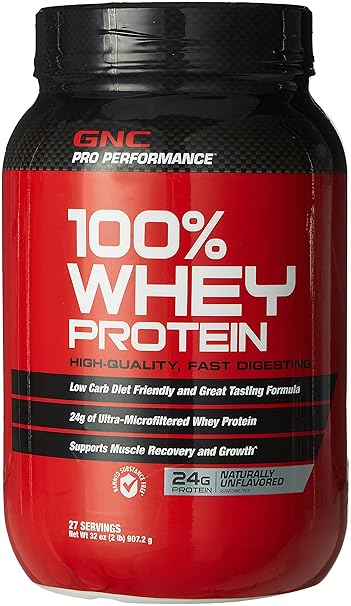
One of the products under GNC's investigation
GNC is one of the biggest vitamin and supplement suppliers in the US. In the past years they have been at the center of the largest supplement scandals in recent years. It became known that GNC was selling products that were mislabeled and ingredients were tampered with using fillers. This was discovered near the beginning of 2016 and went all the way up until mid 2017. Many products were discovered to have this issue including their protein powders, fat burners, and multivitamins. A lot of these supplements contained ingredients such as wheat, soy, and branched chain amino acids (BCAA), and 1,3-dimethylamylamine (DMAA). These ingredients were added to supplements in order to cut down on margins when manufacturing these products, however the change of ingredients was not noted on the label and poses an issue when it comes to allergies in consumers and also potential heart attacks with the DMAA. The company claimed that they didn’t know what was in the capsules and powder, because they outsource ingredients form other companies. Once it was made public that this was going on, a lawsuit was filed against the company. It was filed with the department of justice and in the end, GNC was forced to pay a $2 million settlement. GNC has yet to release an apology as of right now but claims to stand by their products. 

Stakeholders

GNC HQ in Pittsburgh PA 
Many people were effected in this controversy. To start, the biggest group to be effected by this are those that took these products. GNC has tons of stores all across the US and sells to millions of people, and the products involved were some of their most popular items. The only reason this was discovered was that people reported health issues, so, many people had allergic reactions and issues after using the product. Not only does this cause an issue in those that bought the product and had issues, but also people who buy from GNC may have lost some trust in the company. Next, is the employees of GNC. With the company losing money in the lawsuit, it’s possible they could make up for the lose with layoffs of their employees. And finally, GNC’s top management. These were the people who chose to use this method in order to save them money. These managers have lost trust from its customers and lost the company money and potentially their own money. Overall, many people were involved in this issue and it branches across to many people’s lives. 

Individualism

In the theory of individualism, it is stated that a company is only obligated to maximize its profits for owners and stakeholders. However, even though financial gains are the main objective and an individualist would achieve that by any means, it is also noted that an individualist must also remain within the law while maximizing profits.  In this case, an individualist would say that this practice is not ethically permissible. It was GNC intent to maximize their profits on their products by making cuts and adding fillers and replacement ingredients to its products, however they didn’t label these changes and because of that they broke the second part of individualism and that is acting within the law. Even though they are not regulated by the FDA, like other food and drug companies, the fact that they did not label the fillers, stimulants, and decrease in the amount of other products means that they were at fault of false and misleading advertising. Since they knowingly didn’t label the new ingredients, their false advertisement posed a major health violation that the department of justice deemed their action as negligence, or failure to use reasonable care, resulting in damage or injury to another. Also, not only did they fail on the legal side of individualism, but they also lost the lawsuit and a $2 million settlement had to be paid. Any direct loss of money would be viewed by an individualist as stealing from the stakeholders in the company. To also add, because they were found to be at fault they also lost customers in the process, which would be a loss on potential future revenue. In the end, their intent to save money and maximize profit only lost them money directly as well as future sources of income. Overall, GNC acted in a way that individualists would claim to be an unethical action, due to the fact that they broke the law in the process, also, they failed to maximize profits by losing money in the lawsuit, as well as potential investments in the future.


Utilitarianism

The theory of utilitarianism revolves around the theory of maximizing happiness for all the stakeholders involved in the long run. In this case, a utilitarian would say that GNC’s actions were not ethically permissible. The reason for this is because by the end of the lawsuit none of the stakeholders involved had increased happiness. When analyzing a case from a utilitarian stand point one must look at all the consequences of the action whether they be good or bad. To start, GNC’s upper management made the choice to add fillers and stimulants. This gave them extra money at the time being so their happiness would have increased, however utilitarianism looks at the long-term effects. After the lawsuit, the company had lost money and was given a bad reputation, which would bring these top members of the company’s happiness down. Next, the customers were promised a product that would help them to achieve their fitness goals. They made purchases thinking they were being told exactly what they were getting, however once it was made public that this was not the case, the consumers were disappointed and overall happiness was not maximized. Also, those who were directly affected by these ingredient changes were hurt the most. The consumers who bought products that, unbeknown to them, contained ingredients that they were allergic to and had to be treated and/or rushed to the hospital. Some were even unknowingly over using the product because it contained DMAA and that caused health issues in people. If GNC had thought about the long-term effects rather than only focusing on the short term, they could have realized that their actions would be potentially dangerous for numerous customers by causing health issues, and that they would be losing out on money from the lawsuit and also lost current and potential customers. Overall, the long-term effects of GNC’s actions caused major issues with everyone involved from the top all the way to the bottom, and because of that no one’s overall happiness was increased and many were harmed in the process.


Kantianism

In Kantianism, the main focus falls on those behind the actions, in this case it would be the heads of GNC. Kantianism theory’s biggest aspects are to act rationally, inform consumers so they can make rational decisions for themselves, respect customers, and act on goodwill. When viewing the case from this point of view, in this case, a Kantian would say GNC’s actions were unethical. To start, GNC decided to make multiple changes to their formulas on several of their products in order to cut down on margins and increase profits. However they did not act rationally here, because they did not take into account what would happen to their customers if they made the changes in ingredients. Since GNC chose to not take factors other than money into account, they acted irrationally. Next, GNC added these ingredients, but did not list any of the changes on a new label and make that information obvious to the consumers. Without that information, a person lacks the ability to choose and act rationally when looking to buy GNC’s products. Their next failure was choosing to not inform their customers to help them act rationally. Also, GNC lacked in showing their customers respect. Them not listing changes to their product as well as the addition of potentially harmful fillers and stimulants shows a lack of respect for the wellbeing of its customers and paints an image that GNC does not care about helping its users achieve their goals. Finally, GNC also showed that their actions were not made with the intent of acting on goodwill. By choosing to be deceitful and cheap towards their customers, just goes to show that the only result GNC was looking for was a way to scam customers and make more money from it. They were more focused on their overall profit and in the process, did not take into consideration the respect that they are obligated to give to their customers. Due to GNC failing on all fronts of Kantianism, a Kantian would decide that GNC’s action were unethical.


Virtue Theory

Case examination through virtue theory focuses on the character of companies and how they reflect the companies’ values and standards. Virtue theory has four main focuses, which are courage, honesty, temperance, and justice. When looking at how GNC acted, it is easy to notice that they fall short on these characteristics and because of that a virtue theorists would say that they acted unethically. To start, GNC did not have the courage to make it known that they were adding ingredients and taking away others and come forward and tell their customers that the formula had changed, because of their fear of losing revenue because they would be producing a lesser quality product. Next, they were also obviously not honest about using fillers and stimulants in their product. Their dishonesty not only came from not mentioning the fillers, but also by stating that the nutrition facts were still the same and had the same benefits, when in reality it no longer was the case. Also, GNC showed a lack of moderation. Their lack of moderation showed when they decided to make financial savings at the customer’s expense, rather than finding methods within the company to do so, such as finding cheaper outsourcing companies or insourcing the ingredients all together. Finally, they disregarded justice by holding back information from their consumers. It was unjust of them to lie to the people that put the company where it is now and putting those same people’s health at risk all to save a few dollars per unit. After examining all of these characteristics and seeing how GNC lacks in each of them, it starts to paint a picture of what the company’s moral values are and what their real intent is. Since GNC failed across all aspects of virtue theory, it is clear to see that a virtue theorist would say that GNC’s actions were not ethically permissible based on this theory.

References

Maggie Fox, December 8, 2016.GNC agrees to pay $2 million fine and examine supplements it sells

Alison Young, October 23, 2015.Oregon AG accuses retailer GNC of selling drug-spiked dietary supplements

Gregory WallaceFebruary 4, 2015.Wal-mart, Target and others under fire for selling bogus supplements

February 3, 2015. Herbal supplements filled with fake ingredients, investigators find

David Kroll, February 9, 2015. Cease-And-Desist Orders Hit Walmart, Walgreens And Others For Herbal Supplement Sales

Anahad O’Connor, February 4, 2015.New York Attorney General Targets Supplements at Major Retailers
https://well.blogs.nytimes.com/2015/02/03/new-york-attorney-general-targets-supplements-at-major-retailers/

April 12, 2018GNC (store)
https://en.wikipedia.org/wiki/GNC_(store)

Saturday, April 7, 2018

Priceline CEO has affair with employee (2016)

Priceline CEO has affair with employee (2016)

Darren Huston, former CEO of Priceline


Controversy
Priceline, an American company and a commercial website for finding discount rates for travel-related purchases such as airline tickets and hotel stays, is a subsidiary company of Booking Holdings, and in 2017 alone accumulated a total revenue of $21.8 billion. Priceline first became known for its Name Your Own Price system, where travelers would name their price for airline tickets, hotel rooms, car rentals and vacation packages. Priceline was founded in 1997 by Jay Walker, who left the company in 2000, thus leaving a trail of CEO's to follow in his footsteps.

Darren Huston took the helm of Pricelines parent company Booking Holdings on January 1, 2014, and was a stand-in CEO for Priceline as well. He was a former executive of Microsoft and Starbucks, and lasted only two years and four months at the helm of the online travel company. He has joined a number of high-profile CEO’s who have dipped their pen in the company ink, from Boeing’s Harry Stonecipher to American Apparels Dov Charney. He recently resigned amidst an internal investigation regarding a personal relationship he admitted to having with an employee within the company. The board said that it was “inconsistent with the board’s expectations for executive conduct” (Tobak, S. (2016, April 29). Priceline CEO Is Out After Affair, But Should He Be? Retrieved March 03, 2018, from http://www.foxbusiness.com/features/priceline-ceo-is-out-after-affair-but-should-he-be).
Jeffrey Boyd, CEO of Booking Holding

Stakeholders
There were many stakeholders that were affected by this scandal, from the two individuals involved, their respective families, the stockholders of the company, the employees of the company, and CEO's everywhere. When I say CEO's everywhere, I say this because it taints their image in a way, because more and more scandals of CEO's having affairs with their employees are coming out. What this does is it paints all CEO's everywhere with a broad brush, making people look at them as men who sit in a superficial throne, who think they can do what they please when they want. 

Individualism

From an individualist standpoint, one would say, in regards to the basics of individualism, that it is ethically permissible. Everyone has the right to pursue their own interests and should do so, but no one has the right to make others choices for them. Darren Huston and the woman involved in the scandal were pursuing their own self-interests, and they have that right to do so. When it comes to the economic theory, such as Milton Friedmans, they would say the same thing. As long as it does not affect the stakeholders and their profit, or is not against the law, it is permissible to do so. As long as Hustons choice to engage in a sexual relationship would not damage the companies stock or equity, as well as the profits, which it did not. In an email to Reuters, Leslie Cafferty, the spokeswoman for Priceline said "the investigation and Hutsons resignation was not related in any way to the companys operational performance or financial condition" (Singh S.).

Kantianism
Priceline Logo
Kantianism is made up of four main principles; act rationally, help and allow people to act rationally, respect peoples autonomy, and to be motivated by goodwill. Another main aspect of kantianism is the formula of humanity, where you do not use people as a means to an end. In the case of Darren Huston, in the lens of kantianism, this situation is impermissible. The decision to cheat on your wife is obviously an irrational decision, but on the contrary, it is rational to follow your interests, and in the case of Huston, that interest was love. He did not deceive this woman into this relationship. However, when it comes to goodwill which means people have good intentions and use good reasoning to come to conclusions that will make their good intentions effective, Hutson failed that. Hutson failed to look past the moment, and decided not to try and think of a why he was doing this, and is it a morally sound decision. Adultery is a horrible thing to do to anyone. It is very wrong to cheat on a spouse in any circumstance, and because of that, a Kant would say what Hutson did was impermissible. You must respect peoples autonomy and their ability to act rationally, but you must also be able to make decisions based on goodwill. 

Utilitarianism
Utilitarianism, a theory developed by John Stuart Mills, determines whether something is permissible or not based on the amount of unhappiness it brings. In this case, this situation would be permissible because the lack of unhappiness outweighs that of happiness. The only person who was affected in a way that would tip the scale was Huston. Hutson was forced to resign from his position as CEO in both companies (Booking Holdings & Priceline). He also drastically complicated his marital life with his wife, and no news has come up whether or not she has filed for a divorce. The biggest stakeholder in this controversy was obviously the shareholders of Priceline, and seeing as since Jeffrey Boyd (Interim CEO) and Brent Keller (Current CEO) stepped in the office, Pricelines shares have almost doubled in value since Huston stepped out.have risen from $1,44.66 to $2,085.85 since Hutson resigned To be exact, shares have risen from $1,44.66 to $2,085.85 since Hutson resigned. This overall proves that the happiness of the case, or rather the lack of unhappiness, is why it was permissible. Who knows if Hutson would have been able to bring Priceline into a league of blockbuster stocks. 

Virtue Theory

Virtue theory in order to determine whether something is permissible or not is whether it fulfills the 4 main virtues; courage, honesty, temperance, and justice. Virtue theory is where it can get a little bit fuzzy, because you have to look at the decisions made within the situation, and determine whether or not Hutson’s’ decisions were rash, cowardice, or courageous. Did he find an area in-between the extremes, or was he too skewed to one side, thats what matters. You can look at all the virtues from both sides, but overall, Hutson failed all of these. He was cowardice for cheating on his wife, he did not restrain himself from going after what he wants, he was not honest at all, and he acted more selfishly than selflessly.

References:
Tobak, S. (2016, April 29). Priceline CEO Is Out After Affair, But Should He Be? Retrieved March 03, 2018, from http://www.foxbusiness.com/features/priceline-ceo-is-out-after-affair-but-should-he-be

Dailymail.com, M. D. (2016, April 28). Married CEO of Priceline and Booking.com resigns immediately after being caught having an affair at work . Retrieved March 03, 2018, from http://www.dailymail.co.uk/news/article-3563538/Priceline-CEO-quits-personal-relationship-employee.html

Kilgore, T. (2016, April 28). Priceline's former CEO did something naughty enough to not get severance. Retrieved March 03, 2018, from https://www.marketwatch.com/story/pricelines-former-ceo-did-something-naughty-enough-to-not-get-severance-2016-04-28#false

FitzGerald, D., & Lublin, J. S. (2016, April 28). Priceline CEO Resigns After Relationship With Employee. Retrieved March 03, 2018, from https://www.wsj.com/articles/priceline-ceo-resigns-after-relationship-with-employee-1461847122

McEnery, T. (n.d.). Priceline CEO Out After Getting Caught Booking Where He Eats. Retrieved March 03, 2018, from https://dealbreaker.com/2016/04/priceline-ceo-darren-huston-resigns/

Morgan, R. (2016, May 24). The bosses who got screwed for boning in the corner office. Retrieved March 03, 2018, from https://nypost.com/2016/05/05/the-bosses-who-got-screwed-for-boning-in-the-corner-office/

Singh, S. (2016, April 28). Priceline CEO resigns over relationship with employee. Retrieved from https://www.reuters.com/article/us-priceline-ceo/priceline-ceo-resigns-over-relationship-with-employee-idUSKCN0XP1SS