Showing posts with label Zhao. Show all posts

Thursday, December 15, 2022

Binance/FTX: The Duality of Man in a Teetering Industry (December 2022)


Binance logo (Image from Binance.com) 

Abstract

Binance, a cryptocurrency market, tried to bail out FTX, a rival crypto market,

after FTX was found to be misusing client funds. Binance backed out of the deal

after realizing how unethical FTX had been to its customers. This caused a big

crash in the crypto market and sent customers everywhere into a frenzy. FTX

then filed for bankruptcy as the SEC and DOJ started their investigations into

the company. The CEO of FTX was arrested, which shined a light on other

industry heads, specifically the CEO of Binance. Nothing incriminating has

been found yet, but customers are still untrustworthy and have been

withdrawing their balances from the marketplace. Binance put a hold on

withdrawals due to the volume. This has led to further questioning of Binance

by the public. 


Ethics Case Controversy

Binance is the largest cryptocurrency market in the world. Its platform

allows users to buy, sell, and trade crypto tokens online and transact and

earn interest using their tokens. Binance has grown tremendously since

being founded in 2017, handling a total of “$34.1 trillion in trading last

year, even while wrangling with regulators.” (Fortune, 2022)

    The man behind the operation is Chinese-Canadian business executive

Changpeng Zhao. Zhao, a McGill University alumn, was relatively unknown

before becoming “as rich as Mark Zuckerberg virtually overnight.”

(Fortune, 2022) He was ranked as high as 30th on the world’s richest person

list with a net worth of $30 billion, but he has since sunk to 136th with a little

over 13 billion.

    Binance made headlines on November 6th when it liquidated all of its

shares of the FTT token, trading platform FTX’s primary token, sending the

crypto industry into a frenzy. Earlier in the week, on November 2nd, a leaked

report showed that the token's value might be fabricated, and Zhao wanted to

get out before losing value. On November 8th Zhao announced that a deal was

made to save rival marketplace FTX, “one of the largest exchanges for digital

currencies, seemingly on the verge of collapse.” (New York Times 2022) It

appeared as though Zhao and Binance would absorb the second-largest marketplace

and their biggest rival, FTX, and firmly cement their place at the forefront of the

crypto industry. However, not even a day had passed before Zhao put out another

statement explaining that the deal had been scrapped due to how uncomfortable

Binance was with FTX’s financial reporting and suspected them of misusing clients'

funds. On November 11th, as Sam Bankman-Fried resigned as CEO of FTX and

filed for Chapter 11 bankruptcy, Changpeng Zhao spoke to reporters about the

collapse of his rival and what it meant for the industry as a whole, “It's devastating

for the industry. A lot of consumer confidence is shaken. We’ve been set back a

few years.” (CNN, 2022) Zhao compared the collapse of FTX to the 2008 global

financial crisis, saying that FTX would not be the only player to fall, just the first.

    The controversy went quiet for over a month; it was unclear what would happen

in the crypto industry or if Sam Bankman-Fried would even be arrested. However,

on December 12th, “FTX founder Sam Bankman-Fried was arrested by Bahamian

authorities Monday evening after the United States Attorney for the Southern District

of New York shared a sealed indictment with the Bahamian government, setting the

stage for extradition and U.S. trial for the onetime crypto billionaire at the heart of

the cryptocurrency exchange’s collapse.” (CNBC 2022) This arrest and extradition

was the first action from The Securities and Exchange Commission and The Department

of Justice to hold someone accountable for this whole financial catastrophe. This arrest

led to another withdrawal frenzy, just like the one FTX experienced, but this time it

was Binance and other smaller crypto marketplaces that were being withdrawn from.

In the 24 hours following Sam Bankman-Fried’s arrest, “$3 billion in net withdrawals

flowed out of Binance, according to blockchain analytics firm Nansen.” (Forbes, 2022)

This rush of withdrawals caused Binance to temporarily halt the withdrawal of USDC,

a crypto token tied directly to the value of the US dollar. This worried investors at first,

but Zhao assured everyone through a series of tweets that the halt was a part of a

“token swap” due to the increase in withdrawals outside of regular banking hours.

Standard functionality resumed shortly after. In the aftermath of the Sam Bankman-Fried

Scandal, critics have pressured Zhao to be as transparent about Binance’s financials as

he has pushed others in the industry to be. Zhao tweeted that liabilities are difficult to

audit publicly but that Binance does not owe money to anyone. Changpeng Zhao and

Binance are not being as transparent as consumers would like, especially at a time like

this, but only time will tell what will happen to them.


Timeline


Stakeholders 

The stakeholders, in this case, include Binance, founder and CEO of Binance:

Changpeng Zhao; FTX, founder and former CEO of FTX: Sam Bankman-Fried; the

Securities and Exchange Commission, The Department of Justice, current and future customers/shareholders, and the general public. Binance would be on top of the

world following this scandal. Their biggest competitor had destroyed themselves, all

they had to do was follow the rules and be transparent, and they would have been set.

However, they made one of the same mistakes they just watched FTX make.

They needed to be more fully transparent with the public. It is not clear what will

happen to Binance in the future, but one thing is for sure, they must regain the

public’s trust. Changpeng Zhao seemed to be a beacon of hope and trustworthiness,

but people are not so sure after his information-withholding tweets about Binance’s

liabilities. Hopefully, he doesn’t follow Sam Bankman-Fried’s path. FTX is all

but dead and buried, they will never be trusted by consumers, and the only course

of action left is for the company to go away forever. Sam Bankman-Fried was a

huge scumbag, not the crypto-guru everyone thought he was. Hopefully, the

Justice Department is harsher with him than they were with the culprits behind

the 2008 financial crisis. The Securities and Exchange Commission has to wake

up and realize how much of a ticking time bomb crypto is a the moment and

adequately regulate it before more scams like this happen. The Department of

Justice has to put the fear of god in the crypto industry and prosecute

Sam Bankman-Fried to the fullest extent of the law. Current/future customers,

shareholders, and the general public have to look at what happened with FTX

and what has already started to get out about Binance and make informed

decisions about whether or not crypto is a wise venture for them. All the

information is laid before them, and they need to put the lust for money on

the back burner and be wise. 


                                            Changpeng Zhao (Image from TheGuardian.com)


Individualism

From an individualist perspective, Changpeng Zhao was ethically incorrect.

He tried to sink money into a failing company to bail out his rival and save

people’s investments. This does not line up with the individualist belief that

“Business actions should maximize profits for the owners of a business, but

do so within the law.” (Salazar, 17) Buying out FTX was not a decision that

would maximize profit, and even after backing out of the deal, he still did

nothing to capitalize on the situation. He also would not give up information

about Binance’s financials when asked, which is between lawful and unlawful,

because he is deceptive. He could have offered consumers a transfer deal from

FTX to Binance to bring in new customers and increase profits. He could have

been transparent about finances to guarantee he says within the law. In the eyes

of an individualist, Changpeng Zhao was unethical; he was deceptive and did

not act to maximize profits. 


Utilitarianism

From a utilitarian’s perspective, Changpeng Zhao’s actions were ethically

beneficial and maximized “happiness in the long run for all conscious beings that

are affected by the business action.” (Salazar, 17) Zhao offered to put his bottom

line “on the line” to buy out FTX and help the affected customers. He may have

been motivated by future profit, but his actions were maximizing happiness

nonetheless. Binance’s actions would be lumped in with Zhao’s and seen as

ethically beneficial. FTX’s actions would be seen as unethical.

Sam Bankman-Fried’s actions would be seen as unethical and minimizing happiness.

The SEC and DOJ would maximize happiness for customers/shareholders and

the general public but minimize happiness for FTX, Sam Bankman-Fried, and

arguably the rest of the crypto industry. I believe they would still be viewed as

ethical. The current/future customers, shareholders, and the general public would

come away from the situation feeling net positive about the whole ordeal because

of more awareness and better regulation of the crypto industry.


Kantianism

    Kantianism, developed by Immanuel Kant, an 18th-century philosopher

from Prussia, is a philosophy focused on “the moral permissibility of the action,

as well as the moral worth in the motivation of the action.”(Salazar, 21) The

categorical imperative is the central concept of Kantianism, a test used to evaluate

if an action is morally acceptable. The most basic version of the categorical

imperative is the “formulation of humanity,” which states that actions are morally

unacceptable if people are used as a means to an end. A Kantian would view

Changpeng Zhao as ethically correct because he did not use people as a means

to an end. Sure he has not been as transparent as people would like, but as far

as we can tell, he has not been malicious or used people as a means to an end.

A Kantian would have no issue with Changpeng Zhao’s actions and consider

him ethical. 


Virtue Theory

Virtue theory, developed by the Greek philosopher Aristotle, is a philosophical

tool used to determine “a person’s character and assesses whether a person is virtuous

or not. Is the person getting better in life, flourishing, and fulfilling his or her purpose

in life, or not?” (Salazar, 23). Examine the actions of the person in question and

determine if they match up with particular positive ‘virtues’ or harmful ‘vices.’

This can give you much helpful information about them. There are four main or

‘cardinal’ virtues; courage, temperance, justice/fairness, and honesty. Courage focuses

on standing up for the right things. Changpeng Zhao stood up for the people when

he offered to buy out FTX, so he would be considered virtuous. Temperance focuses

on moderation in action and being realistic. Changpeng Zhao knew it was too risky

to follow through with the buyout and could jeopardize his own company; therefore,

he would be considered virtuous. Justice focuses on suitable products and good practices.

Binance was the most prominent crypto marketplace and offered all the features

a customer could ask for; Zhao would be considered virtuous. Honesty focuses on

being truthful with the general public, your customers, employees, and other

businesses. Changpeng Zhao has not been as open and transparent as the public

would like him to be and would not be considered virtuous. The Virtue Theory

would consider Changpeng Zhao as virtuous overall. 


Justified Ethics Evaluation

After studying the FTX and Binance sides of this case, I am ashamed to have

been so naive when I did my paper on FTX and Sam Bankman-Fried. It is clear

now that he was highly unethical, and I was too scared to condemn him then.

I can’t believe I was against jail time for SBF and the other executives involved.

Regarding Changpeng Zhao, I agree with the ethics evaluation and believe

him to be an ethical person. He is on a slippery slope, though. If he doesn’t

become more transparent and be proactive in conforming to new regulations, he

will get burned as well. Watching this situation unfold in real time as I completed

these reports was unbelievable. I never thought Sam Bankman-Fried would be

brought to justice while I was still working. I hope I am not wrong about

Changpeng Zhao, like I was wrong about SBF. He should be investigated

thoroughly due to his involvement and clean up his act so that consumers

are better protected. I am sure that the proper regulations will be created due

to this fiasco.


                                    Sam Bankman-Fried arrested (Image from cryptotimes.io)


Conclusion

The public can rest easier tonight knowing there was justice in this case;

Sam Bankman-Fried will be punished for his actions. It is unclear who will join

him or what his punishment will be, but the crypto industry will be better regulated;

as a result, further protecting future customers. Unfortunately, only some people are

walking away from this scandal better off than before, but there will be correct laws

going forward. As far as we can tell, the head of the crypto industry still standing

is ethical and a much better person than SBF; hopefully, it stays that way.


References

Walt, Vivienne. “He Became as Rich as Mark Zuckerberg Virtually Overnight. How Binance Founder 'C.Z.' Zhao

Became a $74 Billion Man While Moving Fast and Breaking Things in Crypto.” Fortune, Fortune, 30 Mar. 2022, https://fortune.com/longform/binance-changpeng-cz-zhao-net-worth-crypto-exchange-trading/.

Yaffe-bellany, David, and Erin Griffith. “Crypto World Is Rocked as World's Largest Exchange Rescues Rival.”

The New York Times, The New York Times, 8 Nov. 2022,

https://www.nytimes.com/2022/11/08/technology/binance-ftx-deal-crypto.html.

Egan, Matt. “Crypto CEO Warns His Industry Faces 2008-Style Crisis, Calls Regulator Scrutiny 'a Good Thing' |

CNN Business.” CNN, Cable News Network, 11 Nov. 2022,

https://www.cnn.com/2022/11/11/business/cz-crypto-crisis/index.html.

MacKenzie Sigalos, Rohan Goswami. “FTX Founder Sam Bankman-Fried Arrested in the Bahamas after

U.S. Files Criminal Charges.” CNBC, CNBC, 14 Dec. 2022,

https://www.cnbc.com/2022/12/12/ftx-founder-sam-bankman-fried-arrested-in-the-bahamas-after-us-files-

criminal-charges.html.

Ashmore, Dan. “Is Binance in Trouble?” Forbes, Forbes Magazine, 15 Dec. 2022, https://www.forbes.com/advisor/investing/cryptocurrency/binance-crypto-crisis/.

“Changpeng Zhao: Tech Chief in the Eye of the Cryptocurrency Storm.” The Guardian, Guardian News

and Media, 25 June 2022, https://www.theguardian.com/technology/2022/jun/25/changpeng-zhao-tech-

chief-in-the-eye-of-the-cryptocurrency-storm.

“Binance Blog Articles.” Binance Blog, https://www.binance.com/en/blog.

“SBF Arrested in Bahamas, Set to Be Extradited to Us.” The Crypto Times, 13 Dec. 2022,

https://www.cryptotimes.io/sam-bankman-fried-arrested-in-bahamas-set-to-be-extradited-to-us/.




Friday, December 2, 2022

FTX: A Fall From Grace (November 2022)

                                                                            Abstract

    FTX, a cryptocurrency marketplace, was using its own created crypto tokens to fund its sister company Alameda Research, an investment firm. This was discovered on a leaked balance sheet causing the token price to plummet, billions of dollars were lost for customers and shareholders, and mass outrage ensued. According to Utilitarianism, FTX acted unethically as they did not maximize happiness for everyone involved. Individualists would say FTX acted ethically as they attempted to maximize profits for the business owners. Kantianism would show that FTX acted ethically as they did not explicitly attempt to deceive anyone. Virtue Theory shows that FTX was neither ethical nor unethical as they were virtuous in some areas but also unvirtuous in others. I think FTX was unintentionally unethical and that the SEC and DOJ need to regulate the cryptocurrency industry better to prevent something like this in the future. 

                                                  FTX Logo (Image from PRNewswire.com)


                                                                Ethics Case Controversy

    Ftx is an online digital currency marketplace where people can buy, sell, and trade cryptocurrencies like Ethereum, bitcoin, and sol. Ftx was created in 2019 and quickly became popular due to publicity stunts and strategic acquisitions. Some of these marketing stunts included winning the naming rights to the arena of the Miami Heat, commercials featuring big celebrities such as Tom Brady and Larry David, and sweepstakes with Shaq.


    The founder, Sam Bankman-Fried, also known as SBF, was thought to be a revolutionary, celebrated, and supported by the crypto community, as it looked like he would be making crypto a mainstream industry and not the niche community it had been since its infancy.


    Everything started to crumble for FTX on November 2nd, when Coindesk, a news site focusing on digital currency, posted a balance sheet from the investment firm that Bankman-Fried owned. The report showed,  “That balance sheet is full of FTX – specifically, the FTT token issued by the exchange that grants holders a discount on trading fees on its marketplace.” (Coindesk, 2022) This is worrisome because the performance of the investment firm is directly tied to the performance of a made-up coin created by the founder’s other company.


    Four days later, on November 6th rival trading platform Binance announced it would be selling all of its FTT tokens as a result of the findings in the Coindesk article. The price of the FTT token crashed, and customers rushed to withdraw their funds from the FTX platform to avoid losing their money. On November 8th, FTX paused customers withdrawing money. Bankman-Fried said in an interview that he would have to raise 8 million dollars in the upcoming weeks to rectify the situation with account holders. That same day, Changpeng Zhao, founder, and CEO of rival platform Binance, announced that Binance would buy out FTX, essentially bailing out Bankman-Fried and the company. Zhao and Binance quickly backtracked on this announcement later that day. Zhao cited evidence of FTX mismanaging user funds and not correctly reporting its finances as the reason for the deal's breakdown. An article by NBC stated, “blockchain analysts tracked the flow of $400 million of assets out of FTX accounts' ' and “Bankman-Fried appeared to confirm reports that funds had moved between FTX and Alameda.”(NBC, 2022). Since FTX and Alameda’s balance sheets were never reported or audited by anyone, there is an easy way to tell why the funds were moved around like they were or where they ended up. Three days later, on November 11th, Bankman-Fried Stepped down from his CEO position at FTX, and Alameda Research, his investment firm, filed for Chapter 11 bankruptcy. 


    As the Securities Exchange Commission and Department of Justice work through their investigations, one of the strangest revelations has been how the executives of FTX and Alameda interacted with one another, especially the relationship between Bankman-Fried and CEO of Alameda Research Caroline Ellison. The New York Post wrote the following, 

“Ellison and Bankman-Fried were part of “cabal of roommates'' based in a “luxury penthouse” in the Bahamas that were behind the machinations at FTX and Alameda,’ “Relationships between the group of 10 insiders were not strictly business – members of the inner circle “are, or used to be, paired up in romantic relationships with each other,” (New York Post, 2022). 

These two sister companies were run by a group of college friends living together in the Bahamas, interdating one another. If that does not scream collusion, then I do not know what does. 


Timeline


Stakeholders 

    The stakeholders, in this case, include the founder and CEO of FTX and founder of Alameda Research, Sam Bankman-Fried, CEO of Alameda Research and alleged ex-girlfriend of SBF Caroline Ellison, founder and CEO of Binance Changpeng Zhao, FTX and Alameda Research as companies, current, and future customers/shareholders, and the general public.

    Bankman-Fried has completely fallen from grace; it is unsure whether he will be arrested for his part in this scandal, as no charges have been filed yet, but it is safe to say that he will never return to the position of status and power that he once had. Even if he gets off ultimately Scott-free, it still came out that he had murky and incorrect financial reporting and was moving around shareholders’ funds without explanation, so it would be difficult for any consumers to trust him in future endeavors.

    Most FTX/Alameda executives living with Bankman-Fried in the Bahamas have done their best to stay out of the public eye. However, the same cannot be said for former Alameda Research CEO and alleged ex-girlfriend to SBF, Caroline Ellison. Only a few days after the initial Coindesk article, users on social media had already sniffed out the two's previous love affair. They had begun to make memes attacking both CEOs. If SBF has not been charged with a crime yet, then it is unlikely that she would be found guilty of anything, as she is slightly more removed from it than he is. However, her name and face have already made their way into public discourse. She will forever be associated with Sam Bankman-Fried, and the public will be hesitant to trust her in future endeavors.

    FTX and Alameda Research filed for chapter 11 bankruptcy. Even if they were to recover financially, the reputations of the companies and those associated with them would be so tarnished that they would never recover in the public eye.

    Founder and CEO of Binance Changpeng Zhao is using this situation to his advantage. One of his biggest competitors has gone under. He is taking the opportunity to distance himself from the shady get-rich-quick con artists that inhabit the crypto industry by acting as a voice of reason and stability.

    Current and future customers/shareholders are the most negatively impacted. Current customers/shareholders scramble to recover whatever funds they can and minimize losses. Future customers/shareholders for FTX might not exist, as it is currently unclear what the company's fate will be. However, future customers/shareholders of crypto, in general, are negatively impacted because this scandal can set back the crypto industry 5-10 years from actual public adoption.

    The general public is more or less unaffected as they are not losing any money, but they may decide to distrust and be weary of crypto as a result and lose out on using it as the helpful tool it can be. 


Sam Bankman-Fried (Image from CityAM.com)

Individualism

From an individualist perspective, Sam Bankman-Fried did not do anything ethically wrong. He ran FTX and Alameda as he saw fit, moving funds between the two based on his discretion. FTX was making savvy deals and acquisitions, they had big-name celebrity endorsements, a super bowl commercial, and they owned the naming rights to the arena of the Miami Heat. Business was booming, and FTX was an absolute powerhouse in the crypto industry. Just days before this whole scandal FTX was valued at $32 billion. (CNBC, 2022) Seeing as SBF and FTX have not yet been charged with any crimes yet they definitely fit the individualist criteria that “Business actions should maximize profits for the owners of a business, but do so within the law.” (Salazar, 17) Randall Eliason, a former prosecutor and current professor at George Washington University, says, “Mismanaging your company and losing a bunch of other people’s money is not criminal. It happens all the time. For a criminal case, there has to be deception,” (Fortune, 2022). There has not been concrete evidence showing proof of deception or any crimes committed, so as far as an individualist is concerned, SBF is ethically correct in his actions. He looks like a total moron, failure, and terrible business manager, but he is not yet a criminal.

Utilitarianism

A utilitarian would consider FTX’s actions as least ethically beneficial as possible and were minimizing “happiness in the long run for all conscious beings that are affected by the business action.” (Salazar, 17) Sam Bankman-Fried put his happiness and desire to operate how he wanted ahead of the financial well-being of all of his customers and shareholders. He may have achieved personal happiness in the short term through his selfish actions, but he will be very unhappy in the long term as his business and power are stripped away. Caroline Ellison acted selfishly for the happiness of herself, Sam, and their roommates above all others. She, too, will become unhappy as her status and power are stripped away. Changpeng Zhao did his due diligence to confirm he would secure profit in the long run before offering to bail FTX out, but I cannot write him off as purely focused on personal gain. This move would have helped the customers and shareholders and maximized happiness for most people involved. He set himself apart from others in the crypto industry and, as a result, walked away positively impacted. Current customers and shareholders are unhappy as some lost money and were deceived, but hopefully, they can recover as much as possible. Future customers and shareholders of the crypto industry are unhappy because this is a big negative for crypto. However, they did not lose money like the current customers and shareholders. The general public’s happiness is relatively unaffected; they did not lose money, which will lead to better regulation in the crypto industry. However, they are still mad at FTX and everyone involved, regardless of whether they were customers. 


Kantianism

Kantianism is a philosophy developed by Immanuel Kant, an 18th-century philosopher from Prussia. Kantianism is focused on “the moral permissibility of the action, as well as the moral worth in the motivation of the action.”(Salazar, 21) A categorical imperative test evaluates whether an action is permissible and morally acceptable. The most understandable version of the Categorical Imperative is “the formulation of humanity,” which says actions are impermissible and morally unacceptable if people are used solely as a means to an end. A Kantian would be on the fence about how Bankman-Fried acted. They would say he acted ethically correctly because there is no evidence so far that he would “lie, cheat, manipulate or harm others to get your way.” (Salazar, 17) However, on the other hand, he did not “use informed and rational consent from all parties.”(Salazar, 17) because he was moving funds as he saw fit without running it by customers and shareholders first. A Kantian may have an issue knowing that the executives of FTX and Alameda Research were all living together and supposedly sleeping with one another. Relationships like that are a big no-no in the business world, and they shouldn’t have engaged in them in the first place, but at the very least, they should have been upfront and open about it. There wasn’t any malicious intent as far as we know in the withholding of that information so it seems ethical as far as Kantianism is concerned. The Kantian would ultimately say that Bankman-Fried acted ethically correctly as there is no evidence that he maliciously intended to deceive anyone or use people as a means to an end; he was just a bad manager who made some very costly and careless decisions as he attempted to increase the value of his company for himself and shareholders.

Virtue Theory

The Greek philosopher Aristotle was the first to develop the virtue theory philosophy. Virtue theory is a tool used to judge “a person’s character and assesses whether a person is virtuous or not. Is the person getting better in life, flourishing, and fulfilling his or her purpose in life, or not?” (Salazar, 23). Look at the person in question and see if their actions align with particular positive ‘virtues’ or harmful ‘vices.’ You can then get a good idea of a person’s character. The four main ‘cardinal’ virtues are courage, temperance, justice/fairness, and honesty. Courage is about standing up for the right things; Sam Bankman-Fried was taking a risk when founding FTX, but he believed bringing crypto to the general public was a good thing to do. He would be considered virtuous in that regard, although not correctly reporting his company’s finances and keeping up-to-date records was cowardly as he was not fully committed to his actions. Temperance is about moderation in action and being realistic; Bankman-fried would not be considered virtuous. Instead of being happy and grounded with his company’s success, he kept trying to achieve more; while this would score him points on an individualist scale, it shows him as lacking virtue here. He did not have to take it upon himself to make those unannounced fund transfers between companies to avoid holdups from shareholder questions. Justice is about suitable products and good practices; FTX was an active crypto marketplace that provided the public with all the tools they would need to buy, sell, and trade various cryptocurrencies. FTX was virtuous in this sense; they provided people with quality products and maintained them properly. Honesty is about being truthful with the general public, your customers, employees, and other businesses. Sam Bankman-Fried was neither honest nor dishonest; as far as the evidence goes, he never purposely misled or deceived anyone, but he was also not completely forthcoming with all of the moves he was making behind the scenes. For this, SBF and FTX would not be looked at as virtuous. The virtue theory would place FTX in a gray area regarding being ethical or unethical. For courage and justice, they were virtuous, but for justice and honesty, they were unvirtuous. 

Justified Ethics Evaluation

After studying this case for weeks, I am frustrated to admit that I still don’t know who I should be mad at the most for this scandal. After analyzing the case through each ethical theory, FTX acted both ethically and unethically. I personally don’t believe Sam Bankman-Fried was intentionally unethical; I think he was just arrogant and way over his head. I still think he and the other FTX and Alameda Research executives should somehow be held accountable and punished. I cannot entirely agree with jail time; I do not think any of them would survive in jail, and if the Securities Exchange Commission and Department of Justice have not charged them with any crimes yet, then I cannot say they deserve the slammer. They should be fined millions of dollars and banned from finance in all capacities. Although this will not make up for all the money still unaccounted for, it will ensure they are made an example of and are not let off easily. I am very unhappy with our Securities Exchange Commission and cannot understand how regulations were not already in place to prevent something of this magnitude from happening. I desperately hope we all learn from this scandal and pass the proper laws to ensure that financial crises like these stop happening or, at the very least, can be reversed and resolved quickly. 


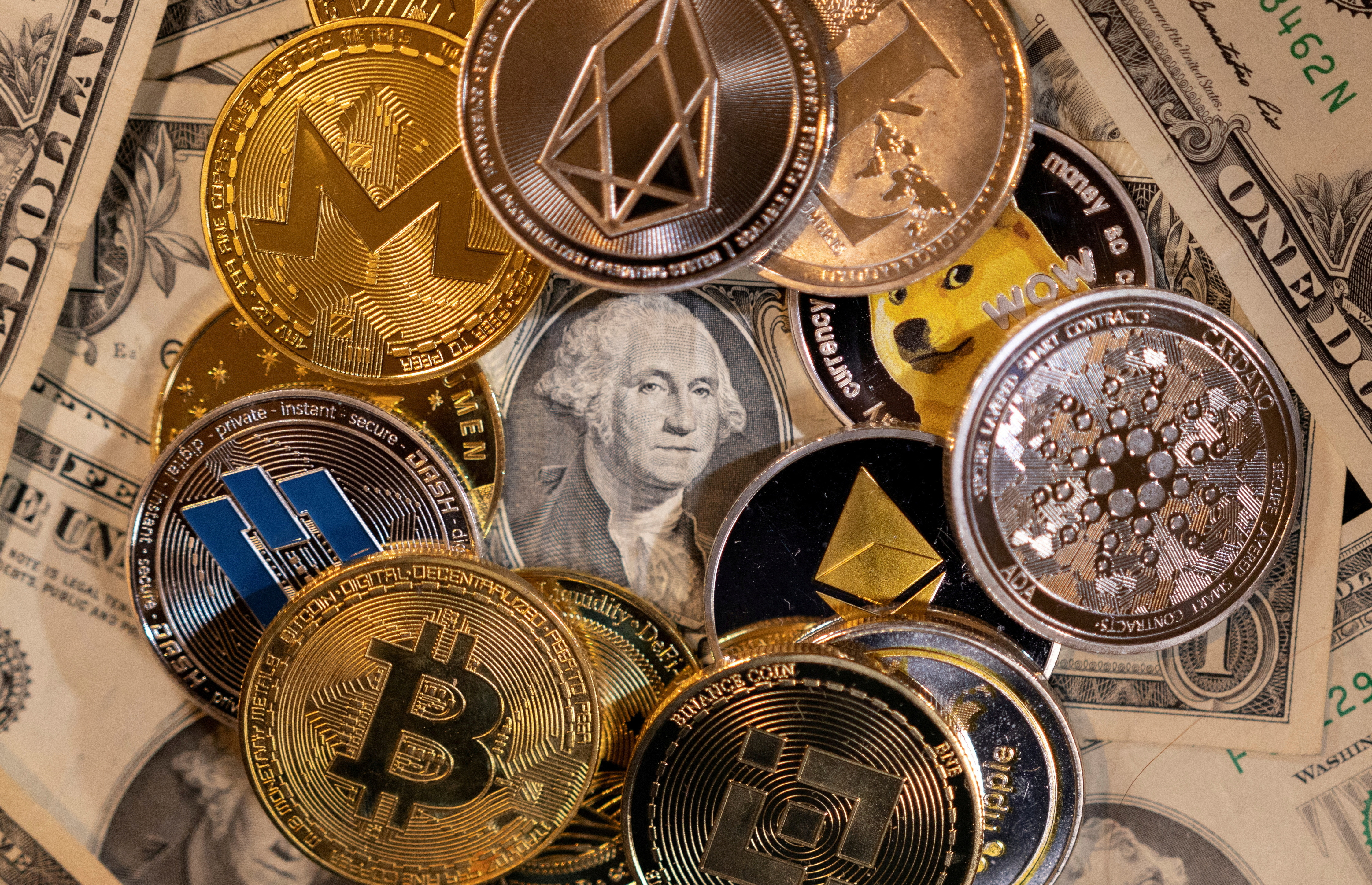
Graphic displaying physical examples of crypto tokens

(Image from ArcPublishing.com)

Conclusion

Between the Wells Fargo cross-selling controversy, the 2008 housing crisis, Bernie Madoff’s Ponzi Scheme, and now the FTX scandal, the general public is at its wit's end with controversy in the financial industry. FTX needs to sort out what happened and return the funds to each of its customers. They should completely disband the company and brand, as nobody will again trust that name. The government, specifically the SEC, should review everything that went wrong after its investigation is wrapped up and start drafting new legislation in conjunction with the DOJ to prevent something like this from happening in the future. Crypto is rapidly evolving daily, and if it is not adequately regulated soon, this exact problem could happen multiple times over the next few years. We must get the proper laws in place as soon as possible.


ReferencesAllison, Ian. “Divisions in Sam Bankman-Fried's Crypto Empire Blur on His Trading Titan Alameda's Balance Sheet.”

CoinDesk Latest Headlines RSS, CoinDesk, 9 Nov. 2022, https://www.coindesk.com/business/2022/11/02/divisions-in-sam-bankman-frieds-crypto-empire-blur-

on-his-trading-titan-alamedas-balance-sheet/. “Sam Bankman-Fried and the FTX Collapse, Explained.” NBCNews.com, NBCUniversal News Group, https://www.nbcnews.com/tech/crypto/sam-bankman-fried-crypto-ftx-collapse-explained-

rcna57582. Barrabi, Thomas, and Lydia Moynihan. “Meet Caroline Ellison, Sam Bankman-Fried's Top Exec - and Rumored Ex-Girlfriend.”

New York Post, New York Post, 14 Nov. 2022, https://nypost.com/2022/11/14/meet-caroline-ellison-sam-bankman-frieds-rumored-ex-girlfriend/. Roberts, Jeff John. “Could SBF Go to Prison? Here's What the Justice Department Would Have to Prove.” Fortune, Fortune, 18 Nov. 2022, https://fortune.com/crypto/2022/11/13/could-sam-bankman-fried-go-to-prison-for-the-ftx-disaster/. Salazar, Heather. The Business Ethics Case Manual: The Authoritative Step-by-Step Guide to Understanding and Improving the

Ethics of Any Business. Print.Huang, Kalley. “Why Did FTX Collapse? Here's What to Know.” The New York Times, The New York Times, 10 Nov. 2022, https://www.nytimes.com/2022/11/10/technology/ftx-binance-crypto-explained.html. FTX. https://www.google.com/url?sa=i&url=https%3A%2F%2Fwww.prnewswire.com%2Fnews-releases%2Fftx-resumes-ordinary-

course-payments-of-employees-and-certain-foreign-contractors-301688260.html&psig=AOvVaw3LNs8zHf7Nsez_lUD_5sbv&ust=

1670129806944000&source=images&cd=vfe&ved=0CA8QjRxqFwoTCNjnusHU3PsCFQAAAAAdAAAAABAD. SBF. https://www.google.com/url?sa=i&url=https%3A%2F%2Fwww.cityam.com%2Fsam-bankman-fried-i-clearly-failed-and-im-

sorry%2F&psig=AOvVaw25txLu18g8ZbpKp9U9A5dp&ust=1670129931641000&source=images&cd=vfe&ved=0CA8Qj

RxqFwoTCOi81f3U3PsCFQAAAAAdAAAAABAL. Crypto. https://cloudfront-us-east-2.images.arcpublishing.com/reuters/C4SMQFCB4JICHAM4PBKXROWFKQ.jpg.