Thursday, April 5, 2018

Procter & Gamble: Adults Eating Tide Pods? (2017)

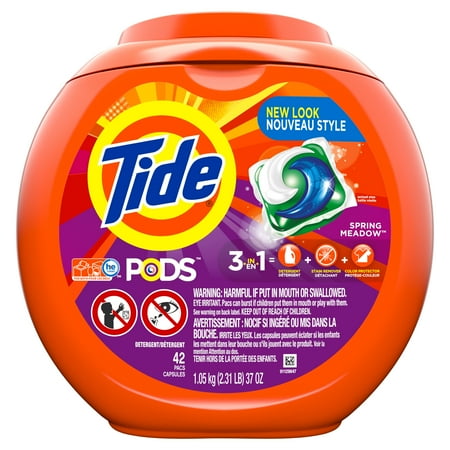
Image result for TIde pods
Tide pods are sold in packages as shown.
There are various sizes and prices
Controversy

Tide is a laundry detergent brand manufactured and owned by Procter & Gamble. Tide has been in some trouble lately due to people eating their laundry pods. Laundry pods have been known to be dangerous if ingested. Even knowing the facts of how dangerous the pods are, tide continues to produce them. The idea of eating Tide pods started in 2017 when, “comedy website CollegeHumor created a fictional video in which a college student tries to resist eating laundry pods, only to end up gorging on them and being taken to the hospital.” (Rettner) This started a movement, a movement called the “Tide Pod Challenge.” This is where teens from all over the U.S take laundry pods and eat them while recording so they can post the content on social media.


Image result for labels on tide pods
Tide has started to advertise safety measures
consumers need to follow
The problem is, elderly adults are eating these pods believing they are candy, which leads to lethal risks that sometimes ends in death. Adults with dementia are at the most risk when it comes to the consumption of laundry pods. In the past six years, six adults with cognitive impairment passed away from consuming tide pods. Along with the six adults, two children with cognitive impairment also passed from the pods. It isn't tides fault for the casualties that have occurred, but it did give them something to consider to try fixing. Procter & Gamble have made some modifications to the pods, remodeled them so they are harder to open and have put enhanced warning labels.

Stakeholders

In this situation, there are a few stakeholders within this controversy. The stockholders are one of them. When consumers found out the effects of eating the pods, people stopped buying from them and the stock a little turn for the worse. The employees are also affected by the controversy, the employees do not like hearing that elderly men and women are eating laundry pods because they don’t know any better. The pods look like candy so that’s all these adults look at in the situation. The other stakeholders are the consumers who are getting ill from eating the pods. “Two children and six adults have died over the past five years as a result of ingesting the pods.” (Popken)

Individualism

Milton Friedman says, “The only goal of business is to profit, so the only obligation that the business person has is to maximize profit for the owner or the stockholder.” With this said, and Individualist would look at this case and think that it is ethically permissible. This is because, the primary goal in an Individuals way of thinking is to profit. An Individualist is more worried about making the sales, as to discontinuing the pod line because people are eating them.

Kantianism

Kantianism is the theory where you act rationally, don’t act inconsistently in your own actions or consider yourself exempt from rules. Respect others, their autonomy, and individuals needs and differences. Lastly to be motivated by Good Will, where you seek to do what is right because it is right. Kantians also live by the formula of humanity. The formula of humanity is when you don’t use people as a mere means, do not lie, deceive, exploit, or use people to benefit yourself. Kantians would perceive this controversy as unethical. Procter and Gamble isn’t lying to their consumers, but they do know the harm that these pods bring to the people. The fact that they know they are ingesting their product can lead to death, Kantians see that ethically impermissible.
Image result for Tide pod
Tide pods are small and handy for college
students and families for quicker laundry prep

Utilitarianism


Utilitarianism is the theory where happiness is what matters. Not only within yourself, but within others as well. Utilitarian’s would believe that the selling of the pods is ethically impermissible because the unhappiness it brings upon the people that go through the troubles of crises when someone eats the pod, outweighs the company for making the sale.

Virtue Theory

The Virtue theory deals with the act itself. The four characteristics of the Virtue theory are, courage, honesty, temperance, and justice. Procter and Gamble has let the public know the affects if pods are consumed, that is an example of them being courageous because they are letting everyone know that something bad can come of their product. A virtue theorist would see Procter and Gamble as ethically permissible. The reason is Procter and Gamble isn’t lying or hiding information for the public, the function of the pod is to be used to wash clothes, not to be eaten. Since the pods are meant for washing clothes, and it does a good job at that, Procter and Gamble is ethical to a Virtue theorist.

References

Associated Press. “P&G CEO Says Company Working to Stop 'Tide Pod Challenge'.”Chicagotribune.com, 23 Jan. 2018, www.chicagotribune.com/business/ct-proctor-gamble-earnings-20180123-story.html.

Gobel, Brandon. “Dementia Patients and the Laundry Pod Problem.” AARP, 26 June 2017, www.aarp.org/health/healthy-living/info-2017/laundry-pods-killing-dementia-patients-fd.html.

Janeway, Kimberly. “Liquid Laundry Detergent Pods Pose Lethal Risk for Adults With Dementia.” Consumer Reports, www.consumerreports.org/laundry-cleaning/liquid-laundry-detergent-pods-pose-lethal-risk/.

Popken, Ben. “More Adults Have Died from Eating Laundry Pods than Kids.” NBCNews.com, NBCUniversal News Group, 16 June 2017, www.nbcnews.com/business/consumer/laundry-pods-can-be-fatal-adults-dementia-n773366.


Rettner, Rachael. “Don't Eat Laundry Pods: Why the 'Tide Pod Challenge' Is So Dangerous.”Https://Www.livescience.com/61418-Tide-Pod-Challenge-Dangerous.html, www.livescience.com/61418-tide-pod-challenge-dangerous.html


Ford Airbag Recall(2017)


Ford: Air Bag Recall(2017)


Controversy:
Millions of ford vehicles today, are being driven with deadly airbags that blow up in small collision accidents. This is due to faulty airbag inflators that degrade over time in warm and humid climate zones. Ford has put several recalls out to get these airbags replaced which has totaled up to over 1.5 million. Many other auto manufacturers are affected by these unstable airbags totaling 42 million vehicles which makes it the largest recall in United States history. Since other auto manufactures get their airbags from the same company many of  vehicles need replacement airbags and there is not enough airbags for everyone. So when people go in to get them replaced dealerships do not have the parts for it. Fortune.com says that when these cars were being produced Fords very own inflation experts believed that these inflation systems were unstable and sensitive to moisture. Fords directors overrode their objections because they thought that was the only supplier that could provide the large number of inflators that they needed. These airbags were also 30% cheaper than the safer airbags. Ford has resulted in putting in the same faulty airbags with a drying agent to try and get the airbags to last a little bit longer since there is not a permanent fix. Customers are unhappy with Ford since they are not getting safe airbags put in and so many people are getting injured.

Stakeholders:

Stake holders are anyone who is affected by the decisions a company or business makes. The stake holders of this recall are the people who own the defective cars, their families, the company’s executives, and the companies’ shareholders. The owner’s families could lose a relative because of a minor accident. Losing a family member because of faulty airbags would be devastating and not fair to the family. The owners of the cars because they are at risk of serious injury or death even in minor accidents from the one thing designed to actually keep you safe. The company’s executives because they overrode what the inflator experts were saying and decided to go with the cheaper airbag inflators. Then the shareholders because less people would want to buy these cars because of how many recalls there are so the value of each share might go down even though it would be hard to prove that it is actually from that recall that their shares went down.

Individualism:
Individualism is when a company maximizes its profits within the law. This controversy does not pass individualism because ford is not maximizing their profits within the law. The airbag company, Takata went bankrupt from all the court ordered fines they had to pay. They had to pay $850 million in reimbursement for all the replacements that now have to be done. The airbags were 30% cheaper so they were maximizing profit. Ford tried to stop more vehicles from being recalled but they were denied by the NHTSA. Since they were denied it shows that they were not within the law.

Utilitarianism:
Utilitarianism is when everyone in the business transaction are happy in the long run. In this case no one is happy because now Ford has to deal with over a million recalls and the company that Ford has gotten their airbags from have to pay for all the knew airbags to be replaced. With some of their vehicle’s like the Ford Ranger it is so bad that they actually can not be driven and have to bring people rental cars to drive around until the airbags can be fixed according to Forbes magazine. Ford is not happy about this because they have to pay for the rental vehicles. Also the customers are not happy because they now have unsafe airbags that they are driving around with every day. The victims of the faulty airbags are also not happy because they were injure from these airbags or in some cases people were killed.

Kantianism:
The basic principles of Kantianism are to act rationally, allow other people to make rational decisions, respect people and being motivated by good will. Essentially meaning doing the right thing because it is the right thing to do. In this case ford did not do the right thing because their own inflator experts said that the airbags are faulty and they still went and put them into their cars. Instead of doing the right thing and not using those airbags they decided to use them anyway because they thought their was no other companies that could produce the amount of airbags needed.

Virtue Theory:
This also does not follow virtue theory because virtue theory is being courageous, honest, justice or fairness and temperance. The courageous thing for ford to do would have been to replace the airbags as soon as they knew they were no good. It is also not fair to people who are victims of these faulty airbags because now they have to deal with the injuries from a part that is designed to keep them safe. Ford is also not being temperate because Takata can’t produce enough airbags so they should change companies. 


 Image result for defective ford airbag


Bibliography
Boudette, Neal E. “Ford and Mazda Hope to Be Removed From Latest Airbag Recall.” The New York Times, The New York Times, 21 July 2017, www.nytimes.com/2017/07/21/business/ford-mazda-airbag-recall-exclusion.html.
Kiley, David. “Takata Settles Airbag Recall, But Millions Of Car Owners Still Waiting For Replacements.” Forbes, Forbes Magazine, 12 Feb. 2018, www.forbes.com/sites/davidkiley5/2018/02/12/takata-settles-airbag-recall-but-millions-of-car-owners-still-waiting-for-replacements/#331b2eb37f74.
Weinstein, Bruce. “Here's How the Takata Air Bag Recall Could Have Been Avoided.” Fortune, 6 Mar. 2017, fortune.com/2017/03/06/takata-air-bag-recall/.


H&M and The "Monkey" Sweatshirt (2018)


Image of Entrance of store
         
H&M which is also known as Hennes & Mairitz. H&M is a Swedish multinational retail clothing company and its known for its most recent fashion trends for men, women, teenagers, and as well as children. H&M sells clothes all over the world and has thousands of stores world wide.

It is the latest of  issues for H&M. The company had to end up closing stores in South Africa  and faced social media backlash and evening through out several national news channels after it ran an ad in January of 2018 showing a young  black boy model wearing a hooded sweatshirt that said, “Coolest monkey in the jungle.” This caused outraged all over the internet, even some celebrity signers ended their partnership with H&M. Celebrities made several tweets regarding this sweatshirt ad. H&M received several complaints about this image. They immediately had to remove the image and send out an apology letter. However, the first letter the company sent out it still didn't make customers too happy. They then had to send out a second letter truly apologizing and removing the sweatshirt from both UK and U.S websites and recycling the remaining stock that was left.
Image result for the weeknd and liam mango tweet
Liam Mongo modeled and Celebrity Stephanie Yeboah tweeting about this image.


The stake holders in this case are the company H&M, the customers, the stockholders of the company, the boy who was the model and his family. H&M main goal by this product was to make a profit by it and consumers purchasing this item however the controversy it caused the company immediately sent out an apology letter for the harm it caused people and they removed the picture along with taking the sweatshirt off the markets.
Individualism theory states " the only goal of business is to profit, so the obligation that the business person is to maximize profit for the owner or the stockholder". As an individualist you would look at this as an ethical perspective because the business was doing exactly what they should be doing and that is making profit, H&M didn't see this as "racist" or "offensive" they saw this as a young boy modeling just another sweatshirt for the company as Liam's mother would say. The company is trying to sell the hoodie to make money and there's no direct connection with racism other then peoples opinion.

If you look from a utilitarian point of view, which if you look at there overall outcome of the advertisement and the measure of the happiness as a whole. An utilitarian should look at and compare the harm it may have caused with the happiness. Before the picture was even put up the company thought that this new line of sweatshirts for kids was going to benefit them and increase their profit, only it did not go that way in the long run. Almost instantly people shared this photo tagging H&M and saying how awful and offensive this sweatshirt was and stores had to close down in South Africa, it made people very unhappy that a retailer would put this saying on a hoodie with that saying and a young black boy modeling the sweatshirt off.
According to Kant, a good person is someone who always does their duty because that's their duty. It is ok if they enjoy being a good person but its also the case that they would do it even if they don't enjoy being a good person. H&M never did anything wrong, it turning into something wrong by the way people were perceiving this picture how they portrayed this little boy in this hoodie. After the back lash, H&M did do the right thing by taking the picture down and apologizing for any harm that it caused people.
Under the virtue theory there is four main virtues that this theory goes by; Justice, Prudence, Temperance, and Bravery. H&M did follow through this most of these however its some what difficult to analyze because H&M mains goals is to make profit with anything they come out with the want to make money. I think in this whole case they were being ethical because they are selling the sweatshirts there intent wasn't to upset anyone or hurt anyone. I do think they should continue to strive and succeed but after this controversy I do think they should carefully focus on what's right and what's wrong and look at the big picture and see how others ( the consumers) view their products, yes, everyone will always have a opinion and H&M did exactly what it should have done and took it down, the company needs to be more aware of what and how their trying to sell their clothing.


 This is the second letter that H&M sent out to the media 

BIBLIOGRAPHY

TodayShow. "H&M Apologizes Following Outrage over ' Monkey ' Hoodie Ad Seen as Racist." TODAY.com, www.today.com/style/h-m-apologizes-following-outrage-over-monkey-sweatshirt-ad-seen-t120979.
Fortin,Jacey. "H&M Closes Stores In South Africia Amid Protests Over 'Monkey' Shirt ." The New York Times, The New York Times, 13 Jan. 2018, www.nytimes.com/2018/01/13/world/Africa/hm-south-africia-protest.html. 

News, Fox. " H&M Apologizes for 'Coolest Monkey' Ad Featuring Black Child, " New York Post, New York Post, 8, Jan. 2018, nypost.com.2018/01/08/hm-apologizes-for-coolest-monkey-ad-featuring-black-child/.
Miller, Joshua Rhett. " Mother of Boy in H&M's ' Coolest Monkey ' Ad Says, ' Get over it' ."New York Post, New York Post, 12 Jan. 2018, nypost.com/2018/01/11/mother-of-boy-in-hms-coolest-monkey-ad-says-get-over-it/.


Uber Vs. Waymo (2016)

Uber Vs. Waymo: Uber Steals Self-Driving Car Technology (2016)


Uber Vs. Waymo Lawsuit Depiction
Controversy
Waymo is the self-driving car company spun from Google, responsible for its profound LiDAR (light detection and ranging) technology allowing cars to use sensors to see the world and safely transport without the functioning of a human operator. The investigation into potential trade-secret theft began in 2016 when Waymo received an email accidently from a supplier containing an attachment that detailed Uber's LiDAR circuit board. Waymo said that the designs received in the email looked very familiar to their own. They started a lawsuit against Uber claiming Uber stole their trade secrets and successfully used the information to assist in keeping up with Waymo in the race to creating and stabilizing self-driving cars. It all started with a man named Anthony Levandowski who used to work for Google’s self-driving car project but decided to leave and try to start his own company called Otto. This was a startup company making self-driving trucks, which Uber decided to purchase for $680 million just six months after the company was founded in 2016. Waymo believed this purchase was a disguise to cover up Levandowski’s betrayal and Uber’s tactics to achieve such a promising technology. During the trial, Waymo revealed that Levandowski downloaded fourteen thousand Google files relating to the self-driving car technology and illegally downloaded 9.7 gigabytes of confidential information and then proceeded to transfer it to an external hard drive before he installed a new operating system on the computer to try and delete any evidence of his actions. This occurred right before he decided to part ways, while negotiating with Uber, and then created Otto. Waymo claims that Uber knew of Levandowski’s actions and decided to continue with the deal. This serves as Waymo’s reasoning for the lawsuit since Uber performed an injustice acquiring Levandowski who had eight trade secrets mostly pertaining to this LiDAR technology. Uber claims that it is normal that engineers download company files and that none of the files went public. During the first couple of days into the trial, Waymo decided not to state their claims regarding the substantive legal section in which Uber knowingly stole and used Waymo’s trade secrets to further their own projects. The judge, William Alsup, forewarned Waymo’s lawyers about the lack of stride on their injustice claims against Uber. Levandowski was expected to plead the 5th Amendment during the process of the trial, if not for the case dismissal, which would raise even more suspicions against Uber. The judge dismissed the case and both companies agreed on a settlement which The Wall Street Journal and Buzzfeed reported that Uber and Waymo agreed on a settlement as of February 9th, 2018 in which Waymo accepted .34% of Uber’s equity at $72 billion. This means that Waymo just received $245 million after asking for the maximum damages of $1.8 billion, shocking the entire court room, seeing how $245 million is substantially lower than the desired $1.8 billion by Waymo. These two companies are now committed to developing their own research and design process to hopefully bring self-driving cars into the 21st century. Waymo will receive .34 percent of Uber’s equity, about $245 million. CEO of Uber, Dara Khosrowshahi confirmed the settlement and stated “To be clear, while we do not believe that any trade secrets made their way from Waymo to Uber, nor do we believe that Uber has used any of Waymo's proprietary information in its self-driving technology, we are taking steps with Waymo to ensure our liDAR and software represents just our good work”. The previous CEO during the time of the controversy Travis Kalanick stated, “We hired Anthony because we felt that he was incredibly visionary, a very good technologist, and he was also very charming,” noting that the goal was to “make driver-less cars a reality”. Uber’s newest CEO stated, “While I cannot erase the past, I can commit, on behalf of every Uber employee, that we will learn from it, and it will inform our actions going forward”. Uber decided to fire Levandowski on May 28th, 2017 to avoid further questioning of their company’s ethical values.

Anthony Lewandowski
Stakeholders
The stakeholders involved during this controversy are Uber and Waymo’s upper management, their supervisors, customers, stockholders, employees, suppliers, community, and the environment. Each C-suite member is involved to make an executive decision on how to handle the controversy, whether they are part of Uber or Waymo. This means that all the Uber supervisors must get together and discuss their plans to use or not to use the technology and while Waymo’s supervisors need to figure out ways to avoid such a dilemma that they are facing right now. Customers of both companies are still waiting for the full unleashing of self-driving car which means they are affected after whether an Uber user or a Waymo supporter. Stockholders must decide whether to trade or sell their stocks based on the future for both companies and whether they are able to overcome to legal fees and settlements to remain on track to maximize their shareholders wealth under the law. The suppliers of equipment, community members waiting for such technology for a safer future, and the environment that will perhaps reap the benefits of less human operated car pollution and construction.

Individualism
According to Individualism Theory, a business must use ethical practices when it generates a profit and maximize stockholders wealth. This means that all business actions that transpire must pertain to the law in every way, whether societal law or constitutional law, and respect all human rights. This theory really stresses the independence of humans and the importance of individual self-reliance and liberty, excluding all outside interference regarding an individuals’ choices. Applying this theory to the Uber vs. Waymo case completely exposes Uber of using unethical practices within their business of self-driving car technology known as liDAR. Uber’s Levandowski broke the law by stealing confidential information from his previous employer while erasing all possible evidence to successfully steal the self-driving car technology. Breaking the law is already ethically impermissible under this ethical theory. Every company is supposed to benefit their business and maximize their stock price in a legal manner only using original ideas, in which case Levandowski and Uber did not follow. Because Uber hired Levandowski, they too took part in unethical business practices by accepting Levandowski designs and not being certain whether the liDAR technology was Levandowski’s original idea or not. If they were certain and decided not to hire Levandowski, Uber would have avoided this lawsuit and continued with their own research, following ethical actions in pursuit of the self-driving technology. Intellectual property is so valuable that any means of stealing it is immediately unethical. Yes, business most likely have done so in the past to acquire the competitive edge that is necessary to become successful, but all ideas must be from within the individuals of the company. Uber used external information, whether on purpose or accident, and therefore deserves to pay back the damages to Waymo. Public opinion of Uber was on the high side before all of this occurred. Now that the case went public, people most likely have negative perceptions of Uber's business practices but will remain reliant of their business because so many young people are oblivious as to what transpired and still need easily accessible transportation right off their smartphone Uber application. Uber remains profitable but did take initial financial losses after the lawsuit settlement. 


LiDAR technology
Utilitarianism
According to Utilitarianism theory, the happiness of the greatest number of people and stakeholders is the most important aspect to being ethical. This means that an action is ethical if it results in overall happiness and unethical if it causes overall unhappiness. Happiness is the only real value that people have in the eyes of Utilitarians so anything that consequently results in the happiness of the majority is deemed ethical by these standards. Uber used stolen intellectual property to generate overall happiness for their upper management, supervisors, customers, stockholders, employees, suppliers, community, and the environment. This would be considered ethically impermissible under utilitarianism because Waymo already developed liDAR technology as the basis for self-driving cars and Uber stole the idea rather than creating their own. If Uber created their own technology and delivered a self-driving car to their customers, then they would have maximized the overall happiness of all stakeholders in this case. Uber also could have offered Waymo contractual agreements to combine the two self-driving car divisions and generate most of these cars into the general public’s everyday lives, maximizing the happiness of both company stakeholders. Because Uber’s actions of stealing resulted in the unhappiness of Waymo stakeholders, a larger part of the population due to the massive size of Google’s business operations, their actions are considered unethical. Uber’s stakeholder’s happiness does not outweigh Waymo’s stakeholder’s unhappiness. The cost of Uber’s actions was $245 million of the company’s equity which lowers shareholders wealth and promotes bad business that is detrimental to Uber’s company and image. From a universal standpoint, mostly focusing on the communities using automobiles as the main source of transportation, the exposure of the liDAR technology would promote all Automobile companies to pursue the same self-driving car technology which could very well be the future of driving. If every car used this than the safety of the masses would be much more secure and that would bring happiness to almost everyone in the world. Not only that but other forms of transportation might be able to pursue the same goal to maximize the safety of every who needs to travel, no matter how far. The environment would benefit as well due to the decrease of natural resources that self-driving technology consumes. If Uber created their own technology, their actions would be considered ethically permissible because it results in a healthier planet and safer transportation methods along with bringing our world to higher levels of technological advancements. The cost of these actions would be Waymo losing business due to the abundance of self-driving tech, creating more competition, which ultimately results in a better economy. In the end, Uber’s actions are deemed ethically impermissible under Utilitarianism due to the overall unhappiness generated from stealing liDAR technology.

Uber CEO (left) vs. Waymo CEO (right)
Anthony Lewandowski (middle)
Kantianism

According to Kantianism, the number one rule to being ethical is following the formula of humanity. This means that everyone has the obligation to treat other rational people with respect as another human being, rather than treating them as objects. Kant wanted people to do the right thing for the right reason, having the will to do something just because it is the right thing to do, while fulfilling their duties as rational humans and always refrain from lying. People are ends, not means, so they can do whatever they please, but they must follow the guidelines of Kant’s rules to be considered ethical. When examining this controversy through a Kantianism lens, Uber did fulfill their duties and work towards methods of safer transportation, an important breakthrough for companies of this nature, and had the best interest of their stakeholders in mind. Uber did neglect to do the right thing though which is developing their own self-driving technology and not using another company’s ideas in the process of improving their own business. Another unethical mistake made was acting irrational and using Waymo’s liDAR without telling them which is classified as lying due to the secrecy of the actions behind Waymo’s back. These actions break Kant’s formula of humanity because they are treating them as an information database rather than fellow humans with feelings and principles. By doing so, Uber did not show Waymo any respect for their hard work and technological advancements. If Uber had told Waymo Levandowski stole their ideas and respected their intellectual property, Uber would be viewed as an ethical business under Kantianism and avoided an expensive lawsuit. Telling Waymo the truth as soon as they received the confidential information from Levandowski, Uber would have been ethically permissible because it is the right thing to do as humans. Because of Uber's actual actions, the business is deemed ethically impermissible under Kantianism. 


Waymo vs. Uber liDAR Self Driving Car Technology 
Virtue Theory

Virtue theory is derived from the four basic characteristics of human being: courage, honesty, temperance and justice. When a business entity uses all four of these virtues for any action performed, they are viewed as ethical under the virtue theory. Businesses with courage take necessary risks and embrace all rewards or consequences that occur because of their actions They must fight for what they believe in because it is who they are. Uber lacked the courage to explore their own path to creating self-driving car technology, so they stole the rewards Waymo received from their hard-working employees and intellectual discoveries and cut out the sacrifices made to achieve such success. Uber had the opportunity to be courageous by turning down the stolen liDAR, fire Levandowski, and discover their own self-driving car. Next, the business must be honest to all stakeholders, including themselves, so that each decision is based on trust and wholeheartedness. Uber completely failed to perform honestly which is why they were tangled up with this lawsuit settlement in the first place. Uber secretly used Waymo’s tech and would have kept the secret until exposed, which ended up happening due to the accidental email sent to Waymo with the stolen ideas. The fact that Uber self-driving car technology was going to remain a secret if not for that email, all profits and benefits to their stakeholders would be based on a lie. Uber needed to admit to their wrongdoings to be honest and ethical. The third characteristic businesses must acquire is temperance, or self-control. Uber did not demonstrate temperance while losing their self-control by indulging in the stolen technology of Waymo’s liDAR instead of abstaining from Levandowski’s secrets. The last part of the virtue theory is justice. This is the idea of fairness and everything being equal. Yes, people can say that Uber only used Waymo’s liDAR so both companies have the same opportunities to create self-driving cars, but how is it fair that Uber did not have to design their own technology using their own finances when Waymo did. Failing to meet all four of these characteristics means that Uber is ethically impermissible under virtue theory. 


Work Cited


Bloom, Jonathan. “Uber-Waymo Trial Could Change How Silicon Valley Does Business.”ABC7 San Francisco, 6 Feb. 2018, abc7news.com/business/uber-waymo-trial-could-change-how-silicon-valley-does-business/3036578/.


Gibson, Kate. “Waymo, Uber Trade Secrets Case Dismissed after Settlement.” CBS News, CBS Interactive, 9 Feb. 2018, www.cbsnews.com/news/waymo-uber-trial-settlement-reached-case-dismissed-today-2018-02-09/.


Holley, Peter. “In Stunning Turn, Uber Pays to Settle Its Court Battle with Waymo.” The Washington Post, WP Company, 9 Feb. 2018, www.washingtonpost.com/news/innovations/wp/2018/02/09/in-stunning-turn-uber-pays-to-settle-its-court-battle-with-waymo/?utm_term=.488344996324.


Isaac, Mike. “With Waymo Settlement, Uber C.E.O. Makes His Mark.” The New York Times, The New York Times, 9 Feb. 2018, www.nytimes.com/2018/02/09/technology/waymo-uber-ceo-.html.


Wakabayashi, Daisuke. “Uber and Waymo Settle Trade Secrets Suit Over Driverless Cars.”The New York Times, The New York Times, 9 Feb. 2018, www.nytimes.com/2018/02/09/technology/uber-waymo-lawsuit-driverless.html.

“Waymo v Uber: Who Stole What?” BBC News, BBC, 5 Feb. 2018, www.bbc.com/news/av/technology-42936448/waymo-v-uber-who-stole-what.


E! News Anchor, Catt Sadler, Quits After Massive Disparity In Pay (2017)


Controversy

The gender pay gap is an issue that has affected America since women have entered the workforce, dating to the end of World War II. One particular case that pinpoints the severity of this issue, and demonstrates its prominence in society today is the departing of E! News host Catt Sadler. After learning from a friend executive that the company was paying co-host Jason Kennedy more than double her salary, Sadler demanded she be paid comparably (Times). The company refused, leaving Sadler with the only option, leaving her dream job of twelve years.

According to Catt’s statement on her website, both she and Kennedy started working at E! the very same year, both with very similar roles on the show which include co-hosting “E! News” (Times). Sadler’s roles over the twelve years, according to the Chicago Tribune included host for “The Daily 10,” “Daily Pop,” “E! News,” and “Live From the Red Carpet Shows.” For several years, Kennedy had been receiving double the salary of Sadler, and the massive disparity in pay along with the denied request to increase Sadler’s salary are what led her to quit and move on from what she describes as her dream job (Tribune).

Overall, in this situation Catt Sadler had gone years without knowing she was severely underpaid for doing the same exact job as her male co-host. According to DesJardins Introduction to Business Ethics, legally E! News is violating the Equal Pay Act which requires that men and women in the same workplace be given equal pay for equal work. Due to the fact that Catt and Jason both held similar roles, and were hired in the same year narrows in on this controversial topic and brings up the ethical issue of gender pay inequality and discrimination of women in the workplace.


Stakeholders

A stakeholder is an independent party directly affected by the actions of a business. The stakeholders involved in this controversy are unique considering that the company is part of the entertainment industry. This being said, the main stakeholders include employees of E! News, additional hosts, viewers, writers, directors, producers and Catt Sadler herself. Due to the fact that salaries are not public knowledge this left all employees in the dark on the fact that Catt was being paid half of what her co-host was making, as was the rest of the public. This also brings up the issue of other female hosts and their salaries. In the future E! News will face issues in regards to hiring female hosts and employees in general because of their bad reputation.

Individualism


Friedman’s Individuals, also referred to as the Economic Theory states that “business actions should maximize profits for the owners of the business, but do so within the law.” Looking at this case an Individualist would not see it as ethical, considering it violates the Equal Pay Act. Although E! News was maximizing profits by underpaying Sadler they were not abiding by the Equal Pay Act which states that men and women in the same workplace be given equal pay for equal work. Sadler and her co-host Jason Kennedy were both doing the similar work and she was being severely underpaid, by half, therefore breaking the law. Although E! News was profiting, Individualist would find it unethical.


Kantianism

The theory originated by Immanuel Kant, states that “one should always act in ways that respect and honor individuals and their choices.” It goes against Kantians to lie, cheat, manipulate or harm others to get your way, rather one should use informed and rational consent from all parties. As viewed by a Kantian, the way E! News treated Catt Sadler, specifically after she approached them during her negotiation to receive better pay. This in no way respected Sadler’s choice, a valued opinion of Kantians. In addition it is obvious that E! News was manipulating and cheating Sadler out of equal pay, therefore they would find this case unethical.

Utilitarianism

Utilitarians take the approach of the stakeholder and strive to accomplish making all parties involved satisfied. The primary values include happiness of all conscious beings. In this case not all parties involved, which would include E! News and Catt Sadler were satisfied. Sadler obviously not content with her salary, therefore Utilitarians would agree that the company was acting unethical. E! News was only focusing on themselves and disregarding the fact that Sadler was not being treated equally or fairly by any means.

Virtue Theory

The Virtue Theory, developed by Greek philosopher, Aristotle was developed in order to know whether a person is fulfilling their full potential and purpose in addition to knowing their purpose and potential. This theory focuses on four characteristics, courage, honesty, temperance and justice. Had any of these four characteristic been implemented by E! News when handling the situation with Sadler they would have demonstrated this theory, but because they do not they fail to do so. The news outlet fails to possess courage by not respecting Sadler’s request for a raise. There is no honesty in the fact that for several years the host was underpaid. And in the end Sadler, being forced to quit due to unfair circumstances is left with no job, unjust on the part of E! News. Therefore the Virtue Theory has not been followed.


References

Astor, M. (2017, December 20). Catt Sadler Leaves E! Entertainment, Saying a Male Co-Host Earned Twice as Much. Retrieved March 01, 2018, from

DesJardins, J. R. (2014). Introduction to Business Ethics (11th ed.). New York, NY: McGraw-Hill.
Jr., C. R. (2017, December 20). An 'E! News' anchor found out she earns half what her male co-host makes. So she quit. Retrieved March 01, 2018, from https://www.washingtonpost.com/news/arts-and-entertainment/wp/2017/12/20/an-e-anchor-found-out-she-earns-half-what-her-male-co-host-makes-so-she-quit/?utm_term=.8d819a1b4241

Miller, J. (2018, January 09). E! Defends Paying Jason Kennedy More Than Catt Sadler. Retrieved March 01, 2018, from https://www.vanityfair.com/hollywood/2018/01/e-news-catt-sadler-pay-gap

Nyren, E. (2017, December 20). Catt Sadler explains why she left 'E! News': 'There was a massive disparity in pay'. Retrieved March 01, 2018, from http://www.chicagotribune.com/entertainment/tv/ct-catt-sadler-quits-e-news-over-pay-disparity-20171220-story.html

Sadler, C. (2017, December 19). WHY I LEFT E ENTERTAINMENT. Retrieved March 01,2018, from http://www.thecattwalk.com/blogcatt/2017/12/13/kd1vzf207a1ilhqe3wps4jg5kxkxjz