Showing posts with label Ford. Show all posts

Saturday, April 7, 2018

Ford Motor Company: Diesel-gate (super-dirty super-duties) (2018)


Ford Motor Company: Diesel-gate (super-dirty super-duties)  (2018)

Super-Dirt Super-Duties

Controversy:


In January of 2018 a lawsuit was filed against Ford Motor Company accusing them of installing emission defeat devices in their F-250 and F-350 super-duty diesel trucks. Over 500,000 trucks were supposedly equipped with this emission defeat device from the years of 2011 to 2017. Ford replaced the traditional exhaust treatment components with a selective catalytic reduction in front of the diesel particulate filter. This device essentially sensed when the truck was being tested for emissions, based on the certification test cycle, and would allow the truck to act accordingly. Which means that when it sensed that the truck was being tested it would only produce the allowable amount of NOx, which is a mixture of nitric oxide (NO) and nitrogen dioxide (NO2). But on the other end, when it sensed that it was not being tested, the truck would produce up to five times the legal limit of NOx in normal stop-and-go traffic, and up to fifty times the legal limit when driving uphill or towing (Tracy). The EPA (Environmental Protection Agency) create emission limits, especially on diesel vehicles because of the devastating impact NOx has on our environment. The defeat device that allowed the truck to emit up to fifty times the allowable NOx is the only reason that Ford was able to achieve their class-competitive horsepower and torque outputs in their power-stroke diesel engines. Not only did Ford knowingly install this emissions defeat device in their Diesel trucks, but they got the device from the same company, Bosch LLC, as Volkswagen did before they were also caught cheating emissions testing.


Stake Holders:
            A stake holder is anyone who has interest or concern in a particular business or organization. In the case of the Ford motor company diesel scandal, there are quite a few stake holders. First, the executives, and really every one who works for ford is a key stake holder because this will most likely result in a huge loss of money for the company which will effect everyone who works for Ford. More importantly, the customers, who were lied to and tricked into buying a truck that turns out to be illegally passing emissions tests. But also, our environment and really every living thing on this planet, emission regulations were made for a reason. To protect the health of living things on this planet.

Individualism:
Individualism is the ethical theory, popularized by Milton Freidman, that focuses on maximizing profits for a company while staying within the law. Said by Freidman Himself “…to make as much money as possible while conforming to the basic rules of society, both those embodied in law and those embodied in ethical custom… (pg.55).” Individualism is rather straight forward, you maximize profits to the best of your ability for your company with out breaking any legal laws, or breaking any customs of business.
            In the case of Ford motor company, I believe that they had the best intentions of maximizing profit with their emissions defeat device. It allowed them to have a real competitive edge over the years and made their super-duty trucks a much more desirable truck to consumers.  But in the end they may end up finding tat the emission defeat devices do the opposite of maximizing profits. According to the managing partner in the firm involved in the suit, “the lawsuit is seeking up to $4.2 billion, for damages affecting more than 500,000 vehicles (Car and Driver).” Which is nothing if you look at the repercussions felt by Volkswagen in an identical lawsuit from 2014.  Volkswagen ended up having to pay out of pocket a total of $15 billion, including up to $10 billion for buybacks or modifications plus nearly $4.7 billion for environmental mitigation and zero-emission research and development. Also, in a poll of Volkswagen owners, 21 percent say that they will not buy another Volkswagen (US News).   Ford could have some serious financial setbacks coming their way once more people find out about this emissions defeat device. Also the loss of customer loyalty could be a huge impact to Ford especially with their upcoming release of a F-150 with a 3.0L diesel. This latest news of emissions cheating could have a serious impact on the excitement of this new truck. (Gilboy). These are all future possible effects that would not prove to be maximizing profits, but there are already current effects of this scandal. Their stock priced have already been majorly impacted just days after this scandal hit the news, as you can see from the picture.            
              
            According to Friedman, Ford did not follow an individualist stand because they did not stay within the law. They knowingly installed an illegal device into their trucks so that they could cheat their way around the emissions tests. They claimed to have the, “cleanest power ever” with their diesel trucks. But in reality they knew that they were emitting well over the legal limit of NOx. Ford diesel trucks go for almost $8,500 more than their gasoline counterparts, this could very well be because of the risk they knew they were taking by installing these devices. Ford violated 58 laws including state consumer, false advertising laws, deceptive trade, federal collusion laws, and Racketeer Influenced and Corrupt Organizations act, otherwise known as RICO (NGT News) (Mehrotra). One of the firms part of the lawsuit is Hagen’s Berman Sobol Shapiro LLP, which is the same firm that filed against Volkswagen during their emissions scandal in 2014.

Kantianism:
            Kantianism is the ethical theory that focuses on the treatment of other human beings. It is focused around the formula of humanity which states, “act in such a way that you treat humanity, whether in your own person or in the person of another, always at the same time as an end and never simply as a means.” This explains that you should not treat people as a “means”, or as a way of getting profit. But to hold your value and your profit in those you do business with. You must treat all the people you do business with as a rational agent. You must provide them with all the correct info they need so that they can make a rational, informed decision on their own. Kant explains that you should conduct your business in a way that everything you do, is done simply because it is the right thing to do, out of your own goodwill.
            Ford, in no way, did they follow a kantianistic business approach. The entire design, advertising, and plain motive behind their super-duty trucks was based around the fact they knew that they would be able to get away with using this emissions cheating device. Their motivation was deceitful from the beginning. They lied and tricked customers, the certified EPA emissions testers, and really the entire population. By using this device they intentionally pumped way more NOx into the air than any one thought, our environment and the people in our environment were being hurt and no one knew it except for Ford. They falsely advertised their truck saying it was the cleanest diesel on the market, they did not provide the consumers with all of the facts about the trucks. They provided the customer with enough “facts” so that they would think what Ford wanted them to think. This would not be considered doing the right thing or following moral law. So, not only did they deceit people from the beginning, but when they were finally caught in January they denied all charges and acted like they never did anything at all. The right thing would have been to come clean, but instead they are going to continue to deny all the charges until concrete evidence is found that they cannot deny.
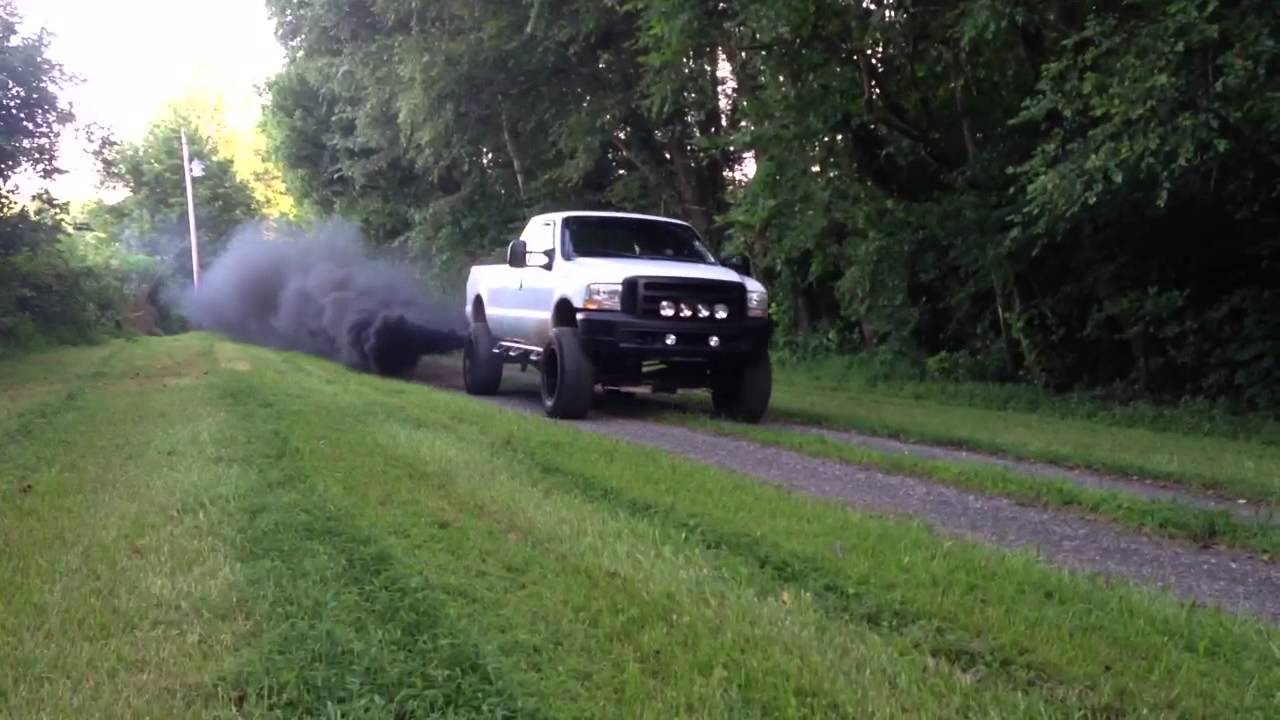
 Image result for ford rollin coal


Utilitarianism:
            Utilitarianism is the belief that in any business action, its main goal should be happiness for all parties involved. No matter what that happiness is, weather it is for maximum profit, maximum success in the business, or even maximum satisfaction from society. A Utilitarianist would argue that


Ford was ethically unjustified in their business doings. This is because not everyone was happy in the end. Ford them selves will not be happy after they have to pay out over $5 billion at least if they lose the case. All of their stock holders are already upset because of the drop in the stock prices after the scandal hit the news. But most importantly, the customers will be the ones who are most upset. Ford claims that they have been the number one selling American based truck company for the past 40 years. This means that they have a large following of very loyal customers. These loyal customers are now going to find out that they have been lied to by their number one truck brand. That the truck they drive every day, may have just been one of the trucks with the emissions cheating device. These will certainly no longer be happy customers.    
        
Virtue Theory:
            Virtue theory actually states that within your business practices you should always incorporate 4 different virtues. The first being courage; the ability to take risks and willingness to stand up for the right thing. This does not include the courage to break the law, like in the case of Ford motor company. If Ford was to be courageous they should have not installed the devices in the first place and be the best they could be without cheating. When they got caught in the beginning of January, the courageous thing to do would have been to own up for what they did and accept the punishment as it may have come. The second virtue is honesty; honesty in agreements, hiring, and treatment of employers, customers and other companies.  Ford certainly was not honest in the making of their power-stroke diesel trucks. They knowingly installed a emissions cheating device so that the truck was able to cheat its way past emissions tests so that they could achieve max horsepower and torque. They were not honest with the customers buying the truck, and they put the employees of Ford in a position where they had to be dishonest. The third virtue is Temperance; which explains reasonable desires and expectations, moderation. One way to interpret temperance is self-restraint. This seems to be something that Ford certainly does not have. They couldn’t stand maybe not being the best truck on the market, so they felt that they had to cheat their way to be more competitive. They could not restrain themselves from having to be the best. The fourth and final virtue that’s incorporated in the virtue theory is fairness; this is simply putting in hard work, producing quality products, and having fair practices. Ford was not fair in their practices. It is not a fair thing to lie to the customers who are buying your trucks. It is not fair to the world to think that you are above emission standards. It is not fair to cheat the system to get what you want. According to virtue theory, Ford seems to be unethical in all four fields of the theory.


Bibliography
Gilboy, James. “Ford Becomes Newest Target of Diesel Emissions Cheat Lawsuit.” The Drive, 10 Jan. 2018, www.thedrive.com/sheetmetal/17555/ford-becomes-newest-target-of-diesel-emissions-cheat-lawsuit.
“Lawsuit Accuses Ford of Diesel Cheating Scandal.” NGT News, 15 Jan. 2018, ngtnews.com/lawsuit-accuses-ford-diesel-cheating-scandal.
Mehrotra, Kartikay. “Ford Sued by Truck Owners, Adding It to Diesel Defendants.” Bloomberg.com, Bloomberg, 10 Jan. 2018, www.bloomberg.com/news/articles/2018-01-10/ford-sued-by-truck-owners-claiming-diesel-engines-were-rigged.
Ford, The suit accuses, et al. “Customers Sue Ford over Alleged Emissions Cheating.” CNNMoney, Cable News Network, money.cnn.com/2018/01/10/news/companies/ford-lawsuit-emissions-tests/index.html.
Tracy, David. “Lawsuit Accuses Ford Of Cheating Diesel Emissions On 500,000 Trucks.” Jalopnik, Jalopnik.com, 10 Jan. 2018, jalopnik.com/lawsuit-accuses-ford-of-cheating-diesel-emissions-on-50-1821962910.
              “Ford Faces $4.2 Billion Lawsuit for Allegedly Dirty Super Duty Trucks | News.” Car and Driver, www.caranddriver.com/news/ford-faces-4-2-billion-lawsuit-for-allegedly-dirty-f-series-super-duty-diesel.
“How Badly Has the VW Diesel Scandal Hurt VW?” U.S. News & World Report, U.S. News & World Report, cars.usnews.com/cars-trucks/best-cars-blog/2016/10/how-badly-has-the-vw-scandal-hurt-vw.


Thursday, April 5, 2018

Ford Airbag Recall(2017)


Ford: Air Bag Recall(2017)


Controversy:
Millions of ford vehicles today, are being driven with deadly airbags that blow up in small collision accidents. This is due to faulty airbag inflators that degrade over time in warm and humid climate zones. Ford has put several recalls out to get these airbags replaced which has totaled up to over 1.5 million. Many other auto manufacturers are affected by these unstable airbags totaling 42 million vehicles which makes it the largest recall in United States history. Since other auto manufactures get their airbags from the same company many of  vehicles need replacement airbags and there is not enough airbags for everyone. So when people go in to get them replaced dealerships do not have the parts for it. Fortune.com says that when these cars were being produced Fords very own inflation experts believed that these inflation systems were unstable and sensitive to moisture. Fords directors overrode their objections because they thought that was the only supplier that could provide the large number of inflators that they needed. These airbags were also 30% cheaper than the safer airbags. Ford has resulted in putting in the same faulty airbags with a drying agent to try and get the airbags to last a little bit longer since there is not a permanent fix. Customers are unhappy with Ford since they are not getting safe airbags put in and so many people are getting injured.

Stakeholders:

Stake holders are anyone who is affected by the decisions a company or business makes. The stake holders of this recall are the people who own the defective cars, their families, the company’s executives, and the companies’ shareholders. The owner’s families could lose a relative because of a minor accident. Losing a family member because of faulty airbags would be devastating and not fair to the family. The owners of the cars because they are at risk of serious injury or death even in minor accidents from the one thing designed to actually keep you safe. The company’s executives because they overrode what the inflator experts were saying and decided to go with the cheaper airbag inflators. Then the shareholders because less people would want to buy these cars because of how many recalls there are so the value of each share might go down even though it would be hard to prove that it is actually from that recall that their shares went down.

Individualism:
Individualism is when a company maximizes its profits within the law. This controversy does not pass individualism because ford is not maximizing their profits within the law. The airbag company, Takata went bankrupt from all the court ordered fines they had to pay. They had to pay $850 million in reimbursement for all the replacements that now have to be done. The airbags were 30% cheaper so they were maximizing profit. Ford tried to stop more vehicles from being recalled but they were denied by the NHTSA. Since they were denied it shows that they were not within the law.

Utilitarianism:
Utilitarianism is when everyone in the business transaction are happy in the long run. In this case no one is happy because now Ford has to deal with over a million recalls and the company that Ford has gotten their airbags from have to pay for all the knew airbags to be replaced. With some of their vehicle’s like the Ford Ranger it is so bad that they actually can not be driven and have to bring people rental cars to drive around until the airbags can be fixed according to Forbes magazine. Ford is not happy about this because they have to pay for the rental vehicles. Also the customers are not happy because they now have unsafe airbags that they are driving around with every day. The victims of the faulty airbags are also not happy because they were injure from these airbags or in some cases people were killed.

Kantianism:
The basic principles of Kantianism are to act rationally, allow other people to make rational decisions, respect people and being motivated by good will. Essentially meaning doing the right thing because it is the right thing to do. In this case ford did not do the right thing because their own inflator experts said that the airbags are faulty and they still went and put them into their cars. Instead of doing the right thing and not using those airbags they decided to use them anyway because they thought their was no other companies that could produce the amount of airbags needed.

Virtue Theory:
This also does not follow virtue theory because virtue theory is being courageous, honest, justice or fairness and temperance. The courageous thing for ford to do would have been to replace the airbags as soon as they knew they were no good. It is also not fair to people who are victims of these faulty airbags because now they have to deal with the injuries from a part that is designed to keep them safe. Ford is also not being temperate because Takata can’t produce enough airbags so they should change companies. 


 Image result for defective ford airbag


Bibliography
Boudette, Neal E. “Ford and Mazda Hope to Be Removed From Latest Airbag Recall.” The New York Times, The New York Times, 21 July 2017, www.nytimes.com/2017/07/21/business/ford-mazda-airbag-recall-exclusion.html.
Kiley, David. “Takata Settles Airbag Recall, But Millions Of Car Owners Still Waiting For Replacements.” Forbes, Forbes Magazine, 12 Feb. 2018, www.forbes.com/sites/davidkiley5/2018/02/12/takata-settles-airbag-recall-but-millions-of-car-owners-still-waiting-for-replacements/#331b2eb37f74.
Weinstein, Bruce. “Here's How the Takata Air Bag Recall Could Have Been Avoided.” Fortune, 6 Mar. 2017, fortune.com/2017/03/06/takata-air-bag-recall/.


Tuesday, April 4, 2017

Takata: Faulty Airbags Cause Largest Recall in History (2013-2017)

Case Controversy


Takata is a Japanese company that has manufactured automotive parts since the 1930s.  More specifically, Takata has specialized in safety equipment for automobiles, including but not limited to: seatbelts, child restraint systems, and airbags.  A controversy regarding Takata’s airbags began in 2013, but it has been ongoing ever since with many new recalls issued and new information on why occupant safety is compromised with Takata airbags.

It seems that Takata’s airbags have several issues leading up to the safety concerns, and they begin with the use of ammonium nitrate, known to chemists as an unstable and quite volatile chemical.  This chemical is used in the airbag inflator, thus it is designed to have a quick working chemical reaction (explosion) in order to inflate the airbag as quickly as possible in the event of a crash.  The second issue stems from the first, but Takata did a terrible job protecting this “volatile” chemical inside the airbag assembly, and water (even high levels of humidity in the air) and high heat do not have a difficult time infiltrating the assembly, which causes a reaction with the unstable ammonium nitrate.  Because of both issues, it is entirely possible for a Takata manufactured airbag to explode in non-crash situations, causing injury and even death to the occupants both due to the actual airbag explosion or an accident related to an unnecessary airbag inflation.  In addition, the airbags have been known to explode more violently than they should, again due to ammonium nitrate, which could cause shrapnel to fly into the occupant’s face.

The ethical issues in this case are startling, especially since Takata manufactures safety equipment, designed to protect occupants, which can actually injure or kill them.  As of the present date, there have been approximately 180 injuries and 11 deaths in the U.S. because of the faulty airbags.  Furthermore, over thirty automakers have recalled vehicles affected by these airbags, including American, Japanese, British, and German manufacturers.  Trustworthiness is the biggest violation in this case, because it seems high ranking officials either knew about the possible negative effects of the chemical, or should have done the necessary research to ensure the chemical was safe for the task, but nothing was done in either case.
A few of the 30+ automakers that issued recalls.
Reported deaths have since increased.

Stakeholders

Some of the major stakeholders in this case are all of the automakers that use and have used Takata airbags.  Though Takata is the company manufacturing the airbags, it is the automakers that have to bear the brunt of the recalls, and it is also those automakers who receive negative connotations due to those recalls.  On another note, it was also the automakers who purchased the Takata airbags, and it seems that their research into the product was questionable.  In addition, essentially everyone who owns a car and drives on public roads is a stakeholder.  The safety of drivers and occupants directly relies on the real-world performance of their airbags.  Also included are other airbag manufacturers, who are currently out of the limelight.  Takata's future actions as a company will have a major impact of the successes of other companies in this field.

Ethical Analysis - Individualism

In the Individualist viewpoint, it is very important maximize profits for the business owners, but to do so within the law.  The maintenance of the business's financial integrity thus relies on high ranking officials to make the correct decisions which result in increasing profits obtained legally.  Based on this definition of individualism, Takata's actions constitute "failed individualism".  A lot of companies simply think greed alone will fulfill individualism, but ethical business under this theory is actually a lot more complicated.  Frankly, it's hard to maximize profits when you know that you are screwing people, since it will almost certainly come back to bite you.  Again, Takata demonstrated very unethical behavior according to individualism.  Firstly, they broke the law by withholding the results of their safety testing from the public.  The law requires that airbags, and their fundamental designs, be tested for safety, since their job is to provide safety anyway.  Secondly, not only did Takata's high ranking officials not maximize profits for the company, they had to pay out billions of dollars.  In January 2017, Takata paid $1 billion to resolve the investigation, $25 million for a criminal penalty, $125 million in victim compensation, and finally $850 million in automaker compensation.

Ethical Analysis - Utilitarianism

Utilitarian ethics hinges on maximizing the happiness of all possible stakeholders of a company and/or case.  In Takata's case, it is certainly unethical under this viewpoint, as the vast majority of the stakeholders likely experience negative amounts of happiness.  The happiness for consumers who drive affected automobiles and consumers who were injured or killed by Takata airbags will be negative as well.  Same goes for the automakers, since their brands will have experienced some negative connotations from the large number of recalls.  The only group of stakeholders that may experience an increase in happiness are other airbag manufacturers who may be able to grow their businesses in the wake of Takata's scandal, but the lack of happiness from all other stakeholders far outweighs this happiness.

Ethical Analysis - Kantianism

Kantianism is an ethical theory that is based in respect for all individuals affected by a situation (or business) in some way, and emphasizes that individuals should be provided the information necessary to make their own decisions.  People should not simply be used in order to make a profit based in self interests, people instead can assist in growing profits if they are provided with a product that they want to purchase after being provided with all of the necessary information about the product.  Takata is unethical under Kantianism since they withheld (and reportedly destroyed) the results of the safety tests on their airbags.  Since they were hiding the information that would have resulted in "nobody" wanting to buy their product (including automakers at the first tier, and consumers buying the automobiles at the second tier).  Automakers and consumers were unable to make an educated decision about the product, and they were not given the respect of their individuality.  Also, this decision by Takata to use these faulty airbags was not made in good will at all, but certainly in self-interest.

Ethical Analysis - Virtue Theory

Virtue theory is pretty simple, and it's based on a number of good virtues that equate to good character in people.  Analyzing if something is ethical under virtue theory, or virtuous, can be done by seeking out any vices, the opposite of virtues, that the people or companies involved may possess.  In the case of Takata, several vices are obviously present, such as greed, dishonesty, and selfishness.  These vices alone are enough to deem Takata unethical under this theory, but I'd go farther to say that the breaching of the virtue "trustworthiness" is the most important wrong in this case, as stated in the case controversy outline.  When people drive, they are potentially putting their lives at risk, so they may trust their vehicles to have well designed safety equipment.  When it comes to safety, people may never trust Takata again.
Takata pleads guilty in the investigation. A woman
who suffered severe injuries is shown.

Justified Ethics Evaluation

As stated earlier, Takata is a Japanese automobile safety equipment manufacturer that has been around for over eighty years.  Their actions in the twentieth century, including the lack of good research and production of faulty airbags, are extremely unethical and morally wrong.  This is a crime of the most serious offense, since negligent research in the safety field results in the injury and death of human beings.  Although it may sometimes seem this way, businesses are not simply objects or entities, businesses are created by and made up of people, and there are people in the Takata company who should be held directly responsible for the deaths of about eleven people.  These people likely aren't "killers", but it's no excuse that they didn't want to spend the money on more research when their "state of the art" airbag innovation turned out not to be so great.  They have lost my trust, and frankly they don't deserve the trust of any consumer or automaker.  If Takata wants to survive as a reputable company, they need to do more than simply pay $1 billion dollars to end the investigation.  That says to me that they know they're wrong, but they don't care enough to fix the issues since they have enough money to cover the reparations. They need to go back to the drawing board and design a new airbag that doesn't have these issues.  The new airbag must then be stringently safety-tested by a third party, and the results need to be published for the general public.  Only then will they be able to gain some trust back from the consumers, and they may be able to once again thrive as a company.


References
America Business Radio Podcasts Asia-Pacific North. "What Caused Takata's Airbag 
     Problems?" Knowledge@Wharton. N.p., 29 Feb. 2016. Web. 1 Apr. 2017.
Reifowitz, Ian. "Criminal charges against executives who break the law protect us from 
     greed. What say you, Trump?" Daily Kos. N.p., 22 Jan. 2017. Web. 01 Apr. 2017.
Richard Read Reporter. "Takata's Exploding Airbags Finally Explained (No Thanks To 
     Takata)." The Car Connection. N.p., 24 Feb. 2016. Web. 01 Apr. 2017.
Salazar, Heather. Western New England University. Spring Semester 2017 Class Notes.
"Takata Airbag Recall - Everything You Need to Know." Product Reviews and Ratings - 
     Consumer Reports. N.p., 2 Mar. 2017. Web. 01 Apr. 2017.
"Takata Corporation." Wikipedia. Wikimedia Foundation, 04 Apr. 2017. Web. 04 Apr. 2017.

Friday, November 21, 2014

Ford: Unintended Acceleration Lawsuit (2013)

Controversy
Ford Motor Company logo

The Ford Motor Company was founded by Henry Ford in 1903. It produces automobiles and is located in Dearborn Michigan. As of May 2014 the Ford Motor Company is worth $64.51 billion (forbes.com). In the last couple years there has been a problem with some of the models Ford produces. This problem has led to a class action lawsuit against Ford. The lawsuit was filed on March 28th, 2013. This lawsuit was filed in Huntington West Virginia’s district court. The lawsuit has plaintiffs from 14 different states. From bloomberg.com it says “the lawsuit claims that Ford’s electronic throttle system can take control of the accelerator and leave drivers unable to stop the vehicle.” Ford has been adding a brake override system to its models since 2010, but the company has not added a brake override system to models that are older than that. The claim involves 32 different models of Ford, Lincoln, and Mercury vehicles that were made before 2010. This includes many of the company’s top models including the Ford F-Series, which is the second best-selling vehicle of all time according to the wallstcheatsheet.com.
The result of the flaw has caused numerous accidents, injuries, and even deaths. One of the lawyers for the plaintiffs stated "Ford's unfortunate history of unintended acceleration problems has been detailed at length in the public record. While our clients seek recovery for the lost value of their cars, they also want Ford to fix the problem so that no more people are injured and no more lives are at risk because of the documented accelerator problems with Ford's vehicles." Adam Levitt, a director with Grant & Eisenhofer, said in a statement. (usatoday.com) On June 12, 2013 the case was filed in West Virginia federal court. This increased the magnitude of the lawsuit. As a result of Ford’s failure to fix the problem, the models that are affected by the unintended acceleration are still on the roads today. This has caused the number of plaintiffs to grow and as of February 8th 2014 plaintiffs from over 30 states have joined in on the lawsuit. They believe that people from almost all the 50 states will be involved in the lawsuit by the time it goes to trial.

Stakeholders
Alan Mulally, CEO of Ford Motor Company

The stakeholders, or the persons who are directly affected by the business and its actions, are numerous. The first and most important stakeholder are the customers of Ford, specifically those who owned or previously owned one of the affected models. These are the stakeholders that are the most affected by the faulty electronic throttle system and the failure of Ford to add a brake override system. Next are the executives of Ford, these are the ones who are making the decisions and running the business. The third stakeholder are the people that are put in harm of the possibility of this unintended acceleration. This can be anybody on the road or near the road because most of the vehicles that have the problem have not been fixed and are still being driven today. The last stakeholder are Ford’s stockholders. In the event of a recall, lawsuit, or some kind of settlement, Ford’s stock will experience periods of decline, and little stability. The stockholders will suffer as a result of Ford’s inability to fix the problem of the unintended acceleration.

Individualism
The individualism theory which was introduced by Milton Friedman is about how a person is best suited to pursue their own desires without consideration for others. With a business perspective this means that a business’s only goal is to maximize profits for its stockholders. Not only is this their goal but it’s also their responsibility. As a result of this, Ford is acting ethically with respects to individualism. This is because they are not fixing the problem of the unintended acceleration which in turn is not costing them any money at the moment. This can change though, if the current case against Ford ends up going against them this could cost the business a large sum of money. Not only will they have to pay for damages and losses but also the cost of fixing the affected vehicles. This will also affect their reliability in a negative way and may result in losses of future customers. This would cause them to not be making as much profits as possible and directly go against the theory of individualism.

Utilitarianism
Ford's faulty electronic throttle system

Utilitarianism is the theory that supports the goal is to maximize happiness for the majority of people. Happiness or pleasure are the only things of intrinsic value. It is important to remember though that the end does not justify the means. In a business perspective this means that maintaining success should not come at the expense of others. Ford is directly going against this. They are maintain success at the expense other. Ford cares more about making a profit than the safety of their customers. After numerous injuries and even deaths Ford continues to allow the problem continue causing unhappiness for many people. This is unethical under the utilitarian view because they are not maximizing happiness for the greatest number of people.

Kantianism
The Kantian theory comes from Immanuel Kant who also explains how one should not lie, cheat, manipulate, or harm others regardless of the positive outcomes that come from these. There are four principles that Kantianism follow first is to act rationally, don’t act inconsistently in your own actions or consider yourself exempt from rules. Second is to allow and help people to make rational decisions. Third is to respect people, their autonomy, and individual needs and differences. Last is to be motivated by good will, seeking to do what is right because it is right. Kantianism is more focused on the consequences rather than the actions. The formula of humanity explains how the use of people to get what you want is wrong. According to the Kantian views, Ford was unethical because they are harming others as a result of their actions. Their actions of not fixing the affected vehicles unintended acceleration flaws are causing harm to others. They are putting the profits they are making over the harm that is being caused as a result of their failure to fix the problem. They are not acting rationally as other car companies who have had problems with their vehicles have recalled them and fixed the problems. This directly goes against the Kantian theory.

Virtue Theory
The virtue theory, which is made popular by Aristotle, is about how you must act rationally in order to live a good life. There are four important virtues for the virtue theory and these are courage, honesty, temperance, and justice. With these virtues in mind, Ford has not shown any of them expect for temperance. Ford did not have courage, as they did not stand up for what was right. This would have been to fix the problem with the affected vehicles and pay for damages occurred. They do not show honesty because Ford has not owned up to the situation at hand and have not takin responsibility for the problem. Last they have not been shown justice as they have not faced punishments for their actions. Based on these virtues of the virtue theory one can conclude that Ford is acting unethical.


Works Cited


2006 Ford F-150. Digital image. Salem News. N.p., 27 Aug. 2011. Web. 21 Nov. 2014.

Digital image. Automobiles World. N.p., 17 Oct. 2013. Web. 21 Nov. 2014.

Esterdahl, Tim. Ford Truck. Digital image. Tundra Headquarters. N.p., 29 Mar. 2013. Web. 21 Nov. 2014.
Ford Go Further. Digital image. FMA Entertainment. N.p., 12 Aug. 213. Web. 21 Nov. 2014.

"Ford Motor." Forbes. Forbes Magazine, n.d. Web. 17 Oct. 2014.

"Ford Sued in Class Action Claiming Sudden Acceleration." Bloomberg.com. Bloomberg, n.d. Web. 18 Oct. 2014.

"Get Free View Image Updates from the Cheat Sheet." View Image. N.p., n.d. Web. 04 Oct. 2014.

"New Ford Unintended Acceleration Class Action Lawsuit Filed." Top Class Actions. N.p., n.d. Web. 18 Oct. 2014.

Press, Alisa Priddle Detroit Free. "Ford Sued over Problems with Vehicle Acceleration." USA Today. Gannett, 29 Mar. 2013. Web. 04 Oct. 2014.

Rising, James. Roadside Memorial. Digital image. James Rising. N.p., 7 Nov. 2010. Web. 21 Nov. 2014.

Senior Management Team. Digital image. Corporate Ford. N.p., n.d. Web. 21 Nov. 2014.