Ford Motor Company: Diesel-gate
(super-dirty super-duties) (2018)
Super-Dirt
Super-Duties
Controversy:
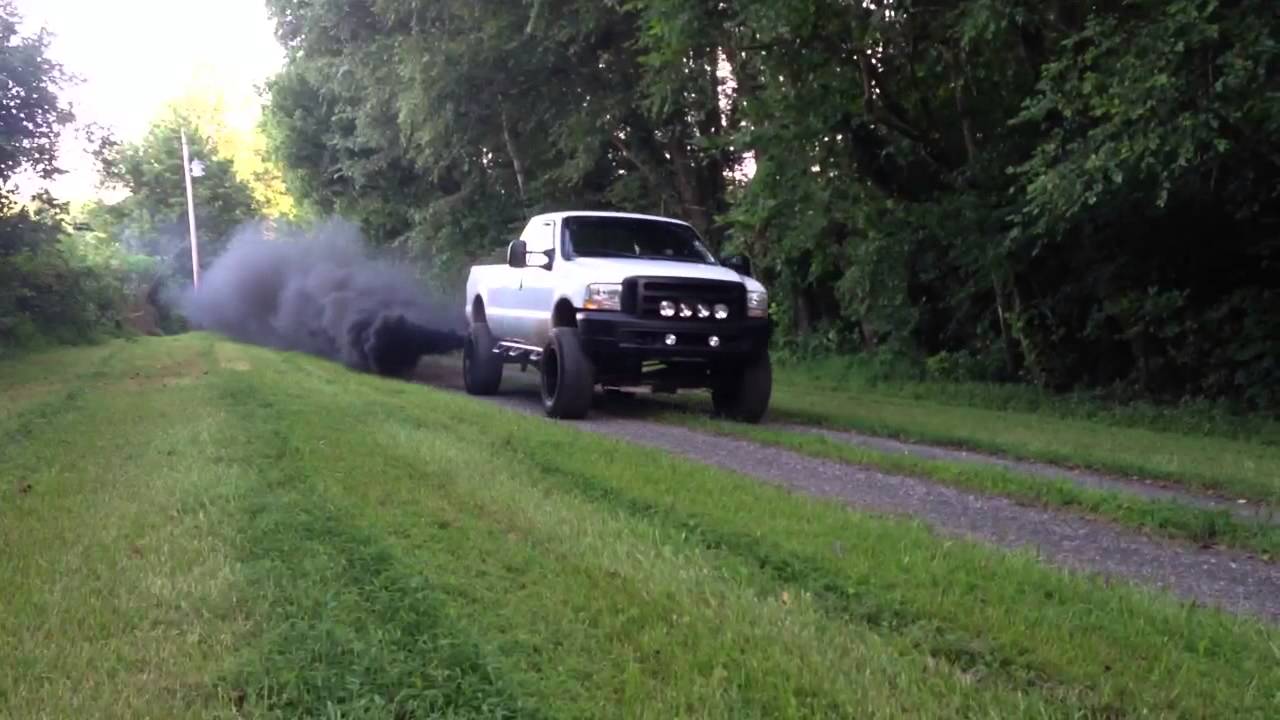
 In
January of 2018 a lawsuit was filed against Ford Motor Company accusing them of
installing emission defeat devices in their F-250 and F-350 super-duty diesel
trucks. Over 500,000 trucks were supposedly equipped with this emission defeat
device from the years of 2011 to 2017. Ford replaced the traditional exhaust
treatment components with a selective catalytic reduction in front of the
diesel particulate filter. This device essentially sensed when the truck was
being tested for emissions, based on the certification test cycle, and would
allow the truck to act accordingly. Which means that when it sensed that the
truck was being tested it would only produce the allowable amount of NOx, which
is a mixture of nitric oxide (NO) and nitrogen dioxide (NO2). But on the other
end, when it sensed that it was not being tested, the truck would produce up to
five times the legal limit of NOx in normal stop-and-go traffic, and up to
fifty times the legal limit when driving uphill or towing (Tracy). The EPA
(Environmental Protection Agency) create emission limits, especially on diesel
vehicles because of the devastating impact NOx has on our environment. The defeat
device that allowed the truck to emit up to fifty times the allowable NOx is
the only reason that Ford was able to achieve their class-competitive
horsepower and torque outputs in their power-stroke diesel engines. Not only
did Ford knowingly install this emissions defeat device in their Diesel trucks,
but they got the device from the same company, Bosch LLC, as Volkswagen did
before they were also caught cheating emissions testing.
In
January of 2018 a lawsuit was filed against Ford Motor Company accusing them of
installing emission defeat devices in their F-250 and F-350 super-duty diesel
trucks. Over 500,000 trucks were supposedly equipped with this emission defeat
device from the years of 2011 to 2017. Ford replaced the traditional exhaust
treatment components with a selective catalytic reduction in front of the
diesel particulate filter. This device essentially sensed when the truck was
being tested for emissions, based on the certification test cycle, and would
allow the truck to act accordingly. Which means that when it sensed that the
truck was being tested it would only produce the allowable amount of NOx, which
is a mixture of nitric oxide (NO) and nitrogen dioxide (NO2). But on the other
end, when it sensed that it was not being tested, the truck would produce up to
five times the legal limit of NOx in normal stop-and-go traffic, and up to
fifty times the legal limit when driving uphill or towing (Tracy). The EPA
(Environmental Protection Agency) create emission limits, especially on diesel
vehicles because of the devastating impact NOx has on our environment. The defeat
device that allowed the truck to emit up to fifty times the allowable NOx is
the only reason that Ford was able to achieve their class-competitive
horsepower and torque outputs in their power-stroke diesel engines. Not only
did Ford knowingly install this emissions defeat device in their Diesel trucks,
but they got the device from the same company, Bosch LLC, as Volkswagen did
before they were also caught cheating emissions testing.
Stake
Holders:
A stake holder is anyone who has interest or concern in a
particular business or organization. In the case of the Ford motor company
diesel scandal, there are quite a few stake holders. First, the executives, and
really every one who works for ford is a key stake holder because this will
most likely result in a huge loss of money for the company which will effect
everyone who works for Ford. More importantly, the customers, who were lied to and
tricked into buying a truck that turns out to be illegally passing emissions
tests. But also, our environment and really every living thing on this planet,
emission regulations were made for a reason. To protect the health of living
things on this planet.
Individualism:
Individualism
is the ethical theory, popularized by Milton Freidman, that focuses on
maximizing profits for a company while staying within the law. Said by Freidman
Himself “…to make as much money as possible while conforming to the basic rules
of society, both those embodied in law and those embodied in ethical custom…
(pg.55).” Individualism is rather straight forward, you maximize profits to the
best of your ability for your company with out breaking any legal laws, or
breaking any customs of business.
In the case of Ford motor company, I believe that they
had the best intentions of maximizing profit with their emissions defeat device.
It allowed them to have a real competitive edge over the years and made their
super-duty trucks a much more desirable truck to consumers. But in the end they may end up finding tat
the emission defeat devices do the opposite of maximizing profits. According to
the managing partner in the firm involved in the suit, “the lawsuit is seeking
up to $4.2 billion, for damages affecting more than 500,000 vehicles (Car and
Driver).” Which is nothing if you look at the repercussions felt by Volkswagen
in an identical lawsuit from 2014. Volkswagen
ended up having to pay out of pocket a total of $15 billion, including up to
$10 billion for buybacks or modifications plus nearly $4.7 billion for environmental
mitigation and zero-emission research and development. Also, in a poll of Volkswagen
owners, 21 percent say that they will not buy another Volkswagen (US News). Ford could have some serious financial setbacks
coming their way once more people find out about this emissions defeat device. Also
the loss of customer loyalty could be a huge impact to Ford especially with their
upcoming release of a F-150 with a 3.0L diesel. This latest news of emissions
cheating could have a serious impact on the excitement of this new truck. (Gilboy).
These are all future possible effects that would not prove to be maximizing
profits, but there are already current effects of this scandal. Their stock
priced have already been majorly impacted just days after this scandal hit the
news, as you can see from the picture.

According to Friedman, Ford did not
follow an individualist stand because they did not stay within the law. They knowingly
installed an illegal device into their trucks so that they could cheat their way
around the emissions tests. They claimed to have the, “cleanest power ever”
with their diesel trucks. But in reality they knew that they were emitting well
over the legal limit of NOx. Ford diesel trucks go for almost $8,500 more than
their gasoline counterparts, this could very well be because of the risk they
knew they were taking by installing these devices. Ford violated 58 laws
including state consumer, false advertising laws, deceptive trade, federal
collusion laws, and Racketeer Influenced and Corrupt Organizations act,
otherwise known as RICO (NGT News) (Mehrotra). One of the firms part of the
lawsuit is Hagen’s Berman Sobol Shapiro LLP, which is the same firm that filed
against Volkswagen during their emissions scandal in 2014.
Kantianism:
Kantianism is the
ethical theory that focuses on the treatment of other human beings. It is
focused around the formula of humanity which states, “act in such a way that
you treat humanity, whether in your own person or in the person of another,
always at the same time as an end and never simply as a means.” This explains
that you should not treat people as a “means”, or as a way of getting profit.
But to hold your value and your profit in those you do business with. You must
treat all the people you do business with as a rational agent. You must provide
them with all the correct info they need so that they can make a rational,
informed decision on their own. Kant explains that you should conduct your business
in a way that everything you do, is done simply because it is the right thing
to do, out of your own goodwill.
Ford, in no way, did they follow a kantianistic business approach.
The entire design, advertising, and plain motive behind their super-duty trucks
was based around the fact they knew that they would be able to get away with
using this emissions cheating device. Their motivation was deceitful from the beginning.
They lied and tricked customers, the certified EPA emissions testers, and
really the entire population. By using this device they intentionally pumped
way more NOx into the air than any one thought, our environment and the people
in our environment were being hurt and no one knew it except for Ford. They falsely
advertised their truck saying it was the cleanest diesel on the market, they
did not provide the consumers with all of the facts about the trucks. They
provided the customer with enough “facts” so that they would think what Ford
wanted them to think. This would not be considered doing the right thing or following
moral law. So, not only did they deceit people from the beginning, but when
they were finally caught in January they denied all charges and acted like they
never did anything at all. The right thing would have been to come clean, but
instead they are going to continue to deny all the charges until concrete
evidence is found that they cannot deny.
Utilitarianism:
Utilitarianism is
the belief that in any business action, its main goal should be happiness for
all parties involved. No matter what that happiness is, weather it is for
maximum profit, maximum success in the business, or even maximum satisfaction from
society. A Utilitarianist would argue that
Ford was ethically unjustified in
their business doings. This is because not everyone was happy in the end. Ford
them selves will not be happy after they have to pay out over $5 billion at
least if they lose the case. All of their stock holders are already upset
because of the drop in the stock prices after the scandal hit the news. But most
importantly, the customers will be the ones who are most upset. Ford claims
that they have been the number one selling American based truck company for the
past 40 years. This means that they have a large following of very loyal
customers. These loyal customers are now going to find out that they have been
lied to by their number one truck brand. That the truck they drive every day,
may have just been one of the trucks with the emissions cheating device. These
will certainly no longer be happy customers. 
Virtue
Theory:
Virtue theory actually states that within your business practices
you should always incorporate 4 different virtues. The first being courage; the
ability to take risks and willingness to stand up for the right thing. This
does not include the courage to break the law, like in the case of Ford motor
company. If Ford was to be courageous they should have not installed the
devices in the first place and be the best they could be without cheating. When
they got caught in the beginning of January, the courageous thing to do would
have been to own up for what they did and accept the punishment as it may have
come. The second virtue is honesty; honesty in agreements, hiring, and
treatment of employers, customers and other companies. Ford certainly was not honest in the making of
their power-stroke diesel trucks. They knowingly installed a emissions cheating
device so that the truck was able to cheat its way past emissions tests so that
they could achieve max horsepower and torque. They were not honest with the
customers buying the truck, and they put the employees of Ford in a position
where they had to be dishonest. The third virtue is Temperance; which explains
reasonable desires and expectations, moderation. One way to interpret
temperance is self-restraint. This seems to be something that Ford certainly
does not have. They couldn’t stand maybe not being the best truck on the market,
so they felt that they had to cheat their way to be more competitive. They
could not restrain themselves from having to be the best. The fourth and final
virtue that’s incorporated in the virtue theory is fairness; this is simply
putting in hard work, producing quality products, and having fair practices. Ford
was not fair in their practices. It is not a fair thing to lie to the customers
who are buying your trucks. It is not fair to the world to think that you are
above emission standards. It is not fair to cheat the system to get what you want.
According to virtue theory, Ford seems to be unethical in all four fields of
the theory.
Bibliography
Gilboy, James. “Ford Becomes Newest Target of Diesel
Emissions Cheat Lawsuit.” The Drive, 10 Jan. 2018, www.thedrive.com/sheetmetal/17555/ford-becomes-newest-target-of-diesel-emissions-cheat-lawsuit.
“Lawsuit Accuses Ford of Diesel Cheating Scandal.” NGT
News, 15 Jan. 2018,
ngtnews.com/lawsuit-accuses-ford-diesel-cheating-scandal.
Mehrotra, Kartikay. “Ford Sued by Truck Owners, Adding It
to Diesel Defendants.” Bloomberg.com, Bloomberg, 10 Jan. 2018, www.bloomberg.com/news/articles/2018-01-10/ford-sued-by-truck-owners-claiming-diesel-engines-were-rigged.
Ford, The suit accuses, et al. “Customers Sue Ford over
Alleged Emissions Cheating.” CNNMoney, Cable News Network,
money.cnn.com/2018/01/10/news/companies/ford-lawsuit-emissions-tests/index.html.
Tracy, David. “Lawsuit Accuses Ford Of Cheating Diesel
Emissions On 500,000 Trucks.” Jalopnik, Jalopnik.com, 10 Jan. 2018,
jalopnik.com/lawsuit-accuses-ford-of-cheating-diesel-emissions-on-50-1821962910.
“Ford Faces $4.2 Billion Lawsuit for
Allegedly Dirty Super Duty Trucks | News.” Car and Driver, www.caranddriver.com/news/ford-faces-4-2-billion-lawsuit-for-allegedly-dirty-f-series-super-duty-diesel.
“How Badly Has the VW Diesel Scandal Hurt VW?” U.S.
News & World Report, U.S. News & World Report,
cars.usnews.com/cars-trucks/best-cars-blog/2016/10/how-badly-has-the-vw-scandal-hurt-vw.


