Showing posts with label Misinformation. Show all posts

Sunday, December 11, 2022

TikTok: Revealing Fake Information to Viewers- Politics (2020-2022)


ABSTRACT

         TikTok, a video-sharing app, has been publicly exposed for having videos that could potentially skew people’s opinions in the political election. TikTok has updated their system to catch search terms relating to the election and has taken steps to partner with others in the industry and experts to help limit the spread of these posts. TikTok created new verification and partnered with fact checkers to make sure the content in these posts is accurate. Four ethical theories are discussed when evaluating this case. An individualistic view would agree with the actions of TikTok as they were operating within the law and increasing their profits in doing so. A Utilitarian view would agree with the fact that TikTok is taking measures to limit the spread of misinformation, but also disagree with the fact that the people are becoming unhappy with the posts on this platform. A Kantian view would agree with TikTok because they took actions to do what was right, which was finding a way to stop the spread of misinformation on the app and abided by the Formula of Humanity. Virtue Theory would disagree as TikTok had a lack of trust, good intention, and honesty in their platform. I believe that TikTok completed all the actions they needed to make sure this platform wasn’t a place for users to view false information about the election.


ETHICS CASE CONTROVERSY

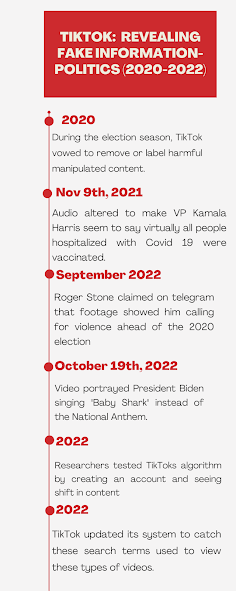
         TikTok has become a place where users are posting information that could have an effect on the election. TikTok has a positive outlook when discussing the issue and the company states, “At TikTok, we take our responsibility to protect the integrity of our platform- particularly around elections- with the utmost seriousness” (Han). With this, it is assumed by readers and viewers that they are taking this very seriously and are working diligently to find a solution to stop the spread of misinformation. According to an article by Rebekah Dunne, she describes that 1,057 U.S. residents were asked about their feelings towards social media and search platforms, specifically TikTok. With this research, “Even though TikTok boosted 100 million users towards the end of last year, it is the least trusted, with only 28% of respondents seeing the social platform as trustworthy” (Dunne). This shows that less than half of the respondents said they trusted this platform for the quality of their videos and if the videos were factual. 28% of respondents who trust TikTok is worrisome because that means that there is a good amount of people who watch these videos, and their opinions might be changed based on what they see. This in the end, could influence the election since these viewers are watching videos regarding political figures. In the wall street journal article, Worries Grow That TikTok Is New Home for Manipulated Video and Photos, Tiffany Hsu writes about the misinformation that these videos on TikTok are showing. This case started in 2020 during the election season when TikTok and other social media platforms vowed to remove or label harmful manipulated content. In November of 2021 there was a video posted of Kamala Harris, the Vice President, altered to make it seem like she was stating that all people hospitalized with Covid-19 were vaccinated. In the original film she was stating that these people that were sick were unvaccinated, but users of TikTok made her seem like she was telling the public that these people were vaccinated. This could potentially ruin her reputation on social media and affect the results in the election. Another example video discussed in the article was in September of 2022. This video that was posted shows political consultant Roger Stone claiming on Telegram that footage showed him calling for violence ahead of the 2020 election. Later, CNN aired that this was fraudulent deep fake videos. This could have a major impact on people’s opinions towards Stone. Stone is being portrayed in this video as wanting violence and the timing of this video being posted is very close to the election. Another example video was from October of 2022 regarding Ms. Biden. There were several TikTok videos that, “manipulated video of Ms. Biden promoting White House cancer initiatives at the Philadelphia Eagles’ home field” (Hsu). These videos were viewed tens of thousands of times. In these videos, the sound of the crowd was replaced with loud booing and heckling. Seeing this video spreads a dislike for Ms. Biden across the country. In October of 2022 two videos were posted that also could have had an effect on the election. The first video being President Biden portrayed to be singing “Baby Shark” instead of the National Anthem. The next video was a video where the White

President Biden singing baby shark


House press secretary Karine Jean-Pierre was edited to imply she was ignoring a question from a Fox News reporter. With these examples and many more that are out there on social media there is a need for this to be stopped. This is affecting and changing people’s opinions on political measures. Personally, I know when I see a video my first instinct is to not think it is fake. However, seeing videos that involve politics for sure makes me question what I am watching. People started to question these videos and it became such a big deal that researchers wanted to learn more about this app. This research team was from a corporate accountability advocacy group called SumOfUs. This group wanted to test TikTok’s algorithm, so they created an account on this app. They started by searching for the 20 most widely watched videos that showed doubt in the election system. The article stated that, “Within an hour, the algorithm had switched from serving neutral content to pushing more election disinformation, polarizing content, far right extremism, QAnon conspiracy theories and false Covid-19 narratives, the researchers found” (Hsu). TikTok’s response to this was to remove the content and inform the public that they updated their system to catch the search terms used to find these specific videos. These videos violated TikTok’s guidelines, it was just a matter of how to figure out a way to stop this from happening. In closing of the article, it was stated that TikTok had removed all the videos that were reported by The New York Times that went against its policies that “mislead users by distorting the truth of events and cause significant harm to the subject of the video, other persons or society” (Hsu). TikTok took the measures they needed to in dealing with these videos. TikTok stated on their page that they were updating their policies for political accounts. One way to limit these posts was to verify accounts when they are created. Verification is now mandatory for accounts that belong to “governments, politicians, and political parties through midterm elections” (Chandlee). These accounts that belong to politicians and political parties will also have their access to advertising denied which will help TikTok more consistently enforce their policy. A statement from TikTok that caught my eye when thinking of how hard working this company is included, “By prohibiting campaign fundraising and limiting access to our monetization features and verifying accounts, we’re aiming to strike a balance between enabling people to discuss the issues that are relevant to their lives while also protecting the creating, entertaining platform that our community wants” (Chandlee). I believe that TikTok is being very smart in the way they are approaching this issue. They are making sure that their platform can be a place for viewers to learn about politics, something that impacts their lives greatly, but at the same time protecting their company from being a place where misinformation occurs. Another step TikTok did in response to these videos was partnering with experts and fact-checkers to check how accurate the videos being posted are. They also worked in limiting the feed that contained unsubstantial content (Morse). They stated that with these experts it was important that they helped “improve our overall approach to platform integrity, from policies to enforcement strategies to product experiences…” (Morse). These fact checkers assess the accuracy of content in more than 30 languages. TikTok explains that for precaution while this content is being checked it is ineligible for recommendation into For You feeds. This means that it will not show up on viewers' home pages when they are using the app. Throughout political elections TikTok enforces its policies through not allowing, “Paid political advertising, and our Community Guidelines prohibit content including election misinformation, harassment- including that directed towards election workers- hateful behavior, and violent extremism” (Han). This statement from TikTok shows the diligence from their company during the political election.

STAKEHOLDERS

         The Stakeholders involved with TikTok are TikTok’s 1 billion users across 154 countries, Oracle, Walmart, the U.S. government, the company TikTok Global, TikTok and its technology, and ByteDance (Ruby).

The owner of TikTok, ByteDance

ByteDance is a Chinese internet company that owns TikTok. Oracle acquires 12.5% of the company while Walmart has a 7.5% stake in TikTok (Kovach). ByteDance has the majority of stake in the company with an overwhelming 80%. ByteDance made around $58 billion in revenue in 2022. The app was originally launched in 2016 by ByteDance, so ByteDance owns a large part of the company with other companies having little stake in comparison. ByteDance shareholders include American, Chinese, and international investors. About 53% of TikTok’s global shares are owned by American investors and the two companies Oracle and Walmart. Also, the 8,424 employees are stakeholders of the company as they show interest in working (Zippia). Along with employees, any investors that buy stock in TikTok also show great interest in the company. Throughout my paper, some of the political figures who are stakeholders in this case were President Biden, Kamala Harris, Roger Stone, Ms. Biden, and Karine Jean-Pierre. As a result of this case, the public of America are stakeholders because they are greatly affected by the election and its results.

INDIVIDUALISM

Individualism, according to Milton Friedman is the idea that the only goal of the business organization is to profit. This means that for an employee of that organization the only obligation they have to the company is to maximize profit for the stockholders and owners and doing this still obeying the law. On the other hand, Tibor Machan had a different view on individualism. His belief towards this was the same as Friedman’s first part but he also included that with keeping in mind that the goal is to profit, employees and workers might have other goals that they are responsible for socially. They can choose to use company resources for social responsibilities if it helps with the overall goal. This is a more free way of individualism and gives the employees, owners, and company a little more freedom with the way they run their organization. Through this company struggle, TikTok abided by the law in their efforts to solve the problem of this spread. Dealing with these videos is shown to not have a negative effect on their profit. From 2020 to 2022 TikTok’s revenue increased from $1.9 billion to $11.64 billion (Ying). Even though they had to spend more of their time focusing on this issue, they were still able to find a way to maximize their profit. If TikTok had not spent their time and efforts on evaluating this issue, they would have not maximized their profits as users wanted to see a change for the better of the app. TikTok cooperated with government and political figures in working to find a way to ensure a safe factual platform for their users.  

UTILITARIANISM

Utilitarianism is the idea of maximizing happiness in yourself and others. The main goal is to “bring out happiness and pleasure in all beings capable of feeling it” (Salazar). One way a Utilitarian shows their values is making sure that their actions benefit everyone around them. For example, in a workplace this would include making sure one’s actions benefited all the other workers and the company. Employees at TikTok were most affected during this case. They were being pressured to make sure the content being posted was not fake and affecting the election. Their main goal is to make sure that people are viewing videos that are not edited to make people seem like something they aren’t. Throughout the time that these TikTok’s were being created, employees were making sure that TikTok’s automatic system was catching and deleting them as fast as they could to benefit the company and keep them up in running. In return with the company staying up and running because these posts were getting deleted it benefited other employees and the company because everyone got to keep their jobs. Not only were the employees benefiting by keeping their jobs by making sure these videos are being deleted so the company can succeed, but viewers also appreciate when they scroll through their feed and there are no videos relating to political figures being made out to be something that they are not. When viewers see a post that might not be true, and they know it is not true they could easily become very upset and possibly delete the app because of their frustrations. But, in this case with deleting these posts, viewers will be happy because they most likely won’t see posts they don’t want to see. TikTok is an app that creates happiness for viewers as they view videos that make them laugh and smile. This app is addictive for users as many get stuck scrolling for hours and don’t even realize the time that has passed. A Utilitarian would disagree with the way TikTok can manipulate viewers to believe false information because in the end it is not maximizing one’s happiness. Also, TikTok can get in the way of one’s personal health as they are comparing themselves to these people in these various videos.

KANTIANISM

         Kantianism is a theory developed by Immanuel Kant that has four basic principles. These include acting rationally, helping others to make rational decisions, respect others, and be motivated to do what is right because it is right. Under Kantianism, The Formula of Humanity states that “Act in such a way that you treat humanity, whether in your own person or in the person of another, always at the same time as an end and never simply a means” (Kerstein). This formula explains that you should never treat a person merely as something that is valuable to get something else. TikTok continues to put their efforts in steps to eliminate this misinformation without disregarding The Formula of Humanity towards their users and employees. TikTok is motivated to do what is right in this situation and that is to do everything they can do to prevent these videos from spreading. With this ethical theory, Kantians would agree with the actions and steps that TikTok took to make sure these videos that were election focused were being caught before viewers got to see them and make opinions that are not from facts. This is shown when researchers created a TikTok account to test its algorithm. After creating this account, the researchers searched for the 20 most widely watched videos that showed doubt in the election system. In the New York Times article, Hsu stated that, “Within an hour, the algorithm had switched from serving neutral content to pushing more election disinformation, polarizing content, far right extremism…” (Hsu). Kantians would agree with TikTok’s response to this because they stated that they would remove the content that violated its guidelines and would update its system to catch the search terms used to find the videos. TikTok is doing what is right and is motivated to find the best way to catch these videos that users are posting. They are also respecting these viewers because they don’t want their opinions to be made from watching a video that has fake information. TikTok is not using their viewers for their own personal gain, instead they are trying to find a way to solve this problem. This is a very smart action that TikTok performed because not only does this affect the users in the moment by seeing these videos, but if these videos shape their votes in the election, it could very easily affect the results since this browser is such a worldwide prominent social media app. The company is hard to evaluate since they continue to improve their app to catch misinformation, yet there are still posts out there currently that portray misinformation. Because of their efforts, a Kantian would agree with their actions. TikTok has good intentions, and this is something that is very important when considering the Kantian view. TikTok didn’t create their app wanting people to post misinformation and viewers can notice the efforts they are putting in to stop this.

Americans trust/mistrust in TikTok


VIRTUE THEORY

         Virtue theory, developed by Aristotle, describes that rationality is the characteristic that makes one person different from another. Aristotle believes that to live a good life and function strongly throughout one's life people must practice rationality. There are four cardinal virtues to virtue theory that are very important to look at when looking into TikTok as a company. These four include: Courage, temperance, justice/fairness, and honesty. The one intellectual virtue that Aristotle describes in this theory is prudence. Prudence is the ability to look forward at your future self and make good decisions in your current experiences to make sure you become the person you want to be. Aristotle believes that happiness comes from living a flourishing life. This means that you have lived your life to its fullest and have taken in and appreciated everything. The main goal of this theory bases the idea of good upon a specific thing’s characteristics and its purpose. When diving into the TikTok case and the way the employees dealt with it through the Virtue Theory, these employees showed great courage when trying to solve this issue. These employees worked long days and were willing to work hard and do anything they needed to make sure these viewers weren’t watching fake news relating to the election. The business as well showed great courage when dealing with this issue. They worked hard to come up with solutions and battled through the adversity they faced as there were many complaints about the posts on the app. Management at TikTok didn’t do a great job with the treatment of their employees, meaning that the second virtue, fairness, was not met by the company. These employees stated in multiple articles that they were working long hours in toxic environments. Some may say that employees were not being fair in the way they chose the videos to remove, but from the insider it is known that experts are the ones that are the deciding factor. The next virtue, temperance, was not met by the company and employees as employees’ expectations were way too high for their position. In an article it is stated that, “Exhausting hours and sleep deprivation are coming amongst staff, while some employees said they averaged 85 hours of meetings per week” (Yahoo Finance). This is not a reasonable expectation for these workers and with this stress and exhaustion it doesn’t do the company any good. The company also had high expectations from the public to get rid of these videos. The last virtue is justice. Justice is described as hard work and good ideas. These employees and TikTok management are working hard to make sure these videos are being deleted from viewers' pages and they have come up with ways to prevent this from happening. For example, updating their system to catch search terms relating to misinformation in the election. Overall, the company shows justice by coming up with solid ideas to stop this spread.

JUSTIFIED ETHICS EVALUATION

In my opinion, TikTok’s approach to this issue was the best they could do. Even though there is no solution to stopping people from editing posts and posting them for the world to see, I think there are few solutions for TikTok to implement. Although, TikTok was unethical in the way they cared for their employees. With the long hours and overworking of their employees, it became known to the public that one should not apply to work for TikTok because of these conditions.  I think the most unethical part about this case was the fact that in 2020 before the election TikTok agreed to remove or label the harmful manipulated content and clearly this didn’t happen as much as people wanted. Videos were still being posted and seen by the public. The content in videos that are posted on TikTok can be very unethical as described in some of the examples of videos relating to the election. TikTok is a very addictive app, and many people get stuck scrolling for hours. When people get caught up in these videos, they start to form opinions on whatever it is that they are watching. Because social media is a platform with a lot of freedom to post whatever you want, many other companies are struggling with this issue as well. I think that because they are working to update their search terms and catch these videos as quickly as they can, they are taking steps to limit the negative effects of these videos.

CONCLUSION

         In all, TikTok has created a good baseline for protecting viewers from seeing information that is false. They are trying their best to quickly update their systems to catch all these search terms without getting rid of the app completely. The main issue is that TikTok vowed to remove all content starting in 2020 that would impact the election. As described in my essay it is proven wrong as many accounts of videos were created to depict political figures as something they aren’t. Now, being 2022, there are still several videos being created that viewers are watching that are related to the election and people involved in the election. Throughout my paper, I analyzed TikTok’s response to this issue and used the theories of individualism, Utilitarianism, Kantianism, and Virtue Theory to evaluate the company.


REFERENCES

Chandlee. “Updating Our Policies for Political Accounts.” Newsroom, TikTok, 16 Aug. 2019, https://newsroom.tiktok.com/en-us/updating-our-policies-for-political-accounts.

Dunne, Rebekah. “Americans Trust Google More than Facebook, Tiktok.” Search Engine Journal, 10 Mar. 2021, https://www.searchenginejournal.com/americans-trust-google-more-than-facebook-or-tiktok/397774/.

Han. “Our Commitment to Election Integrity.” Newsroom, TikTok, 16 Aug. 2019, https://newsroom.tiktok.com/en-us/our-commitment-to-election-integrity.

Hsu, Tiffany. “Worries Grow That TikTok Is New Home for Manipulated Video and Photos.” The New York Times, The New York Times, 4 Nov. 2022, https://www.nytimes.com/2022/11/04/technology/tiktok-deepfakes-disinformation.html.

Kerstein, Samuel. “Treating Persons as Means.” Stanford Encyclopedia of Philosophy, Stanford University, 13 Apr. 2019, https://plato.stanford.edu/entries/persons-means/#:~:text=One%20formulation%2C%20often%20called%20the,1785%3A%20429%2C%20italics%20removed).

Lin, Ying. “Tiktok Ad Revenue (2019–2024).” Oberlo, Oberlo, https://www.oberlo.com/statistics/tiktok-ad-revenue.

Morse, Andrew. “Tiktok Removed Nearly 350,000 Videos Related to Election Misinformation.” CNET, CNET, 25 Feb. 2021, https://www.cnet.com/news/politics/tiktok-removed-nearly-350000-videos-related-to-election-misinformation/.

Ruby, Daniel, and About The Author Daniel Ruby Content writer with 10+ years of experience. I write across a range of subjects. “35+ Tiktok User Statistics: How Many TikTok Users Are There in 2022?” Demandsage, 16 Nov. 2022, https://www.demandsage.com/tiktok-user-statistics/.

Salazar, Heather. The Business Ethics Case Manual .

Stevekovach. “Tiktok Deal Puts U.S. Owners in Charge, but Chinese Parent Company Still Has Some Say.” CNBC, CNBC, 22 Sept. 2020, https://www.cnbc.com/2020/09/21/tiktok-deal-splits-control-between-us-and-chinese-owners.html.

“TikTok Staff Speak out about Toxic Work Culture and Emphasis on 'Relentless Productivity'.” Yahoo! Finance, Yahoo!, https://finance.yahoo.com/news/tiktok-staff-speak-toxic-culture-104417817.html?guccounter=1&guce_referrer=aHR0cHM6Ly93d3cuZ29vZ2xlLmNvbS8&guce_referrer_sig=AQAAAI8RY0VGJn6eKALw3U-2ysIcCSEfpKGfkFN_Ln-233TzYawgFDyqccq7fCuu0ZUtVUfgJ_BPb_K5Dw__GhL3CuFOp1wS61cJqbDyyY_0fF5ZLmRu8wfgSNjJxMq4ipsdgy77Lqdq8ggrcPmKsssZmEPZxnvhlx9sfaLlV8JZXZy3.

             “Working at TikTok.” Employee Reviews and Culture, 18 Nov. 2022, https://www.zippia.com/tiktok-careers-1472578/.
Monday, December 5, 2022

Gab: Unethical Social Media Platform (2022)

Abstract

Gab's Logo
    Gab is a social media platform where there are no guidelines for the users which leads to a lot of controversy. This platform is a safe haven for users who are not warmly welcomed on popular social media sites due to their opinions. This paper will discuss the ethical issues that Gab holds. Looking through evaluations of individualism, utilitarianism, kantianism, and the virtue theory, we will dig deeper into the impact Gab has on the nation and the future of the nation. Individualism refers to the main goal of a business is to profit within the law. Utilitarianism refers to how actions can maximize one's emotions. Kantianism refers to the formula of humanity and motivation must be presented. And virtue theory refers to the intellectual virtues and the virtues of characteristics explaining how virtues play a role in Gab. These evaluations will look into ethical decisions that have been made from the owner of the company and how he has reacted to the issues. Along with that, the posts and comments from the users that have led to unethical decisions and actions that had great consequences and have affected the country immensely. From my view, due to the lack of guidelines and holding people accountable for their actions, this social media site causes a lot of harm to the nation and even worldwide.
Ethics Case

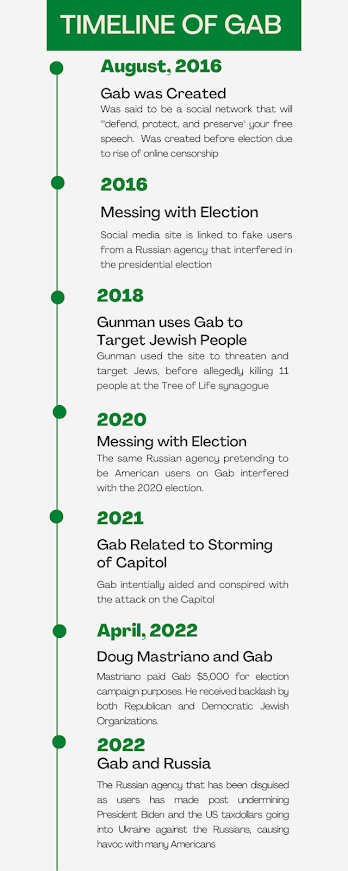
   In recent years, there have been great advancements in technology. With the new electronics and internet becoming accessible to more people, social media has taken a big role in our world. From FaceBook, to Instagram, to TikTok, to Twitter, people have been able to create more connections than they ever could before. With all of these new connections and easier ways to spread information, there is also a lot of false information that appears on social media. A new social media platform was brought to the surface in 2016 called Gab. Gab was founded by Andrew Torba right before the 2016 election. This social network was created to “defend, protect, and preserve” your freedom of speech (Goodwin, 2021) . Torba realized the amount of censorship on all social media platforms so he created one where you can speak whatever you want without being stopped. With that comes a lot of false information that is being spread. Right away this social media platform became an issue around the elections. Gab is an American microblogging and social networking service known for its far-right user base. Many comments that were posted had a major effect on people's emotions that later resulted in a tamper with the elections from false information.

    Gab is a social media site that has links to a Russian agency. This Russian agency disguised as fake American users who would post comments that later would interfere in the presidential election (Myers, 2022). Since there were no guidelines or supervision over this network, people are able to speak freely with no consequences. False information started spreading like wildfire creating angry and passionate Americans. This continued and fueled people as years went on. In 2018, a gunman used the network to threaten and target Jewish people. He then later went to kill eleven Jews at the Tree of Life synagogue (Goodwin, 2021). Gab is seen to have no boundaries with no right or wrongs like any other social media platforms have. Gab disappeared, laying low for a few years, and then once again resurfaced when the 2020 elections came around. The fake users from the Russian agency once again started spreading false information to cause issues in the election. Users on Gab became so infuriated that it built up to the storming of the capitol. Gab intentionally aided and conspired with the attack on the Capitol by creating a space for like minded people to come together to fuel their anger. People posted to gain “followers” who grew angry throughout the posts that triggered people to storm the Capitol. 

    Gab has become a network full of like minded people with no supervision. It is known as a safe haven for neo-Nazi, racists, white supremacists, white nationalists, antisemites, conservatives, right-libertarians, and believers in conspiracy theories (Goodwin, 2021). This caused people who were banned from social media platforms to be attracted to it. This social media platform was created to cause chaos. 

    In recent months, the Russian agency that has been disguised as users has made posts undermining President Biden and the US tax dollars going into Ukraine against the Rusissians (Goodwin, 2021). With peoples strong opinions, a lot of havoc arose between Americans. The Russians goal is to ignite anger amongst conservative voters and to undermine the trust in the American electoral system. They are able to do this because of Gab. 

Stakeholders    

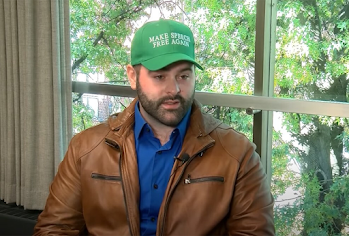
Founder Andrew Torba
    People who were affected by Gab and the decisions that this business makes are known as stakeholders. Stakeholders would include Andrew Torba who is the creator of Gab, the 100,000 users, and even everyday Americans who were affected by posts on this social media. Andrew Torba is affected by the decisions happening to this social media because he created it. Any bad or good outcomes from Gab affect the image of Torba. Torba has received a lot of backlash for creating Gab but has only continued to say the same thing; it was created for free speech so he will not create guidelines for users. Andrew Torba has held his ground and truly believes this social media platform is acceptable. The 100,000 users are also affected by Gab. They are strong minded and continue to be because Gab offers them a space for their opinions that they couldn’t say on other platforms. They would have no “safe haven” if Gab was eliminated. Along with that, the actions that happened and that are allowed on Gab resulted in everyday Americans being affected. Eleven people were killed because of a gunman who plotted on Gab. Also, the actions of the rioting at the Capitol were also consequences of Gab and affected many Americans nationwide. Gab has affected many people and continues to, especially around election times.

Individualism

    Individualism is when the businesses main goal is to profit within the law. Milton Friedman, an economist, formed an idea around individualism. This idea stated that the only goal of a business is to profit. That means that they would stop at nothing until they maximize their profit for the owners or stakeholders. Many people have attempted to take down Gab, but have been unsuccessful due to them following the law. Gab's main goal is to be a social media site where you can post and comment on any opinion you have without any backlash. They were able to profit this by targeting a specific audience that was drawn to this social media idea. A lot of negative aspects came from this platform; people were commenting awful statements and were targeting specific people based on religion or political beliefs. But even though this platform generated a lot of hate and anger, there was nothing anyone could truly do because it was protected under the law. Gab is protected under the law of freedom of speech, leaving it hard for people to truly shut down this site. They were able to maximize their “profit” for the stakeholders; Andrew Torba and users, while also following the law.

    Although Gab was able to achieve individualism, this concept of individualism does not take into account the identity of the company and leaders or the motivation of investors to invest in socially responsible businesses. In terms of Gab, the business strived to be successful and was able to be successful but with the price of their image. Their main goal was to be a social media site where you can post and comment whatever opinion you have. The users who posted on this platform did receive quite a lot of backlash. They were seen as “neo-Nazi, racists, white supremacists, white nationalists, antisemites, conservatives, right-libertarians, and believers in conspiracy theories” (Goodwin, 2021). These types of people are not kindly welcomed into our world because of their ruthless and unfair opinions. Along with that, creator Andrew Torba received a lot of publicity in a bad way. Right away, after Gab was published, it created a lot of public enemies. This type of social media was banned from Apple and Android app stores. The only way to access it was through the Internet. 

Gab is Reliant on Their Users to Function

Utilitarianism

   Utilitarianism is the theory of how actions affect one's emotions. It’s how you can maximize happiness in yourself and others through decisions and actions. This also means how decisions can maximize sadness. These actions and decisions are made up of doing what's right and what's wrong. In terms of Gab, a lot of wrong has been done from users and the posts they have created. 

    Stakeholders of Gab had a lot of responsibility with maximizing users and outsiders emotions. It is seen that information from comments on Gab have caused conflict and infuriated many people. It has fueled anger. Conflict and controversy is unavoidable on social media platforms. That is why companies like Twitter, Instagram, FaceBook, and YouTube step in to set guidelines. Their actions and decisions are made to maximize the happiness of their users. Of course not everyone will be happy, but they base their decisions on the majority of users. Gab was created to target the unsatisfied users on those platforms. Andrew Torba was looking to maximize happiness for those unsatisfied users. He was able to do that because of the lack of guidelines. With that came consequences, such as, fueling and maximizing anger from users clashing with outside people.

    There are around 100,000 users on Gab. That is a small portion of people considering other social media platforms estimated in the billions for users. Even though it is a small number, these users have a great impact. The users on Gab tend to fuel each other, they maximize their emotions in an angry way. For example, they were convinced that the 2020 elections were rigged and then later conspired to storm the Capitol. They fueled one another. But it’s not just the user's actions that affect other users, they also affect the outside people. On average, there are 4 million outside views on Gab, that means nonusers go and look on the social media platform. What users comment and post has maximized anger in outside users. Their actions have put a negative effect on everyday people. 

    Gab is full of unethical decisions. They set out to create a platform that was different from everything else. Their targeted audience are  the misfits on popular social media sites. This is where people were able to spread misinformation and be able to target topics and people with no consequences. Gab has a major effect on everyone's emotions due to their decisions and actions that were made.

Kantianism

            Kantianism is an obligation of respect to all autonomous beings. It consists of principle formulas, one being the formula of humanity. It states that, “You treat humanity, whether in your own person or in the person of any other, always at the same time as an end, never merely as a means” ( Kant 1785: 429, italics removed). In a business aspect, this concept is for businesses and business people to follow. It implies for them to treat all persons with respect and morally right. It is an ethical theory that is in place for people to act rational towards one another. It allows and helps people to make rational decisions in an individual and business sense. Business people are motivated to do what is best because it is the right thing to do. From recent research it has come to light that Gab has different views than other social media platforms. The world sees them as morally wrong but what Andrew Torba has created he believes is the right thing.

In recent years, social media platforms have taken steps to decrease hate and misinformation on their platforms. Social media sites such as Twitter, Instagram, FaceBook, and YouTube have taken precautions surrounding users and the posts they make. They have done this because it is the right thing to do in society. They have realized that disinformation can cause a lot of conflict worldwide and the root of the spread of this information are their platforms. Each site has a sensor system and takes action in eliminating misinformation. If users are consistently posting misinformation and bad comments, these social media sites have a duty and power to ban these users. But with these users being banned, they are led to other social media sites where they are allowed; Gab.

Gab is a social media site that is the opposite of Kantianism. There is a lack of morals and doing the right thing on this site. Gab provides a space for people to say whatever they please without being controlled. They granted these users freedom of speech on a social media platform where anyone can see it. In a sense, freedom of speech is a good thing, but only when used morally right. The posts and comments made in the name of freedom of speech have caused damage to others. These actions go against the concept of kantianism and the duty we have to one another.  Misinformation has been spread throughout the site and continues to spread targeting people based on race, political and religious beliefs. Other social media platforms do their best to keep their platforms morally fair  out of respect for other people. Gab is a social media site that does not follow Kantianism in an ethical world. They lack morals and kindness towards other beings.

 Virtue Theory

    The users of Gab are quite questionable. There are rights and wrongs of basic human behaviors. We understand that crimes are bad and hurting others is bad. We also understand that helping others and doing the right thing is good. These rights and wrongs are taught and learned as we grow. Virtues are the characteristics that allow things to function properly. These characteristics include; courage, honesty, temperance, and justice. They have to be learned. Virtues doesn’t focus on the rules but rather on what kind of person you should be. The opposite of virtues are vises, which are the wrongs. People have both. The users of Gab don't care for others feelings, these actions lead to poor actions. Those actions have been murder, rioting, targeting certain people because of their political and religious beliefs. They lack virtues. But it’s not just the users but also Gab as a company.

    Gab also lacks virtues. Virtues in a business aspect are guidelines for the company to be honest, have compassion, to be fair, have generosity, serve justice, etc. Since Gab does not have guidelines for their users, they do not help keep a balance of rights and wrongs. Breaking down the virtues of a business; courage, honesty, temperance, justice, it is seen how Gab lacks some of them. In a way, Gab does have courage. Just creating this app was a riskful task. Andrew Torba knew this site would not be acceptable in others eyes but still took the risk. But even though there was courage involved it was not courage related to doing the right thing. By creating this site, a lot of damage has been done. On the other hand, Gab lacks honesty. This social media site allows misinformation to be posted on their page and labels it freedom of speech which makes it “acceptable”. Since they do not have honesty on their platform it reflects back on the company and creator regarding their virtues and what they prioritize . Along with that, Gab lacks temperance. Temperance is known as self-restraint or self-regulation. Businesses complying with the law is an example of temperance. Gab consists of users who do not possess self-restraint. They post and display absurd comments for the public eye to see without thinking of the consequences, it causes conflict. The final virtue is justice. A user of Gab targeted Jewish people and stated he was going to shoot them. Later on he ended up shooting and killing eleven jewish people. Gab was not held accountable for what had happened. There was no justice for what this social media site led to. There is a lack of accountability which leads to a lack of justice. Users have a free range of everything meaning they can say and do whatever they please without consequence. Along with that, Gab is also not held accountable for what their users comment and do. Social media sites like Twitter and FaceBook keep a strict guideline of virtues for their users. Companies like FaceBook have also been held accountable for the false information that is posted on the platform. Gab does not have responsibility like these companies which causes a lack of virtues of doing the right thing from Gab and their users.

Ethics Evaluation

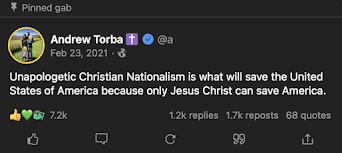
Gab Post Made By Torba In 2021
    Overall, from an ethical standpoint, Gab should not exist as a social media platform. Every business has values to follow even social media platforms have ethical values. They identify what is wrong and right in society. There are guidelines on each platform to eliminate as much false news as possible. Gab goes against all of these standards in place. Gab could shift its guidelines by creating right and wrongs on the site. That would mean the site could be monitored and watched for terrorism and just overall bad people that cause conflict in society. By doing that it will allow an ethical standpoint for the social media site. The only issue is this cannot happen with the current ownership. Andrew Torba is a very strong willed and persistent person on the purpose of this platform. That purpose was to be a place where you can say whatever you want without getting banned or posts deleted. The point I think Torba is missing is that this is an easy access to the United States. Terrorism has been occuring like nazi affiliated people, white supremacists, even Russians are able to gain access and control over fellow Americans. The social media platform has only caused havoc and the only way to stop it is by eliminating it. Higher powers have been in the process of this by deleting it off of app stores but they cannot eliminate it completely. The internet is a powerful and typically a place that havens unethical things; including social media sites and misinformation. 

The basic definition of ethics is that it is the “moral compass that governs a person’s behavior” (Dictionary). From the research that has been gathered, Gab lacks a moral compass which leads their users to go wild on posting. In order to adjust Gab to be more ethical, there needs to be more guidelines or it should be deleted completely. Yes, there is freedom of speech, but there is a limit before it becomes offensive and causes damage.

Conclusion

    Gab has been on the internet since 2016. This social media platform is not going anywhere anytime soon. The longer the site is around the more users it gains making it have more influence on the misinformation being spread. Gab is an unethical company that looks to further their philosophies. To stop this from happening people need to become aware of the damages that are made from Gab. Strict guidelines need to be set for this social media site. That includes holding the users and creator accountable for what they say and do. There needs to be consequences for their actions. 

Reference

Allyn, B. (2021) Social Media Site GAB is surging, even as critics blame it for Capitol ViolenceNPR. NPR. Available at:

https://www.npr.org/2021/01/17/957512634/social-media-site-gab-is-surging-even-as-crit ics-blame-it-for-capitol-violence (Accessed: December 1, 2022).

Andrews, T.M. (2021) GAB, the social network that has welcomed Qanon and extremist figures, explainedThe Washington Post. WP Company. Available at: https://www.washingtonpost.com/technology/2021/01/11/gab-social-network/ (Accessed: December 1, 2022).

Gab Social. Available at: https://gab.com/ (Accessed: December 1, 2022).

Goodwin, J. (2021) GAB: Everything you need to know about the fast-growing, controversial social network | CNN businessCNN. Cable News Network. Available at: https://www.cnn.com/2021/01/17/tech/what-is-gab-explainer/index.html (Accessed: December 1, 2022).

Myers, S.L. (2022) Russia reactivates its trolls and bots ahead of Tuesday's midtermsThe New York Times. The New York Times. Available at: https://www.nytimes.com/2022/11/06/technology/russia-misinformation-midterms.html (Accessed: December 2, 2022).

Special to the Capital-Star, P.C.-S.A.4 (2022) What is Gab? A look at the far-right social media platform backing Doug Mastriano - Pennsylvania capitalStar. Available at:

https://www.penncapital-star.com/campaigns-elections/what-is-gab-a-look-at-the-far-righ t-social-media-platform-backing-doug-mastriano/ (Accessed: December 1, 2022).


Friday, December 2, 2022

TikTok and the Dangerous Spread of Misinformation(2020-2022)


Abstract

            TikTok is one of the most popular social media sites on the planet, amassing 1 billion monthly users, (backlinko.com). Unprecedented in its reach and influence, the app has a massive responsibility that no other social media company has had to realize. It’s imperative that the information being shown is the truth, and not manipulated to alter viewers opinions, especially when it comes to topics like politics. This, however, has been the center of massive controversy around the app, with political figures being shown in deepfakes to manipulate their messages, to false information being spread like wildfire. The company responded stating that they would take action to limit this, but despite this the misinformation continues to run rampant. 

            Different ethical theories would take different stances on the misinformation spread on TikTok. For individualists, they would only care that if the company is operating within the law, their main goal should be to optimize profits and wealth of the owners. With this being such a new issue, TikTok operates within the laws, and its reach is spread further with the attention it gains, thus increasing profits, so individualists would not see an issue. Utilitarian’s value the importance of increasing the happiness of people. A utilitarian would take issue with the spread of misinformation, as this can lead to division among most people. Kantians would take the stance that TikTok takes action to prevent the spread of false information and eliminate this issue from the app. Lastly, Virtue Theory would take large issue with TikTok’s lack of trust, good intention, and honesty, considering the never before seen spread of misinformation the app is responsible for. 


Ethics Case Controversy

            TikTok was released in China in September of 2016, and since then has exploded into the most largely used social media app in the world. It was released worldwide in 2018, but launched for most areas around the globe in 2017. By 2020, the app had over 2 billion users, (bbc.com). 

            One of the biggest accusations against TikTok continues to be against the data the app collects from its users. Being that it is originally a Chinese app that was mainly operated by a Chinese company, (up until a deal put U.S. owners in charge which we’ll talk more about later), many politicians were worried what information was being shared. The main concern was that the app could be used by the communist Chinese party to spy on Americans as well as other countries. India banned TikTok in April of 2019, (bbc.com), however this was later overturned. The U.S. opened a national security review of the app after both Democratic and Republican lawmakers claimed that the app was a threat. Some of the data TikTok collects seems unnecessary and an invasion of privacy. Things like location, phone model, keystroke rhythms when users type, and even what users copy and paste on their phones, both in and out of the app, (bbc.com). Donald Trump, when President, worked to ban TikTok from the Appstore, however clearly this did not happen. TikTok worked with the governments of the world to try to be as transparent as possible. They allowed for experts to examine their alarmingly effective algorithm, as well as clearly stating what data they collect and what they do with that data. Nothing has been found to be an issue, and many other apps such as Reddit, Facebook, and Instagram also collect similar data. 

            This past midterm election, TikTok was the center of a lot of attention, as the app is the foremost platform for people to spread misinformation, attempting to affect political outcomes. This, however, is not a new topic of conversation when it comes to TikTok. Three years ago, TikTok had to create a set of rules regarding posts surrounding election periods, prohibiting campaign advertising, (washingtonpost.com). This does not remove the threat that the app has, especially when it comes to politics. Lindsay Gorman, former senior advisor to the Biden administration, said, “If Russia had owned Facebook during 2016, the amount of influence that Russia could have exerted on American voters might have made that effort much, much more successful. That’s the vulnerability that we’re talking about with TikTok,” (Gorman). 

President Biden and Vice President Harris
            A California law in 2019 made it illegal to share deepfake videos of politicians within 60 days of an election, (nytimes.com). TikTok itself stated that it removed videos “that misled users by distorting the truth of events and cause significant harm to the subject of the video, other persons or society.” This past month, during midterm elections, there were many deepfake and manipulative videos posted about political figures such as President Biden, his Vice President Kamala Harris, former President Trump, Nancy Pelosi, and many others. It is impossible for TikTok to narrow down each individual fake video and delete it from the app, and the company has taken a stance to attempt to prevent the spread of misinformation as much as possible. As recently as September 28, 2022, TikTok released an official statement, “An update on our work to counter misinformation.” This includes using fact checkers to analyze posts, improved detection of audio which is known to be misleading, and increased investments into machine learning models, (TikTok.com).

            Although TikTok has never been banned from the Appstore, or removed in any other countries around the world, it still poses a threat, although it has been improving its stance. TikTok is now under control of the U.S. after a deal in September of 2020. Americans now hold 4 of 5 seats on TikTok’s global board, with Bytedance CEO at the 5th seat, (cnbc.com). President Trump was responsible for this deal, which gave American companies Oracle and Walmart full control over the app. Despite the continued spread of misinformation, many users are more comfortable with the security of TikTok.


Individualism

            An Individualist would not see any issue with how TikTok operates its business. Milton Friedman, a Nobel prize winning economist, argued that businesses should not be socially responsible and should only focus on maximizing profits for the owners, and anything else such as spending money on resources, employees, and other things is taking away from the owners, (Salazar 17). The only issue an Individualist would have is that TikTok does invest in ways to solve the issues presented in this case, however the app itself is still a hotspot for misinformation and attention grabbing videos, which ultimately maximize profits. 

On top of this, I believe the app would have been removed and there would be no profits had it not cooperated with the government and political officials, and shown an effort to decrease the spread of false information. It could be argued that these steps taken were necessary to continue to increase profits. This ties into the argument made by libertarian philosopher, Tibor Machan. He claims that Friedman’s ideas are “overly restrictive” and “sometimes limits long-term profits by failing to acknowledge that other goals of a business besides profiting may actually help to boost profits,” (Salazar 18). Along with this, as mentioned previously, TikTok does not really need to be concerned with stakeholder groups, which is another common theme in individualist theories. 

All things considered, an individualist, depending on their specific stance, would likely not see any issue with how TikTok operates and handles its issues such as misinformation and data collection. 


Utilitarianism


Dr. Nia Williams - Bangor University
Utilitarianists believe the most important role a business plays is to improve the happiness of all the customers it affects. There are two ways to interpret this when it comes to TikTok, the short term, and long term. Short term, TikTok does this perfectly. In fact, there is probably no other app on the planet that creates happiness in the way TikTok does. Its short, sub 30 second videos of cute dogs, funny people, and personal interests are an artificial spike of dopamine that keeps users hooked for hours. It’s been accused of being highly addictive for this reason, as stated by Dr. Nia Williams of Bangor University, (bbc.com). This leads us into the long-term effects. Students often say that they must delete TikTok during exams in order to properly focus, (bbc.com). Along with this, getting into the situations described in this case, the misinformation spread on TikTok can cause a lot of argument and hatred between people. I personally have seen arguments started over a TikTok, and I’m sure I’m not alone. Anyone familiar with the app can look at a comment section of a controversial or political TikTok and see what I’m talking about. “Under a utilitarian framework, all beings who are capable of experiencing happiness should be considered when weighing the costs and benefits of actions,” (Salazar 20). Despite the short-term boosts in dopamine, a utilitarian would not be happy with TikTok ethically. These short term, addictive periods of happiness are comparable to drugs or alcohol. They can be detrimental to a person’s wellbeing, draining hours of their time and creating a negative loop. Long-term it can damage grades, relationships, and possibly most importantly, a person’s integrity and ability to think on their own. Overall, profits are most important, and TikTok uses its algorithm and addictive nature to draw in more consumers. 


Kantianism

            It’s challenging to determine whether TikTok’s controversy is justified under Kantian ethics. “Kantianism does not make decisions based on consequences, but rather on what Kant calls the “Good Will,” (Salazar 21). The “good will” of the company is hard to determine, since they continue to take steps to eliminate misinformation, however misinformation still is all over the app. From my perspective, as long as TikTok continues to take actions that show their disproval of the misinformation plaguing the platform, a Kantian theorist would see no issue with TikTok. Whether their intentions are pure, or just to keep their customers and stakeholders happy, from the outside it is unfair to make assumptions. If their actions show good intentions, it must be assumed their actual intentions align with their actions. 

TikTok's new CEO Kevin Mayer

            In a different perspective, a Kantian also believes that respecting someone’s freedom and rationality is key, (Salazar 22). It could easily be argued that the data TikTok collects does not respect an individual’s freedom and rationality, however upon downloading the app the user is asked to read and agree to all of the apps terms. You are given the choice to allow TikTok to collect this information by using the app, and it is just as easy to delete the app if you don’t want your information collected. It is fully disclosed what information is collected, how it is used, and how the algorithm is used. In my eyes this is not an invasion of privacy or freedom if you are agreeing to these terms and knowingly using the app despite all this. Most people don’t read the terms of service and privacy policy, but this is not the company’s responsibility, and they do their part to inform the customer. 

            This is a tricky one, but TikTok does its part to be transparent with all its customers and stakeholders. It is unfair to assume malicious intent as long as the company cooperates with stakeholders and the law to prove that they are not attempting to invade privacy or encourage the spread of misinformation. The people on the app are the ones posting misinformation, and TikTok is not intended for this purpose according to the company, as proven by the steps they have taken since the issue arose to eliminate it. 


Virtue Theory

            Similar to Kantianism, a virtue theorist would want to analyze the intent of the company. However, with a virtue theorist, is much more interested in the character of the company or individuals in charge and how their actions show this. “Is the person getting better in life, flourishing, and fulfilling his or her purpose in life, or not?” (Salazar 22). To interpret this into the perspective of a company, is TikTok striving to make the app better and fulfill the app’s purpose in the world? TikTok started to simply entertain people with its short videos. It gave people an opportunity to showcase their talents and creativity, and potentially make money. Many people who have gained a large following on the app have profited greatly off it, whether directly through their TikToks or through sponsorships garnered from their fame. Although the apps users take advantage of the platform and the freedom it offers, the app has taken the stance that it does not approve of posts that spread misinformation and hatred. With this in mind, it is easy to assume, like mentioned previously, that the company has good intentions and is striving to improve its place in the world. 

            Some of the values that are important when considering virtue theory are honesty, justice, and leadership. These are all values TikTok has displayed throughout the years, working to overcome the controversy it has created. They have been fully transparent with all of its stakeholders, held individuals responsible who have threatened the apps integrity, and paved the way for many people to create a better world. 


References

Alvarado, Jesus. “Deepfake Videos on TikTok Can Be Fun. They Can Also Be Malicious.” Marketplace, 1 Nov. 2022, https://www.marketplace.org/shows/marketplace-tech/deepfake-videos-on-tiktok-can-be-fun-they-can-also-be-malicious/. 

Hsu, Tiffany. “Worries Grow That TikTok Is New Home for Manipulated Video and Photos.” The New York Times, The New York Times, 4 Nov. 2022, https://www.nytimes.com/2022/11/04/technology/tiktok-deepfakes-disinformation.html. 

Kovach, Steve. “Tiktok Deal Puts U.S. Owners in Charge, but Chinese Parent Company Still Has Some Say.” CNBC, CNBC, 22 Sept. 2020, https://www.cnbc.com/2020/09/21/tiktok-deal-splits-control-between-us-and-chinese-owners.html. 

Salazar, Heather. The Business Ethics Case Manual. n.d. 

Tidy , Joe, and Sophia Smith Galer. “Tiktok: The Story of a Social Media Giant.” BBC News, BBC, 5 Aug. 2020, https://www.bbc.com/news/technology-53640724. 

“Tiktok User Statistics (2022).” Backlinko, Backlinko, 5 Jan. 2022, https://backlinko.com/tiktok-users#monthly-active-tiktok-users. 

TikTok. “An Update on Our Work to Counter Misinformation.” Newsroom, TikTok, 16 Aug. 2019, https://newsroom.tiktok.com/en-us/an-update-on-our-work-to-counter-misinformation. 

Tucker, Emma. “TikTok's Search Engine Repeatedly Delivers Misinformation to Its Majority-Young User Base, Report Says | CNN Business.” CNN, Cable News Network, 18 Sept. 2022, https://www.cnn.com/2022/09/18/business/tiktok-search-engine-misinformation. 

Zakrzewski, Cat, et al. “As Midterms Loom, Tiktok Faces Its next Political Test.” The Washington Post, WP Company, 2 Nov. 2022, https://www.washingtonpost.com/technology/2022/10/31/tiktok-faces-2022-midterm-elections/.