Showing posts with label Election 2020. Show all posts

Friday, December 2, 2022

YouTube: Misinformation Controversy (2020-2022)


Abstract

YouTube is a form of social media that consists of video sharing and production. Users can post videos as well as interact with items already on the site. YouTube, along with other popular social media sites faced pressure to censor the content being posted by their users. The controversy surrounding the presidential election traveled quickly nationwide through sites like YouTube, Twitter, Facebook, and Instagram. These companies were forced to make quick decisions to protect their users as well as the name of their brands. To determine if the decisions YouTube made in this situation were ethical, we will compare the four main ethical theories. Individualism, Utilitarianism, Kantianism, and the Virtue Theory are packed with standards that YouTube needed to meet in order to be considered ethical in the choices they made regarding their censoring of information.

Ethics Case Controversy


            The 2020 United States Presidential election was consumed with controversy and accusations. Using social media sites, misinformation about the election and election results spread across the country. Sites like YouTube, Google, and Facebook were the largest platforms that were being used to spread false information. The Presidential election was a serious matter in the United States and many social media platforms released statements on how they planned to limit and control information on their pages. YouTube did not make an official statement until the “safe harbor” deadline after the election. The “safe harbor” deadline is the last day that Congress has the legal ability to intervene in the election. All states will have their final and official vote counts by this day and Congress does not have any authority for change once the deadline is reached. In YouTube’s statement, they addressed that they will not tolerate any content that speaks on misleading information. Referring to the safe harbor deadline, YouTube says, “Given that, we will start removing any piece of content uploaded today (or any time after) that misleads people by alleging that widespread fraud or errors changed the outcome of the 2020 U.S. Presidential election, in line with our approach towards historical U.S. Presidential elections” (YouTube). The company stated that any content referring to the election being ruined by counting errors or software glitches will be immediately removed. 
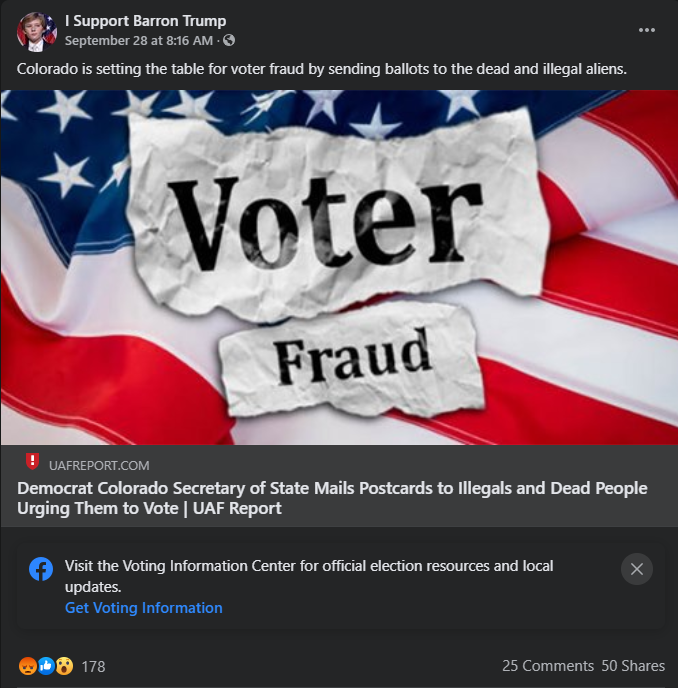
An example of some of the misinformation
posted on numerous social media pages

Section 230 of the Communications Decency Act is a law that was created in 1996, with the intent of regulating online pornography. This law protects media sites like YouTube by stating that if their users are to post illegal things, they are not considered liable (CBS News). Those opposed to this claim that companies are using it to hide and not address their issues upfront. This also allows for defamation lawsuits for organizations who are displeased with their reviews on certain sites. There is controversy from both sides of the political atmosphere. Joe Biden and other democrats feel that this law allows for companies to take a backseat and not take the action they should be to censor their websites. Donald Trump and other republicans feel that their opinions are being censored and this law allows for a “shield” to protect them (CFR). The basis of this misinformation scandal with YouTube is based on the election between Donald Trump and Joe Biden in 2020. Donald Trump and his supporters claimed that the election was stolen, and that Joe Biden won based on miscalculation as well as voter fraud. Videos of these claims were plastered all over YouTube, forcing the company to release the censorship statements that they did.

YouTube’s current statement on their website states that they do not allow any content that could be misleading or incorrect. YouTube states on their site, “With billions of people visiting us every day - whether they’re looking to be informed, to catch up on the latest news, or to learn more about the topics they care about, we have a responsibility to connect people to high-quality content. So, the most important thing we can do is increase the good and decrease the bad. That’s why we address misinformation on our platform based on our ‘4 Rs’ principles: we remove content that violates our policies, reduce recommendations of borderline content, raise up authoritative sources for news and information, and reward trusted creators.”
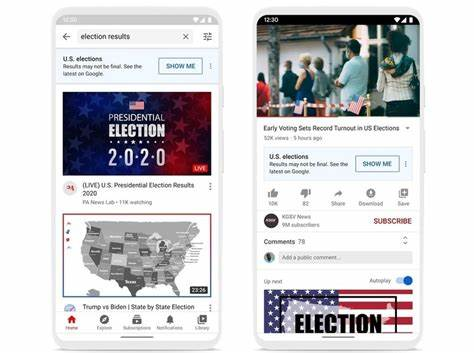
Examples of some election content that
YouTube allowed to be posted


On January 6, 2021, YouTube content creators livestreamed the attack on the Capitol. Two specific creators, Ford Fischer and news outlet Status Coup had their videos removed by YouTube. YouTube released a statement to both channels saying, ‘” Content that advances false claims that widespread fraud, errors, or glitches changed the outcome of the U.S. 2020 presidential election is not allowed on YouTube.”’ (Forbes). These creators argued that YouTube was interfering with the posting of raw footage that was historically significant. Forbes also highlights that YouTube had not removed footage from news outlets like NBC News and the Telegraph, both of which posted speeches from the riot. YouTube was yet again late to the party as they took nearly a week to place a suspension on Donald Trump. Twitter and Facebook banned him indefinitely right after the event.

Stakeholders
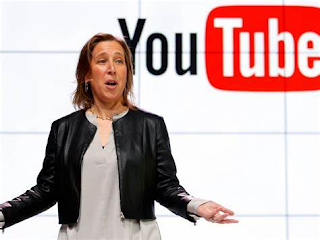
CEO of YouTube Susan Wojcicki
Stakeholders are individuals that are involved in the operations of a business. The Stakeholder Theory is the theory that holds business managers responsible for balancing the interest of stakeholders in relation to the business. The stakeholders involved in YouTube are content creators, viewers, users, subscribers, advertisers, and employees of the company. These groups share common interest in the services YouTube offers, hence their involvement with the company. Susan Wojcicki is the Chief Executive Officer of YouTube, and according to Business Insider she oversees nearly 5,700 employees. In the year 2020, during the presidential election, it was forecasted that there were 2,132,010,000 users YouTube users worldwide. It was then forecasted that there would be 2,436,910,000 users in the year 2022 (Statista). In relation to the misinformation controversy with YouTube and the 2020 Presidential election, many stakeholders were controlled heavily by YouTube executives. On December 9, 2020, YouTube released a statement stating that they banned nearly 8,000 channels (YouTube). Many users and content creators were upset with the choices made my YouTube and felt their rights were violated. According to the Stakeholder Theory, YouTube needs to find a balance between the interests of their stakeholders and what is best for their business. Ideally, YouTube pleases all their users with no issues, and it does not impact the organization in a negative way. Once users begin promoting false information, it forces YouTube to step in to protect the integrity of their business. YouTube received backlash from non-stakeholders because of their lack of action regarding the misinformation scandals. Once the company did step in, they upset those associated with their business.

Individualism

Individualism in business ethics is making a decision based on personal benefit. Milton Friedman’s individualism theory states that the only goal of a business is to profit. Business individuals only need to focus on maximizing their profit for business owners or stockholders (Salazar). Tibor Machan believes that individualism also believes that the direct goal is to maximize profits, but only by first completing indirect goals that are not related to profits (Salazar). This theory suggests that if everyone makes decisions that are the best for themselves, it will benefit the group. Those following an individualistic model feel that personal benefit is the most important factor when making a decision. This theory is arguable incredibly selfish and harmful in a group atmosphere. In the instance of YouTube, they originally chose to not release a statement addressing the misinformation across the platform. Perhaps they were looking to protect their brand, or they did not want to anger their users. I do not think YouTube was concerned about their profits but more about their image to the public. Removing and censoring videos ultimately hurt the company as they lost customers. YouTube was looking to defend their organization because of the pressure they were experiencing. An individualist would agree with YouTube’s decision to remove these videos. It seems that YouTube was looking to benefit their company in the only way they could in this situation.

Utilitarianism

            Utilitarianism is a theory that focuses on actions that promote happiness and oppose actions that may not encourage happiness or cause harm. Utilitarianism seeks to please and satisfy every individual involved. The goal of Utilitarianism is to maximize happiness and pleasure in yourself and others. Within this theory there is the belief that if something is promoting positive behavior but is misleading information, then it is acceptable. However, if the information is incorrect and is misleading, it is not acceptable. A utilitarian would view YouTube’s approach to this situation as the most ethical decision. They were making attempts to limit harmful information from being presented to their viewers. As stated earlier, utilitarianism demotes actions that may cause harm or not encourage happiness. YouTube has an obligation to protect their users from harmful content which is what prompted them to create new guidelines. There were no true consequences or harmful results that came from the decisions that YouTube made. Utilitarians, “avoid short-sighted thinking that often boost profits momentarily but leads to a quick demise” (Salazar). This applies to YouTube because it did not boost their profits or lead to a demise. At first there was backlash from the public, but it quickly blew over. Now, there is only a small group that still holds a grudge against YouTube for this issue. YouTube was not looking to profit over these decisions, they were only looking to protect their page as well as their other users from viewing misinformation.

Kantianism

            Kantianism is believing that people should act rationally and do the right thing, because it is the right thing to do. It is the belief that people should act rationally as well as help others make rational decisions. Immanuel Kant proposed this system and felt that people’s wills should be based on moral rules. Referring to Kantianism, “It claims that we all have duties toward one another that depend on our relationships with one another, the most basic and all-pervasive relationship between persons being that of a fellow member of humanity” (Salazar). We must all act in a way that benefits ourselves while following similar values.  Kantian examines the morals of the people behind the action, in contrast to Utilitarianism which focuses on consequences. Immanuel Kant said, “Act so that you treat humanity, whether in your own person or that of another, always as an end and never as a means only.” This statement by Kant is referred to as the formula of humanity and motivation and is the basis of Kantianism. YouTube felt that they had the obligation to create some regulations on their site. Prior to implanting these regulations, YouTube had trust in their users to post content with correct information and not mislead viewers. They did not treat anyone in a way that a Kantian would consider unethical. YouTube released their guidelines and acted as they promised if they were violated.

Virtue Theory

Virtues are the characteristics that allow things to function properly are called ‘good-making features’ or “virtues’ (Salazar). The virtue theory focuses on the idea that we should not necessarily follow rules but follow what we feel will better an organization. This means focusing on how we want to represent our company through the employees we hire and what kind of behaviors we expect. The Virtue Theory focuses on four characteristics. These characteristics are courage, honesty, temperance, and justice. YouTube initially lacked in the courage category when they refused to step up and make a statement regarding the misinformation. Based on the Virtue Theory, the characteristic of courage requires one to stand up for what is right and be confident enough to take a stand. YouTube did not present this characteristic immediately. As far as the honesty characteristic, YouTube aligned with this. The honesty characteristic is about being truthful and transparent when completing business related tasks. The company was upfront with the public about what their action plan was as soon as they had announced it. The temperance virtue is all about setting reasonable expectations for an organization. YouTube had the responsibility to do what was best for their company, as well as their customers. They had expectations of locating every video containing misinformation when that is impossible to achieve. The final virtue is justice which deals with fair practicing within an organization. YouTube had the responsibility to remove videos in a fair and reasonable way. They did not go about this situation in a fair way as it is evident that they typically removed videos coming from right-sided users. There is also evidence of YouTube removing some videos they did not want up but leaving some of similar nature. YouTube should have removed and restricted all videos to remain fair and ethical. By leaving some up and not full restricting some accounts, there is a level of bias involved which discredits YouTube’s authority in this situation. Based on the examination of ethics through the Virtue Theory, YouTube was ethical in their decision. They did not follow every virtue; however, they nailed two out of four.

Justified Ethics Theory Evaluation

            In my opinion, YouTube’s actions were ethical. The decision they made aligns with the four ethical theories mentioned above. There are however parts of this controversy that are not ethical. YouTube at one point seemed to be picking and choosing which videos they wanted to remove. YouTube should have treated all accounts and users the same way but that was not the case. There were many similar videos that were left on the site and not censored. Specifically, republicans felt that they were being targeted in the removal of videos. There is not outstanding evidence that would indicate this is true. They also argued that this is a violation of their First Amendment Rights. YouTube was successful in following honesty and temperance. The company was honest about their feelings towards the situation and about what would trigger them to remove a video. YouTube was also temperament as they were doing wheat was best for the organization. They set clear expectations and made those visible to the public. YouTube released proper statements and information regarding what their expectations were. They warned their users about what would prompt their videos to be removed. I feel that this justifies YouTube’s decisions and proves them to be ethical. Their decisions were not flawless; however, they were doing what they felt was the best for everyone involved.

Conclusion

            Many social media platforms are facing similar issues regarding what they can and cannot control as far as content. Users want the ability to post and view whatever they want. Platforms want to be able to control and monitor what is posted on their sites. Either way, one group does not get what they want. I feel that YouTube has the ultimate power in this situation as it is their decision on how they regulate posts. This opened the eyes of many users who were furious about the idea of being restricted. This is not the last time that YouTube will face this challenge. The hope is that they have learned how the handle this situation better and the regulations they have already, will help prevent any major damage down the line.

References

Grant, N. (2022) YouTube may have misinformation blind spots, researchers say, The New York Times. The New York Times. Available at: https://www.nytimes.com/2022/11/05/technology/youtube-misinformation.html  

Hugh Langley, R. P. (n.d.). YouTube org chart: We identified the 49 most powerful people helping CEO Susan Wojcicki steer the $1 Trillion video goliath. Business Insider. Retrieved December 2, 2022, from https://www.businessinsider.com/youtube-org-chart-top-executives-2021-10

Patterson, D. (2020) What is "Section 230," and why do many lawmakers want to repeal it?, CBS News. CBS Interactive. Available at: https://www.cbsnews.com/news/what-is-section-230-and-why-do-so-many-lawmakers-want-to-repeal-it/ (Accessed: December 2, 2022).

Team, T.Y.T. (2020) Supporting the 2020 U.S. election, blog.youtube. YouTube Official Blog. Available at: https://blog.youtube/news-and-events/supporting-the-2020-us-election/

Trump and Section 230: What to know (no date) Council on Foreign Relations. Council on Foreign Relations. Available at: https://www.cfr.org/in-brief/trump-and-section-230-what-know

Salazar, Heather. The Business Ethics Case Manual. n.d.

Sandler, R. (2021) YouTube is taking down raw footage from the Capitol Riot as it tries to crack down on misinformation, Forbes. Forbes Magazine. Available at: https://www.forbes.com/sites/rachelsandler/2021/02/04/youtube-is-taking-down-raw-footage-from-the-capitol-riot-as-it-tries-to-crack-down-on-misinformation/?sh=b4f9c434c102

YouTube's censorship of the 2020 election criticism is an argument for abolishing Section 230 (no date) RT International. Available at: https://www.rt.com/op-ed/509237-youtube-censorship-2020-election/

YouTube statistics 2022: How many users does YouTube have? (2022) IncrediTools. Available at: https://increditools.com/youtube-statistics/ (Accessed: December 2, 2022).

Monday, November 30, 2020

Tik Tok causes a National Security Scandal and US Government tries to Shut Down the App 2020

 Tik Tok, formally known as Musical.ly which is owned by ByteDance is being accused by the US government that the app is a national security issue, and they want to ban it from use in the United States.

             TikTok is a wildly popular social media app that is owned by the Chinese company ByteDance. The US government sees this as a national security threat due to the fact that the Chinese government could use its “2017 national intelligence law” to demand the data from the 100 million US TikTok users. President Donald Trump issues an executive order on August 6th, 2020 beginning to ban the app from use. This idea of banning the app is a serious issue for the users because many of the users use this app as a platform for promoting small businesses, talking about important issues and bringing awareness to different things, and so much more. The US government also has reason to believe that there were other reasons for worry with this app due to some manipulation with the 2020 election information. Another thing that they are worried about in the theme of national security is the algorithm which is what decides what videos you see on your for you page, they are concerned that this idea of the Chinese policy of “military-civil fusion” could potentially transfer this AI technology over to the Chinese government.

            Overall, the US government has a very deep fear that TikTok could be a threat to national security and more due to the fact that it is owned by a Chinese company. Something that could potentially solve this problem would be if it was owned by a non Chinese company, which we will later see in the paper see that it is a possibility for an American company to come in and save TikTok.


Figure 1 This photo shows the news talking about banning TikTok from Fox News and CNN


Ethics Case Controversy

In August of 2018, the app called Musical.ly which was taken over by the Chinese company called ByteDance decided to change Musical.ly into the now popular TikTok. (Influencer Market, 2020) By doing this, they moved all the Musical.ly users over to TikTok and turned an app that was mainly about lip syncing to songs into something much more powerful. Overall, TikTok is a video sharing app that allows the creators to make a 15 or 60 second video about whatever they want. They can play music or sounds in the back, add filters and much more. This is different from Musical.ly because that form of the app was focused more on lip Synching to songs, where TikTok is a  much more broad platform, where you can sing to music, but also do other things such as share information about your business, talk about politics, make funny clips with fun filters, and so much more. Another feature that they added when they switched over was the ability to react to other people’s clips and share your reaction side by side with the original video. The app has reported 500 million monthly active users and it has been downloaded 80 million times. Another thing that makes this app so popular is the fact that many celebrities have chosen to use this app, for example in the article they talk about Jimmy Fallon being one of the people interested in the app and he used it to start challenges that other people can try to do themselves for fun, which is now something that is widely popular and it seems like there is a new challenge every day. So there is currently many influencers using this app for millions of people to see.

            According to (Yurong, 2020) “In July, the Trump Administration officially signaled a potential ban on the company in the U.S., alleging concerns over national security because of the company's Chinese ties.” However, they also say that this was not the first time that TikTok had been involved in issues of national security. In late 2019 the CFIUS investigated TikTok. In the article by the Washington post, they explain in depth more about why this social media app is such an issue in the eyes of the US government. They go over the security and privacy concerns and point out that they collect more data than some other popular platforms. They are worried about locational data and data on children that TikTok have that they are worried could pose a threat. The government is worried that the Chinese government could use its “2017 national intelligence law” to demand the data from the 100 million US TikTok users. Another thing that they are worried about in the theme of national security is the algorithm which is what decides what videos you see on your for you page, they are concerned that this idea of the Chinese policy of “military-civil fusion” could potentially transfer this AI technology over to the Chinese government. (Danzman, 2020)

              In another article by CNN, they share some other reasons that TikTok is a national security threat. Some of the members of the government such as Chuck Schumer (Senate Minority Leader) as well as Tom Cotton (Arkansas Republican Sen.) called for the intelligence community to take a look into the risks that may be associated with this application. The article says that TikTok states that these claims are “unfounded” and that TikTok had recently hired an American CEO and claimed that they have never given any of the users data to the Chinese government and that even if they were asked to, they would not. However, the worry is that the company that owns TikTok, ByteDance could be forced into handing over user data. There is the argument that even if China was looking into TikTok, it may not really be any use to them. It says that even if TikTok was able to collect the type of data that would be useful to China’s government, there is still not a guarantee that they could be giving access to it. This article also goes over some security flaws with TikTok that can also be seen as concerning, some user information can be changed, privacy settings can be changed and they could even post videos and get some information about the users. Another issue this article brings up is that some workers of TikTok have said that they were pressured to interfere with videos that relates to politics. They have also become a major platform for misleading speech which is something else that they fear. (Fung, 2020)


Figure 2 Shows the TikTok logo


            Issued on August 6th, 2020 Donald Trump has declared an Executive Order in regard to information and communications technology and services supply chain, which he later says that this order is due to one app in particular, TikTok. He says that it is causing threats to national security, foreign policy, and the economy of the united states. He says This mobile application may also be used for disinformation campaigns that benefit the Chinese Communist Party, such as when TikTok videos spread debunked conspiracy theories about the origins of the 2019 Novel Coronavirus.” So he shares exactly what the risks of this app are. He also says that for many places such as Homeland Security, Transportation Security Administration and US Armed Forces have banned the use of TikTok on government phones.

              Finally, the Washington Post says on September 23rd, 2020 that a deal has been made that would hopefully solve the issue of national security. They said, “On Friday, the U.S. government announced that it would pull the popular video-sharing app from U.S.-based app stores. The next day, President Trump announced a deal that seemed to give TikTok a reprieve, by partnering in the United States with Oracle and Walmart.” (Danzman, 2020)


Figure 3 Shows the relation to TikTok and the Chinese Brand ByteDance

Stake Holders

              In this situation, the stakeholders are, The United States Government because there is a national security risk that could happen, which would have an impact on them, as well as the mention of the issues with the elections, so if  TikTok were to be giving out information to the Chinese government, it would impact them in a negative way. However in their case, banning TikTok would not be a good thing for them as well because many the users who are using this app as an important platform will be upset because the government is taking away this from them. So unless they could come up with a solution other than letting information being given out or banning the app, they will be in a very bad place. The American people because they are very interested in this app which is shown by the number of active users, many people use this app as a platform and it impacts them because if the app is banned by the government, they lose this platform. This is bad for the users because their information would be given out to someone they didn’t approve of, or they get something they love taken away, so unless they can find a way to fix this, they are also in a bad spot within this situation. Within the American people I would like to be a little more specific and mention the small businesses that use this app as a platform as well as the celebrities who use this as a platform as well. It is an easy way for these influencers to get messages across to all types of people who use the app, so that will have an impact on them as well. Another stake holder would be the company ByteDance because this app could have been banned to all of America which would have had a negative impact on their company because they would be losing a significant amount of their users and something cool about this app that everyone appreciated was that it was a great way to get in touch with people all over the world, and if the US cannot participate, that would severely impact them. Finally, I would like to mention the American people as a whole, and I mean everyone in the whole country because national security is an issue that has an impact on everyone within the country. Regardless of if you are a user of the app, if the app is causing issues with national security, then that has an impact on everyone. So when it comes to thinking how the app should proceed, everyone in the country, not just the users of the app, should be taken into consideration.

Individualism

              Individualism in ethics states a “business’s actions should maximize profits for the owners of the business, but do so within the law” (Salazar, 2014) In this case of TikTok and the security scandal I think that the important thing to think about from this perspective is the idea of “within the law”. President Trump was concerned with the fact that the owners of TikTok were going to share the information from the US users, which is why he was considering banning the app. Earlier, I had mentioned that “The government is worried that the Chinese government could use its “2017 national intelligence law” to demand the data from the 100 million US TikTok users” (Danzman, 2020) . Because the Chinese government has a law in place, that could require them to hand over the information, technically if they were asked to hand it over that would be within the law. However, if they were asked to hand over the information and refused to give it up, then they would be breaking the law. If they were to give out this information, then the US would ban TikTok, which would be bad for their business because they have a lot of users who are in the United States.

            Due to the fact that they sold TikTok over to the US companies, Oracle and Walmart, the issue of TikTok having to give out information to stay within the law was mostly solved,  however, some of TikTok is partly owned by ByteDance, which some of the articles said that Donald Trump was still not fully supportive of the app and still has concerns. Overall, the main worry in this case is that they were potentially going to hand out US users information, which for the Chinese would be within the law, but because that would cause the US to ban the app, it would not be what it best when it comes to maximizing profits if they were to lose all of the US.

Utilitarianism

              Utilitarianism ethics perspective states that “Business actions should aim to maximize the happiness in the long run for all conscious beings that are affected by the business action” (Salazar, 2014) In this case, the maximum happiness would be the piece of mind for the users to use the app and be able to use this as a platform for whatever they like, without having to worry that there is going to be a national security issue because of the app. It is also in the apps best interest to still have all of the US users because a lot of the users come from the US. Since this is such a widely popular app right now, people do not want to have it banned, and the owners of the company do not want to see the app lose a lot of its users. So the best case for this situation would be for the security threat to be diminished so that everyone, including the app owners, the US government and the apps over 100 million users, may use and run the app in a safe way that will not impact the security of their country. The users also trust that their personal information is not being used for anything other than the outlines purposes of the application. If the users were to find out that their personal information was being sold or shared with someone that they did not approve of, that would not be in their best interest and they would not be happy about this. If the US government began having issues with China because of the information being share from this app, that would not be in the best interest of the government, which would have a negative impact on the government,  but also the citizens of the US, regardless of if they use the app or not. If the company found out that TikTok was being banned by the whole country (US), then that would not be the best thing for them because a large population of the apps users would be gone, making it not the best move from a business stand point. So overall, Utilitarianism point of view would say that the maximum happiness in this case would be to find a way to fully diminish any national security threat to the US.

Kantianism

The Kantianism prospective says that one should “always act in a way that respect and honor individuals and their choices. Don’t lie, cheat, manipulate or harm others to get your way. Rather, use informed and rational consent from all parties.” (Salazar, 2014). Kantianism would not approve of what is going on with TikTok and the ByteDance company because they specifically mention that you should honor individuals and their choices, however, by potentially giving out personal information to someone they have not authorized, is definitely not respecting the individual. It also says to not harm others or lie, or cheat or anything of that nature, and by giving away information that is personal and could impact the national security of a country, is not a honorable and rational choice. Kant would also want them to be respecting the choices of people, and by not giving them the choice to keep their information safe, they are not following and respecting the law of Kantianism by any means. However, I also wanted to add, in this case, the US government also may be going agiasnt Kant because they were planning to ban the app for everyone in the country, which many people did not want, and did not understand what their fun 60 second videos had to do with national security. This is going agiasnt what Kant says because Kant states that you have to respect the individual and their choices, and if they want to have the app, they should be able to make that choice on their own and the US government should respect that choice.

Virtue Theory

            The virtue theory wants everyone to “act so as to embody a variety of virtuous or good character traits and so as to avoid vicious or bad character traits” (Salazar, 2014). Some of the good traits that the company used in this case were honesty, in many of the articles summarized in this paper, they specifically said that they thought the accusations were uncalled for and untrue. They proved to be honest in their saying of this by deciding to sell the company to the Walmart and Oracle. That was a rational choice to make that overall, was going to benefit all of the stakeholders in this case. Sometimes in cases of businesses, they can be greedy, dishonest or selfish in order to get what they want and in the case of TikTok, because they were able to make this deal, which like I mentioned has a benefit to all parties, is a good thing. If they had given out the user information like they were being accused of, then that would not be a good trait, so they should not be a company that is trusted with your personal information. As users, when we are putting our information into these apps when we sign up and when we use it, we expect that the company holding this information will not be dishonest with it, by sharing it with people we do not approve of or use it in ways that are wrong or illegal. Some of the main virtues that the owners of TikTok should have specifically to be able to ensure trust within their users are, courage, honesty, temperance and justice. All of those things and more are wildly important when running a company because to be a good company, you want to be trustworthy. And in this case, TikTok was and potentially still it not something that people can just blindly trust anymore. The accusations, if they were true or not, still bring up the issue that they are not trust worthy and there for are not a virtuous business. In order to make their business better, they need to look at what their traits are and fix them in order to be able to ensure to their users that their information is safe and that they are not going to be risking their security within their country in order to use the application.

Justified Evaluation

            In my personal opinion, I think that the company ByteDance, would be in the wrong if they were to give out the users information because that would not be a respectable choice because none of the users came onto this app to want to worry about their personal information being share to the point that it causes issues with national security. I think that because this app is used by such a large range of people that TikTok should be respectful of the people who have chosen to use this platform and not be sharing their personal information. However, the US planning to ban the app all together, I do not think was a smart or fair choice as well. Because so many people use this as a platform for many different reasons, I think that getting rid of the app for something that is at this point in time only theoretical, and no major harm has been caused would be very hasty. In some of the articles I read, it seemed like the national security threat was not the only reason that President Trump wanted the app shut down. Things like the algorithm causing issues with things being posted about the 2020 election seemed to be an issue in the Presidents eyes.

 I think that the owners of the app could potentially have been taking advantage of the diverse and large platform they have created with TikTok, which is wrong, but by selling to Walmart and Oracle, making them the majority owners, was the right thing to do to prove that they were not out to give anyone’s information away. I think that they were in a tough spot because of the law mentioned earlier, if their government asked for the TikTok information, they would have to give it up, but by selling it to someone who is not controlled by the Chinese government was the right thing to do and the best choice across the board.

As a whole, I think that threatening to ban the app was a sad thing because there are so many users who have benefited from this app. For example, many small business owners were able to share their products without having to pay for ads, and reach people not only all over the country, but all over the world. So it had a major benefit to those smaller businesses. Some other people that it had an impact on were people who are minors. On this app many minors who still want to be able to find a way to participate in US government, but cannot legally vote yet, were able to share thoughts, information, and opinions on voting. It is a great way for young people to get involved and informed about our country. However, the list of ways it has benefited people is not short by any means. However, I had mentioned earlier, we cannot just think of the users of the app, but the whole country, because people should not have to worry about their national security at risk. So, I understand, but I think that there could have been a different way of handling the situation. But overall, by selling to American companies it basically solves the problem. But if there is issues with this app, how can we as users and Americans be sure that our information is not being given out, because Walmart and Oracle do not own 100% of the business. Because of this issue, I wonder if there is a different way that they could handle this app, other than just having an American company partially take over.

Company Action Plan

When it comes to handling this TikTok National Security threat in the way that is best for all of the stakeholders. First of all, if we look at the company Byte Dance, they should be taking a look at the way they are running their company to see if there is any way that they can make sure no one is questioning any of their morals. To do this, some things that they can do is, potentially take less information from the users. If there is not much information coming from the users, the information they have may be useless if the Chinese government asks for it. Another thing that they could do as a company is become less of a Chinese company if they want to have their apps and other products used around the country, they could do this by finding representatives from the countries they want the app used in, so all the countries have an inside idea of what is going on with their apps. Another thing that they could do, is decided to not share their products outside of the country. This would not be ideal from a business standpoint, however, it would stop any accusations that are risen about the risks of national security in other countries. In this specific situation of TikTok, they did sell part of the app to Walmart and Oracle, however, this is just one of the things the company owns, so there could be other issues that arise within the company specifically. By selling TikTok though, the company does still own a small portion and I did mention earlier, that if the US government is still worried about the app giving out information, something that they could do in this specific situation is to sell the rights to the app, so that a fully American company could buy the idea of the app and recreate it, so there is full control and no need to worry about the Chinese government getting involved in any way. It has been made clear that none of the stakeholders would be in the best interest with the app shutting down or getting banned, however, just simply adding in American countries, does not really stop someone from giving out information in secret. But if the app was something new, with the same features and ideas, then that would be the best for all the stakeholders because the owners of TikTok would make a profit, the new company that remakes the app would make a profit and the US people and government would have piece of mind when it comes to using the app they love. It would be a lot of work to make this happen, however, if they want this app to not be banned, shutdown or being accused of stealing and giving away information, this is one of the only things they can to do give piece of mind.

Conclusion

Overall, this TikTok situation, was handled to some extent due to its sale with the American companies Oracle and Walmart. However, it has been made clear by the President that he is still not fully convinced that this is not still an issue. However, as of right now, there does not seem to be any immediate national security threat now that it is mainly owned by American companies. This whole situation was not ethically moral and there was some serious issues in the way that the company was running the app. So to conclude, there is many ways that ByteDance would better handle the situation with TikTok and make the popular app safe for everyone to use


Work Cited

Danzman, S. (2020, September 22). Analysis | The U.S. government thinks TikTok is a national security threat. So why can't the government decide what to do? Retrieved November 12, 2020, from https://www.washingtonpost.com/politics/2020/09/23/us-government-thinks-tiktok-is-national-security-threat-so-why-cant-government-decide-what-do/

Fung, B. (2020, July 09). TikTok is a national security threat, US politicians say. Here's what experts think. Retrieved November 12, 2020, from https://www.cnn.com/2020/07/09/tech/tiktok-security-threat/index.html

Influencer Market. (2020, October 26). What is TikTok? - The Fastest Growing Social Media App Uncovered. Retrieved November 12, 2020, from https://influencermarketinghub.com/what-is-tiktok/

Salazar, H. (2014). The Case Manual (pp. 1-24, Rep.). Springfield, MA: Heather Salazar.

Trump, D. (2020, August 6). Executive Order on Addressing the Threat Posed by TikTok. Retrieved November 12, 2020, from https://www.whitehouse.gov/presidential-actions/executive-order-addressing-threat-posed-tiktok/

Yurong, C. (2020, September 24). Timeline: How TikTok struggled with Trump's political attacks. Retrieved November 12, 2020, from https://news.cgtn.com/news/2020-09-24/Timeline-How-TikTok-struggled-with-Trump-s-political-attacks-TYnT698NzO/index.html

Sunday, November 29, 2020

Facebook Controversy on Misleading Information Regarding the Election (2016-2020)

Facebook Taking Action Against Misinformation and Fixing Past Mistakes 

    Facebook, created and developed by Mark Zuckerberg in 2004 in Cambridge, Massachusetts, has become one of the world’s biggest social media giants. However, exceptional growth does not come without backlash. Over the years, Facebook has had many lawsuits and allegations pressed against them and how they continue to operate within the world of social networking, social media, and the vast spread of news information. When it comes to the United States specifically, the comprehensive, widespread news of false information regarding the elections has taken a toll on the company's ethics and standing. This specifically happened during the 2016 election regarding the Cambridge Analytica scandal regarding Facebook’s policy to protect its data. Facebook has the ability with its algorithms and data knowledge of users to know almost everything about them. Since more of this has come to face over the years through documentaries and new articles, more people have begun to notice the effects. Once the realization was brought to light during the 2016 election, Facebook eventually admitted to its wrongs and decided to step up the data protection and how things would move forward when it came to the next election. They had published an article regarding how they plan to do this, which developed a whole new mainframe regarding the election. They even opened “The Elections Operations Center” to oversee the postings and add the additions to each post concerning the election. Overall there are still some flaws within the system they created, and some things can pass by. Even with those flaws, Facebook always does its best to provide everyone with an equal opportunity for the election, and they are continuing to stop the spread of misinformation.

Case Controversy 

    Facebook, one of the major social media giants, has had some backlash over the years regarding how it handles the United States elections. This controversy majorly stemmed from the 2016 United States Elections, where everyone was caught off guard regarding information put out onto social media. At the same time, all social media networks and applications continue to grow. Facebook continues to grow heavily throughout the years, reaching over “223.03 million users” (Clement, J.)  only in the United States. The main issue brought to light is how do you manage what over 233.03 million users are doing every millisecond of the day? Individuals are posting, sharing, watching videos that are sometimes live, and liking posts, especially when it comes to such a sensitive topic as the election.

Timeline of Facebook's Events


    While there have been issues within the past with Facebook and another company Cambridge Analytica back during the 2016 elections, they did admit to their wrongdoings. They were adamant about correcting their mistakes from the past. The overview of the scandal back in 2016 was that Facebook was that the personal data of Facebook users was breached and violated by consumers. According to the Federal Trade Commission, “Facebook, Inc. will pay a record-breaking $5 billion penalty, and submit to new restrictions and a modified corporate structure that will hold the company accountable for the decisions it makes about its users’ privacy” (FTC) The fine was paid, and this is when Facebook set out to fix the wrongdoings in from the past. While there's always work to do and constant challenges present themselves with the evolving world, it has been proven through Facebook's efforts that they are trying to do what they believe is best for the individuals who use the platform. While also protecting the first amendment rights of Americans. The issue is shutting down the false information presented and determining whether it is indeed false or not. 

    Amongst all the other social media applications such as Twitter and Snapchat, Facebook is the only one that has put together a comprehensive plan across the applications it owns. Facebook also owns Instagram, so it is not listed as a different social media application above. Facebook developed a very in-depth comprehensive plan for the 2020 election, including but not limited to the displaying of information labels on posts about the election. Facebook stated, “In 2018, we launched our Elections Operations Center ahead of the US midterm elections…Through it, we bring together subject matter experts from across the company – including from our threat intelligence, data science, engineering, research, operations and legal teams – for real-time monitoring so that we can address potential abuse flowing across our network.” (Rosen, Guy)

Preview of what Facebook/ Instagram users saw during the 2020 Election.


This was proven during the few before the 2020 election; the warnings were posted on any posts pertaining to the election. Even during the election, Facebook and Instagram provided continuous updates, even before the news did. Please see the figures above and below for how this is displayed on their applications. Facebook has proven that it is trying to reduce the misinformation that can present itself within an election period. 

Preview of what Facebook/ Instagram users saw during the 2020 Election. 


    However, when it comes to this controversy’s opposing side, a recent CNN article spoke to how some misinformation is still presented. This article is based on activist researchers, claiming that “Facebook has failed to act on hundreds of posts that racked up millions of impressions and contain claims that the social media giant has previously identified as false or misleading.” (Fung, Brian) They claimed that these posts included false claims and information regarding President Donald Trump and the past Vice President Joe Biden. However, Facebook’s Guy Rosen, the VP of Integrity did refute this statement by saying that, “We remain the only company to partner with more than 70 fact-checking organizations, using AI to scale their fact-checks to millions of duplicate posts, and we are working to improve our ability to action on similar posts...There is no playbook for a program like ours, and we're constantly working to improve it.” (Fung, Brian) While Facebook does have a solid argument that they are one of the only companies to do this, they are still being questioned and pushed against in the media’s eyes. 

    Even without the election in general, Facebook has put up more priorities regarding false information.

Preview of what a Facebook/ Instagram user will see if they come across a post including false information.
Through an article published by Facebook by a few of its higher-up officials, they have stated numerous times how they plan to prevent the wrong information from being posted. The pictures show an example when a post includes incorrect information. In addition to the warning labels Facebook, “ For example, we reduce its distribution so fewer people see it — on Instagram, we remove it from Explore and hashtags, and on Facebook, we reduce its distribution in News Feed.” (Rosen, Guy, et al.) This is just another way that Facebook is working to protect its users, along with all of the other attributes mentioned before. 


Preview of what a Facebook/ Instagram user will see when they click on a post with false information.

Stakeholders

    The stakeholders in this controversy are individuals who use Facebook; they represent many stakeholders since there are 233.03 million users in the United States. The employees of Facebook, the stockholders, and CEO Mark Zuckerberg. It would also directly affect Erin Egan, the Chief Privacy Officer & Policy, and Guy Rosen, the Vice President of Integrity. Many positions have been created to serve the employee’s and consumers’ betterment, which is why positions such as; Chief Privacy Officer and Vice President of Integrity were developed to help the consumers better and protect Facebook's integrity.


Individualism

Over the years, Facebook has done its best to maintain profits while also being a social networking application and website. They have been able to make a profit through promotional ad campaigns and creating their advertising programs. This is all within the law as many different companies and people do digital advertising. With the usage of the Facebook platform, it is extraordinary the number of people another business can reach with Facebook Ad campaigns. However, there are many rules in place for someone to run an ad campaign on Facebook. Especially regarding the data and privacy policies. It’s simple if all the rules are not followed, then the ad will not be approved. This is one of the few ways Facebook makes money besides investors and stockholders in the company. Since Facebook is a free application to use, they had to broaden how they could generate revenues. The primary way besides some stockholders is the money they have in their Ad generation, which they are very strict with approving ads there is always a set amount of policies you have to adhere to and follow.


Utilitarianism 

When it comes to Utilitarianism and Facebook, not everyone will be happy with what others post online. Which frankly is the beauty of freedom of speech. However, this truly isn’t something Facebook can control unless it goes against their regulations and the effects that it has on the community guidelines. The main goal of utilitarianism is to maximize happiness in yourself (Facebook) and in others – do so impartially. Facebook has cracked down on the misinformation and false information being posted, which increased its position. Therefore the employees are taken care of, which doesn't directly affect them unless they are users of the application, but then again, they understand the restraint Facebook is going through. When it comes to Facebook users, Facebook has put out apologies and responses to past issues and how they are working to improve them. Such as the references above with how they planned to work on false information posts and election information. 


Kantianism 

Kantianism states that all rational decisions need to be ethical, and everyone should be treated rationally. In addition, when introducing the Formula of Humanity, which is to treat people as an end in themselves and not merely as a mere means. You should treat people as valuable and worthy of respect. Besides, you should never do things that inhibit people’s rationality, affecting their decision without them knowing. While with the news of misinformation back in 2016, individuals were affected by their data being shared, and that is not to be ignored; however, what needs to be noted is the clear and recent transparency of Facebook. Even back in 2016, they displayed all of their privacy policies and data on their website. In the past four years since then, they have made it even more evident on their website and posted several articles and messages from some of its higher-ranking officials. They have also taken action to protect the false information that users could be seeing, along with marketing information that pertains to the elections to make sure their users have full transparency. 


Virtue Theory 

Virtue theory is based on the four cardinal virtues; courage, honesty, temperance, and justice. While Facebook has genuinely displayed the courage to right their wrongdoings and to set the record straight on all accounts, they also continue to bounce back and right the wrongs which were unforeseen. When it comes to the virtue of honesty; to some, Facebook indeed might not have been honest at all points in time, while they have genuinely been entirely unaware or not of privacy issues before they were brought to the light; they did admit to being in the wrong, and they did make corrections from past mistakes. When it comes to temperance, Facebook has been quite patient and realistic when setting up privacy policies and verifying misinformation and false information. They have admitted that there is no playbook for what they are doing; they are listening to the users of the applications and making improvements as they continue. I believe that Facebook does display a majority of these virtues with a possible half and a half on the honesty virtue. We will never honestly know if Facebook knew it was an issue and left it unresolved or if they were unaware and the public brought it into their eyes. However, the social media giant understands the matters presented to the public and wants to fix them. 


Justified Ethics Evaluation 

In my personal opinion, I genuinely believe that Facebook was not in the wrong. Yes, I can fully admit that I think Facebook did some things that seemed somewhat strange or inappropriate. However, I believe that Facebook has done everything in its power to restore the structure of its privacy policies, protect people from misinformation, and to rectify the majority of the false information that has been posted. There is not a manual for the internet, social networking, or social media. How are individuals supposed to react to the ever-evolving world of the internet, let alone the companies operating within that space? Privacy issues happen every day in every company; hackers and other things are known for these issues. This is why when Facebook stepped back and rethought how to restructure things back in 2016, they did it to plan for involvement in the future. They brought on new positions, created a whole new development team, and created the Elections Operations Center specifically regarding the United States Election. They developed ways to identify false information through Facebook to warn the users about the inaccurate information. When it came to the election, they set up a whole system in the backend; that fact-checked information posted a warning on posts about the election. Overall I believe that to a majority over defaults that Facebook follows the ethical theories in play. 


Company Action Plan 

        The current issue with Facebook is the abnormalities of the world we are currently living in today. Twenty years ago, individuals wouldn’t have been worrying about the false information being posted or misinformation about an election. However, with the current world we live in, this has become a problematic pressing issue. Social media, in itself, is still a new dynamic with continually changing attributes. This is a first-generation problem for the companies in this dynamic, and one that no one has the answers to without trial and error. While it is frustrating that for false information to be remedied, it has to happen first, they eventually will, and it is a step in the right direction. Especially in Facebook’s realm, many other social media companies have not taken the initiative they have. While in the belief that Facebook has created the right building stones to continue protecting people's privacy while also saving them from false information. I do believe a few more steps can be taken. Such as surveying Facebook users to see if they are currently liking how misinformation is being addressed in the application. They are adding in additional staff to monitor the postings on the application. Besides, I believe holding an open forum or doing a live virtual event where users can ask questions and bring things to Facebook's attention, instead of the issues just building up without Facebook knowing. I believe a new way to uphold some of the proposed amendments would be for there to be a changed mission statement. One would be; To provide people with the power and individualism to come together on a platform to communicate with their friends, family and make connections. While also protecting privacy and protecting people from false information and misinformation sometimes put out into the world. Facebook would further expand its newly developed Elections Operations Center and develop newer operations and a new department for when false information is identified; they can promote how they diffused the issue. I believe they should also create an updated chart of a monitoring system, where Facebook users can see how many posts and organizations have been identified in releasing false information. As said before, I believe that they should start a program to hear out the users and acknowledge their problems, which would help Facebook understand and rectify some things that they may be missing. This would not only establish a greater strength with individuals' trust in Facebook, but it would also show them that on top of all the things Facebook does to protect its users. Facebook is willing to go one step further in ensuring everyone's happiness, trust, transparency, and ease of use when using Facebook.


References

Clement, J. “Facebook Users in U.S.” Statista, 19 Oct. 2020, www.statista.com/statistics/408971/number-of-us-facebook-users/. 

“FTC Imposes $5 Billion Penalty and Sweeping New Privacy Restrictions on Facebook.” Federal Trade Commission, 28 Apr. 2020,  www.ftc.gov/news-events/press-releases/2019/07/ftc-imposes-5-billion-penalty-sweeping-new-privacy-restrictions.  

Fung, Brian. “Facebook Can't Catch Misinformation It's Already Identified as False, Activist Group Says.” CNN, Cable News Network, 9 Oct. 2020, www.cnn.com/2020/10/09/tech/facebook-misinformation-loophole-avaaz/index.html. 

Rosen, Guy. “Preparing for Election Day.” About Facebook, 8 Oct. 2020, about.fb.com/news/2020/10/preparing-for-election-day/. 

Rosen, Guy, et al. Helping to Protect the 2020 US Elections, 21 Oct. 2019, about.fb.com/news/2019/10/update-on-election-integrity-efforts/.

Written By: MaryKate Caron