Showing posts with label Facebook. Show all posts

Friday, December 2, 2022

Meta: Mega Layoffs at Meta (2022)

One of 11,000 laid off employees


Abstract


Meta is a company that was originally founded by Mark Zuckerberg in February 2004. Initially known as Facebook, it was a social media site where people could gather online in one place to connect with friends and family, meet new people, join neighborhood groups, and share whatever they felt like sharing. The social media world was still somewhat new in 2004 but over the next decade it grew immensely with Facebook leading the way and buying out any competitor that threatened their position. In 2012, Facebook filed an IPO (Initial Public Offering) and joined the stock market with their initial value being assessed at 104 billion dollars. Over the years Facebook bought Instagram, and Whatsapp among other buyouts further solidifying their place as one of the world's most valuable companies. In March 2020 when the Covid global pandemic hit, Facebook had 48,268 employees. With a pandemic forcing millions of people to be online more, Mark Zuckerberg saw that as an opportunity for growth and he went all in. In October, 2021 Facebook was receiving 97.5% of its revenue from advertising and in that same month Zuckerberg decided to rebrand. Meta was the new name and now the parent company of Facebook, Instagram, Whatsapp, etc. By September 2022, Meta had now employed 87,314 and surely a genius such as Zuckerberg prioritized his employees and put the health/happiness of his staff, and the privacy of his online user base ahead of any personal gain or success of his company. Or did he?


Ethics Case Controversy

Facebook was known as one of the Big 5 of American IT companies along with Alphabet, Amazon, Apple, and Microsoft. Zuckerberg was cruising along from the time he created the company in 2004 until the start of the pandemic. There were some controversies regarding Facebook and the 2016 presidential election that will be addressed later, but for the most part Facebook was thriving and Zuckerberg was loving every minute of it. When the pandemic hit and millions of people spent more time at home and online using Facebook, Netflix, TikTok, etc there was a huge influx of advertising money because the usage on these platforms skyrocketed. Mark Zuckerberg in his layoff letter to employees said "Many people predicted this would be a permanent acceleration that would continue even after the pandemic ended. I did too, so I made the decision to significantly increase our investments.” (LayoffLetter) He later goes on to admit that he was wrong and takes ownership, but one has to wonder if this potential huge layoff wasn’t a fall back he was planning on. The pandemic was terrible and millions died but I don’t think anyone thought that the pandemic was going to last forever. Even at the height of the pandemic there were tons of people still denying its seriousness and wanting it to end. How then, did Mark Zuckerberg and a team he likely pays very well get this prediction so wrong. Did they really assume that online usage would remain as high during the pandemic as when it was over? Or did the company know they had to hire and sell quickly to take advantage of the increase during the pandemic and never worried or cared that at some point in the future they’d have to lay off a large percentage of their staff. 


The pandemic alone can’t be fully to blame for Meta having to lay off 13,000 or 13% of its workforce. The rebranding to Meta at the same time Facebook was seeing record profits also should be called into question. In October, 2021 Zuckerberg came out saying he was rebranding and created Meta which stood for the metaverse. He saw this as the future of social media but why now, when the company was so successful did he make this change. Two months prior, an ex-product manager at Facebook Frances Haugen became a whistleblower against Facebook. She produced tons of evidence and testified before the SEC (securities exchange commission) and the US Congress, and on 60 Minutes with information showing how unethical and shady Facebook and Zuckerberg had been. “The documents paint a picture of a company that is often aware of the harms to which it contributes—but is either unwilling or unable to act against them.” (Time) She showed evidence of how Facebook knew they were spreading misinformation throughout the 2016 election, misinformation throughout a deadly pandemic, and the mental health effects of Instagram usage for teens, among others. She also said how Facebook was lying to shareholders about the value and direction of the company. She made the claim and had evidence to support it that Facebook put profit over safety and that they willingly ignored the dangers of their platform in order to make money. Facebook came out and denied her reports saying that they spend five billion every year keeping their platforms safe. Eight other whistleblowers came out after Haugen did against Facebook. Facebook stock fell after these reports but within two months Zuckerberg “rebranded” but was that just a way to change names and hide behind the guilt that Haugen had already laid out. 

Another huge controversy that further declined Meta’s profits in 2022 was the reports that Meta had provided personal data information to a group of hackers posing as Law Enforcement. In March 2022 it was reported that hackers compromised emails of police and sent “emergency data requests” to Meta for users' home addresses, phone numbers, IP addresses and other subscriber information. This is troublesome if you’re a user of the platform because you trust a company like Meta to protect your information. “Facebook has been scrutinized for its handling of user data for years following reports that Cambridge Analytics obtained data on tens of millions of the platform’s users.” (Bloomberg) This is another example like Haugen said above where Meta puts profit over privacy.


Stakeholders


The main stakeholders within Meta are its individual users, its shareholders, employees both current and terminated, and its advertisers. According to Bloomberg as of October 2022, there are currently 3.71 billion users across all of Meta’s platforms. That’s a lot of personal data information that people trust Meta to protect. Shareholders are people that own shares of a company and buy into the company hoping to make money. Vanguard, Fidelity etc are large shareholders of Meta and likely if you have a retirement account you are also a shareholder of Meta since it's been a huge successful company for so long. At the end of September before laying off 11,000 Meta employed 87,314. This number would include Mark Zuckerberg himself but not ex-employees like whistleblower Frances Haugen and countless others. It is estimated that Meta has over three million advertisers that pay for ads across Meta’s platforms. It’s easy to see that a company like Meta has lots of stakeholders that trust Zuckerberg to lead both a  successful and ethical company. 


Individualism

According to economist Milton Friedman “the only goal of a business is to profit, so the only obligation that the business person has is to maximize profit for the owner or the stockholders within the law or the rules of the game.” (Salazar_Slides) He fully believed in a free market and capitalistic society where companies can make as much money as they want even when they don’t value their employees, or value their customers' privacy. Individualism prioritizes the profit of the owner and stockholders ahead of what could be morally right like creating a safe work environment. During the Covid pandemic, Mark Zuckerberg took a chance that social media use would remain high and advertising dollars would keep coming in. In a span of 2.5 years from 3/20 until 9/22 he increased his staff working at Meta by 80%. Meta hired more people to maximize his profit and the profit of his company. According to Yahoo Finance, each share of Facebook stock on 3/4/2020 was worth $163.90 and by 9/6/2021 it was worth $375.88. That is an increase per share of almost 130%. Safe to say that Zuckerberg and the shareholders profited a lot from his decision to double down on the pandemic. Zuckerberg took a risk knowing full well that the jobs he promised people might not last, but he needed their commitment to Meta in order for the company to make this huge profit. He swung big and missed though since the advertising dollars stopped rolling in after the pandemic both due to reduced online usage, competition from other social media sites, and negative publicity from ex employees like Haugen. By 10/31/2022 each share was now only worth $98.22 and within weeks is when Meta laid off 11,000 workers. What Zuckerberg did doesn’t violate any laws and he prioritized his own profit and the profit of his shareholders ahead of the jobs his employees depended on. An Individualist like Friedman would be ok with Zuckerberg laying off any amount he needed at Meta as long as it kept profits rolling in. 


Share price of Meta 3/2020 through 12/2022

Utilitarianism


    Utilitarianism is a theory that allows for actions that maximize the most happiness in yourself and others. “Happiness or pleasure are the only things of intrinsic value” (Salazar_Slides) Utilitarianism believes that you should always tell the truth even if it doesn’t create happiness and that lying is morally impermissible. Trying to figure out if each Meta stakeholder's happiness was maximized in Zuckerberg’s decision to lay off 11,000 is a hard one to determine. It’s been shown that Meta has over 3 billion stakeholders but not each person was affected in the same way with the layoffs. Firstly you’d assume that the 11,000 that were laid off and their families were affected the worst in that they lost their job and source of income and who knows how long it could take them to get employment equal to what they had. In their declining profit and news of layoffs millions of shareholders saw the money they had invested in Meta drop as the share price dropped so they would be unhappy with the layoff decision.  Utilitarianism would likely be ok with sacrificing the happiness of the 11,000 that lost their jobs and the profit loss for the shareholders that invested because laying off those workers could be needed for the future success of Meta. Utilitarianism would see that there are 3.71 billion users across Meta platforms that use social media which makes them happy. Online users' short term happiness isn’t as profound as losing your job. Since there are significantly more people receiving happiness from Meta’s platforms than those that lost their jobs, a Utilitarianist would see the layoff decision as a good one since it allowed for the most people to be happy. 


Kantianism

Meta’s layoff passed the Utilitarianism theory but it definitely does not pass the Kantianism theory. According to Kants, there is only one right motivation to do something and that’s because it is simply the right thing to do. Obviously laying off 11,000 workers 6 weeks before Christmas is not the right thing to do, especially when you’re still a multi-billion dollar company. Kant defined morality using three Categorical Imperatives which are laws of rationality or logic. One of these imperatives is Humanity which means that we should always be fair and respectful and never treat people as a means to get something. Zuckerberg hired thousands of people likely knowing full well that social media usage wouldn’t remain as high as it was during the pandemic. He treated these people as a means to bring him more money knowing full well he would lay them off the minute they didn’t bring him value. Another problem that Kantians would find with Meta and Zuckerberg is that everything he did was motivated by self-interest. Hiring people, laying off people, selling personal data was all motivated by how it would impact his profit. Universal Law says that “you can act for that reason while at the same time willing that it be a universal law that everyone adopts that reason for acting.” (Salazar) Meta didn’t pass the universal law since their reason for acting was for profit and society would say the same for any other company that valued profits over people. 


Virtue Theory

CEO-Mark Zuckerberg


In looking at virtue theory Mark Zuckerberg would be the person to focus on as he is the CEO of Meta and all decisions are made and approved by him including the one to layoff 11,000 employees. There are four major virtues consisting of courage, temperance, justice, and honesty and does Zuckerberg appease these virtues in his daily role as CEO. Courage virtue consists of taking risks and having the courage to take a stand for the right ideas. Zuckerberg definitely took big risks as CEO of Meta in thinking that online usage would remain high, he thought it would continue so he hired tons of people, he spent money on new programs and invested further in the metaverse. Zuckerberg wouldn’t be as successful as he is without taking risks and he did stand up to the ideas he had that he thought would succeed so therefore he passes the Courage virtue. The temperance virtue is one that forces self control and It holds us accountable for our work and actions. Temperance slows things down and allows you to look at the bigger picture beyond what might be happening today. Zuckerberg wouldn’t pass the temperance virtue because he showed no real self control in jumping to hire thousands during the pandemic. If he had thought long term he would have seen that it was more likely online usage would drop as the pandemic went away. He could have predicted a future where those hired employees weren’t needed if he had shown some self-control instead of only seeing dollar signs early in the pandemic. Justice theory speaks for itself, were you a leader that was just and fair in your treatment of people. Did you work hard and were you honest and in this virtue Zuckerberg failed. As a CEO and leader if you make the wrong decisions and hire thousands of people only to lay them off a couple years later then that is not just. As the CEO Zuckerberg needs to take the blame for getting his prediction so wrong. Finally the fourth virtue is Honesty and was Zuckerberg honest in his treatment and hiring of employees and his treatment of customers and other companies he dealt with. Zuckerberg failed this virtue also since he hired people only for personal profit as I believe he knew this usage increase was going to be short term. He also wasn’t honest in what he did with customers' personal information in giving it to hackers.  


Justified Ethics Evaluation


In my opinion Mark Zuckerberg has failed in many ways ethically in protecting his employees right to work, his customers right to privacy, his platforms right to view honest and trustworthy material. Meta is a billion dollar company that should be held to a higher standard when it comes to being honest and fair and treating people with respect. I believe that Mark Zuckerberg knew that the pandemic wasn’t going to last forever and he hired thousands of people with the promise of good stable jobs. He used those people for 2.5 years for his own personal profit before laying off 11,000 of them. The fall of 2021 whistleblowers came out against Facebook and Zuckerberg with evidence as to the wrongdoings of the company. Just two months after these reports came out, Zuckerberg thought that by “rebranding” it would give him a fresh start. He wanted to ignore the problems the company had instead of facing them head on and dealing with them. After rebranding in the fall of 2021 to Meta the company continued to lose money. They saw a huge reduction in advertising money throughout 2022 due to the pandemic slowly ending. Meta also lost public faith when in March of 2022 it was found that they had given users personal data information to hackers. Meta lost money throughout 2022 until in November when Zuckerberg announced he was laying off 11,000 workers. While he did take blame for being wrong in predicting online usage would continue I think he was wrong in blaming competitors like Tik Tok or the fact that Apple was charging them more. Meta has a lot of internal problems and until Zuckerberg can take ownership of the many faults they have instead of blaming it on other things I believe we can expect more layoffs in their future. One of the biggest ethical problems I have with his decision to lay off is that “in 2020, Facebook, Inc. spent $19.7 million on lobbying, hiring 79 lobbyists. Facebook was the largest spender of lobbying money among the 5 Big Tech companies in 2020.” (Bloomberg) If they are spending that much on wasteful lobbying they could have figured out a way to not lay off 11,000 hard workers 6 weeks before Christmas.


Conclusion


In conclusion Zuckerberg is one of the richest and powerful business minds of mine and likely most generations. He surrounds himself with some of the smartest people to maintain a company that almost 4 billion users rely on. I can’t talk to the complexities of how hard it must be for Mark Zuckerberg. I can however talk to the basic decencies of human interactions and treating people. Never should a person's well-being be second to your personal profit. Never should false information or science denying platforms be openly shared so easily that can hurt real people. Never should personal information be sold because it can make someone a profit. Zuckerberg might think the metaverse is the future of social media, but before we get there he has a responsibility to be moral and just and honest and truthful to all of Meta’s stakeholders, today, tomorrow, and in the metaverse. 


Facebook-Meta Timeline
Major events from the creation of Facebook to their rebranding to META to their layoff of 11,000

2/2004 MARK ZUCKERBERG FOUNDED FACEBOOK

1/2012 FACEBOOK FILED IPO, COMPANY VALUED AT 104 BILLION

2/2012 FACEBOOK BOUGHT WHATSAPP FOR 19 BILLION

3/2012 FACEBOOK BOUGHT OCULUS VR FOR 2.3 BILLION

4/2012 FACEBOOK BOUGHT INSTAGRAM FOR 1 BILLION

3/2020 COVID PANDEMIC BEGINS - CURRENT EMPLOYEES 48,268

10/2021 FACEBOOK RECEIVES 97.5% REVENUE FROM ADVERTISING

10/2021 FACEBOOK NAME CHANGE TO META PLATFORMS, INC.

2/2022 META REPORTS BIG DECLINE IN PROFITS FROM Q4

2/2022 META LOSES 230 BILLION IN MARKET VALUE

3/2022 NEWS REPORTS META GAVE PERSONAL DATA TO HACKERS

6/2022 COO OF 14 YEARS ANNOUNCED SHE’S LEAVING META

7/2022 FIRST EVER REPORTED YEARLY REVENUE DECLINE BY 1%

9/2022 META EMPLOYS 87,314, UP 80% SINCE PANDEMIC BEGAN

11/2022 META LAYS OFF 11,000 OR 13% OF ITS WORKFORCE


Jake Harrison


Works Cited

Frenkel, Sheera, et al. “Meta Lays off More than 11,000 Employees.” The New York Times, The New York Times, 9 Nov. 2022, https://www.nytimes.com/2022/11/09/technology/meta-layoffs-facebook.html.

“Mark Zuckerberg's Message to Meta Employees.” Meta, 9 Nov. 2022, https://about.fb.com/news/2022/11/mark-zuckerberg-layoff-message-to-employees/. 

Perrigo, Billy. “Why Whistleblower Frances Haugen Decided to Take on Facebook.” Time, Time, 22 Nov. 2021, https://time.com/6121931/frances-haugen-facebook-whistleblower-profile/. 

Person, and Katie Paul. “Exclusive: Meta Slashes Hiring Plans, Girds for 'Fierce' Headwinds.” Reuters, Thomson Reuters, 1 July 2022, https://www.reuters.com/technology/exclusive-meta-girds-fierce-headwinds-slower-growth-second-half-memo-2022-06-30/. 

Turton, William. “Apple, Meta Gave User Data to Hackers with Forged Legal Requests (AAPL, FB).” Bloomberg.com, Bloomberg, 30 Mar. 2022, https://www.bloomberg.com/news/articles/2022-03-30/apple-meta-gave-user-data-to-hackers-who-forged-legal-requests. 

Wagner, Kurt. “Meta Freezes Hiring, Cuts Headcount, Slashes Budgets across Teams.” Bloomberg.com, Bloomberg, 29 Sept. 2022, https://www.bloomberg.com/news/articles/2022-09-29/meta-announces-hiring-freeze-warns-employees-of-restructuring?srnd=premium#xj4y7vzkg.


Thursday, December 1, 2022

Meta Incorporated: 11,000 Employees Left Jobless After Layoffs (2022)

ETHICS CASE CONTROVERSY 
The four cofounders of Facebook

On February 4th, 2004, “The Facebook” was launched by four college students at Harvard University – Mark Zuckerberg, Eduardo Saverin, Dustin Moskovitz, and Chris Hughes. Meta, formerly known as Facebook, would become one of the largest social media platforms in the world, amassing three billion user profiles in 2021, the most it has ever seen, half of which were using the site every day to share photos, post status updates, and for the promotion of businesses and political campaigns.

Every large company has its fair share of problems, and for Facebook, privacy issues were one of the major ones that often-caused users to question the platform’s credibility. One large scandal that put Facebook in the headlines for privacy concerns was the Cambridge Analytica Scandal in 2016. Facebook had exposed the data of close to 87 million Facebook users to Cambridge Analytica, a political consulting firm which worked for the Trump Campaign. A Russian-American researcher who worked for CA at the time, engineered an app using the Facebook App that allowed users to take a quiz that would expose their data to CA but also the data of their friends when CA discovered a loophole in Facebook’s programming interface. This, in addition to many other privacy incidents have caused many users to delete their accounts and stop using the platform parent platform Facebook, and Instagram, another social media platform that was acquired by Facebook in 2012 for $1 billion. 

From the start of the company, no one could have predicted the magnitude in which Facebook would grow. Zuckerberg made company history in October of 2021, when Facebook Incorporated changed its name to Meta Platforms Incorporated to reflect an emphasis on their newfound mission towards building the “metaverse,” which would eventually allow users to interact in virtual reality environments (Rodriguez, 2021). The company has made it clear that augmented and virtual reality would become a key part of its growth strategy in the upcoming years. With this being an extensive and costly project for the company, we begin to see it encounter massive hurdles that make the public and their shareholders question whether there is a company for this once high-flying company. 

With the COVID-19 pandemic, every person was forced to move online, and that meant increased time shopping online, thereby significantly boosting e-commerce, and more time browsing social media for hours on end – Meta and other platforms like it took full advantage of this. Over the course of the pandemic, the company underwent a massive hiring spree. The rationale for this was because the pandemic pushed everyone to accelerate online activity and the company had predicted this trend to be permanent. Because of this, not only did Facebook want to recruit and retain the brightest talent, but so did every other large company who followed Facebook in doing so – namely Twitter and Amazon. Facebook in particular needed to invest in numerous personnel to oversee everyday operations with work-from-home jobs and moderation for their platform (Frenkel, 2022). Over the course of two years, Meta continued to hire without deeming it necessary to do so. Little did they all know, Meta had miscalculated big time believing that this trend would be sustainable. 

This miscalculation would cost Meta, and many others big time, In October of 2022, Meta’s stock plummets after having a “dismal earnings report” (Yang, 2022) to end the third quarter, yet again. This caused Meta’s capitalization to be wiped off more than $65 billion by investors when it finally joined the economic slowdown. With rising competition from short-video platforms such as TikTok, falling sales and users, and rising costs, the company’s net income in the third quarter fell by 44% to $4.4 Billion, below analysts’ estimates for $5 billion with revenues also falling by 4%, depicting the slowest growth pace since going public in 2012 (Murphy, 2022). This caused low faith from investors and shareholders, as they all had a hard time seeing the vision for the Metaverse turning things around for the company. 

In September of 2022, Meta Platforms had amassed its largest ever number of workers, totaling 87,314 people – this is where they realize they would need to make major changes amidst the rising economy before they are unable to recover. On November 9th of 2022, Mark Zuckerberg announces layoffs and job cuts for 11,000 individuals, making up 13% of their workforce – a number that made history. Zuckerberg announces that the company is also taking steps to become leaner and cut spending as well as enacting a hiring freeze through the first quarter of 2023 (Vanian, 2022). Although these layoffs were made across all departments and regions, most of them affected areas like recruiting and business teams. Less engineers were affected as they are an essential part of building up Zuckerberg’s vision of the “Metaverse.” 

STAKEHOLDERS 
Mike Schroepfer, former CTO of
Meta and top shareholder


The layoffs came amid a tough time for Meta and with the projections for fourth quarter earnings announced in late October of this year, investors were “spooked”, and this caused their shares to sink by nearly 20%. Investors have raised concerns about Meta’s rising costs and expenses, which jumped 19% year over year in the third quarter to $22.1 billion (Vanian, 2022). Analysts and investors are both losing confidence in the company because despite their decisions for cost cuts and hiring freezes, expenses in 2023 are expected to reach an all-time high at $96-$100 billion, a large sum compared to 2022’s total expected expenses, totaling $85-$87 billion. During this period, Meta was facing intense investor scrutiny for spending so heavily on the Metaverse project – Zuckerberg's vision of building an “avatar filled world” (Murphy, 2022). Zuckerberg continues to reassure them by warning that these promises of efficiency will take time and patience. Wall Street Analyst, Brent Thill sides with investor concerns and says: “There are too many experimental bets versus proven bets in the core.” Needless to say, investors are worried about Meta platforms and rightfully so, but according to Zuckerberg, these efforts will be “of historic importance” to create a basis for an entirely new way for humans to interact with one another and “blend technology into our lives” (Yang, 2022). 

INDIVIDUALISM 

Milton Friedman, an economist and a Nobel prize winner for economics rose to prominence in the 1970’s. His theory of Individualism states that a business’ only goal is profit. Therefore, the only obligation that a business has is to maximize profit for itself and its shareholders within the law. Generally, this theory holds true with some exceptions, some of which are the social identity of the company and of the leaders. There are many investors, customers, and employees who wish to be involved with socially responsible businesses meaning ethically sound businesses and those who profit within the law, seeing as social responsibility can generate profit. Just because something is legal, does not make it ethical and this is emphasized by Tibor Machan who believes that the direct goal of profiting may need to be met by indirect goals that are not aimed at profiting. Businesspeople may have other goals and social objectives but must prioritize profit-maximizing strategies. 

Under the circumstances, Meta was reporting growth rates at all-time lows since going public and declines in revenue and net income. These declines are dismal to their shareholders and the company’s growth, especially one of this magnitude. The aftermath of the layoffs was mixed – some former employees were glad and wanted to explore the next chapter of their lives, while others were devastated and immediately went searching for new opportunities, seeing as the cost of living only continues to rise, especially in highly populated areas in the country, where many have relocated for their position at Meta. Mark Zuckerberg and Meta set certain goals for the company, and to achieve those goals, this was the decision he had to make. There is no denying how empathetic and apologetic he was during the announcement of the layoffs, and he was saddened to let his talent go under these circumstances. This is ultimately the decision he had to make to maximize his company’s profit as expenses are only going to increase. This was in the best interest of his company and stockholders. 

UTILITARIANISM

What makes something good? When we think about something that is good, we are typically searching for some intrinsic value. Our attitudes and preferences influence our happiness and usually, all actions are aimed at something good and will bring us happiness. Utilitarianism, founded by John Stuart Mill emphasizes that we should bring about happiness and pleasure in all beings that can feel it. When there is a perfectly imperfect mix of egoism and altruism, we get utilitarianism, an ethical concept that wants humans to maximize happiness for ourselves and for others. Meta heavily contradicts this theory, as the company could have avoided a lot of the adversity that is currently being endured by his former employees. 

Meta layoffs provided a good example of ends not justifying the means – it is hard for utilitarianism to hold true in all cases, no matter how much we wish it could. Under these circumstances, the Meta layoffs could have been avoided if Zuckerberg wasn’t blinded by the social media boom amid the pandemic. The CEO should have looked into the future and considered his employees’ futures during his rapid hiring spree rather than making rash decisions dictated by greed. The employees that were hired at this time and were laid off, would have been better off finding a more permanent and stable career elsewhere. According to Mill, this decision was highly unethical and selfish of the CEO and shareholders, who should have found a middle ground with their employees, which would have been making other cuts outside of employment and provided employees the option to sever their relationship with the company peacefully rather than being forced to unexpectedly without warning. 

KANTIANISM 

Immanuel Kant was a German Philosopher and was one of the primary thinkers of the Enlightenment. The basic principles Kantianism consists of rational decisions through consistent behavior, and respect for individual autonomy, needs and differences. He pushes humans to evaluate whether certain actions are coming from good will. In the business context, this theory implies that businesses and businesspeople have an obligation to treat everyone with respect, and this treatment is an obligation regardless of one's goals or missions – meaning that the desire to make profit or for any other outcome cannot be a reason to treat people without respect and fairness. To help individuals reason with their decisions, Kant created the Categorical Imperative. The Formula of Humanity is one of the most prominent moral formulations within the categorical imperative which states that exploiting and using others in order to fulfill a desire is unethical and may involve manipulation tactics that deprive them of their rationality (Salazar 2014). 

In the case of the Meta layoffs, it was clear that there was a discrepancy between what Zuckerberg did, and the Formula of Humanity. In this case, we see that the intention behind the massive hiring spree that Meta underwent during the pandemic was so they were able to acquire the biggest and brightest talent – talent that they could use to get ahead of competitors. But the layoffs make it evident that these employees were dispensable, and their talents were utilized but once it became a burden to the company to pay them for what they’re worth, it was quite easy for them to just cut ties with these employees and because of this, there was a clear violation to the Formula of Humanity. There is a motive behind every business decision, whether the motive was to intentionally do damage or not, decisions that businesses like Meta make such as these layoffs will impact every component associated with the company. In the case of the Meta layoffs, the apology that was released by Zuckerberg to his employees and the CEO’s general reputation showed that there was no real intention to do any harm to the affected individuals here. Although, it would be difficult to argue the moral permissibility of Meta’s actions considering the former employees were not allowed to vouch for themselves so therefore, there was no respect for these individuals’ autonomy and rationality. 

VIRTUE THEORY
Snippet of Mark Zuckerberg from leaked 
video call where he apologized to those
affected by the layoffs.

When we take the time to think about our personality, we should take the time to ask ourselves if there are traits within our personality that positively contribute to our growth and our social responsibility. In an ideal world, we would all want to avoid viciousness or unfavorable traits. This virtue theory differs from the previous three ethical theories but lay the foundation for a business’ ethics and moral code. This theory is comprised of four main virtues: courage, honesty, temperance, and justice. 

One of the virtues that Zuckerberg demonstrates is honesty. Once he himself was able to come to terms with the fact that his company numbers were declining. Though, there is a gray area where we are unsure if Mark Zuckerberg only came clean about his company’s numbers because he couldn’t run from it, or if he genuinely wanted to be transparent with his team, shareholders, and users. Regardless, his display of transparency gained him and Meta a sum of respect, but unfortunately didn’t mask the decline in Meta’s numbers. 

Another virtue displayed by Zuckerberg is courage. He apologizes in the letter announcing the layoffs: “I want to take accountability for these decisions and for how we got here. I know this is tough for everyone, and I’m especially sorry to those impacted.” By doing so, he demonstrated that he had the ability to take accountability for his own actions without placing blame on others. This is a trait of a exemplary leader, which he possesses. 

In addition to this letter the CEO attempts to make things right post layoffs for the individuals affected, demonstrating justice. Zuckerberg did what he could to make this time as easy as possible by offering impacted employees 16 weeks of pay along with two additional weeks for each year of service to Meta. Plus, health insurance will remain covered for six months (Vanian, 2022). The CEO is aware of what this decision has done and how it would potentially affect his former employees, and he attempts to reconcile these wrongs. 

Although Zuckerberg demonstrates a majority of the four main virtues, he does not exemplify temperance. There was a lack of self-control throughout the course of two years leading to the layoffs. The CEO’s overambitious behavior ultimately led him to burn bridges with many people—his former employees, shareholders, many Meta users. The potential that he sees in the future of Meta and the formation of the “Metaverse” blinded him and motivated him to make decisions that were irrational and impulsive. Because of this lack of temperance, there are now 11,000 individuals fighting for their livelihood. 

JUSTIFICATED ETHICS EVALUATION

In retrospect, it is quite easy to shame Meta and Zuckerberg, CEO of Facebook parent company, Meta for laying off so many employees. These employees are people who do work to make a living and are very dependent on their careers in the company. We look at Meta and how long they’ve been a prominent social platform, one that almost all of us use or have used at one point and it’s difficult for us to wrap our brains around the fact that they couldn’t keep the 11,000 people on their payroll. The reality is the state of the economy proving to carry rising expenses and costs will make this almost impossible for Meta to sustain while remaining in business. 

Meta’s active user count has been steadily decreasing for quite some time now and we are all aware of where Zuckerberg wants to take the company – to the Metaverse. This requires the company to invest as much time and finances into the project as they can sustain in order to execute this vision that Zuckerberg has for his company. When we have a vision for what is essentially our livelihood, we want to do what we can to help it come to fruition and this is what Zuckerberg did. In this case, it was evident that the CEO did not want to burn bridges with the people that contributed so much to his company’s growth and success.

After the layoffs, there is no denying that his decision has paid off. There were signs of growth instantaneously as Meta’s stock rose 5.2% by end of day November 9th, the day of the layoffs and closed at $101.47. While there is a huge deficit the company still must reconcile, it continues to persist and analysts, while skeptical, attempts to put their faith in the power and potential that Facebook holds. Not only was the CEO struggling, but there would be losses for his investors and other shareholders if he didn’t make this executive choice – Zuckerberg did so compassionately and with transparency. Therefore, his actions were ethical and justified. 


BIBLIOGRAPHY 

Chang, Alvin. “The Facebook and Cambridge Analytica Scandal, Explained with a Simple Diagram.” Vox, Vox, 23 Mar. 2018, https://www.vox.com/policy-and-politics/2018/3/23/17151916/facebook-cambridge-analytica-trump-diagram. 

Frenkel, Sheera, et al. “Meta Lays off More than 11,000 Employees.” The New York Times, The New York Times, 9 Nov. 2022, https://www.nytimes.com/2022/11/09/technology/meta-layoffs-facebook.html. 

Kelly, Jack. “Meta Lays off 11,000 Workers-How to Cope with Being Downsized and Prepare for a Difficult Job Market.” Forbes, Forbes Magazine, 10 Nov. 2022, https://www.forbes.com/sites/jackkelly/2022/11/09/meta-lays-off-11000-workers-how-to-cope-with-being-downsized-and-prepare-for-a-difficult-job-market/?sh=5ca637862a80. 

Murphy, Hannah. “Meta's Value Plunges More than $65 Billion amid Falling Sales, Rising Costs.” Ars Technica, Financial Times, 27 Oct. 2022, https://arstechnica.com/tech-policy/2022/10/metas-value-plunges-more-than-65-billion-amid-falling-sales-rising costs/#:~:text=The%20company%20estimated%202022%20total,costs%20and%20freeze%20most%20hiring. 

Vanian, Jonathan. “Meta Laying off More than 11,000 Employees: Read Zuckerberg's Letter Announcing the Cuts.” CNBC, CNBC, 9 Nov. 2022, https://www.cnbc.com/2022/11/09/meta-to-lay-off-more-than-11000-thousand-employees.html. 

Yang, Mary. “Facebook Parent Meta Is Having a No-Good, Horrible Day after Dismal Earnings Report.” NPR, NPR, 27 Oct. 2022, https://www.npr.org/2022/10/27/1131705422/facebook-meta-earnings-stock-price-fall-metaverse#:~:text=via%20Getty%20Images-,Meta's%20tumble%20in%20share%20price%20on%20Thursday%20was%20the%20market's,the%20Facebook%20parent's%20bottom%20line. 

Capoot, Ashley. “Meta Shares Pop 5% as Wall Street Rallies around Layoffs.” CNBC, CNBC, 9 Nov. 2022, https://www.cnbc.com/2022/11/09/meta-stock-up-as-wall-street-rallies-around-layoffs.html. 

Hall, Mark. “Facebook.” Encyclopædia Britannica, Encyclopædia Britannica, Inc., 18 Oct. 2022, https://www.britannica.com/topic/Facebook. 

Ingram, David, and Rima Abdelkader. “Meta Employees Post about Layoffs after More than 11,000 Jobs Are Cut.” NBCNews.com, NBCUniversal News Group, 9 Nov. 2022, https://www.nbcnews.com/tech/social-media/meta-layoffs-lay-offs-mark-zuckerberg-jobs-employees-how-many-rcna56425. 

Rodriguez, Salvador. “Facebook Changes Company Name to Meta.” CNBC, CNBC, 29 Oct. 2021, https://www.cnbc.com/2021/10/28/facebook-changes-company-name-to-meta.html#:~:text=The%20new%20name%20reflects%20the,playing%20in%20a%20virtual%20world. 

Salazar, Heather. “The Business Ethics Case Manual: The Authoritative Step-by-Step Guide to Understanding and Improving the Ethics of Any Business.” 2014.

Saturday, December 11, 2021

Facebook: Employees Told to Preserve Internal Documents During Investigation (2016 - present)

Ethics Case Controversy

There are few people in the world who are unaware of Facebook. With over two and a half billion monthly users (about one third of the planet’s population), Facebook is the most popular social media site on the Internet. However, as many people know, the company’s success has also come with a seemingly endless stream of controversies dating back to its inception in 2006. This includes a multitude of user data leaks, government investigations, unethical practices, and so much more. However, Facebook (who recently changed their name to Meta) is currently under fire following the release of the Facebook Papers: internal documents detailing a number of wrongdoings being


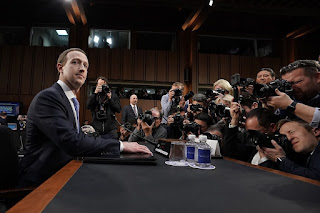
Zuckerberg testifying to Congress about
the 2018 Cambridge Analytica Scandal

committed by Facebook. Although this alone is enough to spark outrage, one of the most recent developments has been a focal point of the controversy. This being Facebook’s order to employees to lock down any internal documents from the company from now dating back to 2016 (Mac & Issac 2021). 


Although the focus of this analysis is occurring in the present, the events leading up to it were set in motion long ago. Over the past five years, Facebook has been the center of an incalculable amount of data leak scandals involving their own company as well as their users. Information such as email addresses, ‘private’ communications and even intimate personal information have been leaked (Yadav 2019). On top of this, many organizations have spoken out against the social media giant claiming that its website serves as a host of harmful, hateful, divisive, and misleading information. Perhaps the most notable of these being The Guardian’s publishing of ‘The Facebook Files’ in 2017. Negative claims against the company’s moderation process and role as a social media site prompted investigation by The Guardian which gathered testimony from Facebook employees as well as other vital sources that show how flawed the company’s practices were. One upsetting example involved the lack of training Facebook moderators received before working to keep harmful content such as cyberterrorism and child pornography off the site. “Workers exposed to such content should have extensive resiliency training and access to counsellors, akin to the support that first-responders receive. However, testimony from those working to keep beheadings, bestiality and child sexual abuse images off Facebook indicates that the support provided isn’t enough” (Solon 2017). Not only was Facebook a host for vile content, the efforts they were taking to combat such content was harming their own employees.


Another scandal that recently ravaged Facebook was the Cambridge Analytica breach. Occurring in March of 2018, this involved the acquisition of the data of over 50 million Facebook users by political consultancy Cambridge Analytica. The company then used this data to manipulate the results of the 2016 presidential election. “‘We exploited Facebook to harvest millions of people’s profiles,’ whistleblower Christopher Wylie told The Observer. ‘And built models to exploit what we knew about them and target their inner demons. That was the basis the entire company was built on’” (Chen & Potenza 2018). Evidently, the company was continuing its shady practices and repeatedly falling short in protecting its employees and the privacy of its users. As the years went on, scandals such as these only became more frequent.


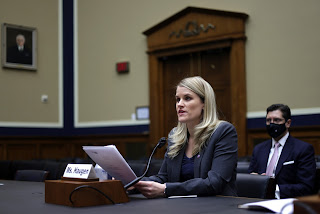
Most recently and perhaps most significantly, Facebook is under investigation from the government after former Facebook Frances Haugen blew the whistle on her former employer’s knowledge of the terrible impact it was having on people. Over the course of the past few months, Haugen has exposed information regarding Facebook’s special treatment of influencers and celebrities, algorithm alterations to increase the divisive nature of the platform, and the overwhelmingly negative impact of Instagram (a Facebook site) on the mental health of teenage girls (Philipose 2021). What the Facebook Papers intended to show people was that the company was actively working to boost its public image and profits with absolutely no regard for their users’ and the public’s wellbeing. This information was not externally acquired, in fact it was gathered in audits and research done by the company itself (Horwitz, 2021). 


What does this have to do with Facebook ordering its employees to lock down their internal information now? Quite a lot as a matter of fact. Facebook is currently focused on damage control. Everyday it becomes more difficult to deny that they are completely free of guilt in this case. This is why they are warning employees to keep information locked down. The most damaging claims against Facebook have time and time again proven to be those made by people on the inside. Whether it be Christopher Wylie from the Cambridge Analytica Scandal or Frances Haugen from the currently unfolding situation. Facebook understands the role their employees can play in exposing their practices that are harmful for their public image or potentially illegal. “‘These are the actions of a company attempting to resist scrutiny, not embrace transparency,’ Senator Richard Blumenthal, a Democrat of Connecticut who has led a Senate subcommittee inquiry into Facebook, wrote in a letter to Mark Zuckerberg, Facebook’s chief executive about the action” (Mac & Issac 2021). The action they are taking now clearly comes from a place of self preservation. They are not looking to apologize or make things right, they are simply looking to walk away from this situation the same way they have with previous scandals; with a fine that is miniscule compared to the size of their company and a slap on the wrist.


While Facebook has not defined any sort of punishment for violating this order, which is referred to formally as a legal hold, it is easy to infer that doing so would not be great for the employee. Facebook’s actions have clearly put employees in an extremely vulnerable position. On one hand they face losing their job for exposing wrongdoing that may or may not be legal but is certainly harming people, and on the other hand they face being held liable for concealing information that is vital to an ongoing investigation. An offense like this is something that would surely get someone in a whole heap of legal trouble. Whether Facebook is able to avoid regulation or not, it certainly won’t mean the end of their company. The same can’t be said about their employees’ careers. Although Facebook has been able to weather many controversies in the past, employees can only hope that this one will be a turning point for the company that allows them to feel safe doing their job. 


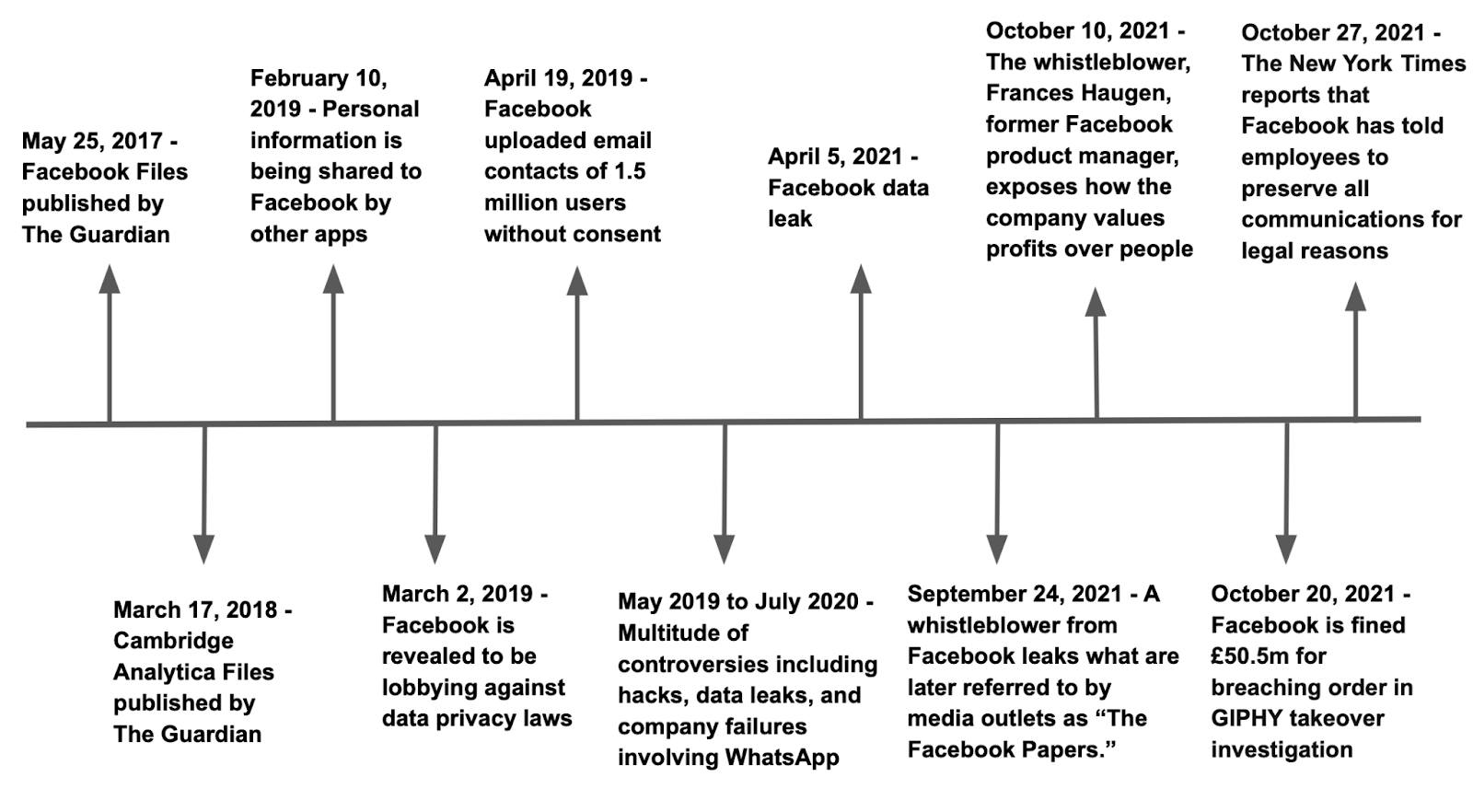
Timeline of Events Pertaining to this Controversy

Stakeholders


    The stakeholders involved in this particular Facebook controversy would be Facebook as a company, Facebook’s employees, Facebook’s users, the whistleblowers, and the government. The way that this controversy ends up being handled will set the stage for Facebook’s future as the dominant social media website. Clearly, executives such as Mark Zuckerberg would be implicated. If more damning information gets leaked or the government/Congress uncovers malpractice, the company could be devastated. Harsh regulations could be imposed on the way Facebook is allowed to operate. In fact, depending on the extent of the wrongdoing, the company could be disbanded entirely. Either way, the company’s public image is in jeopardy. Next we have Facebook’s employees. These stakeholders are in the most difficult position. If they adhere to Facebook’s orders, they may be participating in a legal hold that leaves them in good standing with the company (thus protecting their job), or they may be obstructing an investigation by hiding illegal activity. Additionally, they risk losing their job if they disclose wrongdoing, whether it be illegal or just unethical. Facebook’s users are absolutely at risk in this case. For one thing, they may be at risk for becoming victims of the social media company’s negative effects such as manipulation through misinformation, damage to mental health, or manufactured psychological addiction. More simply, they may be at risk for losing access to a social media site they enjoy using. With nearly three billion users, this is quite a large group of stakeholders. Then there are the whistleblowers such as Wylie and Haugen. These people stand to have their careers ruined if their efforts don’t serve to make any impact. They will simply be seen as disloyal employees. However, if their testimony helps bring regulation to Facebook, they will have made a huge impact on the future of the Internet. Finally, there is the government. This includes Congress and any authorities looking to regulate Facebook. In this case, they are responsible for adequately investigating a company with a very checkered history. If they fumble the investigation and let Facebook off easy, they could lose the trust and respect of the people they are sworn to advocate for. More importantly they risk letting what is essentially one of the most globally influential companies in history go unchecked which could have potentially disastrous effects. 


Individualism 

The theory and lens of individualism has been used over a number of years as both Friedman and Machan have both recognized this theory. Looking at the case of Facebook through the Individualist Theory, the goal of this theory is for an organization to maximize its’ profit for stakeholders by any means within the law. With this being said the company of Facebook inc. has had some very impressive earnings over the past few years, except not at the pleasure of the stakeholders. Rather it has put people in a place of risk and made life profiting for the company more difficult along the way.

Looking through Friedman’s scope of ethics he would not completely agree with what Facebook has done but can agree on some things. This is due to Friedman looking for the absolute most profit for an organization. Friedman’s Individualism, he believes that the only goal of business is to profit. This leaves the sole obligation that the business person has is to maximize profit for the owner or the stockholders within the law. On the other hand, Machan would most likely look at the situation slightly differently due to his libertarian views on Individualism. His view states; 

“Whether they are individual people or the stockholders of a publicly-traded company. The business has no direct responsibility to any other interest-groups, which are often called stakeholder groups in the context of business. Employees, customers, suppliers, and the societies that the business impacts are all examples of stakeholders when they are affected by the business’s decisions”.

Even though it has been exposed that Facebook values profit over people, at what expense are they holding these values. If they care too much about profits it would begin to go against Individualism theory. Even with all these views of Individualism within a business in mind it’s hard to argue in favor of Facebook. As they did not do what was in favor of their stakeholders and they technically did not stay within the law if found guilty of some of things they have been accused of.

Individualism could be looked at in this case as a means of a fair and balanced view. The reasoning behind this is because it looks at both the profit for the organization while also taking a slight step back into ethics by making sure that the organization isn’t breaking any laws. The only part the theory falls short is the gap in between illegal or just unethical.

An example of how facebook was unethical looking through the individualist lens is their many data privacy breaches in their history. It would be one thing if they were actively trying to keep data secure and keep these breaches from happening, however they are not. Documents from within Facebook leaked that showed that they were running a “secretive global lobbying operation targeting hundreds of legislators and regulators” in order to get rid of data privacy laws. This is because this would benefit them exponentially however, at their customers detriment, by selling their personal information. This is considered unethical by individualism because they were focused 100% on their profits here without a care as to how getting rid of data privacy laws would affect their customers. Which proves that in a lens that is for profit and pro-company that they were undeniably in the wrong.

Utilitarianism


    From a utilitarian perspective, Facebook has drastically mishandled this controversy as well as the events that have led up to it. Utilitarianism is an ethical theory that focuses on the maximization of happiness for all sentient beings capable of feeling it. This applies to the short term and long term effects of an action. With many of Facebook’s actions surrounding this case, they have done just the opposite of maximizing happiness for practically all stakeholders involved. 


Facebook (Company): Ultimately, it is Facebook and its executives such as Zuckerberg themselves who have dug the hole that they are currently stuck in. Instead of doing their absolute best to maximize the success of their own company through ethical practices, they disregarded the public good to maximize their profits and therefore focused on their own happiness. In fact, they actively made their users miserable because it kept people on the site longer which, in turn, made them more money. Sure, they may argue that their site makes people happy by allowing them to connect with others but in the long run its effects are proving to be overwhelmingly negative. This will be revisited in the user section. Now Facebook is feeling the consequences of their selfishness and greed. Had they focused on making a user experience that was safe and healthy for everyone, they would have a more secure and more accepted business free from endless controversy. More presently, had they been more transparent and open with investigators, they could receive help on making their platform a place that could maximize happiness for everyone. Instead shut everyone out and conceal vital information that might help in achieving the aforementioned goal (Dwoskin et al. 2021). 

Facebook Employees: Happiness is sure to be at an all time low for Facebook employees. For all they know their job and their career as a whole are at large for the sake of Facebook’s profits. Facebook’s order to preserve information has had a profoundly negative impact on employees' happiness. Not only do they have to worry about losing their job, they must also worry about possibly facing legal action if they conceal the wrong information. This is bound to be incredibly stressful and either choice has bad outcomes for these employees. A utilitarian would be appalled by the way Facebook is treating its employees. 

Facebook Users: The long term versus short term effects are the primary reason why utilitarianism goes against the way Facebook is manipulating its users. In some cases Facebook is giving users very short term happiness by triggering the release of dopamine with a notification or a like or a cool post. However, in the long run this leads to a social media addiction that can even result in withdrawal symptoms without constant use. Additionally, a lot of Facebook’s strategy revolves around increasing divisiveness and anger on its platform. The company determined that this keeps people coming back and keeps them on the site longer (Ghosh & Scott 2018). Overall, Facebook currently sees sad or angry or unhappy customers as more valuable than happy ones and it will therefore stay designed to keep customers that way. 

Whistleblowers: The whistleblowers in this case may not all be coming from a utilitarian standpoint but their actions certainly are utilitarian. These people saw a company actively committing wrongdoing that resulted in the suffering of potentially billions of people. Instead of sitting by and watching, they stood up and did something about it, putting their own careers at risk. In doing so, they hoped to make a difference that allowed for the maximization of happiness for the maximum number of people involved in this case. Even if it was bad for Facebook, it may stand to help billions of people become happier. 

Facebook whistleblower Frances Haugen discussing
the experiences under her former employer

The Government: The government is the only other saving grace for utilitarians in this case. They are the only force that appears to be attempting to maximize happiness for people. After the whistleblowers stood up the government saw that people were suffering and started an investigation that will hopefully put a stop to it. Although the government does have a shady history with large companies and corporations such as Facebook it does truly seem that a concerted effort is being made to impose regulation that will make social media a better place for everyone. This will ultimately be incredibly beneficial to the maximization of happiness for countless individuals. 


Undeniably, Facebook is wrong to continue with its current practices from a utilitarian point of view. Over its fifteen year history it just seems to get worse. Year after year more people seem to be negatively affected by the company than positively and it is simply a shame. All those involved can only hope that action is taken to help Facebook become a force that maximizes happiness for everyone instead of destroying it. 


Kantianism


​​Kantianism is defined as acting rationally, allowing and helping people make rational decisions, respect people and their autonomy and their individual needs and differences, and being motivated by Good Will. Act rationally means to not act inconsistent with your own actions and do not think that the rules don’t apply to you but they apply to everyone else. In Kantianism you also have to think about the Formula of Humanity. The Formula of Humanity says “Act in such a way that you treat humanity, whether in your own person or in the person of another, always at the same time as an end and never simply as a means.” This is saying that everyone is valuable and able to make their own rational decisions. There should also be no lying, cheating, stealing, or deceiving because it disrespects people and treats them like a mere means. An example for that would be to say you are selling something and you willingly withhold information to the customer that would make them rethink their purchase in order to get them to purchase your product. That is against what Kant is saying.


Kant would deem Facebook’s way of forcing their employees to keep quiet in order to save themselves impermissible. This is because they are deceiving themselves and the people that use their website by trying to make them think nothing bad is going on in this whole case. They are also lying to the people who use their website and platform saying that they are trying to fix the problem when really, they are doing nothing but just making it an act by putting a legal hold on the documents since 2016. Right off the bat, the Facebook Papers that started this whole case, repeatedly shows how Facebook was lying, deceiving, and disrespecting its users. Mark Zuckerberg, and other employees of Facebook, continue to lie and lie about what is going on within his own platform. Authors of the article, “Only Facebook knows the extent of its misinformation problem. And its not sharing, even with the White House”, note how Facebook has taken recent action in restricting researcher’s access to their data that they once offered with open arms. This comes not long after significant connections to health and election misinformation and Facebook were discovered. As the White House and other parties put pressure on Facebook to explain why data access is being revoked or heavily restricted, they simply put forth misleading or untruthful reports about their own investigations into misinformation or claim that all the data researchers need is already available to them. A common strategy of Facebook throughout its many instances of controversy has been to throw large amounts of seemingly meaningless data at the authorities. The data has very little context to it and is practically useless, however it gives the company a way to call themselves transparent while maintaining their coverup operation (Dwoskin, Zakrewski, Pager). Facebook is lying to its users by posting things that lead them to be misinformed. Not only that, they aren’t doing anything to stop the fake news, so that could be considered them being lied to. By hiding the research they have conducted on their company from the public and investors, they are not being respected as someone who would want to know about what is going on in a company, especially the people who are investing and need to know if they should pull their money out from the investments. They are withholding information in order to get more and more people to use their app without giving them the knowledge of the things they are doing that some people would acknowledge as wrong doings.


Virtue Theory


Unlike other ethical theories, virtue theory does not have a set of rules to follow: the theory is practiced by attempting to be a good person, then actions will effortlessly come after. This theory questions whether a person can distinguish what is right and wrong. However, knowing righteousness is simply not enough, therefore he/she must act and practice to be virtuous. In the case of Facebook, we may use four characteristics of the theory and analyze the morality of the company. The four characters are Courage, Temperance, Justice, and Honesty.

Courage

        In short, courage in business ethics indicates a company’s willingness to take risks: the ability to face challenges and admit reality for the sake of rightness and rectitude. Facebook, as noted, has been recognizing its impacts on society, but it has never shown its courageous actions. Many studies and professionals concluded that the platform creates a disturbing effect on users, and the effect is even more visible when it comes to politics. Facebook itself admits Instagram or any photo/video-sharing social media adversely affects teenage girls (Philipose, 2021). However, preventing those issues would harshly decrease the company’s profits, simply because the platform would have less attractive content and fewer viewers (Silberling, 2021). In other words, as of now, Facebook is choosing money over the safety of users. Therefore, the company fails to achieve courage by nonapplication of moral values in actions.

Temperance

        Temperance is also an important character to evaluate the case. The great profit tempts Facebook to ignore and devalue the safety of users. The company is losing control to enforce more restrictive policies and rules to protect users from skewed information. The company must recognize and respond to its violation of ethics, even though such critical actions decrease the profit.

Justice

        Justice in business ethics means the value of equally treating individuals and the effort of producing good quality products. Facebook does not treat its users in the right ways but does treat them as their source of revenue. The quality of service they provide is not promised as the company insists, rather the service is creating harm among users and stakeholders (The Social Dilemma). The company failed to have justice, showing its negligence to overlook the malpractice. Facebook continues hurting users for the sake of money.

Honesty

        Among the four characters, honesty is the only character Facebook has displayed in the case. Honesty is the characteristic of being truthful to their actions. The company has disclosed its comment on the negative impact of both spreading misinformation and creating skewed body images on their young users (The Social Dilemma). The disclosure of acknowledgment of the issue is significantly crucial in Virtue theory, and the company has succeeded to perform the character.

Finding Means

Facebook overlooks the value of those four characteristics and fails to be virtuous. Facebook overlooks the value of those four characteristics and fails to be virtuous. The company should also find the means within the four characteristics. The balance of those characteristics is essential to become virtuous. 

        Facebook shows its failure to practice the majority of the four characteristics. The wrongdoings of the company have been putting society at the risk of extreme polarization and psychological harm from misleading information. Facebook acknowledges the uncertainty and manipulation by fear mongering on the platform, yet it executes no further regulations to prevent serious problems. The recognition of righteousness is inadequate. Facebook can only become virtuous when it takes pivotal actions.


Action Plan


Facebook and its controversies have created a very toxic workplace for its employees and an incredibly harmful platform for its users. What began as simply a manner for people to connect to others over the Internet has turned into nothing more than an algorithm that is intentionally manipulating its users to keep them on the app for as long as possible and sell their attention to advertisers. There is a way to fix this, however, but it is going to require Facebook to completely reevaluate the way they conduct their business. 


Currently, Facebook is keeping a lot of its data and the manner in which it processes said data under lock and key. Previously, they were involved in numerous efforts to share the massive amounts of data they collect from their billions of users with organizations looking to study it for a number of reasons such as predicting criminal activity, identifying mental health issues, and overall simply studying the way people interact with each other in the setting. In response to controversies, Facebook has ceased sharing their data and keeps it completely internal for fear of it incriminating them in any sort of illegal activity. This is nothing less than counterintuitive. With their efforts, it appears Facebook is attempting to keep their platform running the way it does with no regard for the way it affects people. What they don’t seem to grasp is that people are going to uncover any negative actions they are taking while running their business. Take a look at the Social Dilemma (2020). A number of people were able to work together to make a feature length documentary about what Facebook is doing all while they continue to “preserve” their data. The only way the company can move forward is to once again make their data available to outside organizations so that they can help the company find non-harmful ways to run their business. Additionally, they must stop deploying harmful algorithms that promote addictive and mentally harmful behavior by its users. This would not only help the users but the employees negatively impacted by all the effects they’ve been ordered to take to cover up bad practices.


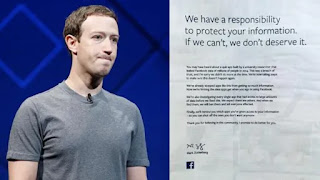
Zuckerberg's apology letter to users after one
of many Facebook data leaks

Something that could serve to guide Facebook through this change and potentially show users how it has turned a new leaf is to alter its current mission statement. Facebook’s mission statement has slightly changed over the years but it is always essentially “to bring the world closer together.” Something that might be a little more thoughtful and helpful for the near future would be “to bring the world closer together and promote the exchange of ideas in a positive and user-friendly way.” This improves on the old statement because it promises a certain degree of ethical behavior on the part of Facebook and reminds them of their new goal to make their unprecedented influence a positive one.


Facebook’s lack of certain core values have led to it possessing a less than ideal reputation. Some values that it should possess to make it more reputable are user mental health, preventing/stopping the spread of misinformation, innovation, creativity, and a healthy spread of ideas. These values would serve to guide them on improving their company and support their mission statement to show they aren’t all talk. Chiefly, stopping the spread of misinformation and prioritizing user mental health would directly address some of their strongest criticisms. 


Monitoring this goes right along with the initial plan. By sharing their data with external organizations it would be very easy to monitor any deviations from their new commitments. For good measure however, Facebook could allow these organizations to do internal examinations similar to how accountants perform audits. This would uncover any wrongdoing or any data that is seemingly being misused. Finally, employee surveys could be done by external organizations that guarantee job safety and anonymity if wrongdoing is reported. 


Maybe people won’t use the websites as much as they do now but it would still be something that people use most likely everyday. The popularity of Facebook’s websites is undoubtedly increasing more and more everyday with no end in sight. It is undeniable that advertisers would still find the online real estate the company offers as invaluable despite the scaling back of harmful practices. Help from outside organizations would allow Facebook to develop a clear roadmap on how to gradually scale back its use of practices that are harmful to users without potentially harming their own profits.


Anthony Meccia, Yuto Hiraki, Elena Farquharson, Ryan Frangie, Jared Kuryan

References

Mac, Ryan, and Mike Isaac. “Facebook Tells Employees to Preserve All Communications for Legal Reasons.” The New York Times. The New York Times, October 27, 2021. https://www.nytimes.com/2021/10/27/technology/facebook-legal-communications.html.

“15 Years of Facebook, 15 Years of Controversy: A Timeline of Events- Technology News, Firstpost.” Tech2, February 5, 2019. https://www.firstpost.com/tech/news-analysis/15-years-of-facebook-15-years-of-controversy-a-timeline-of-events-6028641.html. 

Dwoskin, Elizabeth, Cat Zakrzewski, and Tyler Pager. “Only Facebook Knows the Extent of Its Misinformation Problem. and It's Not Sharing, Even with the White House.” The Washington Post. WP Company, August 19, 2021. https://www.washingtonpost.com/technology/2021/08/19/facebook-data-sharing-struggle/. 

Scott, Dipayan Ghosh and Ben. “New Facebook Scandal Shows How Political Ads Manipulate You.” Time. Time, March 19, 2018. https://time.com/5197255/facebook-cambridge-analytica-donald-trump-ads-data/. 

Chen, Angela, and Alessandra Potenza. “Cambridge Analytica's Facebook Data Abuse Shouldn't Get Credit for Trump.” The Verge. The Verge, March 20, 2018. https://www.theverge.com/2018/3/20/17138854/cambridge-analytica-facebook-data-trump-campaign-psychographic-microtargeting. 

“The Facebook Files.” The Wall Street Journal. Dow Jones & Company, October 1, 2021. https://www.wsj.com/articles/the-facebook-files-11631713039. 

Philipose, Rahel. “Explained: Who Is Facebook Whistleblower Frances Haugen, and What Has She Revealed?” The Indian Express, October 13, 2021. https://indianexpress.com/article/explained/who-is-facebook-whistleblower-frances-haugen-7556326/. 

“Underpaid and Overburdened: The Life of a Facebook Moderator.” The Guardian. Guardian News and Media, May 25, 2017. https://www.theguardian.com/news/2017/may/25/facebook-moderator-underpaid-overburdened-extreme-content. 

Williams, Erika. The Courthouse News Service. 27 October 2021.

https://www.courthousenews.com/shareholders-sue-facebook-following-whistleblower-revelations/

Silberling, Amanda. Tech Crunch. 5 October 2021. https://techcrunch.com/2021/10/05/facebook-whistleblower-frances-haugen-testifies-before-the-senate/?guccounter=1&guce_referrer=aHR0cHM6Ly93d3cuZ29vZ2xlLmNvbS8&guce_referrer_sig=AQAAAJN8hLzBKVVS-KRbrPDyppViZNxpMnCb_Re_dUyNXk8M7GaqBXcpWhd0Aqjv9b-fp0tBUfNN7uPqYhVf2FT3jgGxcEQSADEVGJJv6yk0su-WFVWzaLOfCSwza41yGIzK31r5JLSTBdofmP6D01ZKRIsdHpcs-bLIiSSr9dVgdmiw


Larissa Rhodes, The Social Dilemma, directed by Jeff Orlowski, 26 January 2020, Netflix.

https://www.netflix.com/watch/81254224?trackId=14277281&tctx=-97%2C-97%2C%2C%2C%2C


The Business Ethics Case Manual, Heather Salazar