Showing posts with label Ethical Controversy. Show all posts

Thursday, December 1, 2022

Meta Incorporated: 11,000 Employees Left Jobless After Layoffs (2022)

ETHICS CASE CONTROVERSY 
The four cofounders of Facebook

On February 4th, 2004, “The Facebook” was launched by four college students at Harvard University – Mark Zuckerberg, Eduardo Saverin, Dustin Moskovitz, and Chris Hughes. Meta, formerly known as Facebook, would become one of the largest social media platforms in the world, amassing three billion user profiles in 2021, the most it has ever seen, half of which were using the site every day to share photos, post status updates, and for the promotion of businesses and political campaigns.

Every large company has its fair share of problems, and for Facebook, privacy issues were one of the major ones that often-caused users to question the platform’s credibility. One large scandal that put Facebook in the headlines for privacy concerns was the Cambridge Analytica Scandal in 2016. Facebook had exposed the data of close to 87 million Facebook users to Cambridge Analytica, a political consulting firm which worked for the Trump Campaign. A Russian-American researcher who worked for CA at the time, engineered an app using the Facebook App that allowed users to take a quiz that would expose their data to CA but also the data of their friends when CA discovered a loophole in Facebook’s programming interface. This, in addition to many other privacy incidents have caused many users to delete their accounts and stop using the platform parent platform Facebook, and Instagram, another social media platform that was acquired by Facebook in 2012 for $1 billion. 

From the start of the company, no one could have predicted the magnitude in which Facebook would grow. Zuckerberg made company history in October of 2021, when Facebook Incorporated changed its name to Meta Platforms Incorporated to reflect an emphasis on their newfound mission towards building the “metaverse,” which would eventually allow users to interact in virtual reality environments (Rodriguez, 2021). The company has made it clear that augmented and virtual reality would become a key part of its growth strategy in the upcoming years. With this being an extensive and costly project for the company, we begin to see it encounter massive hurdles that make the public and their shareholders question whether there is a company for this once high-flying company. 

With the COVID-19 pandemic, every person was forced to move online, and that meant increased time shopping online, thereby significantly boosting e-commerce, and more time browsing social media for hours on end – Meta and other platforms like it took full advantage of this. Over the course of the pandemic, the company underwent a massive hiring spree. The rationale for this was because the pandemic pushed everyone to accelerate online activity and the company had predicted this trend to be permanent. Because of this, not only did Facebook want to recruit and retain the brightest talent, but so did every other large company who followed Facebook in doing so – namely Twitter and Amazon. Facebook in particular needed to invest in numerous personnel to oversee everyday operations with work-from-home jobs and moderation for their platform (Frenkel, 2022). Over the course of two years, Meta continued to hire without deeming it necessary to do so. Little did they all know, Meta had miscalculated big time believing that this trend would be sustainable. 

This miscalculation would cost Meta, and many others big time, In October of 2022, Meta’s stock plummets after having a “dismal earnings report” (Yang, 2022) to end the third quarter, yet again. This caused Meta’s capitalization to be wiped off more than $65 billion by investors when it finally joined the economic slowdown. With rising competition from short-video platforms such as TikTok, falling sales and users, and rising costs, the company’s net income in the third quarter fell by 44% to $4.4 Billion, below analysts’ estimates for $5 billion with revenues also falling by 4%, depicting the slowest growth pace since going public in 2012 (Murphy, 2022). This caused low faith from investors and shareholders, as they all had a hard time seeing the vision for the Metaverse turning things around for the company. 

In September of 2022, Meta Platforms had amassed its largest ever number of workers, totaling 87,314 people – this is where they realize they would need to make major changes amidst the rising economy before they are unable to recover. On November 9th of 2022, Mark Zuckerberg announces layoffs and job cuts for 11,000 individuals, making up 13% of their workforce – a number that made history. Zuckerberg announces that the company is also taking steps to become leaner and cut spending as well as enacting a hiring freeze through the first quarter of 2023 (Vanian, 2022). Although these layoffs were made across all departments and regions, most of them affected areas like recruiting and business teams. Less engineers were affected as they are an essential part of building up Zuckerberg’s vision of the “Metaverse.” 

STAKEHOLDERS 
Mike Schroepfer, former CTO of
Meta and top shareholder


The layoffs came amid a tough time for Meta and with the projections for fourth quarter earnings announced in late October of this year, investors were “spooked”, and this caused their shares to sink by nearly 20%. Investors have raised concerns about Meta’s rising costs and expenses, which jumped 19% year over year in the third quarter to $22.1 billion (Vanian, 2022). Analysts and investors are both losing confidence in the company because despite their decisions for cost cuts and hiring freezes, expenses in 2023 are expected to reach an all-time high at $96-$100 billion, a large sum compared to 2022’s total expected expenses, totaling $85-$87 billion. During this period, Meta was facing intense investor scrutiny for spending so heavily on the Metaverse project – Zuckerberg's vision of building an “avatar filled world” (Murphy, 2022). Zuckerberg continues to reassure them by warning that these promises of efficiency will take time and patience. Wall Street Analyst, Brent Thill sides with investor concerns and says: “There are too many experimental bets versus proven bets in the core.” Needless to say, investors are worried about Meta platforms and rightfully so, but according to Zuckerberg, these efforts will be “of historic importance” to create a basis for an entirely new way for humans to interact with one another and “blend technology into our lives” (Yang, 2022). 

INDIVIDUALISM 

Milton Friedman, an economist and a Nobel prize winner for economics rose to prominence in the 1970’s. His theory of Individualism states that a business’ only goal is profit. Therefore, the only obligation that a business has is to maximize profit for itself and its shareholders within the law. Generally, this theory holds true with some exceptions, some of which are the social identity of the company and of the leaders. There are many investors, customers, and employees who wish to be involved with socially responsible businesses meaning ethically sound businesses and those who profit within the law, seeing as social responsibility can generate profit. Just because something is legal, does not make it ethical and this is emphasized by Tibor Machan who believes that the direct goal of profiting may need to be met by indirect goals that are not aimed at profiting. Businesspeople may have other goals and social objectives but must prioritize profit-maximizing strategies. 

Under the circumstances, Meta was reporting growth rates at all-time lows since going public and declines in revenue and net income. These declines are dismal to their shareholders and the company’s growth, especially one of this magnitude. The aftermath of the layoffs was mixed – some former employees were glad and wanted to explore the next chapter of their lives, while others were devastated and immediately went searching for new opportunities, seeing as the cost of living only continues to rise, especially in highly populated areas in the country, where many have relocated for their position at Meta. Mark Zuckerberg and Meta set certain goals for the company, and to achieve those goals, this was the decision he had to make. There is no denying how empathetic and apologetic he was during the announcement of the layoffs, and he was saddened to let his talent go under these circumstances. This is ultimately the decision he had to make to maximize his company’s profit as expenses are only going to increase. This was in the best interest of his company and stockholders. 

UTILITARIANISM

What makes something good? When we think about something that is good, we are typically searching for some intrinsic value. Our attitudes and preferences influence our happiness and usually, all actions are aimed at something good and will bring us happiness. Utilitarianism, founded by John Stuart Mill emphasizes that we should bring about happiness and pleasure in all beings that can feel it. When there is a perfectly imperfect mix of egoism and altruism, we get utilitarianism, an ethical concept that wants humans to maximize happiness for ourselves and for others. Meta heavily contradicts this theory, as the company could have avoided a lot of the adversity that is currently being endured by his former employees. 

Meta layoffs provided a good example of ends not justifying the means – it is hard for utilitarianism to hold true in all cases, no matter how much we wish it could. Under these circumstances, the Meta layoffs could have been avoided if Zuckerberg wasn’t blinded by the social media boom amid the pandemic. The CEO should have looked into the future and considered his employees’ futures during his rapid hiring spree rather than making rash decisions dictated by greed. The employees that were hired at this time and were laid off, would have been better off finding a more permanent and stable career elsewhere. According to Mill, this decision was highly unethical and selfish of the CEO and shareholders, who should have found a middle ground with their employees, which would have been making other cuts outside of employment and provided employees the option to sever their relationship with the company peacefully rather than being forced to unexpectedly without warning. 

KANTIANISM 

Immanuel Kant was a German Philosopher and was one of the primary thinkers of the Enlightenment. The basic principles Kantianism consists of rational decisions through consistent behavior, and respect for individual autonomy, needs and differences. He pushes humans to evaluate whether certain actions are coming from good will. In the business context, this theory implies that businesses and businesspeople have an obligation to treat everyone with respect, and this treatment is an obligation regardless of one's goals or missions – meaning that the desire to make profit or for any other outcome cannot be a reason to treat people without respect and fairness. To help individuals reason with their decisions, Kant created the Categorical Imperative. The Formula of Humanity is one of the most prominent moral formulations within the categorical imperative which states that exploiting and using others in order to fulfill a desire is unethical and may involve manipulation tactics that deprive them of their rationality (Salazar 2014). 

In the case of the Meta layoffs, it was clear that there was a discrepancy between what Zuckerberg did, and the Formula of Humanity. In this case, we see that the intention behind the massive hiring spree that Meta underwent during the pandemic was so they were able to acquire the biggest and brightest talent – talent that they could use to get ahead of competitors. But the layoffs make it evident that these employees were dispensable, and their talents were utilized but once it became a burden to the company to pay them for what they’re worth, it was quite easy for them to just cut ties with these employees and because of this, there was a clear violation to the Formula of Humanity. There is a motive behind every business decision, whether the motive was to intentionally do damage or not, decisions that businesses like Meta make such as these layoffs will impact every component associated with the company. In the case of the Meta layoffs, the apology that was released by Zuckerberg to his employees and the CEO’s general reputation showed that there was no real intention to do any harm to the affected individuals here. Although, it would be difficult to argue the moral permissibility of Meta’s actions considering the former employees were not allowed to vouch for themselves so therefore, there was no respect for these individuals’ autonomy and rationality. 

VIRTUE THEORY
Snippet of Mark Zuckerberg from leaked 
video call where he apologized to those
affected by the layoffs.

When we take the time to think about our personality, we should take the time to ask ourselves if there are traits within our personality that positively contribute to our growth and our social responsibility. In an ideal world, we would all want to avoid viciousness or unfavorable traits. This virtue theory differs from the previous three ethical theories but lay the foundation for a business’ ethics and moral code. This theory is comprised of four main virtues: courage, honesty, temperance, and justice. 

One of the virtues that Zuckerberg demonstrates is honesty. Once he himself was able to come to terms with the fact that his company numbers were declining. Though, there is a gray area where we are unsure if Mark Zuckerberg only came clean about his company’s numbers because he couldn’t run from it, or if he genuinely wanted to be transparent with his team, shareholders, and users. Regardless, his display of transparency gained him and Meta a sum of respect, but unfortunately didn’t mask the decline in Meta’s numbers. 

Another virtue displayed by Zuckerberg is courage. He apologizes in the letter announcing the layoffs: “I want to take accountability for these decisions and for how we got here. I know this is tough for everyone, and I’m especially sorry to those impacted.” By doing so, he demonstrated that he had the ability to take accountability for his own actions without placing blame on others. This is a trait of a exemplary leader, which he possesses. 

In addition to this letter the CEO attempts to make things right post layoffs for the individuals affected, demonstrating justice. Zuckerberg did what he could to make this time as easy as possible by offering impacted employees 16 weeks of pay along with two additional weeks for each year of service to Meta. Plus, health insurance will remain covered for six months (Vanian, 2022). The CEO is aware of what this decision has done and how it would potentially affect his former employees, and he attempts to reconcile these wrongs. 

Although Zuckerberg demonstrates a majority of the four main virtues, he does not exemplify temperance. There was a lack of self-control throughout the course of two years leading to the layoffs. The CEO’s overambitious behavior ultimately led him to burn bridges with many people—his former employees, shareholders, many Meta users. The potential that he sees in the future of Meta and the formation of the “Metaverse” blinded him and motivated him to make decisions that were irrational and impulsive. Because of this lack of temperance, there are now 11,000 individuals fighting for their livelihood. 

JUSTIFICATED ETHICS EVALUATION

In retrospect, it is quite easy to shame Meta and Zuckerberg, CEO of Facebook parent company, Meta for laying off so many employees. These employees are people who do work to make a living and are very dependent on their careers in the company. We look at Meta and how long they’ve been a prominent social platform, one that almost all of us use or have used at one point and it’s difficult for us to wrap our brains around the fact that they couldn’t keep the 11,000 people on their payroll. The reality is the state of the economy proving to carry rising expenses and costs will make this almost impossible for Meta to sustain while remaining in business. 

Meta’s active user count has been steadily decreasing for quite some time now and we are all aware of where Zuckerberg wants to take the company – to the Metaverse. This requires the company to invest as much time and finances into the project as they can sustain in order to execute this vision that Zuckerberg has for his company. When we have a vision for what is essentially our livelihood, we want to do what we can to help it come to fruition and this is what Zuckerberg did. In this case, it was evident that the CEO did not want to burn bridges with the people that contributed so much to his company’s growth and success.

After the layoffs, there is no denying that his decision has paid off. There were signs of growth instantaneously as Meta’s stock rose 5.2% by end of day November 9th, the day of the layoffs and closed at $101.47. While there is a huge deficit the company still must reconcile, it continues to persist and analysts, while skeptical, attempts to put their faith in the power and potential that Facebook holds. Not only was the CEO struggling, but there would be losses for his investors and other shareholders if he didn’t make this executive choice – Zuckerberg did so compassionately and with transparency. Therefore, his actions were ethical and justified. 


BIBLIOGRAPHY 

Chang, Alvin. “The Facebook and Cambridge Analytica Scandal, Explained with a Simple Diagram.” Vox, Vox, 23 Mar. 2018, https://www.vox.com/policy-and-politics/2018/3/23/17151916/facebook-cambridge-analytica-trump-diagram. 

Frenkel, Sheera, et al. “Meta Lays off More than 11,000 Employees.” The New York Times, The New York Times, 9 Nov. 2022, https://www.nytimes.com/2022/11/09/technology/meta-layoffs-facebook.html. 

Kelly, Jack. “Meta Lays off 11,000 Workers-How to Cope with Being Downsized and Prepare for a Difficult Job Market.” Forbes, Forbes Magazine, 10 Nov. 2022, https://www.forbes.com/sites/jackkelly/2022/11/09/meta-lays-off-11000-workers-how-to-cope-with-being-downsized-and-prepare-for-a-difficult-job-market/?sh=5ca637862a80. 

Murphy, Hannah. “Meta's Value Plunges More than $65 Billion amid Falling Sales, Rising Costs.” Ars Technica, Financial Times, 27 Oct. 2022, https://arstechnica.com/tech-policy/2022/10/metas-value-plunges-more-than-65-billion-amid-falling-sales-rising costs/#:~:text=The%20company%20estimated%202022%20total,costs%20and%20freeze%20most%20hiring. 

Vanian, Jonathan. “Meta Laying off More than 11,000 Employees: Read Zuckerberg's Letter Announcing the Cuts.” CNBC, CNBC, 9 Nov. 2022, https://www.cnbc.com/2022/11/09/meta-to-lay-off-more-than-11000-thousand-employees.html. 

Yang, Mary. “Facebook Parent Meta Is Having a No-Good, Horrible Day after Dismal Earnings Report.” NPR, NPR, 27 Oct. 2022, https://www.npr.org/2022/10/27/1131705422/facebook-meta-earnings-stock-price-fall-metaverse#:~:text=via%20Getty%20Images-,Meta's%20tumble%20in%20share%20price%20on%20Thursday%20was%20the%20market's,the%20Facebook%20parent's%20bottom%20line. 

Capoot, Ashley. “Meta Shares Pop 5% as Wall Street Rallies around Layoffs.” CNBC, CNBC, 9 Nov. 2022, https://www.cnbc.com/2022/11/09/meta-stock-up-as-wall-street-rallies-around-layoffs.html. 

Hall, Mark. “Facebook.” Encyclopædia Britannica, Encyclopædia Britannica, Inc., 18 Oct. 2022, https://www.britannica.com/topic/Facebook. 

Ingram, David, and Rima Abdelkader. “Meta Employees Post about Layoffs after More than 11,000 Jobs Are Cut.” NBCNews.com, NBCUniversal News Group, 9 Nov. 2022, https://www.nbcnews.com/tech/social-media/meta-layoffs-lay-offs-mark-zuckerberg-jobs-employees-how-many-rcna56425. 

Rodriguez, Salvador. “Facebook Changes Company Name to Meta.” CNBC, CNBC, 29 Oct. 2021, https://www.cnbc.com/2021/10/28/facebook-changes-company-name-to-meta.html#:~:text=The%20new%20name%20reflects%20the,playing%20in%20a%20virtual%20world. 

Salazar, Heather. “The Business Ethics Case Manual: The Authoritative Step-by-Step Guide to Understanding and Improving the Ethics of Any Business.” 2014.

Friday, May 6, 2022

LinkedIn Fake Profiles (2022)

Pictured: LinkedIn profile pictures recognition for better results.
Ethics Case Controversy

LinkedIn is one of the country’s biggest and most helpful online services when it comes to seeking employment and professional networking. They are known to bring users to real employers and help them with career success in a very safe way. At the beginning of 2022, this changed drastically when it was found that many profiles that were being used on LinkedIn were fake accounts. Not only do these fake accounts violate LinkedIn’s policies, but it also makes it an unsafe environment for users who can have their identity stolen and tricked into thinking they are legit accounts. LinkedIn is now taking action to delete many accounts and has removed more than 15 million since the beginning of 2021 (Bond, 2022). This is just one step further to removing all these accounts and LinkedIn is working hard to try to delete them all, but new technologies are making it more difficult.

At the beginning of 2022, a veteran researcher, Renee DiResta, had noticed something off from one of the profiles she had gotten a message from on LinkedIn. The first thing she noticed is that the profile picture looked like it was very fake. For example, the profile that went by the name of Ramsey had a picture that was missing an earring on one side, had hair blurring into the background, the placement of the eyes was exactly centered, and the background was blurry. With a combination of all these details, it showed DiResta that she was dealing with a computer-generated AI profile picture. DiResta told one of her colleagues, Josh Goldstein, about her findings and worked with Stanford researchers on an investigation to find more fake profiles. After doing this they ended up uncovering more than 1,000 LinkedIn profiles using what appeared to be faces created by artificial intelligence (Lusina, 2022).

LinkedIn has acknowledged and has been committed to removing these accounts. They have done so and have removed millions of fake accounts from when the problem arose. Although they made great efforts to remove the accounts from the Social Networking website some accounts have now adapted and are relatively genuine and difficult to decipher from a true user. There are some common things that LinkedIn Consultants Trainers (Goodman) tell the users to look out for. Particularly things that include, profile pictures that look too good to be true, receiving multiple invitations from the same company, a suspicious work history (Look for endorsements from the employers or employees they may work with), and profiles with too many connections can be too good to be true are all possibilities and things to look out for. Many users receive messages that they are qualified for the offers.

Pictured: Users receive a message that the sender has an offer for them.

After more research about the fake accounts was done, it became prominent that the technology being used to generate the fake profile pictures are Generative Adversarial Network (GAN). This technology uses real pictures to create fake AI humans which can be indistinguishable from real humans. Out of the 1,000 accounts discovered by DiResta that used GAN, 70 of these accounts linked back to real companies (Slater-Robins, 2022). When they reached out to these companies to ask about the fake profiles, many of them had no clue about them and stated that they hired other companies to help with finding potential customers. One of the companies that had accounts was called RingCentral. They had many fake profiles that said they worked there but the company claimed that they never worked there. RingCentral said they had hired other people to help with finding potential customers and one of these companies used GAN (Bond, 2022). Many other companies had the same response showing that this is a big issue that LinkedIn must find a way to deal with.

There are a lot of CEOs for companies that are unaware of the fake accounts saying they are associating with the company as they believe they are truly real accounts. They believed that they were real people and that they were just trying to connect with the company to obtain opportunities, not deceive the real users trying to obtain opportunities. A lot of fake accounts have become skilled and advanced in deception. Many people as stated by NPR have said the fake accounts seemed to be of someone familiar not knowing that the photo was generated by a computer and is completely fake. Many people don’t even know they are connecting with these fake accounts and are under the assumption that they are truly real. “LinkedIn removed more than 15 million fake accounts in the first six months of 2021, according to its most recent transparency report. It says the vast majority were detected during signup, and most of the rest were found by its automatic systems before any LinkedIn member reported them.” (Bond) LinkedIn is committed to trying to keep its Social Networking platform safe and accessible to all users. But AI is becoming so advanced that it is making it difficult to detect all of the fake accounts they have been plagued with over the years.

Stakeholders
There are various stakeholders in this case of the LinkedIn profiles which the fake accounts are affecting. Beginning with the actual user. It is a security risk to the everyday professional who is just trying to build their network and create opportunities for themselves down the road. It is difficult to do so when those networks are manipulated and taken advantage of by fake accounts. Next would be employers trying to access new connections. Employers need to be careful as they may be connecting with fake accounts and that may hurt their reputation. Those fake accounts could deceive and manipulate someone who is truly interested in working for the company. There are about 645 million users who are currently seeking job opportunities, and most of them are LinkedIn stakeholders. Whenever someone creates a new account on LinkedIn, he or she is actually investing his time to create a profile and putting his or her personal information so the employers can see their information and contact them or based on their skills and experience. If one person experiences getting into fraud by the fake users on the social media platform, he or she will be afraid to use that platform. Ring Central’s image was also hurt by this, having they were exposed for authorizing the use of fake LinkedIn profiles to get into contact with consumers and misleading the users of LinkedIn. Air Sales and Renova Digital were talked about in the article as well, being they were just two of the many different companies using fake profiles.
Individualism

The ethical theory that will be discussed for this ethical based issue is Individualism. This includes Friedman’s Theory and Machan’s Individualism. Friedman’s individualism theory is, “The only goal of business is to profit, so the only obligation that the business person has is to maximize profit for the owner or the stockholders within the law or the rules of the game.” (Salazar 11:10) Friedman’s Individualism theory explains that businesses need to do just what needs to be done to keep the business running so long that the business profits. This view is extended to if any action is taken without considering profit, then that is stealing from the owner of the company. It is a very persuasive view. Overall, the points of view are outdated and not aligned with today's social and ethical norms. Next is Machan’s Individualistic theories. His theories involve, “The only direct goal of business is to profit, and the primary obligation of the business person is to maximize profit within the law, but: 1. The direct goal of profiting may need to be met by indirect goals not aimed at profiting. 2. Business people may have other goals and those goals may at times be prioritized over the goals of profit-maximizing.” (Salazar 24:00) These goals are aligned slightly differently from Friedman’s point of view. Friedman’s focus is profit, whereas Machan has a slightly different approach in which the main goal is profit but this may be by completing indirect goals. This can include social-economic or environmental goals that can improve the image of the company as well as bring in profit for the company.

         How does Individualism apply to the issue that LinkedIn is focusing on maybe a little tricky to decipher? From Friedman’s perspective, LinkedIn may be operating for a profit which is against the law and the rules of the game. The lack of user privacy would be the factor that is being violated in an individualist’s mind. These fake accounts are a danger and risk to professionals across the world. The individualistic approach would look at this case to be impermissible. This is because the company is not doing everything, it possibly can to protect the privacy of its professionals. This is hurting their image as these fake accounts continue to deceive and mislead the professionals trying to make a living and open new doors or opportunities. “A recent study found faces made by AI have become "indistinguishable" from real faces. People have just a 50% chance of guessing correctly whether a face was created by a computer — no better than flipping a coin.” (Bond) It is almost impossible for those just looking quickly at the profile to distinguish it from real or fake. Most people’s minds will gravitate towards believing that it is a truthful account or maybe even someone that looks familiar to them. The Machan Individualist would look at this the same way. LinkedIn cannot get a good read on what accounts are fake and what ones are real because of how advanced Artificial Intelligence is getting. They try to detect all the fake accounts they possibly can at the creation of the account. But because AI is so advanced now it is difficult for them to detect all the fake accounts. To a modern individualist, LinkedIn would be ethically responsible for wasting money by not doing enough to protect their user’s privacy, as well as portraying a bad image and losing important relationships with their professionals on their Social Networking website.
Utilitarianism

A utilitarian would view LinkedIn’s way of handling the situation as a good, ethical way to do so. In utilitarianism, it states, “Happiness or pleasure are the only things of intrinsic value” (Salazar, 6). This means that from a utilitarian point of view if whatever is being done creates happiness, then that is the right thing to do. On the contrary, if something makes somebody not pleased or unhappy then it is the wrong thing to do. In this case, happiness is in the process of being maximized for mostly all the stakeholders.

LinkedIn (Company): After this case is resolved and LinkedIn takes care of all the fake profiles and accounts then they will be both negatively and positively impacted from a utilitarian point of view. Now they are most likely making users unhappy which causes them to also deal with the stress of making the website safe and living up to the policies they have. Once all of this is dealt with then they will be happy again to have gotten rid of the false information and fake accounts.

LinkedIn Users: Similarly, to the company, LinkedIn users are most likely upset and negatively impacted at the moment because they are getting a lot of spam accounts and messages. They also must deal with the risk of accidentally getting their information leaked and their identity stolen. Currently, this situation goes against a utilitarian point of view, but once LinkedIn continues to delete accounts and make its platform safe again, this will ultimately make the users happy again as well.

Companies Using Fake Profiles: Currently, these companies are very happy with being able to use many fake profiles. This gives them a lot of advantages such as saving money, reaching out to more customers, and getting a boost in sales. This could change once LinkedIn deletes more accounts because then they might be held accountable for using these fake profiles even if it’s because they hired a company that set them up for them.

Future Shareholders: Depending on how this situation unfolds and how LinkedIn handles it can affect how the future shareholders stand on the situation. For example, this could well with utilitarianism because if LinkedIn fixes the situation fast and shows that it is a reliable company, more people might trust it again and join which could help improve the stock. On the contrary, if more and more spam and fake accounts start to exist then this could negatively affect LinkedIn which would also cause unhappiness among the shareholders.

Future Prospective Employees: In the state that LinkedIn is in the future prospective employees might be unhappy because of how difficult it is to find jobs using the platform. Also, they must avoid any fake accounts and make sure they do not leak their information. Once things are resolved they will become a lot happier.

    It is evident that LinkedIn’s actions were ethical in a utilitarian view. Many of the stakeholders are either happy at the moment or will be happy once everything is finally dealt with. Fake profiles are an apparent thing on most applications and websites of this nature. The way that LinkedIn is currently dealing with it shows promise of not letting this happen again and how they really follow all their policies and want to guarantee safety and real people on their platform.

Kantianism

Kant’s ethical theory is based on his conceptions of human worth. Kant believes that everyone has the right and his own decision to make not just himself happy, but others feel the same way as well. When we apply Kant’s ethical theory to the LinkedIn fake profiles, Kant’s theory will go against this because Kant thinks that when you decide what to do, you should act in a way that your audience can accept your decision and agree with you. Treat others as you want yourself to be treated by others. In Kantianism, when you never want to hurt yourself, your decision can also be not based on principles that can hurt others. If others accept your will, you are good in the eyes of Kant. Kantians will see that fake profile creators have been raised to long for the short-term rewards of response on their posts, but not to show the truth and reality to others from their own will, but to get others' likes and become famous in the eyes of others. When you lie on social media by either creating fake profiles or giving wrong information, lying is wrong whatever reason you have for the lie in Kant’s point of view. Trusting your communication and building relationships are supported by Kant.

When LinkedIn officers provided many statements to prove themselves correct that their company has many policies against the users who break their policies, but the policies are not implemented practically. They have breakage in their system that they hide from social media, so their consumers are not reduced because thousands of professionals have premium memberships that they pay monthly fees. LinkedIn did not help the public detect the scammers, but to keep their profits growing. “There are still ways by which you can reduce the magnitude of the risk” (Kumari). Identification of the thefts on any social media platform is very crucial as people have their personal information uploaded on those platforms. Security for any platform is very necessary to keep the audience engaged and trustworthy. Many of the videos can be watched on other platforms to keep yourself protected from those fake profile creators and scammers.

There are many social media platforms that have complaints about the creation of fake profiles and giving false information to users. When the right actions and the right people are hired to detect the scammers, the illegal actions can be reduced. When you will not give your personal information to anyone regardless of the social media platform, a number of cases of spam can be detected. LinkedIn has to implement its policies on its largest professionally growing platform to help consumers safely contact and remain engaged with their employees or digital community. Kantians do not act inconsistently in their own actions, so based on the formula of humanity, Kantians will respect others as they respect themselves. When Kantian will look at the fake LinkedIn profile accounts, he will complain to the officials because he does not want others to be scammed as it is the formula of humanity in the eyes of Kantians.

Virtue Theory

Virtue Theory essentially can be determined based on whether it works or not. For example, do fake profiles work in what needs to be accomplished? You would have different answers depending on which side of the situation you are on. The people who are being contacted by the false profiles would say that it does not work, while the other side, the people who are hiring the fake profile bots, would say they are successful in obtaining the requested information. Virtue theory is limited based on our perspective on what the purpose is. Virtue theory comes down to 4 virtues of character: courage, temperance, justice/fairness, and honesty. The virtue of courage means that a person is ok with taking a risk and is willing to take a stand for the right ideas and actions. For example, if employees of the companies that were using these false profiles knew about them and their shady practices, in order to be considered courageous, they would be the ones who would take a stand for the company to stop using them. The next virtue of character is honesty, an honest person is someone that is truthful to others. “The virtue of honesty certainly does have instrumental value, since others will trust an honest businessperson and be more likely to do business with him”(Wittmer and O’Brien) For example, if a company wants to be considered honest and want to gain trust with their consumers, they would not be using false LinkedIn profiles to lure in potential customers. The next theory of character in business is justice or fairness, which means that individuals should be treated the same unless they differ in ways that are relevant to the situation. For example, LinkedIn users should not have to try and differentiate real people from AI, while the blame can be put on the companies that are using the false profiles to obtain personal information, as it is not fair to the consumer to have their data being collected without their knowledge. The final virtue is temperance, temperance essentially means to do things in moderation, for example, if the company that is hiring these false profiles uses them to collect thousands of people’s data, this is not showing temperance, as they are overusing the services that are unethical in the first place. If a business wants to be considered virtuous, it must be willing to have all 4 of these characteristics. The virtue of character that is most in question in this article is honesty. Are companies that use this method of an advertisement being honest with their consumers? A company that has to lie to potential consumers to get their data is obviously doing something wrong, whether they are lying for the potential benefit of the consumer does not matter as being honest to the consumer is a large part of operating an ethical and virtuous business.

LinkedIn User: As a LinkedIn user, you expect to use the website for authentic business connections, and when a fraudulent account connects with you and takes your information, this is not what you intended to happen. This is considered a vice, a vice is something that is lacking virtue, and having your information taken for an unknown purpose is not what the consumers intended. If consumers wanted to give their information to these companies, they would not be using LinkedIn, especially if they knew they were being misled. Honesty is one of the main components of virtue, and when we are being tricked into believing that the other person is real, how could we ever choose to trust the business?

Fake Profile Purchaser: As someone that wants to increase their marketing, a fake profile would seem like the way to go. You could reach a certain area of people by searching what job they currently have and using fake profiles to get information like their names, phone numbers, and emails. You could then use this data collected to further market your product. From this side of the Virtue Theory, you could almost argue that it is acceptable, being that it satisfies your goals. The main goal of the false profiles is to collect data, so you are able to market your product to people of a certain demographic. But it is not virtuous, as you are conflicting with one of the main virtues of character, honesty. Being dishonest with your consumer base is not how you want to attract them to your company, as they will have reservations about your intentions from the start.

Overall, Virtue Theory would assess the use of false identities as morally impermissible, as it goes against one of the main virtues of character, honesty. If companies were to hire real people with real names and real jobs to promote their product, that would be considered permissible, but until then they should stop hiring these artificially created people to try and promote their product. The workers of the companies that are using these false profiles need to be more courageous and speak up and take a stand against their companies for using artificial intelligence, as this is considered morally impermissible. The companies also need to be more temperate, and not be greedy with their data collection. These AI can collect thousands of users’ data very efficiently, but they are not doing this in moderation, they are trying to get as much data from consumers as possible, while the morally correct way would be not using fake people and collecting the data a normal way through ethical resources. Finally, this is not justifiable or fair to the consumer, as these companies are misleading their potential customers from the very first point of contact, their consumers are being led on and not being given the facts. If the business that uses these false profiles were to work on these 4 virtues of character in business, they would be considered morally permissible, but until they change what they are doing, using false profiles will continue to be morally impermissible and should be stopped by both LinkedIn and the companies that are using the software.

Action Plan
The current issue at stake that LinkedIn is dealing with is that many fake profiles are being used on their platform which violates their terms of service and can potentially affect the current users. There have always been some fake profiles but recently they have gotten a lot harder to notice if a user did not know what to look for and a lot more have arisen. Many users have noticed that these fake profiles use profile pictures that are generated by a computer software program called Generative Adversarial Network (GAN). Not only do these fake profiles violate LinkedIn’s terms but in some cases also steal users’ information. To resolve this current issue LinkedIn should keep track of every account to check and balance the movements of users. When people search for other users, LinkedIn should know why the users are searching for them. Many users with fake profiles send others offers to steal their personal information for any reason. Some ways that LinkedIn as a company can remain profitable is through the implementation of such strict policies for all users, the creation of new softwares, and hiring people with high cyber security skills will diminish the fake profile of users. If LinkedIn is able to rid its website of all fake profiles, it will appeal safer and become a better overall platform. All users should provide their identification cards to verify their identity when creating a new account on LinkedIn. LinkedIn is committed to trying to keep its social networking platform safe and accessible to all users.
Pictured: U.S. security agencies issue advisory on Russian cyberattacks on infrastructure.

Authors

Evan Langille

Connor Crump

Shazal Zaheer

Timothy Restall

References

Bond, S. (2022, March 27). That smiling linkedin profile face might be a computer-generated fake. NPR. Retrieved April 14, 2022, from https://www.npr.org/2022/03/27/1088140809/fake-linkedin-profiles

Lusina, A. (2022, March 29). Researchers say linkedin is overrun with fake, ai-generated profiles. PetaPixel. Retrieved April 14, 2022, from https://petapixel.com/2022/03/29/researchers-discover-more-than-1000-ai-generated-linkedin-profiles/

Goodman, Melanie. “How to Spot Fake Profiles on Linkedin.” LinkedIn, LinkedIn, 5 July 2021,

https://www.linkedin.com/pulse/how-spot-fake-profiles-linkedin-melanie-goodman/

Slater-Robins, M. (2022, March 28). LinkedIn has a problem with fake profiles. TechRadar. Retrieved April 14, 2022, from https://www.techradar.com/news/linkedin-has-a-problem-with-fake-profiles

Salazar, H. Individualism and Business Ethics. N.d.

Salazar, H. Utilitarianism and Business Ethics. N.d.

Kumari, R. (2020, April 10). LinkedIn has fake profile problem AND So do you. LinkedIn’s Mission Statement. Retrieved April 15, 2022, from https://www.linkedin.com/pulse/linkedin-has-fake-profile-problem-so-do-you-rakhi-kumari/

Wittmer, Dennis & O’Brien, Kevin (2014). The Virtue of “Virtue Ethics” in Business and Business Education. Journal of Business Ethics Education 11:261-278.

ESSCA, https://ethique-des-affaires.essca.fr/en/the-role-of-the-virtue-of-temperance-in-business-ethics

Johnson and Johnson: False Bankruptcy Hurts People (October 2021)


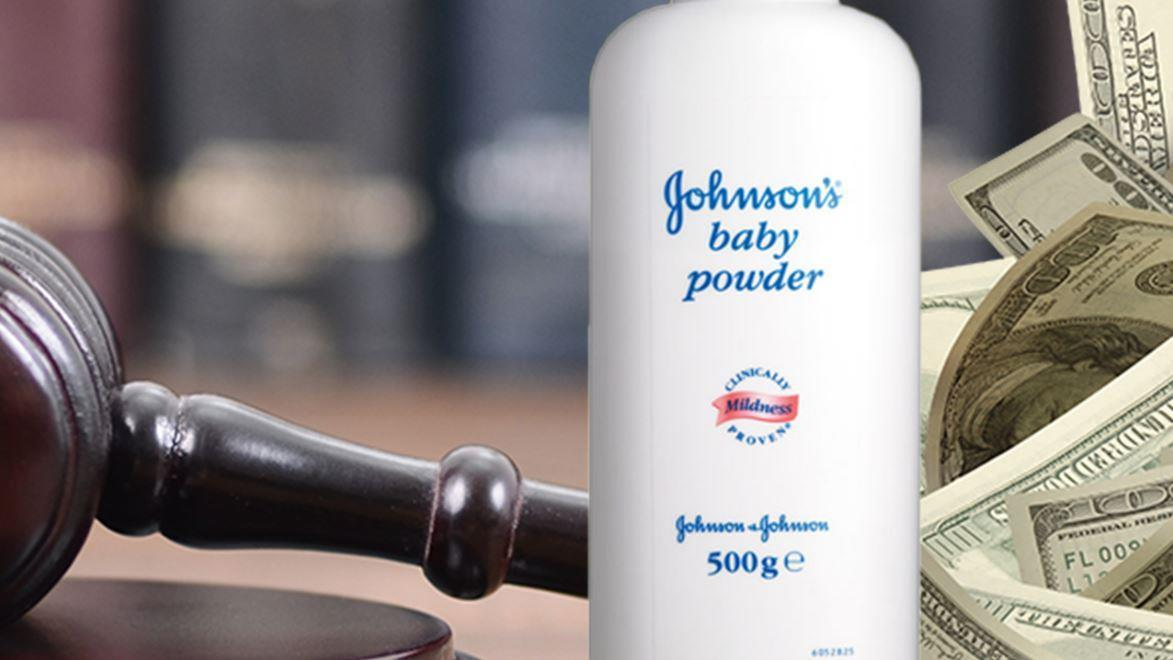
Pictured: Johnson & Johnson’s Talcum Powder involved in thousands of lawsuits.


Ethics Case Controversy

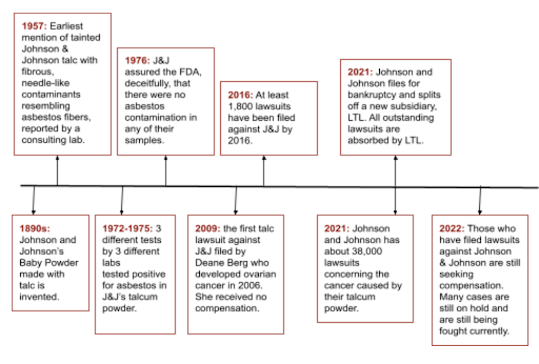
Johnson & Johnson is a multibillion-dollar company in the pharmaceutical industry that produces medical devices, pharmaceuticals, and consumer packaged goods. Johnson & Johnson is responsible for the household items that many of us are familiar with, including Band-Aid, Tylenol, Neutrogena, Johnson’s Baby, and countless more. In October 2019, the U.S. Food and Drug Administration found asbestos in one of the containers of their talc-based baby powder retailers to pull this product off of their shelves. Talc and asbestos can naturally form together in talc mines, causing asbestos contaminated products with very little way of filtering it out. Asbestos contamination in talc products can lead to cancers such as mesothelioma and ovarian cancer. For over a century, consumers have used talcum powder, otherwise known as baby powder, to perfume, dry, and protect their own and their children’s skin. Not only has Johnson & Johnson denied that their talcum powder causes cancer, but the company has known that this harmful substance was in their product since as early as the 1970s. In an investigative report by Reuters, they revealed that, “J&J didn’t tell the FDA that at least three tests by three different labs from 1972 to 1975 had found asbestos in its talc,” (Reuters). The company has faced around 38,000 lawsuits claiming the asbestos in Johnson’s baby powder caused ovarian cancer and mesothelioma in consumers (NPR). Spokespeople from the company made statements that claimed that the company had made sure through many tests that the ingredients in the powder are safe. One stated, “Our [powder] has been routinely tested and confirmed to be asbestos free by a range of independent laboratories, universities and global health authorities''. In an attempt to quiet the angry public the company has spent around 2 billion dollars in costs and settlements (Jolly 1). Despite the enormous backlash that the company was experiencing, in an effort to maintain their profits and buy themselves time, the company took to doing some immoral financial actions. 

            In October 2021, Johnson & Johnson filed for bankruptcy under the weight of thousands of lawsuits. This quiet tactic effectively puts a hold on all outstanding and unresolved lawsuits that Johnson & Johnson was facing concerning the contaminated talcum powder. The company’s legal maneuver of filing for bankruptcy was controversial to many people. Johnson & Johnson worked with the bankruptcy court to set up a trust fund of $2 billion to resolve outstanding and future claims. By doing so, the company will save billions of dollars and allows them to settle claims through the trust fund instead of litigating them individually. Johnson & Johnson is not facing the problem head on, but rather trying to get out of the claims anyway they can without having to take responsibility for the health risk they put their consumers in. In addition, Johnson & Johnson transferred all of the potential liability linked to the talcum powder cases into a subsidiary, called LTL. This way, Johnson & Johnson could keep their valuable assets separate and the subsidiary absorbs the liabilities as a protective maneuver.  The company claimed that their choice in actions would help resolve claims in an efficient and equitable manner. However, their strategy halted the cases, allowing them to remain on hold for months or even years. Anger and frustration sparked from families that were seeking compensation from Johnson & Johnson’s contaminated products. Companies facing similar situations have found openings in state and federal law such as creating and pushing a new subsidiary into bankruptcy, which Johnson & Johnson did.


Pictured: A telltale needle-like shape of asbestos found in a 1978 bottle of J&J baby powder.

 At age 22, Hanna Wilt realized that she was not able to walk right, her first symptom of an aggressive cancer called mesothelioma. Her illness rapidly advanced after unsuccessful treatment, causing Hanna not only fear, but outrage towards the company responsible for making her sick. Her lawsuit against Johnson & Johnson was suddenly blocked weeks before her passing at age 27. Wilt used Johnson & Johnson’s talcum powder every day, sometimes even multiple times a day. Wilt was angry that the company had known about the powder contamination and kept the information from customers. “This powerful group of people, they lied and were able to potentially ruin so many people’s lives,” said Wilt (NPR). Hanna’s mother, Hope, knew that seeking justice would not have saved her daughter’s life, but she did not want a company like this to get away with their actions that have caused so many families heartache. Tens of thousands of people have filed these baby powder cases and have still not received justice for the company’s actions. Not only did Johnson & Johnson deny responsibility that their talcum powder caused mesothelioma and ovarian cancer in consumers, but they used an ethically controversial tactic to get themselves out of it. Hanna Wilt is not the only one that has died from the effects of using this product and many others are seeking justice from the company who claimed false bankruptcy as a maneuver around responsibility. 

Pictured: Johnson & Johnson’s headquarters in New Brunswick, NJ.

In an episode of The Weekly about the case on Hulu, an interview of a woman, Patricia Schmitz, discussed how she was diagnosed with mesothelioma, after realizing that she too had used the baby powder for most of her life and filed a lawsuit against the company. Her lawyer, Mark Lanier, discussed his research and similar cases that found that a known material found within Talc mines (Talc being a main component of baby powder) was asbestos. This was also a very hard substance to identify and remove because the material was scattered within the Talc mines. When he dug further into the company’s internal files he found that there were actually tests done on samples of the powder that showed a positive match to asbestos found within the talc in the product. Using the results he found within Johnson & Johnson’s result, as well as within his own tests, they found traces of asbestos in the products as well as within the tissue of the bodies of the individuals that were affected. He argued that they had in fact done tests but created the tests in such a way that they knew they could not accurately pick up traces of the asbestos because they were not sensitive enough. Documents dating back to the 50s even show that results of tests done on the talcum powder show that it contained asbestos. The company has known about the dangers and the contaminants of its products for upwards of 70 years and had lied to the public and refused to acknowledge the dangers of it. In the result of Patricia’s case, Johnson & Johnson was required to pay her $4.8 million and the Justice Department had opened up an investigation of the company as a result of all of the suits filed against them (The Weekly).

Timeline

Stakeholders

Johnson & Johnson has a large number of key stakeholders in their company but there are three that hold the most stake within the company. First and foremost is their Executive Chairman and CEO Alex Gorsky. Alongside him is the second largest stakeholder who is the Chief Executive Officer Joaquin Duato (JNJ). Coming in as the third largest stakeholder of their company is the investment group The Vanguard Group Inc. who holds over $36 billion dollars within the company. In addition to these stakeholders, future shareholders, current shareholders, consumers of Johnson & Johnson products as well as the general public all play a major role in those who have a stake within the company. Shareholders are affected by the outcomes of lawsuits filed against a company which they have billions invested into because it could impact their return on investment. These groups and people could lose all of their money put into the company if the company were to file for bankruptcy. The consumers and general public that use Johnson & Johnson’s products are affected because they are either looking for justice for wrongs committed against them from using the products and they are also important to future consumers' well-being if the products are a danger to their health. Justice must also be served to those who have suffered as a result of the product.

Individualism

When it comes to defining “Individualism” Professor Salazar states “Business actions should maximize profits for the owners of a business, but do so within the law.” (Salazar 17). This definition explains how a business, like Johnson and Johnson, makes its decisions to best serve its long-term interests of maxing profits. Therefore, it could be argued that the company decided to make this bankruptcy choice because in the long term they believe they will be able to sort out all these lawsuits and will bring closure to them and the families affected, without having to spend millions in fines. On the other hand, it can be argued that using this “Texas two-step" method to pause the lawsuits was not in their best interest because when all is said and done many individuals and their families were harmed in this process and the company will lose a lot of their reputation and could eventually lose out on profits over time. A business that believes in individualism would only want its workers to focus on how to maximize the goal of the company, which any companies' main goal is profit. This would lead to Johnson and Johnson agreeing with the individualism theory because they are solely focused on making a profit, and stalling these cases allow them the time needed to figure out how they can get out of it while losing the least amount of money.

Is this situation ethical? No, obviously because many people have potentially been harmed using its product they knowingly put on shelves with dangerous chemicals. This case has way too many stakeholders involved that will for the most part all be negatively affected. Johnson and Johnson cannot view this in an individualistic way of just wanting to act in their self-interest to earn profits because people’s lives and health are on the line. But this potentially is how they are handling the situation, only caring about their profit, and trying to hide their wrongdoings. However, they are performing all of this within the laws, as unethical it may still be, this is all legal. Professor Salazar also writes, “Since laws can be changed, these laws simply represent that the business will abide by commonly agreed-upon standards” (Salazar 18). The previous quote explains how those who believe in the theory of individualism do so and believe as long as they are acting within the laws, they can do just about anything in order to maximize profits. 

In conclusion, the theory of individualism would find the circumstances of this case permissible as the company is acting to maximize their profits within the laws. Unfortunately, it is in a very unethical manner, but the main goal of a company is to profit and what Johnson and Johnson is doing is stalling the lawsuits to give them more time to figure out how to get out of this without losing too much money and their reputation. When thinking about it, they are certainly acting in an individualistic way because they are only worried about their self-interests, profits, and paying no attention to the irreversible damage they have potentially caused to a number of families. 

Virtue Theory

Being a virtuous person can be described as behavior showing high moral standards. Therefore virtue theory in relation to companies and their customers, owners and all who work for that company, have a moral obligation or duty to consumers of its products. This includes being honest, transparent, and fair in their business practices. Johnson & Johnson did not use virtuous and ethical business practices in handling the lawsuits made against them in recent years as well as simply being an ethical company to their millions of customers for decades before the scandal was released. When a company knows of the dangers of its products and they continue to withhold those warnings from their consumers that is an immoral and unethical use of power. “A warning on the product that has even a chance to cause harm or illness to those using it would be the least that a company could do in the way of being ethical and just” (The Weekly). For upwards of 70 years Johnson & Johnson has been a household name of purity and safe products to be used for babies as well as adults. It is the company’s responsibility to uphold these values and promises of the quality and safety of their products to customers. When there is even a shadow of a doubt that a product is dangerous and can cause harm to those who will use it, especially one marketed as being used on babies, the company has an ethical and moral standard that they must inform these people. Then at least the people using it can make their decision based on weighing the risks with the rewards of buying the product. 

Utilitarianism 

A utilitarian would view Johnson and Johnson’s way of handling the situation as the opposite of their belief. Utilitarianism is described as in simple terms, the greater good for the greater number of people. In this case, Johnson and Johnson did not care about the health and the state of the people who were affected by the baby powder, they only cared about the reputation of their company and keeping their company making money. In Johnson and Johnson’s case, no stakeholders were happy at all with the case, and is as follows: 

Hanna Wilt/All 38,000 other cases: All of those who tried to bring Johnson and Johnson to court will be negatively impacted by this case, because Johnson and Johnson used the Texas two-step to freeze all these cases, and they were never settled. Johnson and Johnson was never held accountable with legal action against the company, and those who were affected by the baby powder were either dying or very sick. 

Shareholders of present and future: Both shareholders of the present and the future will also be negatively impacted by this case. The company was looked at by the public as not owning up to their mistakes, and the value and stock of the company dropped. The company’s stock value was down, and was not a consideration for future investors at all. 

Customers/Society as a whole: Customers of the billion dollar company also will be negatively impacted by this case because they are the ones that have been using Johnson and Johnson products and can themselves be affected by the baby powder and they might not even know. These customers will lose trust and faith in Johnson and Johnson especially after the way they handled all of the court cases, and did not take ownership for what they did.

Johnson and Johnson’s actions were unethical and the opposite of what a utilitarian would believe in. The greater good was not the greatest for the greater number of people. Johnson and Johnson handled this case very poorly and it's very sad to see innocent people die and be very sick from a health product that they thought they were using to benefit them.   

Kantianism

It is clear that Johnson & Johnson’s actions were impermissible based on a Kantian’s view. The company went against the Formula of Universal Law, Humanity, and Autonomy, determining that they did not make a rational action. The Formula of Universal Law prohibits people from making exceptions of themselves and forbids all forms of deceit. Clearly, Johnson & Johnson deceived its loyal customers by failing to report the talcum powder samples containing asbestos in the 1970s. They market their products as safe and trustworthy, however that is disproved by this case. The Formula of Humanity states that people should treat others for what they are and not as a mere means to get something they want. Johnson & Johnson used its consumers to get monetary gain, regardless of an unsafe product. They withheld information about the asbestos in order to get people to buy their product they would otherwise be wary of purchasing, knowing the dangers. The company then blocked the lawsuits with the bankruptcy and settled matters through a trust fund, costing them the least amount of money possible. The Formula of Autonomy regards legislating laws everyone can agree to. Johnson & Johnson agreed to obey laws about product safety and standards the FDA sets yet failed to do so. The tactic that J&J used is not clearly legal. Lindsey Simon, a professor who teaches bankruptcy law at University of Georgia stated, “I think if you really look closely at what bankruptcy code allows, it’s not altogether clear this is permitted,” (NPR). Based on the formulations of the categorical imperative in Kantian ethics, Johnson & Johnson’s actions are impermissible. 

Action Plan

Johnson & Johnson acted in an entirely selfish way to a massive number of customers as well as stakeholders in their company. For monetary gain and protecting their assets, they continuously put millions of people’s health at risk and caused cancer and subsequent death in many. The outrage and backlash towards them that the scandal had caused forced the company, however delayed, to take action in an attempt to remediate the burden they have put on people. Though there are some who suffered irreversible damage and loss of life, those individuals could not be helped. In order to repair the damage to their reputation as one of the safest companies whose products are prided in safety and purity, Johnson & Johnson would need to make a number of steps to do so. Starting with continuing to make settlements with the lawsuits filed against them and repay the best they can to the families who were impacted by the product. Conducting a mass recall of all of the baby powder that consumers may have in their homes and provide compensation for the products. They should also conduct an investigation and publicly own up to the mistakes that were made as a company and express their apologies and plans for moving forward to making the company safe and reliable again.  Johnson & Johnson must be completely transparent in the production of their products and have the customers' very best interest and health at heart. For a company who prides itself in purity and care, these values must be top priority in all matters of the business. Johnson & Johnson strives for good and the wellbeing of their customers but being honest about where products come from and making sure that they are not risking the lives of their customers should be more of a priority than it seems to be currently.  

Johnson and Johnson should emphasize multiple core values within their company after this situation. One of these core values should be testing all of their products, this is something that seems to be giving the company a lot of past issues, and that is where this entire controversy originated from. Once, they find an issue in one of their products such as a dangerous chemical they should immediately take that product off the shelves. Another value they need to recognize is honesty. Johnson and Johnson cannot try to hide their mistakes, especially in this case, and admit their wrongdoings in order to protect their customers' safety. A third relevant core value needs to be integrity. This encompasses the previous two values and overall emphasizes ethical practices within their business. Trying to hide mistakes and potential harmful products is a terrible look on any company’s reputation, especially such a large and powerful company like Johnson and Johnson. Having integrity is the most important core value that every company should take seriously.

In order for Johnson and Johnson to ensure ethical productivity to prevent this problem from happening again they need to have discussions with the testing departments and even upper level management. This needs to be done in order to ensure they minimize putting harmful products on the shelves. Having harmful products seems to be becoming a theme for Johnson and Johnson showing they need to be more careful in the future. Having discussions with upper management will also mention the company’s ethics and making sure they admit their mistakes to once again get harmful products off the shelves so they do not cause any problematic situations like this case. Customer safety needs to be Johnson and Johnson’s number one priority as they currently dug themselves into a huge hole with lawsuits and even possible deaths at their fault.

During the case controversy, many executives knew about the asbestos contaminant. Products from every company are required to be tested and regulated through the Federal Drug Administration. When Johnson & Johnson had their products tested in the 1970s, there was evidence of high levels of asbestos in their talcum powder. Johnson & Johnson must have gotten these lab results back and had to have known about the contamination. In this case, the executives and others who had been notified of this danger should have been fired for failing to do anything about it. To prevent cases like this in the future, Johnson & Johnson should hire people who show integrity, check employment history, ask about their ethics, and administer personality assessments. The company should also promote those who show these qualities and are focused on the health of consumers and doing what is ethically right. If any employee proves otherwise, they should be fired immediately because this will set a standard for what the company expects in its workers. If people act unethically and get away with it, others might take advantage of that and act unethically (potentially for monetary gain) because they too can get away with it. By doing so, Johnson & Johnson will gain a better reputation if customers see that they want ethical people working for their company. 

Johnson & Johnson needs to remarket their company. For a company who has faced thousands of lawsuits for their dangerous products, they still claim they value safety, health, and ethical practices. It is wrong to claim this if many of their products have been known to be dangerous and harm their customers. If Johnson & Johnson were to take the steps in this action plan to better their company and the safety of their consumers, they should show the public how they are doing so. For example, Johnson & Johnson can decide to go through more thorough development and more regular testing of their products with a third party neutral lab. This way, if a product is deemed unsafe, the lab will be able to report this to the FDA instead of potentially keeping quiet if they are working with Johnson & Johnson. In addition, they can prove to consumers that they are taking a more ethical approach to their company and hire new people to replace ones that have shown unethical behavior. By marketing their company as a more caring and ethical company and by taking the necessary steps to do so, people may put trust back into their company. 


Authors:

Kathryn Bentz

John Oliver

Taylor Tenerowicz

Joe Contino


References

Girion, Lisa.  “J&J Knew for Decades That Asbestos Lurked in Its Baby Powder.” Reuters, Thomson Reuters, 14 Dec.

 2018, https://www.reuters.com/investigates/special-report/johnsonandjohnson-cancer/.

Horsley, Scott. “Johnson & Johnson Wins a Key Court Battle in Baby Powder Case.” NPR, NPR, 25 Feb. 2022,

 https://www.npr.org/2022/02/25/1083061992/johnson-johnson-wins-court-battle-bankruptcy-baby-powder. 

Johnson & Johnson. “Alex Gorsky.” Content Lab U.S., https://www.jnj.com/leadership/alex-gorsky. 

Jolly, Jasper. “Johnson & Johnson Faces Push to Force Global Ban on Talc Baby Powder Sales.” 

The Guardian, Guardian News and Media, 6 Feb. 2022, https://www.theguardian.com/business/2022/feb/06/johnson-johnson-faces-push-to-force-global-ban-on-talc-baby-powder-sales. 

Mann, Brian. “Rich Companies Are Using a Quiet Tactic to Block Lawsuits: Bankruptcy.” 

NPR, NPR, 2 Apr. 2022, 

https://www.npr.org/2022/04/02/1082871843/rich-companies-are-using-a-quiet-tactic-to-block-lawsuits-bankruptcy. 

Tarver, Banks. The Weekly: V. Johnson & Johnson. Hulu, 2019, 

https://www.hulu.com/watch/199c0daa-62ed-430c-8e00-383a118fd523. Accessed 11 Apr. 2022. 

Salazar, H. The Business Ethics Case Manual. N.d. 


Mann, B. (2022, April 2). Rich companies are using a quiet tactic to block lawsuits: Bankruptcy. NPR. 

Retrieved April 15, 2022, from https://www.npr.org/2022/04/02/1082871843/rich-companies-are-using-a-quiet-tactic-to-block-lawsuits-bankruptcy