Showing posts with label LAYOFFS. Show all posts

Friday, December 2, 2022

Twitter: Elon Musk Layoffs (2022)


Abstract

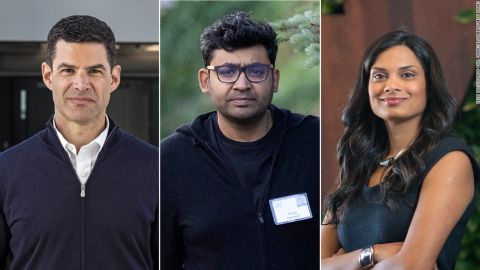
Between January and April, Elon Musk began to collect large amounts of shares of the social media company known as Twitter. On the 27th of October, the deal was finalized. Musk immediately became Twitter's new owner, promptly firing Agrawal, chief financial officer (CFO) Ned Segal, Gadde, and general counsel Sean Edgett. Because of the exorbitant expense of the Twitter Exchange, Mr. Musk began to cut costs within the company, on October 20th The Washington Post reported that Musk intended to terminate 75 percent of Twitter's staff to which Mr. Musk told Twitter employees, while layoffs were still likely to happen, he did not intend to do so at the scale the Post had previously reported. Fast-forward to November 4th Musk and Twitter began laying off a substantial portion of the company's workforce and Twitter temporarily closed its offices, with The New York Times estimating that roughly half of the employees had been let go. Because of this mass layoff without warning five Twitter employees based in San Francisco and Cambridge, Massachusetts filed a lawsuit against the company, alleging that mass layoffs would violate federal and California WARN Acts.

This paper will be an analysis of the potential ethical violations that Mr. Musk has committed, according to the theories of Individualism, Utilitarianism, Kantianism, and Virtue Theory to determine whether Mr. Musk and the company was acting ethically or unethically.


Company takeover overview

Between January and April, Elon Musk began to collect large amounts of shares of the social media company known as Twitter. On April 2nd Mr. Musk becomes the largest shareholder and is invited into the spheres of influence within Twitter. On the 14th Mr. Musk makes a bid to buy out the company to which the board of directors unanimously agrees on the 25th for a price of $44 billion. Between May and June however, Elon Musk begins to back out of the said deal for a multitude of reasons. The first of which was revealed to the public was the report that five percent of all Twitter users were either bots or spam accounts. To ensure that the deal would be as smooth as possible, the board agrees to a 3rd party investigation, to dismiss the claims that were given by Mr. Musk.

In July, at the time, security officer Peiter Zatko had accused several Twitter executives, including CEO Agrawal and certain board members, of making false or misleading statements about the privacy of its users. Because of this Mr. Musk then announced his intention to terminate the proposed acquisition, claiming in a regulatory filing that Twitter was in "material breach" of several parts of the agreement. In response, Twitter formally launched its lawsuit against Musk at the Delaware Court of Chancery and hired the law firm Wachtell, Lipton, Rosen & Katz to represent its case on July 12th. When the Board and Mr. Musk went to court on the 19th judge Kathaleen McCormick ruled that the trial would take place in early October and last for five days. In the coming weeks, many chaotic events took place, that caused the value of Twitter to fall drastically, on the 22nd Twitter cited the "chaos" caused by the proposal as the primary factor for its decline in revenue. At the end of the month, Musk's lawyers complained that Twitter had hindered them from commencing the discovery process and requested an October 17 start date, which they were given.

On August 10th Musk sold 7.92 million Tesla shares worth a total of $6.9 billion as a backup should he lose the lawsuit and be forced to buy the company. To strengthen his case Elon Musk would begin to gather evidence that suggests Twitter had manipulated the deal in bad faith. On the 29th Musk filed a "termination letter" with the SEC, citing Zatko's claims as evidence Twitter breached their contract, which was accepted into the case.


On the 13th of September Zatko testified before the Senate Judiciary Committee, while Twitter shareholders voted in favor of the acquisition. While at the same time Musk privately offered to purchase Twitter at the reduced prices of $31 billion and $39.6 billion, both of which the company rejected. On October 3rd as the time for the court hearing drew nearer Mr. Musk’s legal team informed Twitter that Musk had changed his mind and decided to move forward with his proposed acquisition at the originally agreed-upon price of $54.20 per share, on the condition that Twitter drops its lawsuit. They accepted and McCormick agreed to a request by Musk to postpone the trial to October 28 so Musk could finalize his debt financing for the acquisition. On the 27th of October, the deal was finalized. Musk immediately became Twitter's new owner, promptly firing Agrawal, chief financial officer (CFO) Ned Segal, Gadde, and general counsel Sean Edgett


Case Controversy


Because of the exorbitant expense of the Twitter Exchange, Mr. Musk began to cut costs within the company, on October 20th The Washington Post reported that Musk intended to terminate 75 percent of Twitter's staff to which Mr. Musk told Twitter employees, while layoffs were still likely to happen, he did not intend to do so at the scale the Post had previously reported. Fast-forward to November 4th Musk and Twitter began laying off a substantial portion of the company's workforce and Twitter temporarily closed its offices, with The New York Times estimating that roughly half of the employees had been let go. Because of this mass layoff without warning five Twitter employees based in San Francisco and Cambridge, Massachusetts filed a lawsuit against the company, alleging that mass layoffs would violate federal and California WARN Acts. which have yet to be addressed in a court of law. Due to the layoffs being so numerous Twitter asked some employees who had been laid off to return to the company, either because they had been fired by mistake or because they were belatedly deemed important to the health of the business. On the 16th Musk stated that he planned to appoint a new CEO to oversee Twitter eventually. Musk and his advisers met with several employees to dissuade them from leaving the company while Twitter offices were once again closed until the following Monday.
On November 18th a large number of core functions had been rendered nonviable due to resignations. These included the "payroll team, financial reporting team, and taxes team for the US, [who] completely resigned". Elon Musk calls for 'anyone' left at Twitter who can write software to meet him, or fly in, to help him 'better understand' Twitter's tech


Stakeholders

The stakeholders, in this case, are the employees at Twitter and their families. Due to the massive changes being made in their workplace they have had no assurance that they will be employed by the end of the week each day. The workforce of Twitter is directly being treated unethically. Being left without a job with no prior notice, their livelihood being put at risk as well as their families being left without a major source of income in many cases will leave people destitute.
The other stakeholders, in this case, are the users and distributors of Twitter, because of such a major slash within the company, many features that were to be rolled out with new updates to Twitter will no longer be on schedule, this will cause an eventual bottleneck within the development pipeline, that will affect all users as well as distribution companies such as Apple and Google.

Today we will take a look at this controversy through several mindsets, summarize those mindsets, and how those mindsets affect what the resolution to the controversy should be.


Individualism

Individualism according to Machan says “the only direct goal of business is to profit, and the primary obligation of the businessperson is to maximize the profit created, for the company and its shareholders.
Looking at the controversy through this lens, ElonMusk has been within the specifications of his purview, by trying to maximize profit, because the company was taken private as of October 26th we cannot tell if the profit is being increased however the plan Elon Musk would indicate he is trying to cut costs to decrease the accumulating debt, and as long as he does that within the purview of the law, he is within the ethical boundaries. That however is up to debate, the laws for layoffs are long and complex, as stated before in the case controversy section, the federal WARN law is a U.S. labor law that protects employees, their families, and communities by requiring most employers with 100 or more employees to provide 60 calendar-day advance notification of planned closings and mass layoffs of employees. Because Elon Musk had not given a 60-day notice it could be argued that he is breaching the laws, however, that could also be contradicted because § 639.9 (b) within the law states that due to unforeseeable Business circumstances the layoffs without notice could be accepted within a court case.


Utilitarianism

Utilitarianism is by far more pro-stakeholder, it takes a stakeholder’s approach by saying in order to maximize happiness in yourself and other people. Its goal is to maximize happiness for all affected parties and to minimize unhappiness for all affected parties. In other words, Utilitarianism can be described as ‘pleasure and the absence of pain’. Ultimately, Utilitarians consider the costs and benefits of actions for all affected, not just the company or one individual. If we are to consider the pros and cons for the stakeholders then the entire deal has been mishandled and has harmed every stakeholder, and the employees have been harmed by the lack of security and reassurance. With the sudden changes and creation of a precarious work environment, the surviving members of the workforce still haven’t recovered from the experience as well as the poor environment that has been put in place by the new CEO. The second stakeholders are the families of the former twitter employees and distributors of twitter. As stated before the families of former employees are directly affected by the exorbitant layoffs happening and are extremely at risk of losing their livelihood as a result, and the distributors who are seen having issues communicating with Twitter’s internal customer support (mainly because it doesn't exist anymore), the extent to which this fallout will be is unknown as of now, but it can be said that the worst is still yet to come, with Elon Musk reported being hemorrhaging money because of this deal. It is still yet unclear if the company and social media platform will declare bankruptcy and how that will also affect the stakeholders.


Kantianism

Developed by Immanuel Kant and focused primarily on rationality and Good Will. Kant says that it is wrong to manipulate and exploit people for their advantage. The four basic principles of Kantianism are defined to act rationally, helping others make rational decisions, respecting people, and to be driven by Good Will, and looking to do the right thing because it is right. In this theory, the Categorical Imperative is a test that decides whether an action is permissible or impermissible. One of the main formulations of the Categorical Imperative is The Formula of Humanity which states that it is wrong to use people as a means to get what you want because it exploits them.


If we follow this line of thinking it is clear to us that Elon Musk is in clear violation of his ethical obligation to his newly found employees, although he is acting rationally trying to cut expenses being dealt with by the company, the lack of clarity and falsities with internal reports to employees about layoffs clearly shows exploitation and manipulation of the employees, that and new reports stating that the workers who are still left are being told to do 70 plus hour work weeks show us that the new CEO, or “Cheif Twit” as he has referred to himself as is fallen out of good ethical practice for his new company.


Virtue Theory

Virtue Theory was developed by Aristotle. Virtue Theory focuses on rationality and whether a person is virtuous or not. The 4 main virtues include courage, honesty, temperance, and justice. Aristotle said that rationality is what differentiates the characteristics of people. So, people need to be rational to live a virtuous life. Aristotle also said that people need to be rational to function well and said that if a thing achieves its function then the thing is happy. Therefore, people who function well will live virtuous lives.

Looking at Mr, Musk’s actions through this lens, it becomes much harder to discern what is ethically just, on certain aspects it is clear that the takeover was very badly mishandled. As stated previously Mr. Musk has not had clarity with his employees thus making him in violation of the virtue of honesty. It is also clear that he violates the virtue of temperance.

Temperance is setting reasonable expectations for employees. Which we can see is not being followed as shown by his telling employees to work 70-plus hour weeks, with so much chaos happening around them. In happenstance, the creation of such a hostile and unreasonable work environment makes it impossible for Mr. Musk to pass the Temperance Virtue.

The virtue of justice is described not as bringing justice in the workplace but as acting in a just and reasonable manner that makes rational sense that can be followed without major issues, which again is shown to not be followed. We have seen that many of the layoffs were trying to be retracted with letters stating that people were laid off that weren’t supposed to be and Mr. Musk reportedly meeting in person with many of the former employees trying to bid favor and bring them back into the fray. The Justice virtue has been violated because of this back and forth of, giving a statement and then retracting it a day later, to where it seems there is no clear rationale for who is and isn't being put on the chopping block, the only clear thing about the whole ordeal is that people are being fired to cut costs, the employees just can never tell who.

The last virtue to discuss is courage, courage seems to not be violated solely because of the complexity of the situation. And the lack of opportunity to be violated, to violate this there would need to be a clear and established history of trust between employer and employee, but because of how recent the case is (it is still ongoing as of writing) there is no allowance for the Virtue to be violated.

Going through the 4 virtues, 3 of the 4 virtues are violated, and the 4th isn't even affected, therefore we can conclude that because any of the 4 virtues are violated Mr. Musk is not working within his ethical boundaries.


Evaluation

Now we have gone through, our journey of several different ethical theories, we can determine whether or not Mr. Musk has mishandled his newly acquired company and how he could've done better. According to Individualism, the argument could be made that he was within his purview of the law to cut ties with a large portion of the workforce without prior notice thanks to § 639.9 (b) of the WARN Acts. but according to all other views he has been in a clear and direct violation of his ethical responsibility to his employees and their families. Utilitarianism would argue that because of the lack of morality with judgments that have taken place, its core values of maximizing happiness haven't been followed. Kantians would also agree that the ethical boundary has been crossed stating the Categorical Imperative was not followed. It is also stated by Virtue theory, that because 3 of the 4 virtues; honesty, temperance, and justice, were not followed that Mr. Musk wronged those who were let go.

Unfortunately, hindsight is 20/20, and what has happened can't be fixed. The correct path to have taken would have been to give the employees 60 days' notice and begin to cut costs in other ways while the layoffs were to occur. The question then arises, “How would we rectify the situation now ?” The most obvious answer would be to give a stipend for the influx of money that has been lost as a result of the layoffs. The odds of that happening are slim to none, however. The option that then brings itself to the forefront would be to settle this dispute in a class action lawsuit that would be able to allow an accord to the workers so that they may air grievances and work toward a settlement that is beneficial to their issues.


Closing Thoughts

In my closing thoughts, I feel I should also come to say that even though this writing is in an attempt to stay neutral to the situation, I do feel that my own thoughts will seep into the writing of the paper. I do stand with the workers as I feel everyone should in this situation. However, there is an argument to be made that this was the course of action that was going to be made regardless of ethical boundaries. I should note that the situation was poorly handled at best and that even if layoffs were to happen the WARN Acts should have been followed better and the workers should have been given much more clarity on what was to happen when the transition between the two different boards was going to happen. I also feel that the Board of directors spearheaded by the former CEO Parag Agrawal is not innocent in the events that lead up to the mass layoffs, in many ways they sold out their employees and left them with many questions and concerns without instilling confidence or a sense of security, it is just as much the board's job to ensure employees that they have security, as it is the board's job to please shareholders.

Overall the entire takeover was a poorly mishandled mess that every party involved had a hand in dealing with. Much of the blame is on Mr. Musk, and we have taken a look at this through many eyes. The takeaway here should be, since each decision matters, it's important to pause and think about the impact your decision or action will have on yourself and others. Weigh the potential consequences of each decision, including positive or negative outcomes that may occur immediately or in the future.


References

Salazar, Heather. The Business Ethics Case Manual: The Authoritative Step-by-Step Guide to Understanding and Improving the Ethics of Any Business. Print.

Ashley Belanger - Nov 14, 2022 4:28 pm UTC. “Twitter Lays off 5K Contractors in Surprise 2nd Wave of Cuts, More Mods Lost.” Ars Technica, 14 Nov. 2022, https://arstechnica.com/tech-policy/2022/11/twitter-lays-off-5k-contractors-in-surprise-2nd-wave-of-cuts-more-mods-lost/.

“Code of Federal Regulations; PART 639 - WORKER ADJUSTMENT AND RETRAINING NOTIFICATION.” www.govinfo.gov, 1 Apr. 2010, https://www.govinfo.gov/content/pkg/CFR-2010-title20-vol3/xml/CFR-2010-title20-vol3-part639.xml.

Feiner, Lauren. “House Republicans Demand Twitter's Board Preserve All Records about Musk's Bid to Buy the Company.” CNBC, CNBC, 22 Apr. 2022, https://www.cnbc.com/2022/04/22/republicans-demand-twitter-board-save-records-on-musks-bid.html.

Hays, Kali. “Elon Musk Calls for Remaining Twitter Coders, Engineers to Meet Him.” Business Insider, Business Insider, 18 Nov. 2022, https://www.businessinsider.com/elon-musk-remaining-twitter-coders-engineers-email-2022-11?amp.

Mac, Ryan, et al. “Resignations Roil Twitter as Elon Musk Tries Persuading Some Workers to Stay.” The New York Times, The New York Times, 17 Nov. 2022, https://www.nytimes.com/2022/11/17/technology/twitter-elon-musk-ftc.html.

O'Sullivan, Donie, and Clare Duffy. “Elon Musk's Twitter Lays off Employees across the Company | CNN Business.” CNN, Cable News Network, 9 Nov. 2022, https://www.cnn.com/2022/11/03/tech/twitter-layoffs/index.html.

Siddiqui, Faiz, and Jeremy B. Merrill. “Musk Issues Ultimatum to Staff: Commit to 'Hardcore' Twitter or Take Severance.” The Washington Post, WP Company, 18 Nov. 2022, https://www.washingtonpost.com/technology/2022/11/16/musk-twitter-email-ultimatum-termination/.

Vinocur, Nicholas, and Vincent Manancourt. “EU Privacy Enforcer Puts Elon Musk on Notice as Twitter Melts Down.” POLITICO, POLITICO, 18 Nov. 2022, https://www.politico.eu/article/elon-musk-twitter-privacy-helen-dixon-eu-privacy-enforcer-puts-on-notice-as-twitter-melts-down/.

Thursday, December 1, 2022

Meta Incorporated: 11,000 Employees Left Jobless After Layoffs (2022)

ETHICS CASE CONTROVERSY 
The four cofounders of Facebook

On February 4th, 2004, “The Facebook” was launched by four college students at Harvard University – Mark Zuckerberg, Eduardo Saverin, Dustin Moskovitz, and Chris Hughes. Meta, formerly known as Facebook, would become one of the largest social media platforms in the world, amassing three billion user profiles in 2021, the most it has ever seen, half of which were using the site every day to share photos, post status updates, and for the promotion of businesses and political campaigns.

Every large company has its fair share of problems, and for Facebook, privacy issues were one of the major ones that often-caused users to question the platform’s credibility. One large scandal that put Facebook in the headlines for privacy concerns was the Cambridge Analytica Scandal in 2016. Facebook had exposed the data of close to 87 million Facebook users to Cambridge Analytica, a political consulting firm which worked for the Trump Campaign. A Russian-American researcher who worked for CA at the time, engineered an app using the Facebook App that allowed users to take a quiz that would expose their data to CA but also the data of their friends when CA discovered a loophole in Facebook’s programming interface. This, in addition to many other privacy incidents have caused many users to delete their accounts and stop using the platform parent platform Facebook, and Instagram, another social media platform that was acquired by Facebook in 2012 for $1 billion. 

From the start of the company, no one could have predicted the magnitude in which Facebook would grow. Zuckerberg made company history in October of 2021, when Facebook Incorporated changed its name to Meta Platforms Incorporated to reflect an emphasis on their newfound mission towards building the “metaverse,” which would eventually allow users to interact in virtual reality environments (Rodriguez, 2021). The company has made it clear that augmented and virtual reality would become a key part of its growth strategy in the upcoming years. With this being an extensive and costly project for the company, we begin to see it encounter massive hurdles that make the public and their shareholders question whether there is a company for this once high-flying company. 

With the COVID-19 pandemic, every person was forced to move online, and that meant increased time shopping online, thereby significantly boosting e-commerce, and more time browsing social media for hours on end – Meta and other platforms like it took full advantage of this. Over the course of the pandemic, the company underwent a massive hiring spree. The rationale for this was because the pandemic pushed everyone to accelerate online activity and the company had predicted this trend to be permanent. Because of this, not only did Facebook want to recruit and retain the brightest talent, but so did every other large company who followed Facebook in doing so – namely Twitter and Amazon. Facebook in particular needed to invest in numerous personnel to oversee everyday operations with work-from-home jobs and moderation for their platform (Frenkel, 2022). Over the course of two years, Meta continued to hire without deeming it necessary to do so. Little did they all know, Meta had miscalculated big time believing that this trend would be sustainable. 

This miscalculation would cost Meta, and many others big time, In October of 2022, Meta’s stock plummets after having a “dismal earnings report” (Yang, 2022) to end the third quarter, yet again. This caused Meta’s capitalization to be wiped off more than $65 billion by investors when it finally joined the economic slowdown. With rising competition from short-video platforms such as TikTok, falling sales and users, and rising costs, the company’s net income in the third quarter fell by 44% to $4.4 Billion, below analysts’ estimates for $5 billion with revenues also falling by 4%, depicting the slowest growth pace since going public in 2012 (Murphy, 2022). This caused low faith from investors and shareholders, as they all had a hard time seeing the vision for the Metaverse turning things around for the company. 

In September of 2022, Meta Platforms had amassed its largest ever number of workers, totaling 87,314 people – this is where they realize they would need to make major changes amidst the rising economy before they are unable to recover. On November 9th of 2022, Mark Zuckerberg announces layoffs and job cuts for 11,000 individuals, making up 13% of their workforce – a number that made history. Zuckerberg announces that the company is also taking steps to become leaner and cut spending as well as enacting a hiring freeze through the first quarter of 2023 (Vanian, 2022). Although these layoffs were made across all departments and regions, most of them affected areas like recruiting and business teams. Less engineers were affected as they are an essential part of building up Zuckerberg’s vision of the “Metaverse.” 

STAKEHOLDERS 
Mike Schroepfer, former CTO of
Meta and top shareholder


The layoffs came amid a tough time for Meta and with the projections for fourth quarter earnings announced in late October of this year, investors were “spooked”, and this caused their shares to sink by nearly 20%. Investors have raised concerns about Meta’s rising costs and expenses, which jumped 19% year over year in the third quarter to $22.1 billion (Vanian, 2022). Analysts and investors are both losing confidence in the company because despite their decisions for cost cuts and hiring freezes, expenses in 2023 are expected to reach an all-time high at $96-$100 billion, a large sum compared to 2022’s total expected expenses, totaling $85-$87 billion. During this period, Meta was facing intense investor scrutiny for spending so heavily on the Metaverse project – Zuckerberg's vision of building an “avatar filled world” (Murphy, 2022). Zuckerberg continues to reassure them by warning that these promises of efficiency will take time and patience. Wall Street Analyst, Brent Thill sides with investor concerns and says: “There are too many experimental bets versus proven bets in the core.” Needless to say, investors are worried about Meta platforms and rightfully so, but according to Zuckerberg, these efforts will be “of historic importance” to create a basis for an entirely new way for humans to interact with one another and “blend technology into our lives” (Yang, 2022). 

INDIVIDUALISM 

Milton Friedman, an economist and a Nobel prize winner for economics rose to prominence in the 1970’s. His theory of Individualism states that a business’ only goal is profit. Therefore, the only obligation that a business has is to maximize profit for itself and its shareholders within the law. Generally, this theory holds true with some exceptions, some of which are the social identity of the company and of the leaders. There are many investors, customers, and employees who wish to be involved with socially responsible businesses meaning ethically sound businesses and those who profit within the law, seeing as social responsibility can generate profit. Just because something is legal, does not make it ethical and this is emphasized by Tibor Machan who believes that the direct goal of profiting may need to be met by indirect goals that are not aimed at profiting. Businesspeople may have other goals and social objectives but must prioritize profit-maximizing strategies. 

Under the circumstances, Meta was reporting growth rates at all-time lows since going public and declines in revenue and net income. These declines are dismal to their shareholders and the company’s growth, especially one of this magnitude. The aftermath of the layoffs was mixed – some former employees were glad and wanted to explore the next chapter of their lives, while others were devastated and immediately went searching for new opportunities, seeing as the cost of living only continues to rise, especially in highly populated areas in the country, where many have relocated for their position at Meta. Mark Zuckerberg and Meta set certain goals for the company, and to achieve those goals, this was the decision he had to make. There is no denying how empathetic and apologetic he was during the announcement of the layoffs, and he was saddened to let his talent go under these circumstances. This is ultimately the decision he had to make to maximize his company’s profit as expenses are only going to increase. This was in the best interest of his company and stockholders. 

UTILITARIANISM

What makes something good? When we think about something that is good, we are typically searching for some intrinsic value. Our attitudes and preferences influence our happiness and usually, all actions are aimed at something good and will bring us happiness. Utilitarianism, founded by John Stuart Mill emphasizes that we should bring about happiness and pleasure in all beings that can feel it. When there is a perfectly imperfect mix of egoism and altruism, we get utilitarianism, an ethical concept that wants humans to maximize happiness for ourselves and for others. Meta heavily contradicts this theory, as the company could have avoided a lot of the adversity that is currently being endured by his former employees. 

Meta layoffs provided a good example of ends not justifying the means – it is hard for utilitarianism to hold true in all cases, no matter how much we wish it could. Under these circumstances, the Meta layoffs could have been avoided if Zuckerberg wasn’t blinded by the social media boom amid the pandemic. The CEO should have looked into the future and considered his employees’ futures during his rapid hiring spree rather than making rash decisions dictated by greed. The employees that were hired at this time and were laid off, would have been better off finding a more permanent and stable career elsewhere. According to Mill, this decision was highly unethical and selfish of the CEO and shareholders, who should have found a middle ground with their employees, which would have been making other cuts outside of employment and provided employees the option to sever their relationship with the company peacefully rather than being forced to unexpectedly without warning. 

KANTIANISM 

Immanuel Kant was a German Philosopher and was one of the primary thinkers of the Enlightenment. The basic principles Kantianism consists of rational decisions through consistent behavior, and respect for individual autonomy, needs and differences. He pushes humans to evaluate whether certain actions are coming from good will. In the business context, this theory implies that businesses and businesspeople have an obligation to treat everyone with respect, and this treatment is an obligation regardless of one's goals or missions – meaning that the desire to make profit or for any other outcome cannot be a reason to treat people without respect and fairness. To help individuals reason with their decisions, Kant created the Categorical Imperative. The Formula of Humanity is one of the most prominent moral formulations within the categorical imperative which states that exploiting and using others in order to fulfill a desire is unethical and may involve manipulation tactics that deprive them of their rationality (Salazar 2014). 

In the case of the Meta layoffs, it was clear that there was a discrepancy between what Zuckerberg did, and the Formula of Humanity. In this case, we see that the intention behind the massive hiring spree that Meta underwent during the pandemic was so they were able to acquire the biggest and brightest talent – talent that they could use to get ahead of competitors. But the layoffs make it evident that these employees were dispensable, and their talents were utilized but once it became a burden to the company to pay them for what they’re worth, it was quite easy for them to just cut ties with these employees and because of this, there was a clear violation to the Formula of Humanity. There is a motive behind every business decision, whether the motive was to intentionally do damage or not, decisions that businesses like Meta make such as these layoffs will impact every component associated with the company. In the case of the Meta layoffs, the apology that was released by Zuckerberg to his employees and the CEO’s general reputation showed that there was no real intention to do any harm to the affected individuals here. Although, it would be difficult to argue the moral permissibility of Meta’s actions considering the former employees were not allowed to vouch for themselves so therefore, there was no respect for these individuals’ autonomy and rationality. 

VIRTUE THEORY
Snippet of Mark Zuckerberg from leaked 
video call where he apologized to those
affected by the layoffs.

When we take the time to think about our personality, we should take the time to ask ourselves if there are traits within our personality that positively contribute to our growth and our social responsibility. In an ideal world, we would all want to avoid viciousness or unfavorable traits. This virtue theory differs from the previous three ethical theories but lay the foundation for a business’ ethics and moral code. This theory is comprised of four main virtues: courage, honesty, temperance, and justice. 

One of the virtues that Zuckerberg demonstrates is honesty. Once he himself was able to come to terms with the fact that his company numbers were declining. Though, there is a gray area where we are unsure if Mark Zuckerberg only came clean about his company’s numbers because he couldn’t run from it, or if he genuinely wanted to be transparent with his team, shareholders, and users. Regardless, his display of transparency gained him and Meta a sum of respect, but unfortunately didn’t mask the decline in Meta’s numbers. 

Another virtue displayed by Zuckerberg is courage. He apologizes in the letter announcing the layoffs: “I want to take accountability for these decisions and for how we got here. I know this is tough for everyone, and I’m especially sorry to those impacted.” By doing so, he demonstrated that he had the ability to take accountability for his own actions without placing blame on others. This is a trait of a exemplary leader, which he possesses. 

In addition to this letter the CEO attempts to make things right post layoffs for the individuals affected, demonstrating justice. Zuckerberg did what he could to make this time as easy as possible by offering impacted employees 16 weeks of pay along with two additional weeks for each year of service to Meta. Plus, health insurance will remain covered for six months (Vanian, 2022). The CEO is aware of what this decision has done and how it would potentially affect his former employees, and he attempts to reconcile these wrongs. 

Although Zuckerberg demonstrates a majority of the four main virtues, he does not exemplify temperance. There was a lack of self-control throughout the course of two years leading to the layoffs. The CEO’s overambitious behavior ultimately led him to burn bridges with many people—his former employees, shareholders, many Meta users. The potential that he sees in the future of Meta and the formation of the “Metaverse” blinded him and motivated him to make decisions that were irrational and impulsive. Because of this lack of temperance, there are now 11,000 individuals fighting for their livelihood. 

JUSTIFICATED ETHICS EVALUATION

In retrospect, it is quite easy to shame Meta and Zuckerberg, CEO of Facebook parent company, Meta for laying off so many employees. These employees are people who do work to make a living and are very dependent on their careers in the company. We look at Meta and how long they’ve been a prominent social platform, one that almost all of us use or have used at one point and it’s difficult for us to wrap our brains around the fact that they couldn’t keep the 11,000 people on their payroll. The reality is the state of the economy proving to carry rising expenses and costs will make this almost impossible for Meta to sustain while remaining in business. 

Meta’s active user count has been steadily decreasing for quite some time now and we are all aware of where Zuckerberg wants to take the company – to the Metaverse. This requires the company to invest as much time and finances into the project as they can sustain in order to execute this vision that Zuckerberg has for his company. When we have a vision for what is essentially our livelihood, we want to do what we can to help it come to fruition and this is what Zuckerberg did. In this case, it was evident that the CEO did not want to burn bridges with the people that contributed so much to his company’s growth and success.

After the layoffs, there is no denying that his decision has paid off. There were signs of growth instantaneously as Meta’s stock rose 5.2% by end of day November 9th, the day of the layoffs and closed at $101.47. While there is a huge deficit the company still must reconcile, it continues to persist and analysts, while skeptical, attempts to put their faith in the power and potential that Facebook holds. Not only was the CEO struggling, but there would be losses for his investors and other shareholders if he didn’t make this executive choice – Zuckerberg did so compassionately and with transparency. Therefore, his actions were ethical and justified. 


BIBLIOGRAPHY 

Chang, Alvin. “The Facebook and Cambridge Analytica Scandal, Explained with a Simple Diagram.” Vox, Vox, 23 Mar. 2018, https://www.vox.com/policy-and-politics/2018/3/23/17151916/facebook-cambridge-analytica-trump-diagram. 

Frenkel, Sheera, et al. “Meta Lays off More than 11,000 Employees.” The New York Times, The New York Times, 9 Nov. 2022, https://www.nytimes.com/2022/11/09/technology/meta-layoffs-facebook.html. 

Kelly, Jack. “Meta Lays off 11,000 Workers-How to Cope with Being Downsized and Prepare for a Difficult Job Market.” Forbes, Forbes Magazine, 10 Nov. 2022, https://www.forbes.com/sites/jackkelly/2022/11/09/meta-lays-off-11000-workers-how-to-cope-with-being-downsized-and-prepare-for-a-difficult-job-market/?sh=5ca637862a80. 

Murphy, Hannah. “Meta's Value Plunges More than $65 Billion amid Falling Sales, Rising Costs.” Ars Technica, Financial Times, 27 Oct. 2022, https://arstechnica.com/tech-policy/2022/10/metas-value-plunges-more-than-65-billion-amid-falling-sales-rising costs/#:~:text=The%20company%20estimated%202022%20total,costs%20and%20freeze%20most%20hiring. 

Vanian, Jonathan. “Meta Laying off More than 11,000 Employees: Read Zuckerberg's Letter Announcing the Cuts.” CNBC, CNBC, 9 Nov. 2022, https://www.cnbc.com/2022/11/09/meta-to-lay-off-more-than-11000-thousand-employees.html. 

Yang, Mary. “Facebook Parent Meta Is Having a No-Good, Horrible Day after Dismal Earnings Report.” NPR, NPR, 27 Oct. 2022, https://www.npr.org/2022/10/27/1131705422/facebook-meta-earnings-stock-price-fall-metaverse#:~:text=via%20Getty%20Images-,Meta's%20tumble%20in%20share%20price%20on%20Thursday%20was%20the%20market's,the%20Facebook%20parent's%20bottom%20line. 

Capoot, Ashley. “Meta Shares Pop 5% as Wall Street Rallies around Layoffs.” CNBC, CNBC, 9 Nov. 2022, https://www.cnbc.com/2022/11/09/meta-stock-up-as-wall-street-rallies-around-layoffs.html. 

Hall, Mark. “Facebook.” Encyclopædia Britannica, Encyclopædia Britannica, Inc., 18 Oct. 2022, https://www.britannica.com/topic/Facebook. 

Ingram, David, and Rima Abdelkader. “Meta Employees Post about Layoffs after More than 11,000 Jobs Are Cut.” NBCNews.com, NBCUniversal News Group, 9 Nov. 2022, https://www.nbcnews.com/tech/social-media/meta-layoffs-lay-offs-mark-zuckerberg-jobs-employees-how-many-rcna56425. 

Rodriguez, Salvador. “Facebook Changes Company Name to Meta.” CNBC, CNBC, 29 Oct. 2021, https://www.cnbc.com/2021/10/28/facebook-changes-company-name-to-meta.html#:~:text=The%20new%20name%20reflects%20the,playing%20in%20a%20virtual%20world. 

Salazar, Heather. “The Business Ethics Case Manual: The Authoritative Step-by-Step Guide to Understanding and Improving the Ethics of Any Business.” 2014.

Twitter: Elon Musk's Command Off to Rocky Start (Oct. 28th, 2022-Present)

        Abstract
Twitter CEO Elon Musk

Twitter, a social media company created in San Francisco in 2006, has had five total CEOs in its life up until the middle of autumn this year. In mid-April, Tesla CEO Elon Musk began the acquisition of Twitter. Despite Musk finding some minor wording in the deal displeasing, Musk finalized the acquisition after over half a year.    


               On October 28th, Twitter was bought out by Tesla’s CEO Elon Musk for an enormous $44 billion. Since Musk has taken over, there have been multiple ethical controversies between him and his employees as well as the general public. His massive layoffs and continued radical discussion of free speech have put Twitter in a tough spot. Individualistically, Musk seemed to be the perfect person to take over Twitter due to his great success at Tesla, but so far it hasn’t appeared that way. Musk does not fall into the utilitarianism ethics category as he is not in it to maximize happiness. He is a businessman with strong personal opinions to guide him. Musk also doesn’t follow the ideas of Kantianism as his continued Tweets regarding politics have scared away partners of Twitter. Overall Musk doesn’t have great balance with any of the four main virtues in the virtue theory and thus has seen the backlash against his company because of it. In my own opinion, I believe Musk is a clear individualist and while I may not believe with all his decisions, I don’t think some are as bad as the media makes them out to be. Ultimately, I think he will turn Twitter around. He’s put too much money into the company to not make it work and because of that I am interested to see what happens with the company moving forward.


Ethics Case Controversy

            Twitter and Elon Musk have had many ethical controversies in the short time since he has taken over the company.  His first and foremost ethical controversial decision comes on October 28th (the first day he took over the company) with the idea to lay off half the company. He discusses doing this urgently because many employees are due for bonuses at the end of the month. Musk insists that these employees must be laid off before November 1st and stated that he is used to going to court over similar issues. This decision by Musk was changed after realizing the true cost it would be to go to court rather than paying the bonuses (Conger). But the question arises, was this an ethical thought? It certainly doesn’t agree with utilitarianism, but is it in line with individualism? Was he trying to make this decision to save the company some money and allow it to be reinvested into the company? Ultimately, we don’t know because the decision was changed. However, the decision to still lay off half of all employees at the company after November 1st certainly posed ethical questions. 

            Following this big slash in Twitter’s employment figure, Musk lost multiple executives; some through his own firing and others by choice of departure. Musk then made steep demands of his employees still left, including getting a new premium subscription service called Twitter Blue out to the public within one week. Starting from scratch, the project team spent countless hours in the office to make sure the product launched when their supervisor demanded it. Ultimately Twitter Blue did launch on time, but due to the rushed process, there were flaws in the development of the service and it backfired dramatically and was pulled from app stores within a week (Kolodny). Twitter Blue developers and team members thought once the software was completed and released their long days would halt, at least for some time. Musk demanded the opposite, proposing an ultimatum to all employees left: Work long days at a high pace or leave. This also would be frowned upon from the standpoint of utilitarianism ethics, as it is not bringing happiness to the people Musk has put in this difficult decision. But the question keeps arising: As such a successful businessman, is Musk doing what is necessary to make Twitter the best its ever been and thus supporting other ethical points of view? So far, it doesn’t appear that way. 


Fired Twitter executives Ned Segal, left, Parag Agrawal, center, and Vijaya Gadde, right, leave the company with $187 million of Elon Musk's money.

Fired Twitter executives Ned Segal, left, Parag Agrawal, center, and Vijaya Gadde, right


            Musk also continued to make headlines as he uses Twitter to voice his own opinion on various different subjects, including politics. Musk, a once liberal-leaning individual, has shifted in recent years more and more toward a right-wing approach. Since acquiring Twitter, Musk has made several different comments on the platform that have been quite controversial for himself and his newly bought company. His continuous advocation for free speech and extremism of statements have caused partnering companies to not want to be affiliated with Twitter to save their own public image. Furthermore, his actions as Twitter CEO to restore and grant amnesty to banned accounts like Donald Trump’s has caused an uproar from some people, leading them to use other forms of social media in protest (Thorbecke). This is an ethical controversy because Musk is trying to do what he believes is right, but in doing so, he risks the health and well-being of his company and its future. 

His actions have created repercussions for his company such as losing big revenue sources from partnered companies that shared their advertisements on Twitter. Without the partnerships and deals with advertisements, Twitter is at a huge loss of income which can have severe implications for its future. Musk is not ignorant of the fact that the company has not been off to a great start since he arrived, and he understands that they need to turn a profit soon. If they don’t, he reportedly told staff that bankruptcy could be high (Allyn). Bankruptcy could be one of the final stages in this adventure for Musk, but experts believe he won’t give up easily and will try to find a way to turn the company around. 


Timeline of events since Elon Musk took over Twitter.
Stakeholders

            With Twitter becoming a privately traded company again, it is difficult to find who still are stakeholders in the company. However, the top five Stakeholders in Twitter prior to going private and who are thought to still be stakeholders include The Vanguard Group Inc., Elon Musk, Morgan Stanley, BlackRock Inc., and State Street Corp. The Vanguard Group, Inc. has the largest stake in Twitter through various mutual funds, exchange-traded funds, and retirement products. As of March 31st, they owned 82.4 million Twitter shares. Elon musk, Twitter’s CEO, is the second largest stakeholder, holding 73.5 million shares and 9.2% stake in the company. Morgan Stanley, another investment bank and asset manager holds 67 million shares used in mutual funds like The Vanguard Group. BlackRock Inc. is another investment manager that owns a little over 50 million shares that are used in its exchange-traded funds and other investment vehicles. Lastly, State Street Corp. offers a broad variety of investment management services that may include some of their 36.4 million Twitter shares. All of these groups have big stakes in Twitter and, depending on how the company performs with Musk leading the company, can see big gains or drastic falls in their portfolios (Reiff). 


Individualism

            The individualist theory states that the goal of a business is to maximize profit for the stakeholders and act in their best interests within the law (Salazar 17). Part of the deal that Elon Musk agreed to when he acquired Twitter was that the company would no longer be a publicly traded company. Rather, it would be private. Because of this, there is no financial information available to the public at this time to see how Twitter is doing financially since Musk has taken over. However, prior to going private, Elon Musk was the second largest stakeholder in the company. Therefore, it would make sense that he acts in an individualist way to maximize his own wealth as well as the wealth of other stakeholders. In the deal to acquire Twitter, Musk made sure that the company would no longer be a publicly traded company, reversing the IPO of Twitter. This action makes it very difficult to tell how the company is doing with regard to its stock price and equity value, but we can infer based on other information that the company is not doing well since Elon Musk has taken over. Immediately cutting half of the employees at the company is a dangerous move. While it may mean Twitter is cutting down on costs, it doesn’t mean it can sustain its revenues. In fact, Twitter has lost many of its main revenue sources (advertisers) due to Musk’s comments regarding Twitter and his political stance (Thorbecke). They have either canceled their deals with Twitter or have them on hold to try and preserve their company’s public image. These actions go against individualism and likely hurt the wealth of the stakeholders dramatically. 


Chevrolet, Jeep, Chipotle Mexican Grill, and Ford were the first major companies to halt their advertisements on Twitter.


Utilitarianism 

            The utilitarianism theory states that an action is deemed ethical if it promotes happiness to the maximum number of people possible and yourself as well as minimize suffering. Pleasure and happiness should be brought to all beings that can feel it and it should be done impartially (Salazar 19-20). It has been clear with the actions of Elon Musk that he has not acted in line with the utilitarianism theory. Within 24 hours of acquiring Twitter, Musk discussed the layoff of nearly half the company. Specifically, Musk wanted to do this prior to November 1st so he wouldn’t have to pay bonuses set to be paid on that date. When told this would cause an uproar and employee lawsuits, Musk said he was used to going to court and paying penalties (Conger). This action and statement are almost the antitheses of utilitarianism. Layoffs of that size are unnecessary within the first 24 hours of running a company. Furthermore, trying to do it specifically before a certain date so people don’t get the bonus, they worked for isn’t promoting happiness to the maximum number of people possible. If anything, it’s only promoting happiness to himself, and therefore is not ethical by Mill’s standards. 

Another example of how Musk hasn’t followed utilitarianism is by giving employees an ultimatum: work 12-hour days at a high pace or leave (Conger). This doesn’t bring happiness to the employees at Twitter because for most people that’s a difficult decision. Many can’t afford to work 12-hour days or don’t want to consistently at a high pace. Working these hours means sacrificing nearly everything in life besides work, and many don’t want that.  However, some also can’t afford to be jobless. Some have to support a family and if they don’t have a job, they cannot put food on the table for their children. This, therefore, shows that Musk is once again not being ethical by the standards set in utilitarianism. 


Kantianism

            Kantianism focuses on four main points, all of which revolve around rationality, respect, and motivation to do the right thing. This ethical theory also talks about how it is wrong to manipulate and exploit people for your own advantage (Salazar 21-22). Musk hasn’t thought that way since his buyout of Twitter. His actions to cut half of the employees at Twitter does not, at least from an external point of view, seem to be rational and make sense as the right thing to do. That doesn’t mean that a layoff of some kind wasn’t necessary, but half of the employees was irrational and disrespectful to both the people getting laid off and also the employees who are still with Twitter because they have to pick up the work that their former coworkers were doing. 

            Furthermore, there are reports of Musk using Twitter as his somewhat own personal platform to push his own agenda. He has recently been talking a lot about free speech on Twitter but in a radically right-wing way. In one tweet as recently as Monday night, Musk stated,” This is a battle for the future of civilization. If free speech is lost even in America, tyranny is all that lies ahead,” as well as “The Twitter Files on free speech suppression soon to be published on Twitter itself. The public deserves to know what really happened …” (Musk). Everyone is allowed to voice their own political opinion, but Musk doing so in such a public manner is irrational. It has cost him many sources of revenue for Twitter and is not the right way to try and handle the situation. He may believe he is motivated to do the right thing for the people of the United States, but he is not just an individual on the platform. He is the leader of the company, and he needs to be motivated to do what’s right for the company. 

Musk has further sent the country into a frenzy by reactivating the accounts of several individuals that were banned from the app, including Donald Trump. Trump was banned from the app nearly two years ago after inciting the attack on the Capitol on January 6th, 2021 through Twitter. With Trump as well as others granted access to the app again, Musk and Twitter are facing heavy pressure and the repercussions, including more advertisers leaving Twitter and others protesting the use of the app. 


Photos from the January 6th riots at the Capitol (left) and the 45th president of the United States Donald Trump (right).


            Kant also states that the formula of humanity is to act in such a way that you treat humanity, whether in your own person or in the person of another, always at the same time as an end and never simply as a means. Elon Musk also doesn't appear to follow this formula as he does look more at a company and its employees as entities rather than human beings, especially with massive layoffs early on as well as aggressive deadlines. He looks to push employees to the limit to get the most out of them like they're machines. Some argue that to be an effective CEO you can't let emotion sway you, but there is a balance that can be had between both. 


Virtue Theory

            There are four main virtues developed by Aristotle in the virtue theory. They include courage, honesty, temperance, and justice (Salazar 23).  In this ethical dilemma, Elon Musk seems to be acting with a lot of courage. He isn’t afraid of what others think of his decisions, but this courage seen early on now looks to be rashness, as the company talked about trying to hire back employees they laid off (Conger). 

In Elon Musk’s short time with Twitter, he has had times where he has been somewhat secretive and dishonest. When first hired he had a meeting in the war room with human resources executives to discuss immediate layoffs. When he finally went through with it, all his did was send an email and lock access to their company emails and message board (Thorbecke). Furthermore, Musk taking the company private makes it difficult to see how they’re doing and further keeps people in the dark about the status of the company. However, he has been quite open about his plans to give free speech on Twitter as well as publicly voicing his political opinion. 

Being a businessman, Musk will push his employees to get the most out of them. Because of this, he does not have great temperance with his employees. Asking for Twitter Blue to be up and running within a week was a tall task to ask of his employees. Furthermore, asking all employees to begin to work 12-hour days is slightly unreasonable (Conger). However, his desires for the company are for it to be great and that is why he’s putting into place these requests. 

Musk isn’t one who cares much for justice. When discussing the layoff of half the employees at Twitter, he wanted to do so prior to their bonus date. He added that he didn’t mind going to court over it rather than paying the bonuses. However, Musk is a hard-working man who tends to ask the employees the same as he asks of himself. Musk also has produced quality products with Tesla and has great ideas for the future. 


Justificatied Ethics Evaluation

            Overall, I think what Elon Musk has done so far with Twitter is unethical. I understand the need to cut expenses to help increase profits. It’s a common practice in the business world and expenses for Twitter primarily come from paying employees. Layoffs happen to some companies, but I don’t think it was necessary to cut half the staff. I think laying off 25% of the staff to start would’ve been better and then reassessing more layoffs if necessary. Furthermore, trying to do it prior to their bonus date and initially not caring about going to court over it is very unethical in my opinion. Those people worked hard for their money and deserve it. 

            On top of that, Musk has asked the remaining employees to work long hours. This is definitely something worth debating the ethicality of, but I don’t see too much wrong with it so long as it’s not a long-term change. Many people work multiple jobs and have other tasks to complete daily, and I feel that it’s more common today for people to work more than a typical 9-5. Musk also does give an alternative to those who don’t want to work under those circumstances. He offers all who decide to leave a three-month severance package. Leaving is difficult, but I feel like someone who once worked for Twitter can find employment elsewhere relatively quickly, so I don’t see this ultimatum as unethical. 

            Lastly, when talking about how Musk has handled voicing his own political opinion and its impact on Twitter, I don’t think it was unethical, but I do think there was a better, more professional way to go about it. Using media outlets to voice your opinion is okay, and using a social media platform you just acquired makes sense, especially since it has drawn attention and buzz to the app. But his actions and statements have caused many to not want to be associated with Twitter because he is now the owner. This has caused a huge loss of profits for the company, and this is the main issue because it’s a trickle-down effect. Loss of revenues may mean more people out of jobs and if that’s the case then Elon Musk is at fault for that. If he wanted to voice his opinion, he should’ve done so through a more professional outlet and voiced his opinion in a more professional way. 

Conclusion

            Ethical controversies in the business world have been happening forever and will continue to happen for the rest of time. There will always be situations difficult to navigate these situations and it is up to us to educate ourselves to the best of our ability to make proper decisions. It is interesting to see how many ethical controversies have arisen already for Twitter and Elon Musk in such a short period of time. From layoffs to new products, politics to bankruptcies, Musk and Twitter have dug themselves a hole financially that they must do work to get out of. However, despite all the news and decisions made, broadly speaking Elon Musk is an individualist. He wouldn’t sink $44 billion dollars into a company just to see it die. He will continue to try and make Twitter better than it’s ever been. How he does so may not be perfect in the eyes of all ethical philosophers, but ultimately, he seems to be business oriented and looking to turn a profit for himself and the people around him. 


References

Allyn, B. (2022, November 12). Elon Musk says Twitter bankruptcy is possible, but is that likely? NPR. Retrieved November 29, 2022, from https://www.npr.org/2022/11/12/1136205315/musk-twitter-bankruptcy-how-likely 

Conger, K., Isaac, M., Mac, R., & Hsu, T. (2022, November 11). Two weeks of chaos: Inside elon musk's takeover of Twitter. The New York Times. Retrieved November 29, 2022, from https://www.nytimes.com/2022/11/11/technology/elon-musk-twitter-takeover.html 

Kolondy,Lora. S. P. (2022, November 11). Twitter pauses paid verifications after users abuse service to impersonate brands and people. CNBC. Retrieved November 29, 2022, from https://www.cnbc.com/2022/11/11/twitter-blue-subscription-disappears-from-app.html 

Musk, Elon. “This Is a Battle for the Future of Civilization. If Free Speech Is Lost Even in America, Tyranny Is All That Lies Ahead.” Twitter, Twitter, 29 Nov. 2022, https://twitter.com/elonmusk/status/1597404771618430976?cxt=HHwWgICl7aTLj6ssAAAA. 

Musk, Elon. “The Twitter Files on Free Speech Suppression Soon to Be Published on Twitter Itself. the Public Deserves to Know What Really Happened ...” Twitter, Twitter, 28 Nov. 2022, https://twitter.com/elonmusk/status/1597336812732575744?cxt=HHwWgMCj2cfX8KosAAAA. 

Reiff, N. (2022, November 22). Top 5 twitter shareholders. Investopedia. Retrieved November 29, 2022, from https://www.investopedia.com/articles/insights/060916/top-3-twitter-shareholders-twtr.asp 

Salazar, Heather. The Business Ethics Case Manual. n.d.

Thorbecke, C. (2022, November 27). Layoffs, ultimatums, and an ongoing saga over Blue Check Marks: Elon Musk's first month at Twitter | CNN business. CNN. Retrieved November 30, 2022, from https://www.cnn.com/2022/11/27/tech/elon-musk-one-month-twitter/index.html