Showing posts with label Business News. Show all posts

Friday, May 6, 2022

LinkedIn Fake Profiles (2022)

Pictured: LinkedIn profile pictures recognition for better results.
Ethics Case Controversy

LinkedIn is one of the country’s biggest and most helpful online services when it comes to seeking employment and professional networking. They are known to bring users to real employers and help them with career success in a very safe way. At the beginning of 2022, this changed drastically when it was found that many profiles that were being used on LinkedIn were fake accounts. Not only do these fake accounts violate LinkedIn’s policies, but it also makes it an unsafe environment for users who can have their identity stolen and tricked into thinking they are legit accounts. LinkedIn is now taking action to delete many accounts and has removed more than 15 million since the beginning of 2021 (Bond, 2022). This is just one step further to removing all these accounts and LinkedIn is working hard to try to delete them all, but new technologies are making it more difficult.

At the beginning of 2022, a veteran researcher, Renee DiResta, had noticed something off from one of the profiles she had gotten a message from on LinkedIn. The first thing she noticed is that the profile picture looked like it was very fake. For example, the profile that went by the name of Ramsey had a picture that was missing an earring on one side, had hair blurring into the background, the placement of the eyes was exactly centered, and the background was blurry. With a combination of all these details, it showed DiResta that she was dealing with a computer-generated AI profile picture. DiResta told one of her colleagues, Josh Goldstein, about her findings and worked with Stanford researchers on an investigation to find more fake profiles. After doing this they ended up uncovering more than 1,000 LinkedIn profiles using what appeared to be faces created by artificial intelligence (Lusina, 2022).

LinkedIn has acknowledged and has been committed to removing these accounts. They have done so and have removed millions of fake accounts from when the problem arose. Although they made great efforts to remove the accounts from the Social Networking website some accounts have now adapted and are relatively genuine and difficult to decipher from a true user. There are some common things that LinkedIn Consultants Trainers (Goodman) tell the users to look out for. Particularly things that include, profile pictures that look too good to be true, receiving multiple invitations from the same company, a suspicious work history (Look for endorsements from the employers or employees they may work with), and profiles with too many connections can be too good to be true are all possibilities and things to look out for. Many users receive messages that they are qualified for the offers.

Pictured: Users receive a message that the sender has an offer for them.

After more research about the fake accounts was done, it became prominent that the technology being used to generate the fake profile pictures are Generative Adversarial Network (GAN). This technology uses real pictures to create fake AI humans which can be indistinguishable from real humans. Out of the 1,000 accounts discovered by DiResta that used GAN, 70 of these accounts linked back to real companies (Slater-Robins, 2022). When they reached out to these companies to ask about the fake profiles, many of them had no clue about them and stated that they hired other companies to help with finding potential customers. One of the companies that had accounts was called RingCentral. They had many fake profiles that said they worked there but the company claimed that they never worked there. RingCentral said they had hired other people to help with finding potential customers and one of these companies used GAN (Bond, 2022). Many other companies had the same response showing that this is a big issue that LinkedIn must find a way to deal with.

There are a lot of CEOs for companies that are unaware of the fake accounts saying they are associating with the company as they believe they are truly real accounts. They believed that they were real people and that they were just trying to connect with the company to obtain opportunities, not deceive the real users trying to obtain opportunities. A lot of fake accounts have become skilled and advanced in deception. Many people as stated by NPR have said the fake accounts seemed to be of someone familiar not knowing that the photo was generated by a computer and is completely fake. Many people don’t even know they are connecting with these fake accounts and are under the assumption that they are truly real. “LinkedIn removed more than 15 million fake accounts in the first six months of 2021, according to its most recent transparency report. It says the vast majority were detected during signup, and most of the rest were found by its automatic systems before any LinkedIn member reported them.” (Bond) LinkedIn is committed to trying to keep its Social Networking platform safe and accessible to all users. But AI is becoming so advanced that it is making it difficult to detect all of the fake accounts they have been plagued with over the years.

Stakeholders
There are various stakeholders in this case of the LinkedIn profiles which the fake accounts are affecting. Beginning with the actual user. It is a security risk to the everyday professional who is just trying to build their network and create opportunities for themselves down the road. It is difficult to do so when those networks are manipulated and taken advantage of by fake accounts. Next would be employers trying to access new connections. Employers need to be careful as they may be connecting with fake accounts and that may hurt their reputation. Those fake accounts could deceive and manipulate someone who is truly interested in working for the company. There are about 645 million users who are currently seeking job opportunities, and most of them are LinkedIn stakeholders. Whenever someone creates a new account on LinkedIn, he or she is actually investing his time to create a profile and putting his or her personal information so the employers can see their information and contact them or based on their skills and experience. If one person experiences getting into fraud by the fake users on the social media platform, he or she will be afraid to use that platform. Ring Central’s image was also hurt by this, having they were exposed for authorizing the use of fake LinkedIn profiles to get into contact with consumers and misleading the users of LinkedIn. Air Sales and Renova Digital were talked about in the article as well, being they were just two of the many different companies using fake profiles.
Individualism

The ethical theory that will be discussed for this ethical based issue is Individualism. This includes Friedman’s Theory and Machan’s Individualism. Friedman’s individualism theory is, “The only goal of business is to profit, so the only obligation that the business person has is to maximize profit for the owner or the stockholders within the law or the rules of the game.” (Salazar 11:10) Friedman’s Individualism theory explains that businesses need to do just what needs to be done to keep the business running so long that the business profits. This view is extended to if any action is taken without considering profit, then that is stealing from the owner of the company. It is a very persuasive view. Overall, the points of view are outdated and not aligned with today's social and ethical norms. Next is Machan’s Individualistic theories. His theories involve, “The only direct goal of business is to profit, and the primary obligation of the business person is to maximize profit within the law, but: 1. The direct goal of profiting may need to be met by indirect goals not aimed at profiting. 2. Business people may have other goals and those goals may at times be prioritized over the goals of profit-maximizing.” (Salazar 24:00) These goals are aligned slightly differently from Friedman’s point of view. Friedman’s focus is profit, whereas Machan has a slightly different approach in which the main goal is profit but this may be by completing indirect goals. This can include social-economic or environmental goals that can improve the image of the company as well as bring in profit for the company.

         How does Individualism apply to the issue that LinkedIn is focusing on maybe a little tricky to decipher? From Friedman’s perspective, LinkedIn may be operating for a profit which is against the law and the rules of the game. The lack of user privacy would be the factor that is being violated in an individualist’s mind. These fake accounts are a danger and risk to professionals across the world. The individualistic approach would look at this case to be impermissible. This is because the company is not doing everything, it possibly can to protect the privacy of its professionals. This is hurting their image as these fake accounts continue to deceive and mislead the professionals trying to make a living and open new doors or opportunities. “A recent study found faces made by AI have become "indistinguishable" from real faces. People have just a 50% chance of guessing correctly whether a face was created by a computer — no better than flipping a coin.” (Bond) It is almost impossible for those just looking quickly at the profile to distinguish it from real or fake. Most people’s minds will gravitate towards believing that it is a truthful account or maybe even someone that looks familiar to them. The Machan Individualist would look at this the same way. LinkedIn cannot get a good read on what accounts are fake and what ones are real because of how advanced Artificial Intelligence is getting. They try to detect all the fake accounts they possibly can at the creation of the account. But because AI is so advanced now it is difficult for them to detect all the fake accounts. To a modern individualist, LinkedIn would be ethically responsible for wasting money by not doing enough to protect their user’s privacy, as well as portraying a bad image and losing important relationships with their professionals on their Social Networking website.
Utilitarianism

A utilitarian would view LinkedIn’s way of handling the situation as a good, ethical way to do so. In utilitarianism, it states, “Happiness or pleasure are the only things of intrinsic value” (Salazar, 6). This means that from a utilitarian point of view if whatever is being done creates happiness, then that is the right thing to do. On the contrary, if something makes somebody not pleased or unhappy then it is the wrong thing to do. In this case, happiness is in the process of being maximized for mostly all the stakeholders.

LinkedIn (Company): After this case is resolved and LinkedIn takes care of all the fake profiles and accounts then they will be both negatively and positively impacted from a utilitarian point of view. Now they are most likely making users unhappy which causes them to also deal with the stress of making the website safe and living up to the policies they have. Once all of this is dealt with then they will be happy again to have gotten rid of the false information and fake accounts.

LinkedIn Users: Similarly, to the company, LinkedIn users are most likely upset and negatively impacted at the moment because they are getting a lot of spam accounts and messages. They also must deal with the risk of accidentally getting their information leaked and their identity stolen. Currently, this situation goes against a utilitarian point of view, but once LinkedIn continues to delete accounts and make its platform safe again, this will ultimately make the users happy again as well.

Companies Using Fake Profiles: Currently, these companies are very happy with being able to use many fake profiles. This gives them a lot of advantages such as saving money, reaching out to more customers, and getting a boost in sales. This could change once LinkedIn deletes more accounts because then they might be held accountable for using these fake profiles even if it’s because they hired a company that set them up for them.

Future Shareholders: Depending on how this situation unfolds and how LinkedIn handles it can affect how the future shareholders stand on the situation. For example, this could well with utilitarianism because if LinkedIn fixes the situation fast and shows that it is a reliable company, more people might trust it again and join which could help improve the stock. On the contrary, if more and more spam and fake accounts start to exist then this could negatively affect LinkedIn which would also cause unhappiness among the shareholders.

Future Prospective Employees: In the state that LinkedIn is in the future prospective employees might be unhappy because of how difficult it is to find jobs using the platform. Also, they must avoid any fake accounts and make sure they do not leak their information. Once things are resolved they will become a lot happier.

    It is evident that LinkedIn’s actions were ethical in a utilitarian view. Many of the stakeholders are either happy at the moment or will be happy once everything is finally dealt with. Fake profiles are an apparent thing on most applications and websites of this nature. The way that LinkedIn is currently dealing with it shows promise of not letting this happen again and how they really follow all their policies and want to guarantee safety and real people on their platform.

Kantianism

Kant’s ethical theory is based on his conceptions of human worth. Kant believes that everyone has the right and his own decision to make not just himself happy, but others feel the same way as well. When we apply Kant’s ethical theory to the LinkedIn fake profiles, Kant’s theory will go against this because Kant thinks that when you decide what to do, you should act in a way that your audience can accept your decision and agree with you. Treat others as you want yourself to be treated by others. In Kantianism, when you never want to hurt yourself, your decision can also be not based on principles that can hurt others. If others accept your will, you are good in the eyes of Kant. Kantians will see that fake profile creators have been raised to long for the short-term rewards of response on their posts, but not to show the truth and reality to others from their own will, but to get others' likes and become famous in the eyes of others. When you lie on social media by either creating fake profiles or giving wrong information, lying is wrong whatever reason you have for the lie in Kant’s point of view. Trusting your communication and building relationships are supported by Kant.

When LinkedIn officers provided many statements to prove themselves correct that their company has many policies against the users who break their policies, but the policies are not implemented practically. They have breakage in their system that they hide from social media, so their consumers are not reduced because thousands of professionals have premium memberships that they pay monthly fees. LinkedIn did not help the public detect the scammers, but to keep their profits growing. “There are still ways by which you can reduce the magnitude of the risk” (Kumari). Identification of the thefts on any social media platform is very crucial as people have their personal information uploaded on those platforms. Security for any platform is very necessary to keep the audience engaged and trustworthy. Many of the videos can be watched on other platforms to keep yourself protected from those fake profile creators and scammers.

There are many social media platforms that have complaints about the creation of fake profiles and giving false information to users. When the right actions and the right people are hired to detect the scammers, the illegal actions can be reduced. When you will not give your personal information to anyone regardless of the social media platform, a number of cases of spam can be detected. LinkedIn has to implement its policies on its largest professionally growing platform to help consumers safely contact and remain engaged with their employees or digital community. Kantians do not act inconsistently in their own actions, so based on the formula of humanity, Kantians will respect others as they respect themselves. When Kantian will look at the fake LinkedIn profile accounts, he will complain to the officials because he does not want others to be scammed as it is the formula of humanity in the eyes of Kantians.

Virtue Theory

Virtue Theory essentially can be determined based on whether it works or not. For example, do fake profiles work in what needs to be accomplished? You would have different answers depending on which side of the situation you are on. The people who are being contacted by the false profiles would say that it does not work, while the other side, the people who are hiring the fake profile bots, would say they are successful in obtaining the requested information. Virtue theory is limited based on our perspective on what the purpose is. Virtue theory comes down to 4 virtues of character: courage, temperance, justice/fairness, and honesty. The virtue of courage means that a person is ok with taking a risk and is willing to take a stand for the right ideas and actions. For example, if employees of the companies that were using these false profiles knew about them and their shady practices, in order to be considered courageous, they would be the ones who would take a stand for the company to stop using them. The next virtue of character is honesty, an honest person is someone that is truthful to others. “The virtue of honesty certainly does have instrumental value, since others will trust an honest businessperson and be more likely to do business with him”(Wittmer and O’Brien) For example, if a company wants to be considered honest and want to gain trust with their consumers, they would not be using false LinkedIn profiles to lure in potential customers. The next theory of character in business is justice or fairness, which means that individuals should be treated the same unless they differ in ways that are relevant to the situation. For example, LinkedIn users should not have to try and differentiate real people from AI, while the blame can be put on the companies that are using the false profiles to obtain personal information, as it is not fair to the consumer to have their data being collected without their knowledge. The final virtue is temperance, temperance essentially means to do things in moderation, for example, if the company that is hiring these false profiles uses them to collect thousands of people’s data, this is not showing temperance, as they are overusing the services that are unethical in the first place. If a business wants to be considered virtuous, it must be willing to have all 4 of these characteristics. The virtue of character that is most in question in this article is honesty. Are companies that use this method of an advertisement being honest with their consumers? A company that has to lie to potential consumers to get their data is obviously doing something wrong, whether they are lying for the potential benefit of the consumer does not matter as being honest to the consumer is a large part of operating an ethical and virtuous business.

LinkedIn User: As a LinkedIn user, you expect to use the website for authentic business connections, and when a fraudulent account connects with you and takes your information, this is not what you intended to happen. This is considered a vice, a vice is something that is lacking virtue, and having your information taken for an unknown purpose is not what the consumers intended. If consumers wanted to give their information to these companies, they would not be using LinkedIn, especially if they knew they were being misled. Honesty is one of the main components of virtue, and when we are being tricked into believing that the other person is real, how could we ever choose to trust the business?

Fake Profile Purchaser: As someone that wants to increase their marketing, a fake profile would seem like the way to go. You could reach a certain area of people by searching what job they currently have and using fake profiles to get information like their names, phone numbers, and emails. You could then use this data collected to further market your product. From this side of the Virtue Theory, you could almost argue that it is acceptable, being that it satisfies your goals. The main goal of the false profiles is to collect data, so you are able to market your product to people of a certain demographic. But it is not virtuous, as you are conflicting with one of the main virtues of character, honesty. Being dishonest with your consumer base is not how you want to attract them to your company, as they will have reservations about your intentions from the start.

Overall, Virtue Theory would assess the use of false identities as morally impermissible, as it goes against one of the main virtues of character, honesty. If companies were to hire real people with real names and real jobs to promote their product, that would be considered permissible, but until then they should stop hiring these artificially created people to try and promote their product. The workers of the companies that are using these false profiles need to be more courageous and speak up and take a stand against their companies for using artificial intelligence, as this is considered morally impermissible. The companies also need to be more temperate, and not be greedy with their data collection. These AI can collect thousands of users’ data very efficiently, but they are not doing this in moderation, they are trying to get as much data from consumers as possible, while the morally correct way would be not using fake people and collecting the data a normal way through ethical resources. Finally, this is not justifiable or fair to the consumer, as these companies are misleading their potential customers from the very first point of contact, their consumers are being led on and not being given the facts. If the business that uses these false profiles were to work on these 4 virtues of character in business, they would be considered morally permissible, but until they change what they are doing, using false profiles will continue to be morally impermissible and should be stopped by both LinkedIn and the companies that are using the software.

Action Plan
The current issue at stake that LinkedIn is dealing with is that many fake profiles are being used on their platform which violates their terms of service and can potentially affect the current users. There have always been some fake profiles but recently they have gotten a lot harder to notice if a user did not know what to look for and a lot more have arisen. Many users have noticed that these fake profiles use profile pictures that are generated by a computer software program called Generative Adversarial Network (GAN). Not only do these fake profiles violate LinkedIn’s terms but in some cases also steal users’ information. To resolve this current issue LinkedIn should keep track of every account to check and balance the movements of users. When people search for other users, LinkedIn should know why the users are searching for them. Many users with fake profiles send others offers to steal their personal information for any reason. Some ways that LinkedIn as a company can remain profitable is through the implementation of such strict policies for all users, the creation of new softwares, and hiring people with high cyber security skills will diminish the fake profile of users. If LinkedIn is able to rid its website of all fake profiles, it will appeal safer and become a better overall platform. All users should provide their identification cards to verify their identity when creating a new account on LinkedIn. LinkedIn is committed to trying to keep its social networking platform safe and accessible to all users.
Pictured: U.S. security agencies issue advisory on Russian cyberattacks on infrastructure.

Authors

Evan Langille

Connor Crump

Shazal Zaheer

Timothy Restall

References

Bond, S. (2022, March 27). That smiling linkedin profile face might be a computer-generated fake. NPR. Retrieved April 14, 2022, from https://www.npr.org/2022/03/27/1088140809/fake-linkedin-profiles

Lusina, A. (2022, March 29). Researchers say linkedin is overrun with fake, ai-generated profiles. PetaPixel. Retrieved April 14, 2022, from https://petapixel.com/2022/03/29/researchers-discover-more-than-1000-ai-generated-linkedin-profiles/

Goodman, Melanie. “How to Spot Fake Profiles on Linkedin.” LinkedIn, LinkedIn, 5 July 2021,

https://www.linkedin.com/pulse/how-spot-fake-profiles-linkedin-melanie-goodman/

Slater-Robins, M. (2022, March 28). LinkedIn has a problem with fake profiles. TechRadar. Retrieved April 14, 2022, from https://www.techradar.com/news/linkedin-has-a-problem-with-fake-profiles

Salazar, H. Individualism and Business Ethics. N.d.

Salazar, H. Utilitarianism and Business Ethics. N.d.

Kumari, R. (2020, April 10). LinkedIn has fake profile problem AND So do you. LinkedIn’s Mission Statement. Retrieved April 15, 2022, from https://www.linkedin.com/pulse/linkedin-has-fake-profile-problem-so-do-you-rakhi-kumari/

Wittmer, Dennis & O’Brien, Kevin (2014). The Virtue of “Virtue Ethics” in Business and Business Education. Journal of Business Ethics Education 11:261-278.

ESSCA, https://ethique-des-affaires.essca.fr/en/the-role-of-the-virtue-of-temperance-in-business-ethics

Tuesday, November 24, 2020

Medique: Recalls 31 Medications Sold Exclusively on Amazon (2018-2020)


Abstract

Medique was founded in 1974 as a company that sold first-aid products and medical supplies.  They strived to supply workplaces but have since expanded.


On September 11, 2020 Medique recalled thirty-one of their over-the-counter medications.  Roughly 143,300 units were recalled at this time.  However, the recall was not due to the medication themselves, it was due to the packaging that the medication was in.  Product’s containing certain substances, by law, have to be in child resistant packaging.  The packaging that these products were sold in did not meet the regulations of child-proof packaging set by the PPPA.  The recall is for any of these medications sold solely from Amazon.com between the date of June 2018 and June 2020.  The price ranged from two dollars to fifty-nine dollars and those who go through the recall process will receive a full refund for their purchase. Thankfully, there was no incidents between these times. In this paper we will go over each of the ethical theories that we learned about in class and determine if this situation would be considered ethical or unethical from their point-of-view.  From the point-of-view of individualism this would be considered ethical, they maximized profit.  From the Utilitarianisms point-of-view they were ethical, they maximized happiness.  Looking from a Kantianism’s point-of-view they were also ethical.  The customers weren’t treated solely as a mere means but also as an end.  Finally, regarding Virtue Theory, they were also ethical.  They expressed all four cardinal virtues which allows them to be ethical in their decision making.  I would suggest for the company to place another level of double-checking into their process in order to prevent this from every happening again.  It would also be a good idea for them to make sure that their customers know that they are aware that they’re supplying to families.  Having the company acknowledge the families and make them their top priority they could possibly bring in more customers as the medicine company that takes families into consideration.     

Ethics Case Controversy

            When one buys a product, they assume that it doesn’t pose any threat to their family when said product is brought into their home.  However, the packaging that the product is contained within can pose a threat that consumers don’t even think about.  This is due to the fact that there are laws and regulations set in place to make sure that potentially dangerous products are as safe as they can be.  Consumers bank on the fact that they are assuming the product they are buying abides by those laws and regulations.  However in 2020, which seems very fitting, it was announced that for two whole years 143,000 products did not meet those laws and regulations posing threats of life-threatening situations for those who had purchased them (.

            On September 11, 2020 a well-known medical brand, Medique, recalled thirty-one of their over-the-counter medications (CPSC).  These medications came from their Medi-First, Medi-First Plus, Medique, Dover, Otis Clapp, and Ecolab product lines (CPSC).  Of these product lines 143,000 units in total were sold and needed to be recalled (CPSC).  One of the products was the Medi-First Non-Aspirin Acetaminophen containing 325mg of acetaminophen (Desk).  There were 2 tablets per packet and they were sold in a quantity of 50 packets or 250 packets (Desk).  The next was Medi-First Extra Strength Non-Aspirin Acetaminophen containing 500mg of acetaminophen (Desk).  This product also has 2 tablets per packet and was sold in a quantity of 50 packets, 125 packets, and 250 packets (Desk).  Medi-First Sinus Pain and Pressure contained 500mg of acetaminophen and came as 2 tablets per packet (Desk).  These packets were sold also as 50 packets, 125, or 250 packets (Desk).  Medique APAP contained 325mg of acetaminophen and came as 2 tablets per packet (Desk).  However, they only came in a quantity of 250 (Desk).  


Medique Extra Strength APAP contained 500mg of acetaminophen and came with 2 tablets per packet (Desk).  The quantity that was offered for this product was 50, 125, or 250 (Desk).  Medique Back Pain-Off contained 250mg of acetaminophen and had 2 tablets per packet (Desk).  This product was sold in quantities of 50, 100, or 250.  Medique CCP Caffeine Free had 325mg of acetaminophen in it and came with 2 tablets per packet (Desk).  The quantities for this product was 50 or 250 (Desk).  Medi-First Cold Relief had 325mg of acetaminophen and 2 tablets per packet (Desk).  They were sold as either 50, 125, 250 packets (Desk).  Medique Cramp Tabs was sold as 2 per packet with 325mg of acetaminophen in quantities of 50, 125, or 250 (Desk).  Medique Decorel Forte Plus had 325mg of acetaminophen in them and 2 tablets per packet (Desk).  The quantities that were offered for this product was 50 and 250 (Desk).  Medique Medicidin-D had 325mg of acetaminophen and 2 tablets per packet with quantities of 50, 100, and 250 (Desk).  Dover Aminofen had 325mg of acetaminophen and also had 2 tablets per packet the quantity offered in this product was only 250 (Desk).  Otis Clapp Back Quell has 200mg of acetaminophen and sold in quantities of 150 packets (Desk).  Otis Clapp Mygrex has 500mg and sold in quantities of 150 packets and Otis Clapp Valihist has 325mg and is sold as 150 packets (Desk).  Medi-First Pain Relief Extra Strength has 110mg of acetaminophen and 162mg of aspiring which is sold in quantities of 50, 100, and 250 (Desk).  Medi-First Plus Pain Zappers has 250mg of acetaminophen and 250mg of aspirin and is sold in quantities of 50 and 125 (Desk).  Medique Pain-Off has 250mg of acetaminophen and 250mg of aspirin and is sold as 50, 100, or 250 (Desk).  Medi-First Aspirin has 325mg of aspirin and is sold as 50, 125, or 250 (Desk).  Medi-First Plus Aspirin has 325mg of aspirin and is sold as 50 or 125 (Desk).  Medique Aspirin is also 325mg of aspirin and is sold as 12, 100, or 250 (Desk).  Medique Diphen has 25mg of diphenhydramine and is sold as 24 or 200 (Desk).  Medi-First Ibuprofen has 200mg and is sold as 4, 50, 125, or 250 (Desk).  Medique I-Prin has 200mg of ibuprofen and is sold as 3, 100, or 250 (Desk).  Dover Addaprin also has 200mg of ibuprofen and is only offered in a quantity of 250 (Desk).  Medi-First Burn Cream with Lidocaine has 0.9 grams of lidocaine and comes as a set of 25 individual packets (Desk).  Medi-First Burn Spray only comes as a 2 oz bottle containing 2% of lidocaine HCI (Desk).  Medi-First Blood Clotting Spray comes in a 3 oz bottle with 4% lidocaine (Desk).  Ecolab Burn Cream comes as a set of 25 individual packets each with 0.9 grams of lidocaine in them (Desk).  Medique Diamode comes in a packet of one with 2mg of loperamide HCI and is offered as 6, 50, or 100 (Desk).  Medique Mediprozen comes in a packet of one with 220mg of naproxen sodium, offered in quantities of 50 and 100 (Desk).

            Each of these products were recalled because the packaging didn’t take significant effort for a child to open.  They are required by PPPA to make it almost impossible for a child under 5 to open any sort of packaging containing the substances such as aspirin, acetaminophen, ibuprofen, lidocaine, diphenhydramine, loperamide, and naproxen (CPSC).  Each of the products above contained one of those substances therefor requiring the recall of the product.  The products were sold solely by

 Amazon.com between the time of June 2018 and June 2020.  The prices ranged from two dollars to fifty-nine dollars depending on the product and the quantity that was purchased.  

            According to the PPPA the products shouldn’t have been sold to the consumers to begin with because of the packaging not meeting the child-proof regulations (Medique).  Thankfully, there isn’t any known circumstances where anyone was hurt due to the packaging or consumption of the medication due to the packaging.  The company did the recall as a precaution to prevent any future situations that could result in poisoning due to the packaging.  The recall number is 20-780 where is states what products are being recalled under the CPSC and the time frame of the recalled products.  If a consumer goes to the company’s website, they can find the recall link that will lead them to the details of the recall (Medique Products).  The link will also lead them to where they can fill out their claim if they are someone that happened to buy one of the recalled products.  Once they fill out the claim the company is issuing a full refund to the consumers.  The website also informs the reader how to properly dispose of the recalled item so that it no longer poses any sort of threat to their household.  There is also a number that is can be called if someone doesn’t have access to the website. 

Stakeholder’s

            This situation had many different stakeholders, those whom won’t even be able to be individually listed due to the circumstances of the situation.  However, a stakeholder is anyone that would be affected by this situation.  The first and most important stakeholder in this situation would be the customers who bought the recalled products.  They purchased something as normal as cold medicine and had no idea there was a massive threat sitting in their cabinets if they had kids in the house.  


Thankfully no one was hurt or died, but the idea that someone messed up a product and it posed a threat to their children would be enough to enrage most parents.  The consumers had trusted the company to make sure that their product was in safe packaging to safeguard them from any incidents and they failed to do so.

            The next stakeholder would the company themselves.  They spent time and money on factories and facilities to package their product the correct way so that they could be trusted by their consumers.  This could have been a very big problem for them had someone died or been poisoned by the non-child-proof packaging.  Had there been a horrible circumstance, the consumer could have sued causing an even larger problem for the company.  It  benefits the company to take the extra steps and make sure that their packaging meets all regulations set by the PPPA so that way they have something to fall back on in situations like these.


        The next stakeholder in this situation would be amazon.com.  The recalled products were solely sold by them and no other distributor or company.  The fact that other Medique products were sold in the time frame of 2018 and 2020 by other distributors and weren’t recalled pointed the finger towards amazon.com.  Had they had anything to do with packaging the products and something were to have happened the blame would have also been on them.  However, they were the second set of people who should have caught the faulty packaging.  Amazon.com were the workers that looked at the product before it was put into a box and sent to the consumers household so they should have checked to make sure that everything was correct before sending it off.  This falls on them too because they were the party that actually handed the medicine to the consumers.  If something had gone horribly wrong the consumer could have said something along the lines of “I got it off Amazon.”.  In order to safeguard themselves, Amazon should know exactly what they are sending to the customers that use their website and make sure that it meets all regulations.

Individualism

            There are two different versions of Individualism that essentially mean the same thing.  The first version is from Friedman who believed that the only job of the company was to maximize profit from the company (Salazar).  Make sure that no one steals from money from the owner’s and if anything is given away that qualifies as stealing (Salazar).  He also believed that corporations should have the same rules as small businesses.  The second version of Individualism is Machan’s version.  This versions goal was to make a profit off the business and to maximize that profit within what the law allows (Salazar).  However, sometimes in order to achieve this goal you have to go about it indirectly and try to achieve something else in order to maximize profit (Salazar).

            Looking at the Medique recall of the 31 over-the-counter products, this situation wouldn’t be considered ethical from an Individualisms point of view.  The company initially maximized their profit by selling all those different products from their product lines.  However, because there was a recall and they had to issue refunds for everyone that made a claim they ended up losing money.  Losing money is the opposite of what the goal of Individualism is.  Also, most likely, not everyone that bought one of the recalled products had children which means that they probably didn’t dispose of the recalled product.  They could have not only kept the recalled product because a child-proof package didn’t mean anything to them, but they could have received the refund of the recalled product as well.  Essentially, from an Individualism point of view, that person would be stealing from the company because the good or service would have been given to them. However, from a different standpoint, the company could have been profitable from the recall because they are ensuring the trust of their consumer.  This would be an indirect goal that would bring them to their direct goal of making a profit.  The company righted their wrongs and therefor the consumers may still purchase their product providing profit to the company.

Utilitarianism

            The main goal of Utilitarianism is to maximize happiness in yourself and in others (Salazar).  This is because happiness and pleasure are the only things of intrinsic value and everyone who can feel them should feel them (Salazar).  That also means that if happiness is valuable then there isn’t a difference between your happiness and my own (Salazar).  With Utilitarianism in mind, I believe that the company was ethical from their point of view.

            The company maximized happiness the best they could with the recall.  The customers who had bought the recalled products most likely weren’t pleased that the products didn’t meet packaging regulations however I’m sure they were happy that nothing was wrong with the product itself.  The product itself was safe to consume when used properly which must have been a huge relief for the customers who purchased them over two years.  There were also no incidents with children getting into the products even though they weren’t child-proof.  This made everyone involved in the situation happy.  The customers also received a refund on their products if they made a claim which must have brought them happiness.  The company themselves must have been thrilled that they didn’t have any lawsuits on their hands regarding children who had been poisoned because of the faulty packaging of their medicine.  Amazon must have also been happy that there weren’t any lawsuits taken out on them because they were the middleman who sold the products and then distributed them directly to the customers.  Overall, even with the circumstances, happiness was maximized as best as possible which makes it ethical from a Utilitarian’s point of view.  No one was hurt, no one was sued, and some even got money out of the entire situation.

Kantianism

            Kantianism is one of the more difficult ethical theories to wrap one’s mind around even though it’s something that everyone should be living by.  The basis of Kantianism that determines if something is ethical or not would the formula of humanity.  The formula of humanity means that you can never treat someone as simply a mere means but always also as an ends (Salazar).  With that being said I believe in the regards to Kantianism Medique was ethical in their recall of the 31 over-the-counter products. 

            Medique didn’t treat their customers as a mere means because if they had they would have sold their products and then not looked back or cared if anyone had gotten hurt.  The company not only recognized their mistake but also acknowledged that someone could get hurt and reached back out to their customers in order to try and right their wrong.  They offered different ways that customers could get in touch with them in order to try and reach all those affected and then they stepped up and gave refunds for products that they were advising customers to dispose of.  Medique thought of these customers not only as customers but as people with families and loved ones who would be heartbroken if something had happened.  In order to not be the culprit of any of that chaos, they alerted their customers and took all the steps that they could to further prevent anything from happening.  Granted, they were the ones that messed up in the first place, but what was done was done and there was no going back.  They had to move forward with their customers and do what they could to protect them once they were aware of the mistake that had taken place.  This is treating there customer also as a means which is the reason that this circumstance would be considered ethical from that point of view.  The customers were not only a mere means but always also an ends to the Medique company and they stepped up when the customers needed to be notified and amends needed to be made.

Virtue Theory

            Virtue theory is different than any of the other ethical theories that have already been discussed in this paper.  This theory looks at a person’s individual traits to determine why they make the decisions that they make.  There was a presentation by Andrew Havard that discussed the topic and explained the four cardinal virtues which are prudence, courage, self-control, and justice (Havard).  Prudence is the virtue of making the right choices, courage is the virtue of having the courage to stick with it, self-control is the virtue that allows someone to appropriately use their emotions, and justice is the virtue to treat everyone equally and give them what they deserve (Havard).  A person also has magnanimity which means that they want to know who they are as a person (Havard).  If someone is missing one of these traits then they are missing them all (Havard).  

            When the Medique situation is taken into consideration I believe that the situation is ethical.  They exercised prudence by making the right decision to recall their products that had faulty packaging.  They had the courage to stick with the plan of the recall and the refund and then correct their mistake and make it better.  They had self-control allowing them to put aside the fact that they were going to lose money and instead be thankful that no one was harmed in the process of selling of the faulty products.  Finally, they showed justice to the people treating all those that received the recalled products the same.  The company also had magnanimity which means that they know who they are as a company and it’s a company that wants to ensure that their products are safe for their consumers.  They also want to ensure that their customers return to them even when mistakes are made. The company expressed all four cardinal virtues which is a good thing because if they’re missing one then they are missing them all.  Hence, I believe that in regard to the virtue theory Medique was ethical in their decision to recall and refund the products.

Justified Ethics Evaluation

After reviewing all the ethical theories and analyzing the situation with Medique, I believe that they were as ethical as they could be considering the situation.  Granted, I don’t believe that the product should have ever been sold if the packaging didn’t meet the regulations of the PPPA.  They were lucky that nothing worse came out of this and that no children got into the non-child-proof packaging and ended up poison.  They maximize happiness in all that is required to be ethical from a Utilitarian’s point-of-view.  The customers weren’t solely treated as a mere means but also as an end which makes it ethical from a Kant’s point-of-view.  They have all four cardinal virtues which makes it ethical from a virtue theorists’ point-of-view.  Individualism is the only one that is being teetered on if it’s ethical from their point-of-view or not.  However, when you look at it from the angle of sometimes needing to aim for something else in order to maximize profit, I believe that it is ethical.  They had to resolve the situation in order to keep their customers which in turn will maximize profit.  To conclude, the company controversy was ethical in my opinion after looking at the ethical theories and the circumstances of the situation.

Company Action Plan

On September 11, 2020 Medique recalled thirty-one of their over-the-counter products.  These products were sold solely on Amazon.com between the time frame of June 2018 and June 2020.  There was nothing wrong with the medications themselves, however their packaging did not meet the PPPA child-proof regulations of medications containing the substances of aspirin, acetaminophen, ibuprofen, lidocaine, diphenhydramine, loperamide, and naproxen.  These products were sold for between two dollars and fifty-nine dollars.  They reached out to those of their customers that they could but because the products were sold on amazon.com they didn’t have a record of everyone that bought a recalled product.  From there they provided customers with different ways for them to be able to reach the company.  Once the customer reached the company, they were supplied with information on how to properly dispose of their recalled products so that they no longer posed any sort of threat to anyone’s family.  The customer was supplied with a link or place that they could claim their recall and then were refunded for the products that they purchased.  

    A mission statement that the company should take on would be “To supply medicine and first-aid products to families like ours”.  Their original mission statement was to the number one supplier of workplaces, however this new mission statements coincides with their expansion.  Their products have made their ways into people’s homes and their mission statement should reflect that.  This mission statement brings comfort to their customers allowing them the opportunity to feel that the people behind this company has families that they care about as well.  The customers feel they aren’t just a dollar sigh but that they are viewed as people with families.  When they are viewed as people and not profit more precautions will be taken.  Along with a new mission statement they should set core values for the company to keep in mind.  Customer safety should be their number one core value.  They are supplying medicine that is consumed by their customers, their safety needs to be the top priority.  Honesty should be the second one that they take in.  They need to be up front and honest with their customers about their products.  If their honest to their customers than their customers will trust them because they will know exactly what the company stands for.  They will also know exactly what they are putting in their bodies and giving to their loved ones.  The final core value that should be applied would be caution.  The mistake that was made by the fact that the packaging wasn’t child-proof should never happen again.  The result of that mistake could have been fatal to someone and they need to take the extra precautions to make sure that it never happens again.  Medique needs to be cautious with what they are making and placing in other’s homes within the reach of their children’s little hands.

            They also need to set into place different levels of checking to make sure that everything is safe.  If they needed to, they could fire another set of staff solely to make sure that the packaging meets regulations.  They may want to consider firing those that messed up two years’ worth of products as well.  My plan will promote profit because they will be rebranded as the company that protects the little ones.  They won’t be a company that only wants to make money, they’ll be the company that cares about families.  They acknowledge that they have families and will therefor think like they are putting these products in their own homes with their own loved ones.

Citations

“Medique Recalls 31 Different Over-the-Counter Drugs Due to Failure to Meet Child Resistant Packaging Requirement; Risk of Poisoning; Sold Exclusively on Amazon.com (Recall Alert).” U.S. Consumer Product Safety Commission, 11 Sept. 2020, www.cpsc.gov/Recalls/2020/medique-recalls-31-different-over-the-counter-drugs-due-to-failure-to-meet-child. 

“Poison Prevention Packaging Act.” CPSC.gov, 17 Nov. 2020, www.cpsc.gov/Regulations-Laws--Standards/Statutes/Poison-Prevention-Packaging-Act.

“What is Virtuous leadership? by Alexandre Havard” YouTube video, 45:52. Posted by “Strathmore University” July 17, 2013. https://www.youtube.com/watch?v=hWqAYDJYxak 

Desk, WGN Web. “Medique Issues Recall on Medicine Sold on Amazon.” WGN, WGN-TV, 14 Sept. 2020, wgntv.com/midday-news/medique-issues-recall-on-medicine-sold-on-amazon/. 

Limbach A Washington, James. “Medique Recalls 31 Different over-the-Counter Drugs.” ConsumerAffairs, 18 Sept. 2020, www.consumeraffairs.com/recalls/medique-recalls-31-different-over-the-counter-drugs-091820.html. 

Medique Products. “Safety Notice.” Medique Products - The Brands That Work, 2020, mediqueproducts.com/safetynotice.html. 

Medique. “Medique OTC Products.” Home Page - MediqueOTC, 2020, www.recallrtr.com/mediqueotc. 


Monday, November 23, 2015

Citigroup, Inc. Pleads Guilty to the FX Scandal (2015)

Controversy
Citigroup Inc. logo

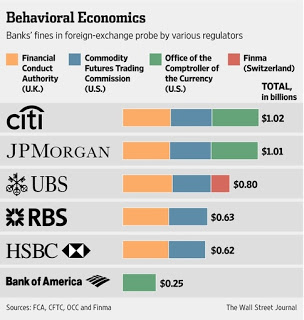
In May of 2015, Citigroup, Inc. as well as three other major banks, pleaded guilty to attempted to manipulate foreign exchange rates. Citigroup is facing one of the largest fines along with JPMorgan Chase & Co. According to Corkery and Protess (2015), Citigroup's fine of $925 million is the largest single fine ever to be given as a violation of the Sherman Antitrust Act. This scandal itself is often referred to as the "FX Scandal". The Forex (otherwise known as FX) is "a decentralized foreign exchange market that trades in the world's currencies" (Royden, 2014). The foreign exchange market is one that goes on 24/7, except in London. In London, at 4:00 P.M. the market stops for exactly one minute. This is called the "fix rate". In the FX Scandal, traders of five major banks came together and fixed the fix rate though online chatroom with names like "The Cartel" and "The Mafia".
This case marks the first time in decades that the parent or main banking unit of a major American financial institution pleaded guilty to criminal charges. However the bank has not stopped operations once throughout this whole process. Is it possible that large fines are considered a slap on the wrist for large companies such as Citgroup, Inc.? Attorney General Lynch argues “the penalty all these banks will now pay is fitting, considering the long-running and egregious nature of their anticompetitive conduct.” (Freifeld, Henry, and Slater 2015). It is hard to think though, that if this had been a small bank that they would be able to continue on with normal day-to-day business operations.

Stakeholders
Many people were affected because of this scandal. These people are referred to as stakeholders. Stakeholders include Citigroup, Inc. employees, customers, those who participate in foreign exchange (other large companies), the government, and small banks. In worse circumstances, the bank could have gone bankrupt and many jobs would have been lost. Instead, employees are now under very close watch, even though they were not all involved in the scheme. Customers and those participating in foreign exchange will now be extremely untrusting of Citigroup, Inc. as they have lied to their clients. The government as a stakeholder, had to deal with the repercussions of the criminal charges and now have to constantly monitor these large banks. Small banks are stakeholders as they expect to deal with fair competitors in the bank industry. 

Timeline of Citigroup/FX Scandal
Individualism
Individualism is one of various ethical theories, which can be used to analyze a given ethics controversy. The values of individualism include profits and the owner's wishes. This theory’s ethical rule is “business actions should maximize profits for the owners of a business, but do so within the law” (Salazar, The Case Manual, p. 17). In the case of Citigroup, an Individualistic analysis would result in saying Citigroup was unethical. Although the traders were manipulating rates to make more profit, they were doing outside of the law. If the traders involved were abiding by the law then the action would be considered in the best interest of the owner, according to Individualism. Traders were not considered with the effect their decisions had on stakeholders (which is considered ethical under Individualism) but because they broke the law the action is considered unethical.

Utilitarianism
Utilitarianism is yet another ethical theory used to analyze whether or not a company acted ethically. Utilitarianism focuses on the values of happiness, and has the ethical rule that “businesses should aim to maximize the happiness in the long run for all conscious beings that are affected by the business action” (Salazar, The Case Manual, p. 19). In contrast to Individualism, utilitarians focus on more than just the owners’ wants and needs. “Classical Utilitarianism” stresses the value of happiness. This would mean that anything resulting in an unhappy outcome is considered unethical. A utilitarian would consider Citigroup unethical as they have not considered their stakeholders in their actions. They stress the long-term outcome of things. In the short run, Citigroup made money but in the long run many customers were cheated (a bad outcome). A utilitarian would weigh these outcomes and come to a conclusion. Even after the fact, Citigroup is moving forward while those who were cheated have lost money due to the issue. All of the individual lawsuits against Citigroup exemplify the lost of trust from its customers. Utilitarians would take this into account and ultimately consider this an unethical decision. Losing the trust of one’s customers is not worth making extra money from lying to them. 

Kantianism
The third ethical theory used to evaluate the Citigroup, Inc. case is Kantianism. According to Kantianism lying, cheating, manipulating, or harming others is considered unethical (Salazar, The Case Manual, p. 20). This is where Citigroup went very wrong. The traders involved in the fix purposely manipulated their customers for their own benefit. Customers were lied to by a company they thought they could trust. This in itself is unethical. There is a serious lack of “Good Will” within the employees of Citigroup. Most employees, if not all employees that had anything to do with the scandal were fired. This was the best thing Citigroup could have done to ensure that the same problem does not occur. When looking at "Good Will" specifically, a Kantian would as if Citigroup, Inc. fired their employees because it was right or because they were told they had to. The same could be argued for when the company pleaded guilty. It is likely that the company pleaded guilty not because it was right but because they were told to by a lawyer so they could cut a deal with the authorities. Kantianism would argue that Citigroup acted unethical throughout the whole scandal, even when they admitted their wrongdoing.

Virtue Theory
The final theory used to evaluate this ethics case is Virtue Theory. Virtue Theory declares that if a company, or individual is acting in such a way that they are expressing good character traits and working to avoid bad character traits then they are acting ethically. The values of Virtue Theory include “character traits that promote wellness or flourishing of individuals within a society” (Salazar, The Case Manual, p. 22). In Virtue Theory good traits are virtues while bad traits are vices. Some examples of virtues are: honesty, compassion, and temperance. Examples of vices include jealousy and greed. In the case of Citigroup, the traders involved in the scandal let the vices get the best of them. By fixing the rates for their own benefit they were selfish, greedy, and dishonest. If those involved in the scandal had taken the time and effort to embraces their virtues and avoid the vices, the scandal may have not even occurred. However, they let their vices take over, leaving an unethical result for the company.

Vikram Pandit, former CEO of Citigroup Inc.
Justified Ethics Evaluation
I believe Citigroup, Inc. was wrong in fixing the foreign exchange rates. This affected so many people across the globe. They manipulated their customers for personal benefit, which is unethical to me. The company also broke the law, which speaks for itself. Although it is hard to control individual employees' decisions, when talk came up about joining the chat room, Citigroup should have opted out. In my opinion, to give banks a monetary fine is not sufficient. Citigroup has not seen any trouble in business activity after the scandal. The fact that they were able to still operate and make a profit seems unjust. They broke the law, plead guilty, but the price being paid does not seem high enough for what they did. I do not mean this monetary wise as they have extremely large fines, just freedom wise. When an individual or small business breaks the law they are often revoked of their rights. Overall, Citigroup acted unethically in fixing the foreign exchange rates and everyone involved should serve the consequences of their actions.


References

Chon, G., Binham, C., & Noonan, L. (2015, May 20). Six banks fined $5.6bn over rigging of foreign exchange markets. Retrieved September 17, 2015. 
Citigroup, Inc. Progress informed by the past, and inspired by the future. (2015). Retrieved October 20, 2015.
Corkery, M., & Protess, B. (2015, May 20). Rigging of Foreign Exchange Market Makes Felons of Top Banks. Retrieved September 17, 2015.
Karen, F., David, H., & Steve, S. (2015, May 20). Global banks admit guilt in forex probe, fined nearly $6 billion. Retrieved October 20, 2015.
Kamich, B. (2015, September 22). Citigroup stock: Here's a chart to lose sleep over. Retrieved October 20, 2015. 
Mcgeever, J. (2014, March 31). TIMELINE-The FX fixing scandal. Retrieved October 20, 2015.
Royden, D. (2014, December 4). The Forex Fix: Understanding the Foreign Currency Scam In London. Retrieved October 20, 2015.
Salazar, Heather (2015). The case manual.