Showing posts with label unethical. Show all posts

Friday, December 2, 2022

Twitter: Elon Musk Clashes with Advertisers (2022)

ABSTRACT

Twitter Application
 Logo

    Twitter is a phenomenally successful social media platform, but new leadership may just be driving it into the ground. Elon Musk, a familiar name to most, just recently bought and become the new owner of Twitter. Elon Musk has shown extreme behaviors, did not hesitate to change guidelines, and granted Twitter account access back to previously banned controversial users. Behind closed doors, Musk is demanding employees commit to intense hours of work and threatened consequences if employees do not conform. Advertisers quickly became wary of his strategy and unsure of his leadership. Musk is now trying to convince advertisers to stay at the company and continue working for him. His actions are not only affecting himself, but the employees, advertisers, and the community of Twitter users as well.

This case will be reviewed under various ethical theories including Individualism, Utilitarianism, Kantianism, and Virtue Theory. Individualists would argue that Elon Musk is unethical because he is willing to express behaviors, even at the risk of profit. Utilitarianists would claim that Elon Musk is unethical because he is not prioritizing the happiness of employees or other Twitter users. Kantians would argue that Elon Musk is unethical because he has the wrong motivations and a lack of rationality. Virtue Theory would claim that Elon Musk is ethical because he is looking to use Twitter to its full potential. Personally, I say Elon Musk in relation to Twitter is unethical because of his extreme behavior and treatment of others.

ETHICS CASE CONTROVERSY

Twitter has been one of the most popular social media platforms for the better part of the last fifteen years. Twitter is a platform in which users can “tweet” their thoughts, share posts with friends, and see the news. Of course, like any other social media website, Twitter has set regulations and guidelines for limiting the content to keep it appropriate for all users. Twitter, in the past, banned users and controversial figures that failed to follow guidelines and was distributing posts that may not be appropriate for many. Musk has taken over Twitter and made changes regarding those banned accounts. Twitter advertisers think that the new leadership may be causing Twitter to take a turn for the worst.

Timeline of Elon Musk's
Twitter Takeover

    In January 2022, Elon Musk began buying shares of Twitter. On April 4, 2022, Musk became Twitter’s biggest shareholder, owning just over 9% of the company in shares. On October 27, 2022, Elon Musk officially bought Twitter and fully owned it through a $44 billion deal. Within 48 hours after his takeover, Musk posted, then quickly deleted, a tweet with anti-LGBTQ content. Since then, guidelines have been edited and “far-right figures [began] to test Twitter’s boundaries for anti-LGBTQ speech” (Wile). Musk denied making the changes and because of this, advertisers have claimed they will back away from the company due to being unsure about Musk’s strategy. These actions are ethically controversial because Musk is allowing for more freedom of speech and expression, but this can be hurtful or inappropriate to other users that may be sensitive to such subjects, or just not mature enough yet.

Musk has also shown close to no remorse for the employees at the company. On November 16th, Musk sent out an email to the entire company that demands the employees to commit to longer hours of higher intensity work. He stated those that do not conform to the new expectations, or support his ideas, will receive three months of severance. Elon Musk did not hesitate to make alterations in the company’s staff, as he fired an engineer, top executives, and up to twenty others. Those he fired included ones that criticized him and his tactics for what he is calling “Twitter 2.0”, the new and updated version of Twitter. The treatment of employees is alarming and does not follow the ethical lines of certain theories. Not only is this treatment intimidating to advertisers, but it is also unfair and can cause them to walk away. Watching a business lose bunches of employees at a time is not something a partnering company wants to experience. They want to be able to trust their partner company, but Elon Musk is making it extremely difficult for advertisers to do so.

In political fairness views, Elon Musk has been exposed to fact checking democratic party members and even posted content speaking against the democratic party. Though there may not being anything wrong with expressing one’s political favors, Elon Musk’s speech was strong and aggressive. Being such a big figure that collects a lot of attention, speaking out with political opinions can be controversial. One must be careful when going about this because the wrong words can offend someone viewing it and may even be taken the wrong way. Musk is trying to create a platform that respects all free speech, but a certain algorithm to his madness has been detected. Before his takeover, Twitter was mainly only fact checking republicans. Now that Musk has control, he wants all political parties to get fact checked and seems to be targeting the democrats. This includes fact checking United States President, Joe Biden, about tax claims. Recently, the White House “was forced to delete a tweet that credited [Biden] for an increase in Social Security payments after being flagged by Twitter as being inaccurate” (Tillison). These political interactive behaviors of fact-checking democrats, tweeting against the democratic party, and changing Twitter’s boundaries in favor of republicans is a controversial approach. People feel passionately about their political views, and with Twitter clawing at only one party, people quickly become unhappy, and advertisers do not want unhappy people.

Twitter’s advertisers quickly noticed Musk’s approach strategy and became wary. The top twenty advertisers of Twitter are even “urging their leaders to pull ads unless Musk agrees to crack down on hate speech” (Barrabi). The new behaviors of Twitter are unpleasing to advertisers and are causing them to pull away from associating with the platform. Advertisers are not sitting comfortably with the political and social tactics of the new guidelines. All kinds of attention are being drawn towards the clash between Elon Musk and advertisers, but the ethical aspects of it are also playing a significant role in the dynamics.

STAKEHOLDERS

    This case intertwines several groups of people in diverse ways. First, there is Elon Musk. He is the owner of Twitter, makes all the decisions, has people working for him, and is catching all the blame. Next, there are Twitter users, who are being affected by the change in guidelines. Then, there are Twitter employees, who are being overworked, ordered to commit to intense hours of work, and are threatened with being fired. Lastly, there are the advertisers, who are highly affected by Twitter activity and business decisions. As a result of Musk’s tactics, advertisers are pleading that their leaders opt out of working with Twitter any longer. Some advertisers, like Coca-Cola and Kellog’s, have already stopped working with Twitter. Each of these groups and individuals play a part in this case and can make a difference in the result. Musk can make better decisions, users of Twitter can remain respectful on the app, employees can do their best to work with one another to keep Twitter under control, and the advertisers can decide whether Twitter is the best business partner for them. Each of these people are involved and affected by whatever types of changes are being made through Twitter. But Elon Musk is the single defendant.

INDIVIDUALISM

Individualists would consider Elon Musk to be unethical because he is not prioritizing Twitter’s profit. He is making choices that are dragging the profit down. In early November, “Musk admitted that Twitter has seen a ‘massive drop in revenue’ since he took over the company” (Barrabi). In an individualist’s perspective, this is unacceptable because being ethical is about prioritizing profit for one’s business. Elon Musk is not doing that. He makes whichever choices he wants, even if they are being disagreed with and looked down upon. The profit for the platform boldly reflects it, but Musk is not making many alterations to fix this. Musk opened and took a poll on whether the previous United States President, Donald Trump, should be invited back to Twitter. This poll collected over fifteen million responses and close to fifty-two percent of them voted “Yes” to allowing Trump back onto the site (MSN). Aside from this poll, there is not much Elon Musk has done to consider the thoughts of users. Musk is thinking of himself first, and this is losing Twitter loads of profit.

Elon Musk (left), newest owner of Twitter, 
and Tim Cook (right), CEO of Apple.

    One of the largest companies on Twitter, Apple, recently stopped advertising on the site. On November 28, 2022, Musk stated that Apple has threatened to take Twitter off the app store. This would tear down the platform. In response, Musk publicly tweeted about the incident, saying that Apple has threatened the removal but without giving a reason. He then posted a following tweet “insinuating the company may hate free speech in the US” (Oparada). Rather than managing an issue and finding a solution, Musk brings it to the public light, knowing the risks. It has become clear that Elon Musk is more concerned with transforming the app how he wants to, rather than focusing much attention on the platform’s profit. Musk is knowingly losing money but carrying on with statements instead of solutions. An individualist would claim it is unethical because it is not what is best for the company.

UTILITARIANISM

Because the recent Twitter activity has been bothersome to many, a utilitarian would claim that Elon Musk is extremely unethical. A behavioral tactic that is uncomforting to many people is the alteration of language that is allowed and the fact checking of certain parties. When Musk posted the anti-LGBTQ content, and far-right figures began doing the same, many were bothered by this and the lenience. Those in the LGBTQ community, or those with sensitive feelings towards it, find this disrespectful. The so-called “hate speech” is very upsetting to many people and the utilitarian perspective would observe this overall lack of happiness as unethical, thus concluding the ethical deficiency lies in the fault of Elon Musk.

The strategy of heavily fact checking liberal posts is pleasing and rejuvenating for the republican party but is discomforting for democrats. When Musk’s new algorithm fact checked the White House account, found their content inaccurate, and made them delete the Tweet, “the administration was humiliated” (Tillison). This can be shaky since politicians are expected to give true information, so the tactic can be justified. Republicans will find joy in this correction made by Twitter. But not everyone is happy and that is what a utilitarian would focus on. If not every specimen capable of feeling happiness is happy, then a utilitarian is not pleased.

The main group in this case, the advertisers, are not happy at all. They are watching Twitter spiral downward and have “increasingly balked at the billionaire’s handling of the social media site and raised concerns about whether it will remain ‘brand safe’ for companies” (Barrabi). Elon Musk is making it difficult for advertisers to feel safe with using Twitter as a source and this can become stressful. Advertisers are unhappy with the recent developments, so much so that they are pulling away from the app and deciding to find other ways of advertising. Utilitarians notice the general unhappiness and conclude Elon Musk as unethical.

KANTIANISM

Due to his motives not coming from goodwill and treating others simply as a means, the Kantianism perspective concludes Elon Musk is unethical. The business decisions made by Musk are shaky and questionable, but his reasons behind these choices are not much better. Targeting the democratic party and plainly favoring the republican side is not the result of wanting to make things “fair”, but it is simply the reflection of Musk’s own political opinions. Continuously making minor decisions that turn a cold shoulder to just liberals is selfish and controversial. For the republicans, it is “a glorious sight to behold” (Tillison) and they can find satisfaction in this, but anyone with different opinions or thoughts than Musk can be irritated. Musk is selfishly making these political actions, not necessarily for the best sake of the site.

Elon Musk has not shown any compassion towards the staff, advertisers, or humanity of the workforce. Firing many employees was not only triggered by a selfish motive but was also a step he took to turn the Twitter staff into his own personal supporters. Elon Musk is firing the employees that disagree with him and by doing such, he is using people and affecting their lives to get what he wants: his own Twitter army. Musk does not care for the employees and lacks compassion for their well-being. His manner of handling the employees is not to directly manage who is working and the quality of work; it is a part of his process in benefitting himself and getting what he wants. He does not consider the impacts this has on advertisers and is still pleading them to stay at Twitter. This contradicts the formula of humanity in Kantianism, which preaches treating humanity as an end and not as a means. Musk is treating the employees, users, and advertisers as a means, not an end. Because Musk’s skills in management contradict the formula of humanity and show poor motives, Kantians would declare he is unethical.

VIRTUE THEORY

Elon Musk is handling Twitter very unethically by the four business virtues. First, Elon Musk lacks courage. He is not willing to support what’s right. Instead of making the political approach fair or allowing employees to be entitled to their own opinions, Musk is doing what he wants to do with his own interest in mind. People can have their own ideas and thoughts, and just because an employee’s ideas might disagree with Musk’s, they get fired. He does not stand for the ethically right ideas and actions. He does what he thinks is best for himself.

Secondly, he has no honesty regarding employee treatment, Twitter users, and advertisers. Musk ensured he would develop Twitter for the better, but he is terminating employees and advertisers are detecting the danger in pairing with the site. He is dishonest with the employment status, as he fires staff for invalid reasons. Musk has also publicly reported false information, then fired an employee for exposing him. Musk is not upholding the honesty virtue.

The third virtue Musk fails to display is temperance, the virtue of reasonable expectations and desires. Elon Musk wants Twitter to be run in ways that only agree with his personal views and thoughts, including politically and socially. That is not reasonable because the social media platform was made for all people with all sorts of different ideas. Furthermore, he is expecting employees to commit to extreme, long, hard hours of work and has threatened consequences, if not. His expectations for staff and desires for the site do not follow the temperance virtue.

Lastly, Musk lacks the justice virtue. He is reducing the quality of Twitter, his newly owned product, and is not using good ideas or fair practices. His ideas are irrational, and his practices are not fair for all, let alone most. His algorithms are unfair, his ideas are too controversial, the quality of Twitter is decreasing, and he is ultimately having people work harder so he does not have to. Thus, he does not follow the justice virtue. Because Elon Musk fails to cooperate with every single one of the virtues, the virtue theory claims he is unethical

Elon Musk is promoting more free 
speech on Twitter for all users

JUSTIFIED ETHICS EVALUATION

The ethics being displayed by Elon Musk are poor. When managing a business, and being in full control, there is more to ethics than one may think. Business morals and ethics are not just about benefitting oneself or one’s own business, but also doing what benefits others, including employees and, in this case, Twitter users. Elon Musk has not done a whole lot to benefit anyone than himself.

The well-being and sake of others are not a priority of Musk’s. He has fired people that need their job to make a living, allowed language that is offensive to many people, and targets certain groups of people. In the political aspects, no matter any personal political stance, the heavy fact checking of only one party is not fair. All politicians tend to post and distribute content that they want people to see, rather than the full truth. Targeting one party upsets people, can heavily impact elections, and makes things more difficult. Politics is one of the messiest subjects to be involved in. Elon Musk is stirring the political pot and advertisers are not pleased.

People need to work to make a living and afford a comfortable life. For Elon Musk to come in and fire top executives and engineers, only because they disagreed with him, is selfish and incredibly unethical. A valid reason for termination of an employee is not because they disagree with ideas. Elon Musk fires employees because they do not agree, and he also fact checks democrats because they do not agree. He is selfish in those ways. Disrespecting the simple opinions of others is unethical and an unacceptable approach for business.

The advertisers of Twitter will not be kept happy, for the few and far that are even still happy. Advertisers and companies that have already detached from Twitter are ahead of the game. Advertising and promoting on an app where people are rowdy, unhappy, and aggravated is not good for any company. As a business owner, it is important to remember the audience and keep in mind all the collaborations that are involved. Companies using Twitter to advertise is a type of collaboration. By not doing what is best for Twitter’s partners, Musk is forcing advertisers out the door without even knowing it. He makes decisions selfishly and shows no charisma for others involved. Elon Musk is unethical and is inconsiderate of the advertisers.

CONCLUSION

Through the takeover of Twitter by Elon Musk, there have been significant shifts in the social media site. Users are unhappy with many of the alterations, politicians are being targeted unfairly, employees are being terminated and threatened, and Elon Musk’s leadership is heavily being questioned. For all these events to be occurring, advertisers are uncertain of Musk’s management skills and are pulling away from the app. Not only is it a business issue, but it is an ethical issue as well. Advertisers are urging their bosses and executives to detach themselves from Twitter because it is no longer a good advertising resource for their companies. Now, seeing a brand team up with Twitter is not the best image for any company. There is still a lot that can happen and change the game for Twitter at any moment, but the pleasure of advertisers is always subjective to change.


REFERENCES

Barrabi, Thomas. “Elon Musk to Meet with Twitter Advertisers as Tensions Rise: Report.” New York Post, New York Post, 9 Nov. 2022, https://nypost.com/2022/11/09/elon-musk-to-meet-with-twitter-advertisers-as-tensions-rise-report/.

Hsu, Tiffany. “Will Elon Musk Be Able to Keep Twitter’s Advertisers Happy?” NY Times, 28 Oct. 2022, https://www.nytimes.com/2022/10/28/technology/musk-twitter-advertisers-general-motors.html.

“Jack White Deletes Twitter Account after Elon Musk Invites Donald Trump Back to Platform.” MSN, 22 Nov. 2022, https://www.msn.com/en-gb/entertainment/other/jack-white-deletes-twitter-account-after-elon-musk-invites-donald-trump-back-to-platform/ar-AA14oxNL.

Oparada, Pascal. “Apple May Remove Twitter From App Store, Elon Musk Kicks.” Legit.ng - Nigeria News., 30 Nov. 2022, https://www.legit.ng/business-economy/technology/1506807-apple-remove-twitter-app-store-elon-musk-kicks/#:~:text=Apple%20May%20Remove%20Twitter%20From%20App%20Store%2C%20Elon,cent%20before%20they%20get%20listed%20on%20the%20store.

Tillison, Tom. “Biden White House Hit with Yet Another Glorious Twitter Fact Check.” BizPac Review, 25 Nov. 2022, https://www.bizpacreview.com/2022/11/23/biden-white-house-hit-with-yet-another-glorious-twitter-fact-check-1311795/.

Wile, Rob. “A Timeline of Elon Musk's Takeover of Twitter.” NBCNews.com, NBCUniversal News Group, 17 Nov. 2022, https://www.nbcnews.com/business/business-news/twitter-elon-musk-timeline-what-happened-so-far-rcna57532.


Theranos: Elizabeth Holmes Fraud Downfall (2015- 2022)

Theranos: Elizabeth Holmes Fraud Downfall (2015-2022)


ABSTRACT

Elizabeth Holmes
            There are many health technology companies that have been very successful in the work they do but Theranos is not one of those companies. The young start-up company was on track for big things but soon faced issues on many accounts of fraud and lying. In March of 2004 this was the start of Theranos, Elizabeth Holmes dropped out of Stanford to pursue her dreams of creating this startup company. Her goal of the company was to be able to diagnose diseases and medical conditions from a single drop of blood. After becoming one of the biggest and richest companies it was soon shut down for unethical and fraud reasons to their investors. In this case she completed many unethical actions that she didn’t follow any of the ethical theories. An individualist would say that she did not maximize profit within the law. A utilitarian would also say that she never maximized happiness of others she only maximized her own for a short moment before she was caught. In Kantianism she did not follow the formula for humanity, Holmes did not follow the rational way of life. Personally, I would also agree that she did not follow these ethical theories.

ETHICS CASE CONTROVERSY

            The case of Elizabeth Holmes did not start until 2018 but there were many years that the case was unfolding until the first court appearance. This whole case starts with Holmes dropping out of Stanford at 19 and she went to start her dreams of creating Theranos start-up. She also had a partner named Ramesh Balwani also known as Sunny. He joined her as the president of the start-up at the age of 20. There were many companies that invested in Theranos as you will read in the next paragraph about all the stakeholders that invested until the downfall of Theranos. The case controversy started when Wall Street Journal did an investigation on Holmes and said that she wasn’t doing what she promised and that she was lying about the single drop of blood method that she has promised she was doing. This was the start of when big name companies like Walgreens started to pull out. Many other

Machine that was used to Test the Blood

small companies at the time also decided to pull out because of the claims that were being made against their labs. In 2016 Balwani steps away from Theranos and the company ends up voiding two years of blood test results that no one can see the results of. In June/July of 2016 she was worth $0 and lost her lab deals with Walgreens that were the ones making her the most money, she also got banned from running labs for two years because of the rumors. Many companies started to sue Theranos like Walgreens they wanted their $140 million that they originally invested into the company. Elizabeth decided to settle for the companies that wanted to sue her. March 2018 came the massive charge of fraud against her which involves more than $700 million from the investors. The fraud involved “elaborate, years-long fraud in which they exaggerated or made false statements about the company’s technology, business, and financial performances” (Doubek). When 2018 rolled around Balwani and Holmes were both indicted on criminal fraud charges, and both pleaded not guilty. Holmes then stepped down as the CEO of the company and in September of 2018 it then dissolves and Theranos is no longer a company. In March of 2021 Holmes was pregnant and she delayed her case until August 2021 when the trial begin. In January 2021 she was found guilty of four out of 11 of the charges and was going to face 20 years and a fine of $250,000 for each count of fraud. All of these charges were related to 1 account of defraud on investors and 3 wire fraud counts on investors (O’Brien).

            In July of 2022 there was talks from Elizabeth and she asked for an overturn conviction due to new evidence and lack of evidence in the last trail. Then in August 2022 she was seen pregnant again just as she wanted to start a new trail again. I don’t think that this was a coincidence rather than a plan attempt to keep pushing dates and final decisions back. In October of 2022 she went to the court hearing to ask for a new trail, she did this because a key witness visited her house a month before they raised fairness of the trail. Her former lab director went to her house and spoke with her husband Billy Evans about the case and how she should be granted a new trial because “the government made things worse than they really are” (Allyn) according to Holmes attorney claim Rosendorff. There was claims

Elizabeth Leaving Court with Husband after Verdict

of new evidence and they were granted a limited hearing from the Judge to allow him to explain himself. His claim on the witness stand was that Holmes is a mother of 1 and there may be a second on the way and she can’t be alone from her children that long and that they need a mother. On November 18th Holmes was allowed to be seen in court again they decided that she will be sentences to 135 month in prison or 11.25 years and then followed by 3 supervised years after prison. This was almost 9 years less than the other decision because of what Rosendorff said to the judge. She will now be sentenced to go to prison in April of 2023. But you never know if a pregnancy could affect this or push this back more.

STAKEHOLDERS

            Theranos was dependent on their stakeholders and the relationships with their stakeholders that did not last very long. The stakeholders trusted Elizabeth and the visions that she had to Theranos, but they were greatly misled. In the end of 2013, she got her first sponsorship with Walgreens, and they planned to make Theranos testing nationwide at the time. Theranos had many investors, but they soon began to pull out in the end of 2015. An example is Safeway who invested $350 million in the company to make blood tests available and have labs around the nation. The family of Betsy Devos was an investor in the company and gave their money because they believed in what Elizabeth was saying and they thought that this would be innovative for the health care industry. Lisa Peterson was also a stakeholder in the company, she was the co-founder of Amway, she invested $100 million in 2014. The families were all given fake revenue projections like $990 million in revenue in 2015. The DeVos family was one of the biggest investors and the family invested their money based on the information that Holmes provided to them. A family called the Walton’s, created Walmart, they “invested $150 million into the company” (Keown) also. There are many investors that made this start-up work like Riley Bechtel, chairman of constriction business Bechtel Group, and Cox Enterprises. This was all part of her plan to get lots of stakeholders to invest and be private donors so that she could safely run her company. She also was smart and would surround herself with my political figures that were into helping the pilot program for blood testing technologies.

INDIVIDUALISM

            According to Freidman’s Individualism as a business you want your main goal and maybe your only goal to maximize the profit of your company by following the law (Salazar) for the owner, so in this case Elizabeth Holmes, or the stakeholders which are listed above. It is also phrased as that anyone who works for an organization is responsible for themselves and what they do, they should focus on themselves and help change their behavior to help the company benefit. An Individualist would say Elizabeth Holmes did not profit within the law, and she did quite the opposite. According to an Article Verdict in fraud case of Theranos founder Elizabeth Holmes offers lessons for investors she supposedly raised $945 million from investors based on her false blood-testing claims. She made sure that Theranos had the money that it needed even though it was true that the company ever even had a prototype that worked. Elizabeth Holmes was only worried about herself and the company that she created. For example, when Theranos started she was one of the richest women in America with $4.5 billion and looking back at it know she probably only cared about the money that she now owned rather than the company. She also was individual because she only looked out for herself when the company started to downfall. They layed off 155 employees in 2017 and she obviously did not care about the workers and doing the right thing because she would just continue to lie and settle when a lawsuit came along. In 2018 she stepped down as CEO when the company lost all profits, and she knew that the company would not come back from this. Once the investors and the profits went, she also knew that it would be best to leave and to try and stay aways from all the laws she broke but it caught up with her in the long run.

UTILITARIANISM

            Utilitarianism is seen as “happiness or pleasure are the only things of intrinsic value” (Salazar) It is seen as happiness of yours and others matters even when some things don’t bring happiness you should still do those things. A utilitarian would view this as an unethical case because of how Holmes went about her company, and she didn’t care for anyone else including the customers/patients, workers, and stakeholders. According to the book utilitarian’s are also concerned about the well-being of the community, Elizabeth Holmes was only concerned about her own happiness with money, and she seemed as if she could care less about the stakeholders. She gave them and the media false hope for what she was creating. When she lied to the stakeholders, she broke a rule of utilitarianism, and this resulted in them withdrawing from the company and also wanting to sue Theranos in the later years.  The stakeholders of this company wanted to maximize happiness with everyone and make sure that Theranos had money to produce the results that they needed. The number of total stakeholders are not given but they were harmed badly and lost trust in medicine. Based on an estimated number Theranos and Elizabeth Holmes sold 1.5 million blood tests from 2013-2016 and 7.8 million tests results for over 175,000 buyers. Holmes hurt many people in this situation and that included “more than 10% of all Theranos test results for 176,000 Arizona consumers were later voided or corrected” (Goodkind). From a utilitarian’s view Elizabeth is not able to see clearly right from wrong and how her decisions effect millions of people. People needed real diagnosis but were left in disbelief and distrust against Elizabeth.   The employees needed to also feel like they were creating happiness but when they have to lie about what they did in the labs it is very unethical. When the company was making false readings, this is a liability to the patients when they need this important information.

KANTIANISM

            Kantianism which was created by Immanuel Kant was not to act irrationally and to consider rationales beings and have dignity and be respected. To respect people and be consistent in your actions that other people would also follow your actions. A Kantianism person would not be on the side of Elizabeth Holmes because mostly some if not all her decisions were made irrationally, and no one should follow her as an example. Under Kantianism the Formula for Humanity states “so act that you treat humanity, whether in your own person or in the person of any other, always at the same time as an end, never merely as a means” (Plato. Stanford). Holmes in the beginning showed people that she was making a difference in the science world but in reality, she was not making a difference at all. She was very respected in the beginning when people saw that she dropped out of Stanford to pursue her dream and became very rich but according to Kantianism she acted irrationally, and her dignity was gone in the end when she lost it all. Holmes was lying a lot and this false information led to her case being unethical and against mostly all the theory’s. One thing that was present was the motivation that Holmes had to keep Theranos afloat, she was motivated to make Theranos a reality when she first started in 2003 but that motivation became overpowered by the view of money and the fear of failing. When Elizabeth got caught by the stakeholders she lost respect from everyone and the motivation to save Theranos also disappeared.

VIRTUE THEORY

Going back a long time was when Aristotle created the Virtue Theory, virtues “are things that enable for something to function well or be good” (Salazar) The Virtue theory consists of four virtues of character and these are courage, temperance/self-control, honesty, and justice/fairness. To add, there is intellectual virtue and prudence is associated with that, it is liability to make good decisions for your future self. These theories were created for people to differentiate between the good and the bad. When people realized what they were doing was good and their purpose they would then achieve what they needed to, it would result in virtue. The courageous part of this case was the whistleblower in this case Tyler Shultz, he was “not only the Theranos Whistleblower, but he was the first to report troubling

Tyler Shultz Whistleblower

findings at the company to regulators” (npr.org). He was being a bold person in doing this because he knew what she was doing was wrong and that the world needed to know about all the money that they were wasting on Theranos. When thinking about the virtue characters honesty is the first one that comes to mind because that is the thing that Elizabeth was not. She was never honest to her patients, stakeholders, workers, and everyone in the world. Elizabeth said “At a relatively young age, I began to believe that building a business was perhaps the greatest opportunity for making an impact, because it’s a tool for making a change in the world” (Brainyquote.com) When reading this it made people think that she was doing the right thing but she did the opposite and was dishonest. Elizabeth Holmes is not a courageous person because she lied and never could get herself to come clean about her work. If she had courage she would stick up for Theranos and find a way for it to survive. She had no temperance when it came to money that she and her company were gaining her self- restraint was zero in this company. In the self- control side, she should have been able to control everything if it went out of hand but she was not able to. She relates to fairness/ Justice because she may have felt that the original court ruling was not fair so she asked for a retrial. The judges thought otherwise that the case was fair and the information provided was liable. She was brought to justice and punished for her crimes, she will face the 11 ½ years in prison. Lastly, she did not contain the characteristic of prudence, she set her future self-up for failure by her unethical ways described above.

JUSTIFICATIED ETHICS EVALUATION

            After reviewing this case and the new decision that was just made for Elizabeth Holmes, I agree with the judge in the decisions that they made. The opportunity that she wanted for a retrial was unnecessary which I agree with them that nothing would have changed her case because all of her evidence was so public, and she could not have taken back what she did. In this case mostly everything that she did with Theranos was non permissible. She was lying constantly to keep the investors and try to make her dreams come true. Theranos actions were very unethical, and I can’t see how she would have gotten away with this no matter how hard she tried. They stole millions of dollars and poured the money into a failed project that scientifically could have never worked. It is pretty impossible to test for millions of diseases with just one drop of blood, there are not enough molecules in one drop of blood for this to work. She deserves the time that she was sentenced because of her unethical actions and the effect that it had on people in negative ways.

CONCLUSION

            In conclusion, Elizabeth Holmes got what she deserved in her second round of being Infront of the judge after asking for the retrial. Her and Sunny both got in equal trouble for what they did. Elizabeth’s current pregnancy will be in question as she gets closer to her prison date, and we will see if it get pushed away even longer. She continued to play many games with the law throughout her time with Theranos and even throughout her court trials. Elizabeth lived a very unethical life from a young age, and I will not understand how she could live with herself lying everyday about the work that she did. She was supposed to be the future for healthcare technology but instead she lied to just get money and become more famous. In the case her husband Billy Evans and her parents are still very supportive of her and are on her side. This is shocking after all she has done.


                                                                        REFERENCES  

Allyn, Bobby. “Theranos Whistleblower Celebrated Elizabeth Holmes Verdict by 'Popping Champagne'.” NPR, NPR, 5 Jan. 2022, https://www.npr.org/2022/01/05/1070474663/theranos-whistleblower-tyler-shultz-elizabeth-holmes-verdict-champagne. 

DesJardins, Joseph. “Chapter 3.” An Introduction to Business Ethics. 

Dumas, Breck. “Key Witness in Elizabeth Holmes Trial Stands by His Testimony.” Fox Business, Fox Business, 17 Oct. 2022, https://www.foxbusiness.com/technology/key-witness-elizabeth-holmes-trial-stands-by-testimony. 

Elizabeth Holmes Case Takes on More Drama Ahead of Sentencing. https://www.nytimes.com/2022/10/17/technology/elizabeth-holmes-case-adam-rosendorff.html. 

“Elizabeth Holmes Quotes.” BrainyQuote, Xplore, https://www.brainyquote.com/authors/elizabeth-holmes-quotes. 

Jdickler. “Verdict in Fraud Case of Theranos Founder Elizabeth Holmes Offers Lessons for Investors.” CNBC, CNBC, 4 Jan. 2022, https://www.cnbc.com/2022/01/04/verdict-in-fraud-case-of-theranos-founder-elizabeth-holmes-has-lessons-for-investors.html. 

Keown, Alex. “Rep for Wealthy Theranos Stakeholder Describes Holmes' Investor Courting Practice.” BioSpace, BioSpace, 27 Oct. 2021, https://www.biospace.com/article/wealthy-theranos-stakeholder-describes-meeting-with-holmes-ahead-of-100-million-investment/. 

Kerstein, Samuel. “Treating Persons as Means.” Stanford Encyclopedia of Philosophy, Stanford University, 13 Apr. 2019, https://plato.stanford.edu/entries/persons-means/#:~:text=One%20formulation%2C%20often%20called%20the,1785%3A%20429%2C%20italics%20removed).

O'Brien, Sara Ashley. “The Rise and Fall of Elizabeth Holmes: A Timeline | CNN Business.” CNN, Cable News Network, 17 Nov. 2022, https://www.cnn.com/2022/01/04/tech/elizabeth-holmes-rise-and-fall/index.html. 

Salazar, Heather. Business Ethics PowerPoint Slides

Ushe, Naledi. “Elizabeth Holmes's Trial Left Theranos Patients without Justice.” POPSUGAR Entertainment, 2 Mar. 2022, https://www.popsugar.com/entertainment/what-happened-to-elizabeth-holmes-theranos-patients-48735060.


Friday, December 10, 2021

Ozy Media’s Executive Dishonesty: YouTube, A&E, and Viewership (February 2021)

 Ozy Media’s Executive Dishonesty: YouTube, A&E, and Viewership (February 2021)

Case Controversy

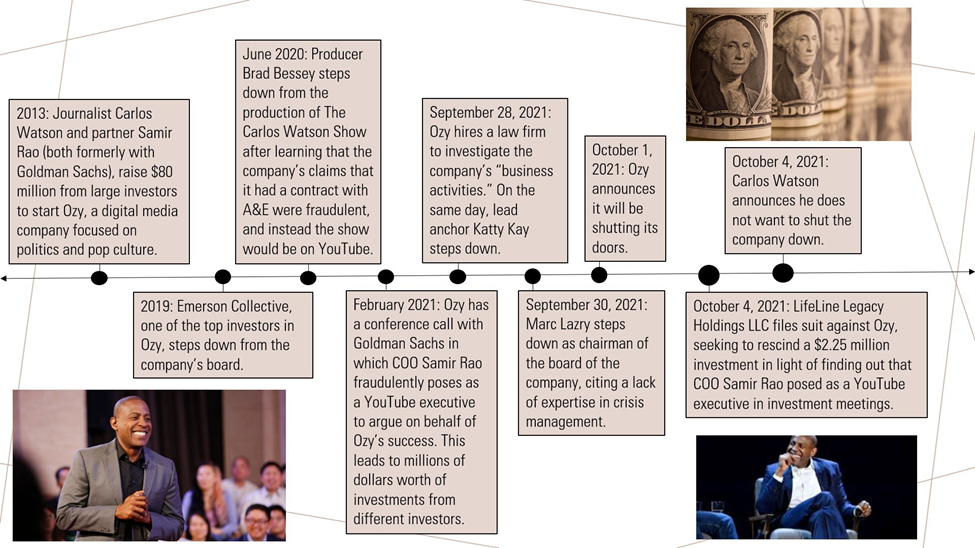
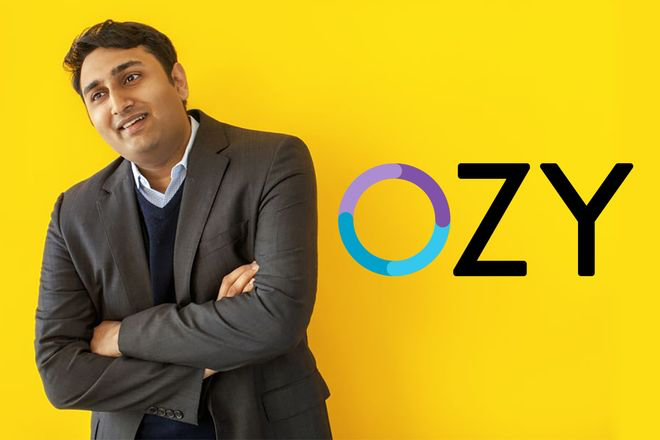
            When Ozy Media was launched in September 2013 by Carlos Watson and Samir Rao, they envisioned themselves as “the new and the next”. They wanted to differentiate themselves by creating an unconventional media company that would focus on topics that would appeal to a diverse group of millennials. Watson and Rao set out to supply content not provided by mainstream news organizations. While going against the grain in an industry can result in innovation and success, it can also result in failure. Unfortunately, in the case of Ozy Media, going against the traditional model for a news organization resulted in failure. Dishonest leadership repeatedly landed Ozy Media in hot water and eventually led to the company ceasing all operations on October 8, 2021. 

            Looking back on Ozy Media’s brief history, it is easy to see from the very beginning how this company ended up where it is today. Just two years after they began operations, questions surrounding Ozy’s viewership began to arise within the company. Eugene Watson, one of Ozy’s first employees, kept hearing Chief Executive Officer (CEO) Carlos Watson boast of Ozy’s high viewership. When he heard the figures, he thought they seemed high, and he decided to compare Watson’s claims to public sources of audience data. From this comparison, he concluded that Ozy was a “Potemkin village” (The New York Times). This obvious deception was only the beginning of the lies perpetuated by Ozy executives. Shortly after these questions were raised Ozy came under fire from BuzzFeed in the summer of 2017. They reported that Ozy was among several companies buying web traffic from fraudulent sources. Ozy published a group of articles in collaboration with JP Morgan. They were soon ranked among Ozy’s most-viewed articles, but much of the traffic to these articles was fraudulent according to industry standards. The traffic was purchased and delivered by a system that automatically loaded specific webpages and redirects traffic between participating websites to quickly rack up views without any human action (BuzzFeed). Ozy also bought a portion of its audience from ad networks that specialized in pop-under browser windows that are opened on users when they visit other websites (BuzzFeed). When this information was brought forth, Ozy claimed they were unaware that the audience was invalid when they purchased it. Ozy also stated that the traffic was not counted as part of their campaign with JP Morgan, and that they used the paid traffic to try to grow an email subscription list. 

These responses from executives did not seem in line with what Ozy was doing regarding the traffic numbers. On the company’s website, it said that they were reaching an aggregate of 40 million people per month through various channels. However, data from Quantcast, a public service Ozy was using to measure their traffic, said the website was reaching only 2.5 million people per month (BuzzFeed). It was also revealed that between June and October 2017, roughly 2 million visits came from domains connected to a company called ScreenRush. This traffic was sent to specific articles on Ozy, many of which were part of the JP Morgan campaign. Investigations into this traffic have determined that ScreenRush is an invalid and fraudulent source of traffic. When this information was brought forth, Ozy immediately stopped working with ScreenRush and experienced a significant drop in desktop referral traffic. These inconsistencies between what management was reporting and what was going on within the company was a major red flag, but Carlos Watson’s charisma and influence helped Ozy maintain support from powerful investors. 

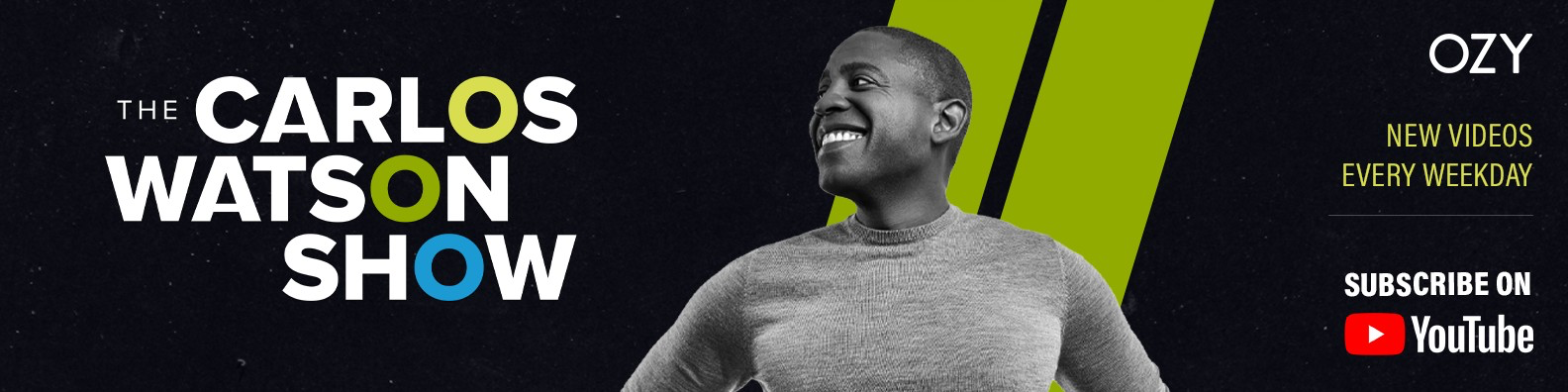
The questions surrounding Ozy’s traffic numbers lingered for the next few years. Ozy maintained a respectable public image due mainly to the charm of Carlos Watson, but in the summer of 2020 the first major controversy plagued the company. In June 2020, Ozy began working on “The Carlos Watson Show,” a daily half-hour interview program hosted by the Ozy CEO. This show would feature prominent celebrities and politicians with the goal of having meaningful conversations about important social justice issues. In order to ensure that the show was high quality, Watson and Rao sought out an experienced executive producer. This led them to Emmy-winner Brad Bessey. Bessey was eager to make an impact socially in the wake of COVID-19 and George Floyd, so he happily agreed to produce the show. He was told by Watson and Rao that the show would appear in prime time on A&E in August 2020. This was an amazing opportunity for Bessey, but some red flags arose early in the production process. 

To start, Bessey had no contact with A&E executives during the making of the show. Watson and Rao claimed that A&E only wanted to talk to them, but Bessey knew several executives at A&E. He offered to reach out to them, but Watson and Rao insisted he did not. The second warning sign that something was amiss was that A&E had scheduled the show “Hoarders” for the time slot that was supposedly meant for “The Carlos Watson Show.” Despite these concerns, Bessey continued working with Ozy because he was so eager to make an impact. Watson’s guests were always told that the show would air on A&E, and longtime writer Heidi Clements was also told this when she started working on “The Carlos Watson Show.” When Bessey finally acted on his suspicions and reached out to A&E at the end of July, he was informed that they had said no to the show before taping began. Shortly after this, Bessey and Clements resigned and said goodbye to Watson and Rao. In Bessey’s farewell email to the executives, he wrote, “You are playing a dangerous game with the truth. The consequences of offering an A&E show to guests when we don’t have one to offer are catastrophic for Ozy and for me (The New York Times).” He informed the rest of the show's staff that he was leaving during a Zoom call in which Watson was present. He also revealed that the show would not appear on A&E, to which Watson responded that the show would “eventually” end up on the network. 

Ozy managed to recover from this incident, and operated problem-free until January 2021 when Goldman Sachs began talks with Watson about a potential $40 million investment in the company. The Ozy executives had boasted to the Goldman bankers that they had a large audience and a great relationship with YouTube. A video conference call was arranged by Ozy for February 2, 2021, to speak with the Goldman Sachs asset management division and YouTube. Alex Piper, the head of unscripted programming for YouTube Originals, was scheduled to represent YouTube. He said he was running late to the call, so he suggested that the meeting be moved to a call with no video. Once everyone had made the switch, Piper told the Goldman team all the things they wanted to hear so that they would make the decision to invest in Ozy. This sounded great, but as he spoke, the Goldman team seemed to think that his voice sounded digitally altered. 

After the meeting, one of the Goldman bankers reached out to Piper’s assistant at YouTube via email. Piper, confused by the email, told the Goldman banker that he had never spoken to her before. Someone else had been on the call impersonating him in order to get the investment. YouTube’s security team began investigating immediately. Within days Watson apologized profusely to Goldman Sachs, and Samir Rao, Ozy’s Chief Operating Officer (COO) was outed as the impersonator. Watson attributed this incident to Rao’s mental health issues. After the call, Goldman Sachs took no further action, but the security team at Google determined that a crime may have been committed. Google alerted the FBI and Goldman Sachs received an inquiry from federal law enforcement officials. There are real legal implications for Ozy in this situation. Tricking potential investors while raising capital would be grounds for criminal charges of wire fraud and securities fraud, as well as a potential civil suit from the Securities and Exchange Commission (The New York Times). 

This phone call was the controversy that led to the end of Ozy Media. Shortly after the New York Times reported on this incident at the end of September 2021, the chairman of the Ozy Board resigned. Ozy’s top anchor Katty Kay left the company, and key advertisers including Facebook and Walmart, hit the brakes on their spending with Ozy. After this backlash from the news of the call, Watson and Michael Moe, Ozy’s other remaining board member, concluded that the company would be unable to recover. A farewell statement was issued by an Ozy spokeswoman, and Ozy Media officially ceased operations. 


Stakeholders

         Stakeholders within Ozy include Carlos Watson and Samir Rao, Investors (and Former Investors) like the Emerson Collective and Goldman Sachs, Employees of the Company (reporters, editors, columnists, anchors, etc.), and Media Consumers. Stakeholders represent entities or people that have a direct interest in the success of a business. Watson and Rao would clearly have an interest in the success of their own company, hoping to profit off it. Investors fall into a similar category, hoping to turn their investments into profit for themselves. Their ability to profit off their investment comes with the need for the business they are investing in to profit itself. In the Ozy scandal, investors hold a larger stake since they seem to be the victim of Ozy’s fraudulent actions. Employees hold a stake in the company because their ability to keep their jobs comes as a direct need for the company to stay alive. Furthermore, with Ozy’s employees being a collection of journalists, the success of the company will also affect the success of the employees’ popularity in journalism. Lastly, consumers of the content that Ozy produces hold a stake. Consumers are likely to consume content if the company that produced it is ethical and if their work is consumable. These stakeholders will be considered in a utilitarian analysis of Ozy.


Individualism

Individualism states that companies should maximize profits for stockholders within the constraints of the law. This is best said by Milton Friedman “there is one and only one social responsibility of business—to use its resources and engage in activities designed to increase its profits so long as it stays within the rules of the game, which is to say, engages in open and free competition, without deception or fraud” (DesJardins 2014). My theory, individualism would interpret the Ozy media case in terms of profit and the boundaries of the law such as deception and fraud. 

So, does Ozy media maximize its profits? In the short-term when they started most definitely, they maximized profits by lying and being deceitful about their subscribers, readers, views, and engagement in the company overall. This led to investors thinking that they were much bigger of a company than they actually were. In the long-term people started to catch on, and they did not maximize profits. They couldn’t maximize profits because their reputation has been damaged from being deceitful and in turn Ozy is stopping production and shutting down which leads to no more profits.

Is it within the law? Hasn’t been fully determined if they are within the law yet. Ozy is being investigated for acts of fraud and being sued by companies such as Lifeline Legacy Holdings “claiming that it was misled when it made an initial $2 million investment in the company earlier this year” (Ellison, Sarah, & Barr 2021). Even with lawsuits Ozy media is innocent until proven guilty in US court systems, but they appear to be breaking the law. 

From an individualism view it is unethical because they are probably breaking the law and definitely not maximizing profits for shareholders due to the fact that they are shut down. The only permissible action would be them being truthful and maximizing profit by doing so.  Breaking the law and the whole scandal is impermissible because if everyone did this there would be a lot of investigations and fraud and in turn many shut down businesses and bad reputations leading to less investments. Less investments means less profit and money that a company can use to invest into itself and grow profits. If you cannot make money, you won’t have a business. 

Utilitarianism

Utilitarians believe that actions are ethical and permissible if they maximize the overall good or, the word that most tend to hear, happiness. Actions are considered ethical if the consequences of those actions lead to most people impacted by them being left “happy.” In other words, happiness is pleasure, and it is the only thing of intrinsic value. John Stuart Mill, the founder of utilitarianism, recognizes that happiness may have a different definition for different people. He uses this notion to defend democracy, claiming that “the best means for attaining [maximized happiness] is an educated citizenry making decisions through a majority-rule democracy” (DesJardins 2014, pg. 32). It is also important to note that utilitarianism functions as a consequential theory, recognizing both the short term and long-term consequences of actions. The actions that are best are those that leave the largest number of people “happy,” meaning that all available actions should be considered.

         How does utilitarianism consider the Ozy scandal? After analysis, it will be found that Ozy’s actions are unethical. Readers may naturally assume such a statement – all forms of fraud should be inherently unethical. In application, utilitarianism will teach readers why such is the case.

         When considering the Ozy scandal through the scope of utilitarianism, one must consider if the business’ activities resulted in a happy majority. In the short term, Ozy’s fraudulent actions certainly generated happiness. The company was able to grow, consumers got to enjoy the content, investors saw profit, and employees held their jobs at a recognizable media source. While the short term consequences yielded happiness for the majority, it is the long term consequences that lead to the conclusion that Ozy’s actions are unethical.

         As a result of the fraudulent actions, Ozy inevitably lost lots of trust, investments, employees, and consumers. Investors, like LifeLine, sought to reclaim investments via legal action, signaling that they were unhappy with their investment and Ozy’s actions. Employees were certainly unhappy when the fraud came to fruition, as outlined by the anonymous allegations of email fraud and Fouriezos’ statement. Consumers were also certainly unhappy, as people tend to consume less of a product if they find out that that product was produced because of scandalous or fraudulent actions. With the fall of investors and profit to the company, Watson and Rao are also certain to be unhappy. This does not mean to say, however, that Ozy’s actions were at first ethical, and only became unethical when the fraud came into the public eye. Ozy’s actions were always unethical, but they were only able to be labeled as such once people recognized what the exact actions were.

         While Ozy’s actions are unethical because they did not achieve the goal of maximizing happiness, utilitarianism says that one must also consider whether there was another option that could have produced more happiness. If no such action existed, then the actions taken by Ozy are ethical. However, as seen in this case, an alternative action did exist. If Ozy had decided to shut its doors earlier or if they had sought to continue practicing without committing fraud, there is a high likelihood that a majority of people would have been left happier.

         If the use of simple utilitarianism does not suffice the reader in this instance, consider an alternative form of utilitarianism created by Louis Lyons. In his book Forms and Limits of Utilitarianism, Lyons outlines a distinction between simple utilitarianism and general utilitarianism. Determining whether an action is ethical based on the prior questions considered falls into the category of simple utilitarianism. Then what is general utilitarianism? Lyons defines it as a “concern [for] the total effects that could be produced if all acts similar to the one in question… actually were performed” (Lyons 1965, pg. 3). To this degree, general utilitarianism suggests that an action is ethical or unethical when it is considered through a general scope. In other words, if other entities were to perform a similar action, would happiness be maximized? Considering Ozy’s fraudulent actions, the answer would again be no. If all businesses participated in fraudulent actions, the collapse of the free market would likely be seen. With nothing but scandal running rampant in the markets, no person would want to engage with it, resulting in displeasure.

         When applying utilitarianism to Ozy, through its many broad scopes, it can clearly be purported that their actions were unethical. Not many would question such a premise, but nonetheless, the Ozy scandal teaches why it is important to consider the broadness of utilitarian ethics. Utilitarianism does not always give a definitive answer, but that is the point. Actions that people view as ethical in the present may be viewed as unethical in the future. By following what makes the majority happy, utilitarianism allows for an action’s ethicalness to change with time. In recognizing the fraud in this case across Ozy’s eight years in business, and putting the business through the utilitarian wringer, it is thus concluded that the actions taken by Ozy are hereby unethical and impermissible under utilitarian standards.


Kantianism

            A Kantian would view the actions of Ozy Media’s leaders as unethical and impermissible. Under Kantianism, you must never treat people as a mere means, but also as an end. This is a version of the “formula of humanity.” When an action fails the categorical imperative test, it is impermissible, and vice versa. Businesses should act in ways that respect and honor individuals and their choices. Lying, cheating, and manipulation are never valid ways to get what you want under Kantianism (Salazar, 17). When making decisions, consequences are not the most important, but rather the “Good Will.” Only people with freedom, the ability to reason, and the ability to think and act on their reasons can have Good Will (Salazar, 21). Having a Good Will requires that people have good intentions and use good reasoning to take actions that will make their intentions effective. In the case of Ozy Media, Carlos Watson and Samir Rao were extremely unethical and took many actions that are impermissible in the view of a Kantian. 

            When examining the lies that Carlos Watson told about Ozy Media’s viewership, it is easy to analyze and quickly conclude that these actions are impermissible from a Kantian perspective. Watson had always wanted to be a television star, so when he started Ozy, he wanted to do everything he could to make his dream a reality. However, when his company struggled to gain significant viewership, he lied about their numbers in order to keep investors on board and ensure that his company would not fail. His motivations are selfish, and he is not respecting the autonomy of his investors, because they are influenced by false information. The consequences for those who invest a lot of money into his company are not important to Watson.

            The A&E controversy is also impermissible when examined through the lens of Kantianism.  Watson knew from the very start that “The Carlos Watson Show” would never be on A&E. Despite this, in order to get a better production crew for his show, he told award-winning executive producer Brad Bessey that the show would appear on the network. Watson’s motivations are once again his own interests. He does not have any regard for Brad Bessey’s autonomy as an individual. He is clearly treating Bessey as a mere means to achieve a higher-quality production. 

            Finally, the Goldman Sachs and YouTube controversy is once again another impermissible action taken by Ozy executives. During the conference call, Samir Rao impersonated Alex Piper in order to get a $40 million investment from Goldman Sachs. This is another example of the Ozy executives treating people as means to their ends. By impersonating him and telling the Goldman Sachs executives things that would make them decide to invest. They show no regard for the autonomy of Alex Piper. He could have easily told the investors the truth himself, but Ozy exploited him for financial gain. They also show blatant disregard for the autonomy of Goldman Sachs. By lying about their viewers and their relationship with YouTube, they took away the Sachs teams’ ability to make their own decision based on the facts. 

            It is clear to see that these actions are impermissible from a Kantian perspective. The executives repeatedly used people to achieve their ends. Nothing they did was motivated by the Good Will that Immanuel Kant talked about when he originated his theory. All the exploitation was to make Ozy look good and to satisfy the selfish desires of Samir Rao and Carlos Watson. 


Virtue Theory

         Virtue theory focuses mainly on rationality regarding functioning well and living out your purpose. Based on functionalism, people or companies exercise rationality as a reason for existing and purpose and goodness based on virtues. These virtues are characteristics that allow us to be rational and flourish within society. To flourish in society, you must get along with everyone in society. People or companies who live good lives by functioning well will certainly also live happy lives. The four main virtues that enable functioning well and living out purpose are: courage, honesty, temperance/self-control, and finally justice/ fairness.

         In terms of Virtue Theory and Ozy Media, the people working there fail to fit most of the main virtues. In terms of courage the only courageous action was when Watson changed his decision to close Ozy and referenced the scandal as a Lazarus moment (Simonetti 2021). He also called the incident tragic and that he did not know that his co-founder was going to impersonate the YouTube executive. This demonstrates courage as Watson stood up for what he believed in, that Ozy is a great company, in front of millions of Today Show viewers. In terms of honesty, this is the virtue that Ozy Media lacked the most. The biggest example of dishonesty was when it was discovered that the company’s co-founder and COO Samir Rao had impersonated a YouTube executive during a conference call. It is also unknown if Watson really was unaware of this, as he said he was, and it is up for interpretation. This wrongful impersonation also depicts the opposite of fairness virtue. It is unfair that Ozy Media tried to deceptively gain a $40 million investment using the tactics that they used. It is unfair to all the honest companies out there who go about investment processes in a fair and official manner. Lastly, in terms of self-control/ temperance, the rash decision by Watson to close Ozy’s doors right after the scandal came out showed that they lacked self-control and temperance because they were so quick to make that decision. Important executives were resigning, and Watson shut down the company all just to change his mind publicly, just days later on live TV.  Ozy Media failed to enable their function in society, and they failed to exercise their rationality because they were not virtuous in their decision making, therefore people like Samir Rao are not virtuous, and in fact vicious.


Action Plan

Ozy Media's current issues revolve around the dishonesty of their executives.Carlos Watson and Samir Rao, the CEO and COO of Ozy respectively, have repeatedly inflated the viewership and engagement numbers on their articles and videos. Multiple employees have revealed that this has been a problem within the company since around 2015. Ozy also was involved in two major controversie. One involved Brad Bessey, an award winning executive producer, who was lied to by Watson about “The Carlos Watson Show” being aired on A&E. The second controversy involved Samir Rao impersonating a YouTube executive in order to attain a $40 million dollar investment into the company from Goldman Sachs. 

Ozy Media’s mission moving forward will be to captivate readers with the most fascinating stories the world has to offer without compromising the truth. Ozy’s mission remains the same, but we will not deceive the public in any way while trying to provide interesting news stories to curious people all over the world.

Some guiding values that Ozy should stick to as they progress forward and attempt to get back on their feet include honesty and integrity, universality, and accountability. As seen with the scandal, the biggest problem that the company must overcome is a tarnished reputation due to fraudulence in investing practices. If there is to be any change in the company, executives like Watson must swerved from fraudulent practices and show that they are trustworthy. By promoting honesty and integrity, Ozy can begin promoting new values that would please the community that has been disrupted as a result of the fraudulence. In terms of universality, the company’s original mission statement was to provide a range of content to all people to keep them informed in many aspects of the world, including, but not limited to, politics and pop culture. By committing to a value of universality, Ozy will display that they truly are dedicated to the mission that they have sought to accomplish. The last, and most notable, value that Ozy must follow is accountability. Thus far, Carlos Watson has attempted to downplay the scandal and undermine its importance. Instead of taking accountability, Watson has sought to keep doors open and move forward with little recognition of its practices. If Ozy is truly going to succeed as it moves on from these accusations, taking accountability will be necessary to regain trust from investors and consumers alike.

Ozy can ensure ethical productivity by hiring independent auditors to attend investment meetings and check up on the company's financial position quarterly. They can also utilize only one public source of viewership and engagement data so the public is actually informed about the real numbers. This way they can make the choice of whether to invest or not based on real information. Ozy can hold meetings with their current employees and set a new status quo regarding honesty within the company. 

By being honest and not deceptive in their practices, business productivity will increase again. Customers and the general public will gain the trust of Ozy Media again, and profits will in turn be promoted. It is necessary for Ozy to follow their new values, in order to see positive results. By being honest with potential investors, Ozy will be more likely to fairly gain investments. It is also important for Ozy to not inflate their viewership statistics, as this was another unethical method of false publicity and deception. 

Matthew Roath, Joe Shea, Owen Harding, Kyle Burnham


References

Associated Press, The. “After a Week of Scandal, the CEO of OZY Media Says He Now Hopes to Stay in Business.” NPR, October 4, 2021. https://www.npr.org/2021/10/04/1043168458/ozy-media-carlos-watson-plans-to-stay-in-business.

“Carlos Watson Show, The.” YouTube, YouTube, https://www.youtube.com/channel/UCyF0994XbriKL_Vss0fTUMw.

DesJardins, Joseph R. An Introduction to Business Ethics. New York, NY: McGraw-Hill Education, 2020.

Ellison, Sarah, and Jeremy Barr. “Ozy Media's Audience Was Mostly a Mirage. Even in Scandal, Founder Carlos Watson Is Looking for Opportunity.” The Washington Post, October 6, 2021. https://www.washingtonpost.com/media/2021/10/05/carlos-watson-ozy-media-today/.

Folkenflik, David. “Ozy Shuts down after Accusations of Deceit, as High-Profile Backers Peel Away.” NPR. NPR, October 2, 2021. https://www.npr.org/2021/10/02/1042547742/ozy-shuts-down.

Godoy, Jody. “Investor Sues Ozy Media for Fraud over Founder's Fake Call.” Reuters, October 5, 2021. https://www.reuters.com/legal/litigation/investor-sues-ozy-media-fraud-over-founders-fake-call-2021-10-05/.

Hayes, Dade. “Ozy Media to Shutter after Allegations of Fraud and Other Misdeeds.” Deadline. Deadline, October 1, 2021. https://deadline.com/2021/10/ozy-media-to-shut-down-carlos-watson-1234848287/#!

Jbursz. “Ozy Media CEO Claims His Scandal-Ridden Company Will Reopen, but Doesn't Explain How.” CNBC. CNBC, October 4, 2021. https://www.cnbc.com/2021/10/04/ozy-media-ceo-carlos-watson-says-the-company-isnt-shutting-down.html. 

LifeLine Legacy Holdings LLC vs. Ozy Media (2021).

Lyons, David. Forms and Limits of Utilitarianism. Oxford: Oxford University Press, 1965.

McEvoy, Jemima. “Ex-Ozy Media Employees Say Company Used Dubious Tactics to Build Newsletter Following, Raising Legal Questions.” Forbes, October 8, 2021. https://www.forbes.com/sites/jemimamcevoy/2021/10/08/ex-ozy-media-employees-say-company-used-dubious-tactics-to-build-newsletter-following-raising-legal-questions/amp/.

McKenna, Francine. “Introducing Ozy Media: Following the Formula of ‘Fake It until You Make It’ Then Collapse in Alleged Fraud.” The Dig. The Dig, October 11, 2021. https://thedig.substack.com/p/introducing-ozy-media-following-the.

Mullin, Benjamin. “WSJ News Exclusive | OZY Media Board Announces Investigation of Business Practices.” The Wall Street Journal, Dow Jones & Company, 29 Sept. 2021, https://www.wsj.com/articles/ozy-media-board-announces-investigation-of-business-practices-11632865291?mod=Searchresults_pos6&page=1.

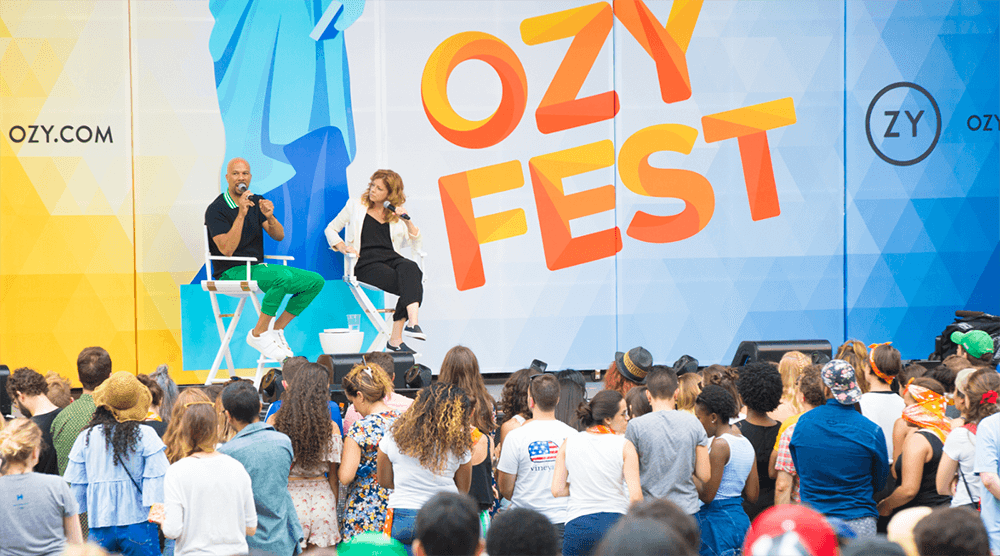
“Ozy Fest About.” OZY, https://www.ozy.com/ozyfestabout/. 

“Ozy Media Suspends Samir Rao after Report of Fake Investor Call, and Katty Kay Resigns.” Ad Age, 29 Sept. 2021, https://adage.com/article/digital-marketing-ad-tech-news/ozy-suspends-samir-rao-after-report-fake-investor-call/2369551.

Salazar, H. The Business Ethics Case Manual. n.d.

Schwartz, Brian. “Sharon Osbourne Says Ozy Media Founder Carlos Watson Lied When He Claimed the Osbournes Invested in His Company.” CNBC. CNBC, October 2, 2021. https://www.cnbc.com/2021/09/30/ozy-media-founder-carlos-watson-lied-about-investment-sharon-osbourne-says.html.

Silverman, Craig. “These Publishers Bought Millions of Website Visits They Later Found out Were Fraudulent.” BuzzFeed News, BuzzFeed News, 27 Dec. 2017, https://www.buzzfeednews.com/article/craigsilverman/these-publishers-bought-millions-of-website-visits-they.

Simonetti, Isabella. “What You Should Know about the OZY Media Meltdown.” Observer. Observer, October 8, 2021. https://observer.com/2021/10/ozy-media-meltdown-carlos-watson-goldman-sachs/.

Smith, Ben. “Goldman Sachs, Ozy Media and a $40 Million Conference Call Gone Wrong.” The New York Times. The New York Times, September 27, 2021. https://www.nytimes.com/2021/09/26/business/media/ozy-media-goldman-sachs.html.

Smith, Ben. “Ozy Built a TV Show on a False Claim, Says Its Former Producer.” The New York Times, September 30, 2021. https://www.nytimes.com/2021/09/30/business/media/ozy-media-carlos-watson.html. 

Smith, Ben, and Katie Robertson. “Ozy Media, Once a Darling of Investors, Shuts down in a Swift Unraveling.” The New York Times, October 1, 2021. https://www.nytimes.com/2021/10/01/business/media/ozy-media-carlos-watson.html.

Watson, Carlos. “A Modern Media Company.” OZY. Accessed November 13, 2021. https://www.ozy.com/pg/about-us/.