Showing posts with label Nutrition. Show all posts

Monday, November 30, 2020

Trifecta Nutrition: CrossFit Games Food Scandal (2017-2020)


Abstract

Trifecta Nutrition is an organic meal delivery service that offers classic, keto, paleo, vegetarian, and vegan plans. Trifecta states, on their website, that their meals are “Organic, premium, pre-made meals”. Their website also claims, “Every meal is made from scratch, just like you would prepare in your own home, only in much larger volume by professional chefs. Our amazing team of chefs use all organic ingredients, grass-fed meat and wild-caught seafood”. However, at the Crossfit Games that ran from August 3rd, 2017 to August 6th, 2017, Trifecta was found to have been using food from other restaurants such as IHOP, a local barbeque shack, and a Mexican restaurant, and others. This incident contradicts their previous statement about using all organic ingredients such as grass-fed meat and wild-caught seafood, and another statement about every meal being made from scratch. CrossFit is currently investigating allegations also about the 2018 games with Trifecta’s actions. Trifecta is chosen by many customers because of their fresh products that cater to different dietary preferences of customers. These allegations that the company is facing is not good for their publicity or consistent business because it shows that they cannot be trusted to supply the quality of food promised, or even their own products. This case will be looked at through the four different ethical lenses, Individualism, Utilitarianism, Kantianism, and Virtue Theory. Considering a utilitarian argument, more harm was done in this Trifecta scandal than bringing happiness. In fact, there is no happiness to be known of in this case, not from Trifecta employees, customers, athletes at the Crossfit games, alternative food sources, or Crossfit Games employees. Thinking of individualism, the Trifecta case was unethical because the company had passed alternative food sources off as their own. A kantian argument can be made that the Trifecta employees were not honest to the Crossfit Games staff, the athletes, or anyone in this scandal. And finally, a virtue theory is that this case was unethical because Trifecta did not meet any of the four characteristics of the virtue theory, which are courage, honesty, temperance, or justice.


Case Controversy:

In 2018, Trifecta Nutrition was involved in a food scandal involving the Reebok Crossfit Games, and some third party restaurants and food chains, such as IHOP, McDonald's, and a Mexican food restaurant. Trifecta is the main food supplier for the Crossfit Games, providing food for athletes, staff, and and consumers at the event. Trifecta promises fresh, healthy, and dietary specific meals for their customers. For the Crossfit Games, Trifecta had gone to third party food suppliers, mentioned above, and used their products to pass off as their own during the event. Two former Trifecta employees came forward to spread this news, and were later relieved of their roles in the company. Trifecta Nutrition was founded in 2015 by Greg Connolly, who is also the present-day CEO of the company. In an article written on July 25, 2018 by hugheyphillipsllp.com, the text reads, “Trifecta Nutrition, which won a high-profile competition for local startup businesses and struck partnerships with national sports organizations, is accused in a lawsuit of repackaging processed foods from chain and fast-food restaurants and passing it off as high-quality organic meals suitable for top-level athletes in training” [1]. This quote shows that before the incidents were found from the CrossFit Games, Trifecta was proved to be a big name in meal delivery, winning multiple competitions for startup businesses and collecting partnerships with well-known sport organizations. In another article, Morningchalkup, discusses how Trifecta sourced food from other businesses for events. A quote that shows this from the mentioned article is, “Trifecta also provides all the food for staff at Regionals, the Games, and to CrossFit HQ for those who wish to purchase it. The lawsuit alleges that Trifecta sourced food for the 2017 CrossFit Games from other restaurants — “IHOP, a local BBQ shack, and a Mexican restaurant, among others, as well as sourcing McDonalds hamburger buns” — and passed it off as their own” [2]. This lawsuit was filed by two former Trifecta employees. After the lawsuit was filed by the two Trifecta employees, they were fired a week later. Another quote that adds to the same case is also written by Morningchalkup. The two employees that filed the lawsuit were mentioned in the quote, “Jodi Charter and Scott Cooper, who were both fired on August 14, 2017, just a week after the 2017 CrossFit Games. Scott was hired July 1, 2016 and was formerly the marketing manager. He also holds a minority ownership in Trifecta (50,000 shares). Jodi was hired in September 2017, as a “Social Media & Marketing Intern” then promoted to full-time around May 2017” [5]. Also, according to Morningchalkup in the same article, in the next paragraph, “According to the lawsuit, both employees had received promotions days prior to being fired. Both former employees are seeking monetary damages in excess of $80,000 each” [6]. Jodi Charter and Scott Cooper, the two ex-Trifecta employees, did the ethical action by speaking up about Trifecta’s actions. Another paragraph from Morningchalkup says, “Morning Chalk Up also spoke with Dan Schneiderman, partner at Witan Law Group, the legal team representing Trifecta on this matter. He added, ‘This is an honest, hardworking company that's made its way from a concept to a start up to a successful company. We believe that the accusation and allegations in the complaint are ultimately trying to form an unfounded narrative to say that a certain culture exists at Trifecta that quite frankly does not exist in that manner. We believe that the allegations are unsubstantiated and are founded mostly out of retribution from two disgruntled employees’” [5]. The previous paragraph also stated, “‘Trifecta strongly opposes the allegations and claims present in the underlying lawsuit,’ Trifecta said in a statement. ‘While we cannot discuss the details of pending litigation nor provide specifics regarding the alleged claims at this time, we look forward to correcting the record regarding the salacious and misguided claims brought by these two disgruntled fired employees’” [4]. Both of these quotes from Morningchalkup state that Trifecta has denied these claims made by former employees, Jodi Charter and Scott Cooper, and preach their innocence on the incident involving CrossFit Games. The lawsuit against Trifecta was 141 pages long, from source Morningchalkup, and in the coming sentences, quotes and photos will be shown from this lawsuit. “‘The food was supposed to be Defendant Trifecta food, which is advertised as “90% lean or greater, and Organic, Gluten-Free, Soy-Free, Dairy-Free and Non-GMO,” but instead was McDonalds hamburger buns, IHOP pancakes, meat and egg products, pork and other meat products from local BBQ shack, etc. Not only were those food products not Defendant Trifecta’s, none of them are or were “90% lean or greater, and Organic, Gluten-Free, Soy-Free, Dairy-Free and Non-GMO’” [8]. Below I will include a photo incorporated into the lawsuit used as evidence against 


Trifecta.  


Individualism Argument:

An individualistic theory posses primary values of the business, or those involved, profiting. Now considering Trifecta Nutrition, the Trifecta case was not ethical to an individualistic argument because the company had passed alternative food sources off as their own, therefore not profiting. An excerpt from the lawsuit against Trifecta, displayed on Morningchalkup, reads, ““Another specific example involves eggs served to CrossFit competitors and attendees. Eggology is or was the sponsored egg product and provider for CrossFit, and Defendant Trifecta was supposed to prepare and serve Eggology eggs for breakfast each day. Defendant Liz Connolly first told Plaintiffs and others that IHOP refused to cook the eggs at their facility because it was against IHOP’s corporate policies and procedures. Shockingly, Defendant Liz Connolly’s solution, as she explained to Plaintiffs and others, was to instruct IHOP to literally throw out the thousands of cartons of Eggology eggs that Defendants sent to IHOP and have IHOP prepare and serve whatever eggs they desired. When Plaintiffs and others communicated to Defendant Liz Connolly their disappointment and disagreement with her approach, Defendant Liz Connolly changed her story and represented that IHOP suddenly changed its corporate policies and procedures and in fact agreed to prepare and serve the Eggology eggs” [9]. Another argument to consider to viewing Trifecta's case from an individualistic perspective, is that neither the athletes, nor anyone else involved in the food scandal have profited from this incident.


Utilitarian Argument:

A utilitarianism argument is happiness for all. Considering a utilitarian argument in the Trifecta food scandal, more harm was done in this Trifecta scandal than happiness brought. In fact, there is no happiness to be known of in this case, not from Trifecta employees, customers, athletes at the CrossFit games, alternative food sources, or CrossFit Games employees. Looking back on the comments made about Jodi Charter and Scott Cooper, these two employees were treated very unfairly. Also considering the dietary plans that CrossFit athletes are on, they have chosen specific meals from Trifecta with trust that they contain the exact nutritional facts to maximize their performance during events. As well as these athletes, any customer of Trifecta reasonably has distrust in the food provider now. Trifecta’s actions have disappointed many and it will take honesty and an action plan to turn their reputation around.


Kantian Argument: 

A Kantian argument is rational decision-making and honesty and freedom. A Kantian argument can be made that the Trifecta employees were not honest to the CrossFit Games staff, the athletes, or anyone in this scandal. As shown in the photos above, of text messages with the president of Trifecta Nutrition, it is clear that there was a lack of honesty from Trifecta. Trifecta was also unwilling to disclose what specific restaurants where they sourced food. With this being said, Trifecta did not consider a Kantian ethical theory in their business actions.


Virtue Theory:

Theory
Character traits that
promote wellness or
flourishing of
individuals within a
society
Theory
Character traits that
promote wellness or
flourishing of
individuals within a
society

Virtue theory is considering character traits that promote wellness or flourishing of individuals within a society. Trifecta did not meet any of the four characteristics of the virtue theory, which are courage, honesty, temperance, or justice. Trifecta did not follow these four characteristics in the slightest way. In fact, it was courageous of them to risk their reputation over a situation that was very controllable from their own ability.


Personal Opinion:

            Speaking on my personal opinion of this Trifecta Nutrition scandal, I believe Trifecta to be guilty and in wrongdoing. CrossFit Games have been around since 2007, and it is a very respected and popular event. Athletes work extremely hard every year to be featured in the event, a miniature Olympics if you will, and Trifecta’s actions have foreshadowed that they do not take the event seriously, the athletes seriously, the athletes training seriously, or even have respect for their own business or values, to stick to their statements about, “Every meal is made from scratch, just like you would prepare in your own home, only in much larger volume by professional chefs. Our amazing team of chefs use all organic ingredients, grass-fed meat and wild-caught seafood” and “Organic, premium, pre-made meals”. What would be a great action plan for Trifecta, is to show the meal delivery business that they are now striving to be what they have lacked to be during this time. What I am referring to is Trifecta should show the public, and CrossFit Games, that they can be trusted from now on, and that nothing but Trifecta products will be distributed. The two terminated employees, Jodi Charter and Scott Cooper, should be compensated for their termination, and also, Trifecta should re-evaluate their upper-level management, because an ethical president would not allow such actions to be performed.


Action Plan:

     The current issue, is that Trifecta has been dishonest about what food they are providing to consumers, and have denied all claims against them, despite the evidence produced against the company. With the detailed and strong evidence against Trifecta, a mission statement should include a public apology from Trifecta, to consumers, the Crossfit Games, and the athletes participating in the Crossfit Games, as well as a plan moving forward to prove their future honesty to consumers. Some core values that are important are honesty, customer satisfaction, and quality assurance of the products being produced and distributed. I believe that some upper level management should be fired for allowing these actions to take place, and for a quality assurance worker to be hired or a quality assurance team, to make sure that the products being distributed are Trifecta's own products, as well as that they are to their own quality standard. With Trifecta's dishonesty towards passing off other vendor's food as their own, they have received poor publicity which has to be rebuilt by building a positive reputation with big names. Trifecta has continued to be the provider for Crossfit Games, which shows consumers that the air has been cleared between the nutrition company as well as Crossfit Games. With this plan of showing how trustworthy of a company Trifecta can be moving forward, their business will hopefully return to having an outstanding reputation. 


Work Cited

About The Author Amy Gesenhues Amy Gesenhues was a senior editor for Third Door Media, and Amy Gesenhues Amy Gesenhues was a senior editor for Third Door Media. “A CMO's View: How IHOP Keeps Winning the Love & Affection of Its 3.5M Facebook Fans.” Marketing Land, 16 Aug. 2016, marketingland.com/cmos-view-ihop-keeps-winning-love-affection-3-5m-facebook-fans-187900. 

“According to Text Messages, Trifecta Coordinated with IHOP for 2017 Games.” Morning Chalk Up, 2018, morningchalkup.com/newsletters/according-to-text-messages-trifecta-coordinated-with-ihop-for-2017-games/. 

Danger, Jessica. “Lawsuit Filed Against Trifecta by Two Former Employees.” Morning Chalk Up, 28 July 2018, morningchalkup.com/2018/07/27/lawsuit-filed-against-trifecta-by-two-former-employees/. 

“How to Win the CrossFit Open (Even If You Come In Last).” VeloPress, 22 Aug. 2017, www.velopress.com/how-to-win-the-crossfit-open-even-if-you-come-in-last/. 

Lofranco, Justin. “According to Text Messages, Trifecta Coordinated with IHOP During 2017 CrossFit Games.” Morning Chalk Up, 30 July 2018, morningchalkup.com/2018/07/29/according-to-text-messages-trifecta-sourced-ihop-food-for-2017-crossfit-games/. 

Maria, Meghan De. “14 Menu Items McDonald's Employees Won't Eat.” Eat This Not That, Eat This Not That, 6 July 2020, www.eatthis.com/mcdonalds-foods-employees-wont-eat/. 

Nutrition, Trifecta. “How It Works.” Trifecta Nutrition, 2020, www.trifectanutrition.com/how-it-works. 

Rodd, Scott. “Organic Food Delivery Company Accused of Serving Chain Restaurant Products.” Bizjournals.com, 2018, www.bizjournals.com/sacramento/news/2018/07/25/organic-food-delivery-service-accused-of.html. 

Wednesday, April 11, 2018

Disney's Nutrition Study Scandal (2016)


Controversy


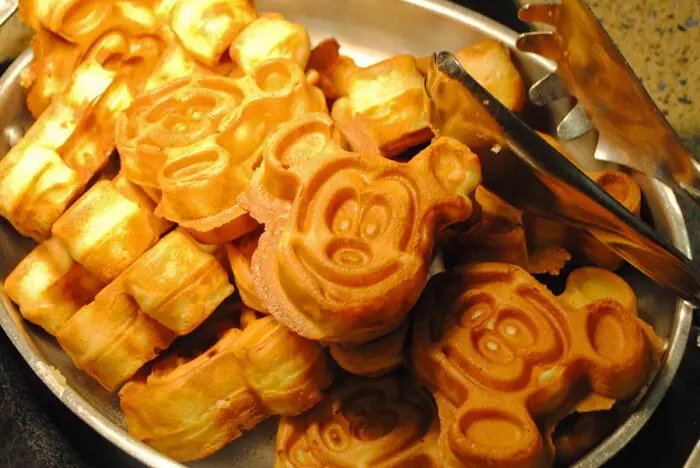
Mickey Mouse themed waffles served at Disney World
The Walt Disney Company has been a multi-media empire since its founding in 1923, and generates over $36 million in revenue a day. According to the Walt Disney Company website, their mission statement is "to be one of the world's leading producers and providers of entertainment and information. Using our portfolio of brands to differentiate our content, services and consumer products, we seek to develop the most creative, innovative and profitable entertainment experiences and related products in the world." Their business portfolio consists of media networks such as ABC, Freeform, and ESPN, while their parks, experiences, and consumer products consist of Disneyland Resort, Walt Disney World, Disney Cruise Line, and the Disney store, along with many other amusement park locations around the globe. 

On April 8, 2016, an article was published with information that the company had pressured an academic journal to withdraw a study children’s meal nutrition. According to the article, Disney was not worried about the contents of the study, but rather feared being associated with one of the study’s main authors, James Hill. Dr. Hill, a professor at the University Of Colorado School Of Medicine, had his last work, a project on sugary drinks and obesity funded by Coca Cola, opposed by fellow scientists in his field who felt that the results were tampered with.  This study had some bias in Coca Cola’s favor as Hill and his team determined that an increase of exercise could counteract eating and drinking sugary and fattening food.

STAT obtained emails between Disney and the study’s authors asking them to withdraw the meal study, regardless of an editor’s warnings of negative PR. Although no information has been revealed about Disney’s involvement with the study, if any at all, but this study shows how corporate sponsors and researchers interact with one another. When a Disney spokesman spoke on the issue, he wanted to reiterate that the questioning wasn’t about the study’s result, but rather Hill’s participation in the study.

Disney has their nutrition guidelines posted on their website now in 2018, which states that "Disney champions the happiness and well-being of kids, parents, and families, and will support healthy lifestyles for all ages by offering and portraying a balance of nutritious options." These guidelines later say that "virtually all of our food or beverage related promotions and sponsorships meet these Guideline. The few exceptions are generally a result of pre-existing contractual obligations." Although they state that they regularly re-evaluate their guidelines for nutrition, it is clear that other things have been done to meet these guidelines, and that they were not living up to the company's mission statement when they suppressed the study from being released.

Stakeholders

Dr. James O. Hill: Professor of Pediatrics & Medicine,
Director Center for Human Nutrition, Director of the
Colorado Clinical Nutrition Research Unit
Many different stakeholders are effected by the ethical dilemma extend far beyond the stockholders. Shareholders of Disney, however, trust the company to be truthful on its studies, including knowing the procedures about how to fund them. Regardless of the true implications, a company funded study should not be pressured into not releasing the results as it is unethical and can cause stakeholders to loose trust in the company. The customers who go to Disney’s amusement parks are also affected by these decisions. Many common diseases can be managed or avoided altogether, including (but not limited to) certain cancers, high blood pressure, obesity, heart disease, and type 2 diabetes. Most people have at least a fundamental understanding of nutrition, and people who are more likely to get these types of diseases pay attention to every detail about food they are eating. Especially while at a new location that serves food, people want to see the nutritional facts of the food they are are eating, and  they have a right to know so they can stay healthy. When nutrition studies are under pressure to be held from publication, it causes these customers to not trust companies.

Individualism


An Individualist would think this case is ethical. According to Friedman’s individualism theory the only goal of business is to profit, so the obligation that the business person has is to maximize profit for the owner and/or stockholders. By dissociating itself from Hill and his team, Disney was doing the profitable thing by trying to avoid itself from someone who was part of an ethical controversy with another company. Disney spent  $2 billion dollars on advertising in 2016, and when compared to the previous four years, is substantially higher. This increase in spending can be associated with this ethical dilemma and the need to keep people coming to their parks. This move by Disney paid off as they were able to generate $55.63 billion in global revenue in 2016, which can be attributed to both the increased spending in advertising and the disassociation of Hill.

This was also the ethical choice based on the reputation of the company. In 2016, Forbes named Disney the second most reputable company in the world, which is higher than their 2015 ranking at sixth. This shows that the Walt Disney company has a high reputation around the world, specifically between the sales of motion pictures and the attraction to the amusement parks. With the disassociation of Hill, and the company's ability to advertise more, this can still be considered ethical. Based on Hill's reputation with his Coca Cola scandal, Disney had no choice but to disassociate itself from the study. By asking the publisher into not releasing the study, Disney was saving money and its reputation, all while staying within the law.

Kantianism


Mickey Mouse themed oranges 
According to a Kantianist, this case is unethical because of it violates the basic principles that Kantianism is based on. These four principles are act rationally, allow and help people to make rational decisions, respect people, their autonomy, and their individual needs and differences, and be motivated by good will. Because Disney attempted to withhold information, both the results of the study and the association with those who conducted the study, they are not allowing people to make rational decisions, nor acting rationally as a company. To act ethically in this situation, it would have been better to release the study, but also announce the association with Hill and his team and that the company chose poorly in their decision to work with them. In this hypothetical situation, people would be able to make a decision on the study themselves and Disney would have been motivated by good will to stay true to publishing the results of the study and help people make the decisions they want.

With Kantian ethics in mind, it is important to note the formula of humanity. According to Kant, the formula of humanity refers to "act[ing] in such a way that you treat humanity, whether in your own person or in the person of another, always at the same time as an end and never simply as a means." In this sense, 'end' refers to something valuable in itself, for it's own sake, while 'means' refers to something that is valuable as a way to get something else. Disney compromised the study about nutrition by both hiring Hill in the first place, then again by suppressing the study's publication. By doing this, they are trying to get people to purchase food at their amusement parks that may be unhealthy for them, and has caused the nutrition details to be compromised overall.

Utilitarianism


Utilitarianism looks at the overall happiness of the stakeholders and attempts to maximize that happiness. With this decision to suppress the publication, the stakeholders would not be happy, thus it is unethical in this form of ethics. As mentioned above, the shareholders who hold stock in the Walt Disney company, this sort of scandal can cost thousands, even million of dollars in financial lost. The long term security that people try to achieve by investing in Disney can be dismantled by scandals like this. It raises the question "What else have they suppressed?" and "what will they suppress in the future regardless of them being caught once?" These types of questions can cause reputation to collapse and the benefit of shareholders investments to be stripped from the company.

More importantly, the customers who eat at the amusement parks can't trust the study's outcome, and with the publication being suppressed, they can't make decisions rationally. When people have diseases, or are trying to avoid diseases, that are depended on nutrition, scandals like this cause them to loose faith in the company, which in turn can cause them to avoid going to the amusement parks, cruises, resorts, and other themed locations that Disney owns. Disney, in turn, should have attempted to maximize happiness in both the stakeholders and the company by publicly denouncing the study with an explanation as to why they believe the study should be discredited. By doing this, customers would have the ability to be happy by making their own decisions, while the company would be happy by clearly separating themselves from Hill and his past scandals. 

Virtue Theory


The Virtue Theory is a theory based on Aristotle's ethics, and focuses around the the characteristics that allow things to function properly, or virtues as the name suggests. Virtues depend on the thing's function and the thing's circumstances, and to determine how to act in any situation, the mean between the extremes must be found, then acted upon. The four main characteristics are honesty, courage, justice, and temperance. 

Honesty can sway from absolute honesty and absolute dishonesty, and in this circumstance, Disney did not act honestly, but acted more towards the dishonesty side of the scale. By suppressing Hill's study from release by pressuring the publishing company, Disney was not honest towards their stakeholders. They attempted to withhold information about Hill's past and the association with Hill to begin with, and therefore were not acting according to this theory.  The extremes of courage range from cowardice to rashness, and in this situation Disney was acting rash in their decision to cover up the study. By acting quickly and not taking time to come up with a better solution, the company ended up digging themselves into a deeper hole with their stakeholders and could of caused some serious damage to the financials or their reputation. The courageous action would of been to make a public announcement explaining the situation with Hill and how, in the companies opinion, the study should be repealed and conducted with someone more credible as to allow the stakeholders to make their own decisions, while also gaining a better reputation for the company. With justice ranging from righteousness to corruption, it is clear to see that Disney was more towards the corruption side of the scale.

Even with temperance, Disney was not ethical in its decision making. Temperance, or self restraint, covers everything from abstinence to radicalness. Disney was radical in their decision to suppress the study's release, which goes against this theory and, again, could have acted in a more ethical way with some patience and a public announcement. Based off of these four basic virtues, it is clear that Disney was not ethical in their decision to pressure the the publisher about this study.
References

“About - Leadership, Management Team, Global, History, Awards, Corporate Responsibility.” The Walt Disney Company, www.thewaltdisneycompany.com/about/.

Center for Food Safety and Applied Nutrition. “Consumers - Using the Nutrition Facts Label: A How-To Guide for Older Adults.” U S Food and Drug Administration Home Page, Center for Food Safety and Applied Nutrition, www.fda.gov/Food/ResourcesForYou/Consumers/ucm267499.htm.

“Healthy Theme Park Meals?” Food and Brand Lab, 2016, foodpsychology.cornell.edu/JACR/Disney.

Kaplan, Sheila. “Disney Tried to Suppress Nutrition Study on Its Theme Park Meals.” PBS, Public Broadcasting Service, 8 Apr. 2016, www.pbs.org/newshour/health/disney-tried-to-suppress-nutrition-study-on-its-theme-park-meals.

O’Connor, Anahad. “Coca-Cola Funds Scientists Who Shift Blame for Obesity Away From Bad Diets.” The New York Times, The New York Times, 9 Aug. 2015, well.blogs.nytimes.com/2015/08/09/coca-cola-funds-scientists-who-shift-blame-for-obesity-away-from-bad-diets/.

Olinger, David. “CU Nutrition Expert Accepts $550,000 from Coca-Cola for Obesity Campaign.” The Denver Post, The Denver Post, 6 June 2016, www.denverpost.com/2015/12/26/cu-nutrition-expert-accepts-550000-from-coca-cola-for-obesity-campaign/.

Olinger, David. “CU Nutrition Expert Who Took Coca-Cola Money Steps Down.” The Denver Post, The Denver Post, 6 June 2016, www.denverpost.com/2016/03/23/cu-nutrition-expert-who-took-coca-cola-money-steps-down/.

Rucker, Robert B., and Michael R. Rucker. “Nutrition: Ethical Issues and Challenges.” Nutrition Research, Elsevier, 20 Oct. 2016, www.sciencedirect.com/science/article/pii/S0271531716302081.


Strauss, Karsten. “The World's Most Reputable Companies, 2016.” Forbes, Forbes Magazine, 13 Apr. 2016, www.forbes.com/sites/karstenstrauss/2016/03/22/the-worlds-most-reputable-companies-2016/#476025e23389.