Showing posts with label fraudulent reviews. Show all posts

Wednesday, December 2, 2020

Wells Fargo: Fires more than 100 employees for fraud! (2016-2020)


Wells Fargo has had many scandals throughout their company with employees making fake accounts for costumes to meet their company quotas. This was a big scandalous problem that all began in 2016 with them signing them up for loans and ruining their customers credits. This all became one of the biggest issues in banking history in 2020 because they had to pay 3 billion dollars in fees. Ethical theories would look at Wells Fargo as very unethical. Individualists theory would look at all of the manager’s and their ethical responsibility. They are supposed to increase the wealth of the owners within the law. An individualist wouldn’t hold  Wells Fargo responsibility for the ethics fallout. They would hold them responsible for the capital they lost due to their stupidity that they performed on customers. Utilitarians are to  require people maximize happiness for the most people. They would view Wells Fargo's issues as unethical on two problems. One problem is the lack of risk that they had when opening the accounts, and the second problem is that they had a lack of consideration for the stakeholders when they all opened up these accounts. Kantians would use actions by the way people make decisions. Also by people analyzing the motivations behind each one. Virtue Theory would cite the vices of a lack of moderation, disrespect, self-interest, greed and dishonesty. Particularly in Wells Fargo they had to pay 3 billion dollars in legal fees for their consciences of the issue that they had started. 
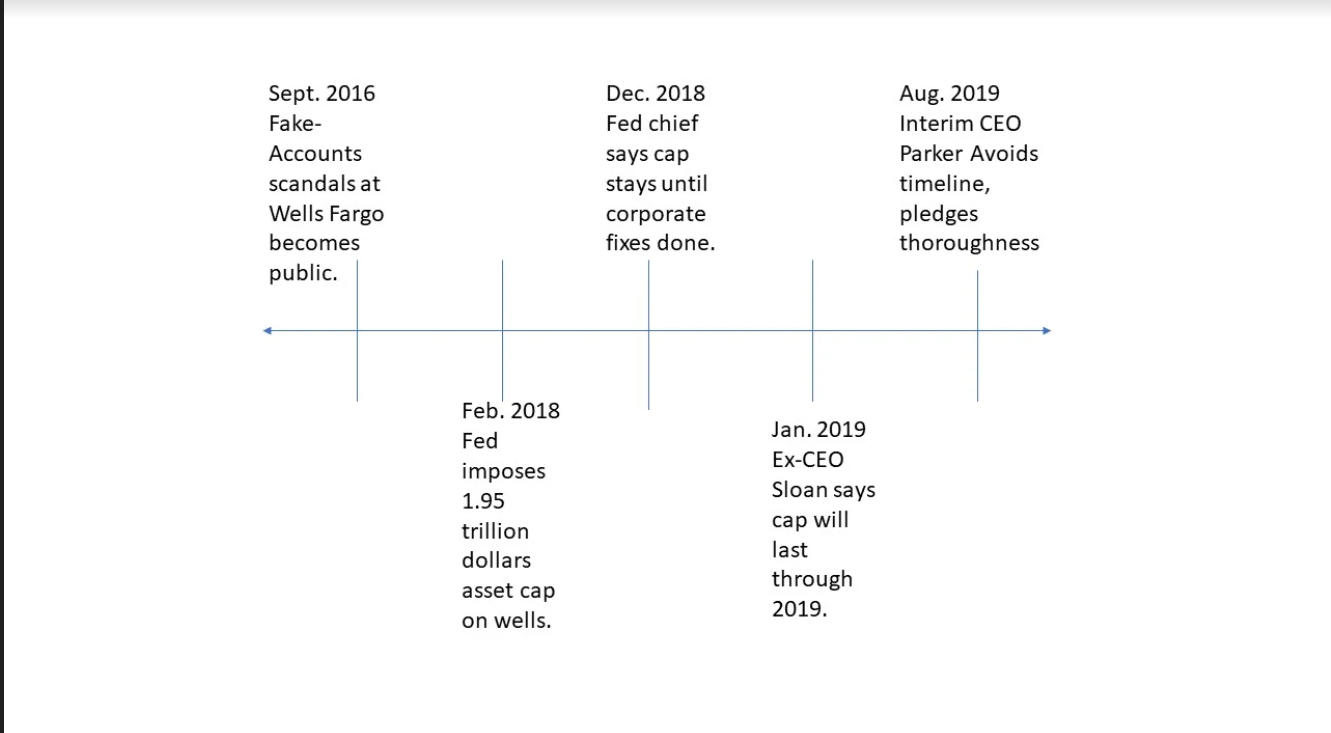

The Case Controversy 

Wells Fargo Company has fired 100-125 employees for going against the U.S. Small Business Administration (SBA) for taking out loans to help small businesses. There was another company that had the same issues with employees falsely taking out loans for Small businesses during COVID-19, this company was JPMorgan Chase. This source also talks about other additions to funding like the 670 billion dollars for the Paycheck Protection Program (PPP) to keep small businesses afloat. The federal government's CARES Act allocated another 10 billion dollars  to the existing Economic Injury Disaster Loan (EIDL) program also. JPMorgan chase had also fired 500 employees for similar acts like Wells Fargo have had. 

Borrowers  are now suing Wells Fargo for placing their home loans in forbearance during the coronavirus without their permission. Forbearance is a special agreement between the lender and the borrower to delay a foreclosure. The literal meaning of forbearance is "holding back". So what Wells Fargo was doing was they were putting the customers in this forbearance when they would call the bank if they were experiencing stress during covid and not being able to afford their monthly mortgage payments even when the customers didn't ask them too. During the coronavirus the federal Coronavirus Aid, Relief, and Economic Security Act would allow borrowers whose mortgages are backed by government-sponsored entities to opt for forbearance by requesting so from their banks. But the law doesn’t allow banks to do it for the. 

Troy Harlow, a man that always paid his mortgages on time he never missed a payment he said that “he pays it because he knows it needs to be paid”. He had to get a kidney transplant at the beginning of the Covid pandemic so with this it has halted his working and it also got affected by the Covid Pandemic. So what he did was contacted the bank of Wells Fargo and asked if they could stop it and they had other plans for him. This was they Wells Fargo has wrongly claimed that borrowers asked to pause their mortgage payments in forbearance plans. The lawyers have also found that the bank put through secondary requests for forbearance on behalf of homeowners who had asked to participate in the program initially but who no longer wanted to. In some cases, the bank withdrew the improper forbearance notifications after borrowers' attorneys alerted them to the errors. But Wells Fargo didn't take responsibility for the mistakes as the court documents show. This also talks about how in 2017 the bank was accused of  having made unauthorized changes to some borrowers' mortgages. Then it goes on and talks about other customers' loan issues.

Wells Fargo is one of our nation's fourth largest banks and is paying a 3 billion dollar fine to the Seattle civil lawsuit on the fake account scandals. These scandals were taking place all the way back to 2016 when they were opening up checking and saving accounts in the customers names. They were doing this so that they could meet their sales quotas, this all lasted for over a decade. It also had been carried out by thousands of employees there that ended up leading to multiple terminations. They were doing things like forging signatures and didn't let the other employees contact them for the surveys on how they liked it. It also says in the sources that none of this money that is being paid to the government is being given to the customers for compensation. Wells Fargo has separately made efforts to compensate victims for potential losses such as fees they might have been charged or harm to their credit ratings. The Justice Department agreed to not criminally prosecute the bank during the three-year term of the agreement only if Wells Fargo continues to cooperate with government investigations. Once the agreement was reached with the bank itself not with any individuals responsible for the fraud. But last month, the bank's former chief executive, John Stumpf, was fined 17.5 million dollars.

Wells Fargo website talks about all of the outcomes that happen to a person when they give out their information or have these phishing emails that are sent to the email and click on them because they think they are real. It tells you what wire transfers are, Money transfers, and checks are. These three things you should always look out for when you are reading a tempting email about your bank info because you couldn't just lose your money you can lose more valuable information. It also tells you what debit card and credit card scammers are doing and how they are getting into your accounts. You would read the source and ask yourself why are they telling us all this but still stealing peoples money and all their information.  


Wells Fargo to resume making emergency small business loans

Stakeholders

There is a future that is going to depend on how Wells Fargo's relationship with customers will have to increase. With all of the issues they had with the customers and taking their information from them they will need to work on their customer service and the security of the business. The people that were involved in the case are the CEO who resigned when all of the news broke out. The other people that were involved were the 100 plus employees that have gotten fired or asked to leave. The people that got most affected were the customers that are suing Wells Fargo for the fraud that they did and put them all in debt. 

Individualism  


Wells Fargo employees were stealing from their owners through this failure.  “Friedman argued that management was responsible for maximizing business profits and any action taken without considering profit is stealing from the owners of the company” (Salazar 17). The biggest failure in a company's business is when you are failing your customers and stealing their information to “maximize profit”. Wells Fargo wasted so much money in the long run with them stealing money,  they added to the long-term damage to their banking company. They wanted to meet their loan quotas; they did this by stealing other people's information. This is the failure to individualism by keeping the proper checks and balances was unprofessional to the company. The company has to pay about 3 billion dollars in law fees because of all of the fake accounts that they had set up for multiple people. 

This was unethical in all means because they were trying to beat out other banks by stealing information and making fake accounts. They had a lack of safety breaches that should be looked over so this doesn't happen again. The checks and balances should be overviewed by Wells Fargo so that they don't let this too keep happening in the company or eventually they will not have any customers that want to work with them with loans or any credit that they need help with. An individualist would be ethically responsible for wasting money by setting up fake accounts and putting people on a forbearance on mortgages. This will be ruining customer relationships by misleading their customers and wanting to go elsewhere because they were trying to “maximize their company profit”. 

Utilitarianism  

A utilitarian wants to maximize their happiness in Wells Fargo there by doing the opposite of that to their customers. The would view this Wells Fargo incident by looking over the ethical issues by the consequences of the company. Before Wells Fargo's controversy like right at the beginning of it they had employees that wanted to do the right thing and look into some of the people's accounts but the higher ups would tell them not to worry about it. How this works with the utilitarian: the employees wanting to do the right thing wanted to maximize the happiness and not watch customers get screwed over. This would also go against a utilitarian because they don't care about how the customers feel if they are doing this to them; they only care about the “profit and happiness” that the company was gonna have. In your case manual you said on page 17 that  “Business actions should aim to maximize the happiness in the long run for all conscious beings that are affected by the business action”. The company should have wanted to  maximize pleasure and minimize pain with a complete stakeholder approach. This is one of the main approaches in utilitarianism in my opinion. 

Actions surrounding these fraudulent acts caused the company to lose lots of employees. They have lost about 100-125 employees during all this including the CEO. They have had many lawsuits filed against them which are losing way more money in the long run for the company. So far they paid about 3 billion dollars in lawsuit fees. What a utilitarian wants to do is avoid short sighted thinking that will boost their profits momentarily but leads to a huge loss in the long term. Wells Fargo did the opposite of this that's why they would be going against a utilitarian.   

Kantianism  

Kantians would be concerned about the entire scandal that the bank that the bank did, they would also be concerned about the customers as well. There was a lack of informed decision making on all sides of the Wells Fargo scandal and when the incident hit social media they tried to eliminate it by firing lots of employees. The difference between a Kantian and utilitarian they would view on the issue by looking at the consequences. A Kantian would make a decision based on the consequences of the act. They like to make their decision in this case the CEO of Wells Fargo at this time. When Wells Fargo started to perform the scandalous acts they were going against many laws and they tried to hide it by not letting other people ask the “customers” for feedback on their accounts. In our textbook it said that “Kant tells us that we should act only according to those maxims that could be universally accepted and acted on” (DesJardins 38). In Kantianism this is the primary rule that they follow, they also use this as a question to themselves when they try to figure out consequences. 

They could have stopped all of these scandals by letting their people actually look at these acts and not let their boss or CEO scare them from looking into the issues. I think if they did this it would be impossible for a banking customer to sue a company. If this was put into play they wouldn't have to worry about the bank closing down in the near future for no one wanted to take out loans or open accounts. They also would have to pay so much in legal fees for all the mistakes that they have made. 

Virtues Theory 


Virtues Theory usually follows the same approach as a Kantian would they like when people are focusing on others. The only difference they focus on the ending more than a Katian would. In Wells Fargo for virtues theory they would care too much about the outcome of the issues they want it to come to the end with the right possible outcome. In your case manual you said “Act so as to embody a variety of virtuous or good character traits and so as to avoid vicious or bad character traits”. Wells Fargo had a terrible act with this because they were stealing the information of their employees to meet their mean. 

Wells Fargo had numerous violations to the Virtue Theory with the scandals that they performed on others. They were very unethical and unprofessional in business by trying to meet their quota deadlines. There was a lack of people wanting to take out loans and the bank felt like it was falling apart so they decided as a company to do the false acts. What comes into play here is the selfishness of their customers. When opening these accounts without the proper legal way they acted out of their own self-interest with zero respect for any of their stakeholders. Honesty and trustworthiness were also impacted here. Honesty was broke because they didn't let any of their employees find out that they were doing this and they wouldn’t let them investigate. Trustworthiness was affected because the people that gave them their information too actually opened up real loans for them; they used it to open up fake accounts for them and forged their signature. If you want to have a successful company and not have a bad reputation you want to build trust with customers now that you did all this too then they are going to refuse to sign up or tell their friends about the bank. 

Action Plan 


Wells Fargos has many problems that they are facing with being sued, legal fees, and firing employees. How the company can be ethical is they can follow the four values in a business these are Excellence, Empathy, Customer Well-being and Trust. With Excellence you can do things like work on how you are sending out the information to people so they know what you are trying to achieve and how it can benefit them. With empathy you can also work on the relationship with the customers in Wells Fargo they would send people feedback on how their accounts where and how they like the bank. I think that this was a good way to stay in good touch with the customers. What they can do to improve their feedback is ask them to recommend people that would be a good fit and get in contact with the bank to start a new relationship. The customer's well-being they need to work on how to fix what the customers don't want and improve on how the customer gets their information. If they can build more trust they shouldn't ask for more information than they need, I know you need to have a lot of information but once you get it made it disclosed so now one can get into it without a customer pin. How they can increase their profit is by not saving so much information they can give them pins so no one can log in besides them. This will help with the security and then more people will open up accounts and they will meet quotas and make more money in the long run instead of losing. This plan will be very confusing but with the pin being needed to open up someone's account that no one has besides them and their computer systems will really help with the security. This will also help with more people opening accounts because they will know that their information is going to be in a safe place and they won't have to worry about fraud. 

Self evaluation

This case has brought out many issues for the Wells Fargo company. I believe that it was morally and unethical of them to perform the stunts they did. I say this because they were taking other people's information and ruining their loans or putting them where they don't want to be. I believe in the near future that Wells Fargo will go bankrupt because of these acts, people will stop showing up and they will go to another bank that is better and has more secure issues for them. 


Reference


Desjardins, Joseph. An Introduction to Business Ethics. New York City: The McGraw-Hill Companies Inc, 2014. 

Morgenson, G. (2020, July 19). Troy Harlow has always made sure to pay his mortgage on time. Wells Fargo had other plans for him. Retrieved November 16, 2020, from https://www.nbcnews.com/business/personal-finance/troy-harlow-has-always-made-sure-pay-his-mortgage-time-n1233635 

Salazar, Heather. The Business Ethics Case Manual. N.d. 

Sonnemaker, T. (2020, October 14). Wells Fargo has fired more than 100 workers for lying in order to get COVID-19 relief funds. Retrieved November 16, 2020, from https://news.yahoo.com/wells-fargo-fired-more-100-222700075.html 

Staff, T. (2020, August 31). Wells Fargo Sued Over Mortgage Forbearance Policy. Retrieved November 16, 2020, from https://therealdeal.com/2020/08/31/borrowers-sue-wells-fargo-over-forbearance-policy/ 

Williams, P. (2020, February 22). Wells Fargo to pay $3 billion over fake account scandal. Retrieved November 16, 2020, from https://www.nbcnews.com/news/all/wells-fargo-pay-3-billion-over-fake-account-scandal-n1140541 

(n.d.). Retrieved November 16, 2020, from https://www.wellsfargo.com/privacy-security/fraud/bank-scams/


Wednesday, November 25, 2020

Yelp: The Unethical Behavior on Its Platform (2013 – Present)


ETHICS CASE CONTROVERSY


Timeline of Yelp
        Yelp, the online directory and customer review site, was founded in 2004. To get more than 100 million published reviews on its site, Yelp has done lots of things not only for the best of the community but also for the success of itself. In 2017, to support the LGBTQQIA community and a trans student, Gavin Grimm, who filed suit against his local school board for denying him use of the boys’ restroom at his school, Yelp allowed customers to find businesses that had gender-neutral bathrooms on its site. Airing political views through Yelp has become such a popular (and unwelcome) pastime that the site had to create “Active Cleanup Alert” in 2016, which was first implemented last year in response to the numerous political attacks to protect the businesses. Recently, on October 8th, Yelp Vice President of User Operations Noorie Malik announced a new initiative which called a “firm stance against racism” to label businesses that users have reported for racist behavior such as using overtly racist slurs or symbols. However, the only problem that Yelp did not successfully solve is about the unethical behavior on its platform.
        Yelp's been sued multiple times. People have accused them of fraudulently misleading consumers about the authenticity and quality of reviews. Businesses have accused them of extortive advertisement sales tactics, alleging that Yelp pressures them to pay for advertising. And there are multiple websites created by disgruntled people to band together against the review juggernaut. But so far, no matter how many times Yelp is sued, they prevail and emerge relatively unscathed from these legal battles. Even the Federal Trade Commission, who revealed in 2014 that they received 2,046 complaints against Yelp, took no action against them. Still, it is concerning that there have been so many complaints against Yelp, and potential future lawsuits are not altogether unlikely [4]. Based on the lawsuit, Yelp demanded the small businesses buy expensive online advertisements to artificially inflate the reviews on their online profiles. The group of small businesses claimed that this tactic produced an environment of unfair competition because larger businesses would be able to pay for the service, and small businesses would lack the funds to do so. Therefore, the larger business would have better control over its online presence and reputation, creating an unfair advantage. Rather than deny or directly address these accusations, Yelp adopted a policy of silence, and instead promoted its “pop-up” notification initiative to distract their users. [8]
Yelp now labels fraudulent reviews with Consumer Alert
        The companies involved in this and other lawsuits against Yelp see an inherent conflict of interest in Yelp’s business model. Yelp automatically categorizes businesses using public records and address information available online, and third-party users are then allowed to rate these companies. Yelp profits from selling ads to the same businesses that are being rated on its site. No matter how much Yelp denies the claims, it is easy to see why some businesses are skeptical. In 2013, Yelp reported net revenue of about $233 million, over 75% of which came from sales of advertising space. Because ad revenue makes up such a large portion of Yelp’s total revenue, the appearance is it could seek to realize huge profits by increasing ad sales and subtlety requiring businesses to purchase ad space on its website in return for posting positive reviews or leaving off the negative ones [3].
        The San Francisco small businesses created a new platform, Yelp-Sucks.com. In response, the public took notice and began to complain and contribute their own stories of reviews being removed from the site. Users added testimonials and shared the website with a larger audience, accelerating the spread of information about Yelp’s scrubbing. Again, although Yelp denied scrubbing was taking place, the user data on Yelp-Sucks.com provided evidence to the contrary and challenged Yelp’s own reputation. [8]


STAKEHOLDERS

Important stakeholders to Yelp are anyone who affects or can be affected by the organization’s actions. Mostly, businesses, restaurants, and customers are the most important main stakeholders to Yelp in this case due to one helping Yelp gaining more users as of now and the other helping Yelp gaining more success as of now. The other stakeholder is a federal law, Consumer Review Fairness Act, that Yelp helped pass in 2016 is also important for the company because it will take responsibility for the relationship between customers and the businesses. 


INDIVIDUALISM


According to Milton Friedman, the only goal of Individualism is to maximize the profit for the owner or the stockholders. Meaning, a business should focus mainly on generating the highest possible amount in profit and should not attempt to be socially responsible, “Spending money on resources, employees, and donations to causes is wrong because it is essentially stealing from the owner or owners of the company.” (Salazar 17) More than that, it is also necessary for a business to operate within the laws and rules of the state that it regulates it. 

        According to the theory of Individualism, Yelp company has failed to maximize the profit for the stockholders. Yelp has introduced lots of alerts to their website just for their users. They want to attract new users and also more users with their new alerts. The only problem is that they didn’t really care about the businesses and the restaurants, who are also their main stockholders, on their apps based on the fake reviews and political reviews from their users which could bring these businesses to the bottom. With the amount of people who use Yelp, it's no surprise that looking over these reviews takes time. Since Yelp is trusted as the online directory and customer review site, one negative fake review can destroy a whole business within a short period. 

Geoff Donaker - Chief Operating Officer
        In order to make money, Yelp advertised businesses who paid Yelp to feature their establishments at the top of relevant searches. In 2009, allegedly, Yelp employees have contacted businesses, offering to remove negative reviews for a fee for "advertising", though Yelp denies this is something they do, “We wouldn't be in business very long if we started duping customers," Chief Operating Officer – Geoff Donaker said. His denials are challenged by nine local business owners and also by a former contract employee who worked with Yelp in its early days and is still close to some Yelp employees and only agreed to be interviewed if granted anonymity [5]. Based on what they said to him, their action is not illegal or unethical; they just helped the little guy by moving bad reviews for his benefit. So, according to Individualism, Yelp is permissible because they are profiting and not doing anything illegal under the law. 


UTILITARIANISM


The goal of Utilitarianism is to maximize happiness for all conscious beings in a long-term period, not just for one individual or one company, that are affected by the business action (Salazar 19). The customers who used Yelp will be happy with how Yelp did for them, such as “Customer Alert”. Yelp will be happy since they think that they help the community a lot through what they did for them. However, the businesses and restaurants will be unhappy with how Yelp brings to them the pressure for “advertising”. 

Yelp was successful by introducing lots of new alerts for helping the community and the users of Yelp. However, Yelp was unsuccessful by not caring about their partners – the businesses and the restaurants. In reply to the fake negative reviews, instead of taking these down, Representatives allegedly would offer to remove or hide the reviews in exchange for agreeing to buy an advertising contract with the site with an expensive price. For a long-term period, these businesses will be stressful to pay Yelp with an expensive price for staying at the top of its website. A veterinary hospital in Long Beach, California experienced similar tactics as I mentioned above about paying for hiding negative reviews. When the hospital contacted Yelp to address false and defamatory claims in a review it received on the site, Yelp allegedly refused to remove the comment unless the hospital agreed to pay $300 a month [1]. Therefore, a utilitarian would view this case unethical because of the consequences Yelp brought to their stockholders. 


KANTIANISM


        While Utilitarianism looks at the consequences of an action, Kantianism looks at the good will of a person. According to Kant, a person must always act as an end and never simply the means. “Always act in ways that respect and honor individuals and their choices. Don’t lie, cheat, manipulate or harm others to get your way. Rather, use informed and rational consent from all parties.” (Salazar, 20)

        Under the ethical theory of Kant, Yelp failed to treat the businesses and the restaurants with a respectful way, instead treating them as a mere means. Yelp was using the threat of harm through negative reviews to force businesses to buy ads. If the owners declined to advertise, the positive reviews disappeared, only the negative reviews stayed. Even though the reviews were untrue, the complaints still exist on the businesses’ review site. This year, a customer complained about being called a racist slur by a manager at the pub, but the incident actually happened at a different establishment. Management reported the comment to Yelp, but the complaint still exists on the company’s page. “I think in many ways it’s a very good idea, but one negative comment can destroy a whole business,” he said. [2]

        Yelp also lied to their users about the authenticity and quality of reviews. Yelp’s use of “community managers, scouts, and ambassadors” to supplement its automated screening does not indicate that Yelp’s directors and officers knew that any significant number of reviews were not authentic or firsthand, beyond what defendants represented to the public. The company itself also admitted its system was not foolproof, and that some filtered reviews could be genuine. [6] Therefore, not only Yelp treats their partners as a mere mean, but Yelp also treats their users as a mere mean. 


VIRTUE THEORY 

        According to Virtue Theory, the most important thing is neither about the outcome, nor the consequences of an action. It is about a person’s character, and how his or her actions reflect who he or she is. There are four cardinal virtues that everyone needs are courage, honesty, temperance, and justice. If one of these is lacking, then the whole will be collapsed. Courage is the quality of mind that enables a person to take risks, face difficulty, danger, and pain without fear. Honesty is the vital role in every aspect of human life that requires honesty, truthfulness, and loyalty. Temperance is having reasonable expectations and desires for yourself and for others. And lastly, justice is the fair treatment among people.

Based on this theory, Yelp lacks all four of cardinal virtues. About honesty, they lied to their users about the authenticity and quality of reviews. Only by paying for “advertising”, businesses can get rid of negative reviews on Yelp sites. Users will wonder about how authentic Yelp is. Yelp is also lacking courage. Instead of admitting the lawsuits in 2014 about manipulating ratings based on ad purchases, they keep denying and being silenced. Yelp lacks justice because of the unfair treatment between small businesses and large businesses. For those small businesses, it is hard for them to stay on the top Yelp’s page by paying an expensive price for each month. This could lead to a loss for every small business in the world nowadays. Lastly, they lack temperance because they do not have a reasonable expectation for the company. Instead of fixing the problem and discussing with businesses against them, Yelp kept silent and promoted its “pop-up” notification initiative to distract their users.


JUSTIFIED ETHICS EVALUATION

        In my opinion, Yelp’s actions were unethical and unprofessional. They know what they do is wrong and is unfair for their partners and their users. Because of money, Yelp lied to their users about the authenticity of the reviews and forced their partners to pay for “advertising” with an expensive price in order to take down the fake reviews and negative reviews. Instead of admitting their unethical behavior, Yelp still kept silenced and denied all the lawsuits that they were accused of. However, based on the laws, there is nothing that can sue Yelp for what they have done since no evidence has been found. Even though there is evidence, Yelp is still not being sued by saying that their action is illegal or unethical; they just helped those businesses by moving bad reviews for their benefits. So, such tactics may be legal, but clearly raised ethical concerns.


ACTION PLANS

        The current issue of Yelp is that they lied to their users about the authenticity and quality of reviews and used the threat of harm through negative reviews to force businesses to buy ads. In order to solve this problem, Yelp has to admit their unethical behavior and apologize to their users and their partners. Yelp has to stop doing these things and gains more trust from the businesses by treating them nicely with the first month of advertising for free price. The company also needs to develop a code of ethics that details its ethical obligations to users of the site and its ratings with respect to ethical values such as honesty, integrity, responsibility and accountability. 

Yelp’s current mission statement is “to connect people with great local businesses”. My recommendation for the new mission statement is, “We, Yelp, promise to connect people with great local businesses by building trust in an honesty, integrity, responsibility and accountability relationship”. With this new mission statement, Yelp successfully addresses what they need to do for their users and also for their partnership with businesses with a detail of its ethical obligations. By building trust in an honest relationship, Yelp needs to be loyal and be truthful to their users and their partners. They should not take down the negative reviews even though they are fake or bad. By building trust in an integrity relationship, Yelp should not lie to their users and their partners. They should be dependable and following through on commitments such as stop forcing small businesses to buy ads. By building trust in a responsibility relationship, Yelp has to be responsible for their actions. In order to gain trust, they need to stop keeping silenced, take responsibility for what they have done, and work on it to change their actions. By building trust in an accountability relationship, Yelp has to do all good things for their users, their partners, and also for the community. 

To prevent this problem from occurring again, Yelp needs to discuss with their User Operations team about improving their system for identifying fake reviews. They can investigate the types of cheating and unethical behaviors that economic incentives may prompt and what causes this differential behavior to exist. They also need to develop a code of ethics that details its ethical obligations to users of the site. They need to recreate teams who are responsible to work with their partners about the commitments. This team needs to put honesty and integrity as the priority for their partners. To help the company to flourish after the controversy, Yelp needs to replace the VP of User Operations as a new person who knows how to improve their system for identifying fake reviews, not only focused on introducing new alerts. Yelp also needs a representative face who has all four cardinal virtues in order to face the dangers and change it. In the case of bad publicity due to the ethical difficulty it faced, the marketing team needs to find the problems and the cure for the problems in order to respond to the media as soon as possible. Marketing team also needs an effective method to fix it as soon as possible and always apologize first. 

By putting ethics as the priority, my plan will always find a way to satisfy not only the users, but also our partners. By training the employees with a code of ethics, Yelp will be more successful and will do lots of good things for this community. 


References

[1] Chris Foresman - Feb 25, 2. (2010, February 25). Yelp facing class-action lawsuit over extortive "ad sales". Retrieved November 21, 2020, from https://arstechnica.com/tech-policy/2010/02/yelp-facing-class-action-suit-over-extortive-ad-sales/

[2] Gross, J. (2020, October 09). Yelp Says It Will Mark Pages of Businesses Accused of Racist Conduct. Retrieved November 21, 2020, from https://www.nytimes.com/2020/10/09/business/yelp-racism.html?searchResultPosition=1

[3] Is it Ethical to Allow Yelp to Manipulate Ratings Based on Ad Purchase? (2014, October 23). Retrieved November 21, 2020, from https://www.workplaceethicsadvice.com/2014/10/is-it-ethical-to-allow-yelp-to-manipulate-ratings-based-on-ad-purchase.html

[4] Lafuente, C. (2017, March 03). Secrets Yelp doesn't want you to know. Retrieved November 21, 2020, from https://www.mashed.com/45890/secrets-yelp-doesnt-want-know/

[5] Richards, K. (2009, February 18). Yelp and the Business of Extortion 2.0. Retrieved November 21, 2020, from https://www.eastbayexpress.com/oakland/yelp-and-the-business-of-extortion-20/Content?oid=1176635

[6] Stempel, J. (2015, November 27). Yelp prevails in lawsuit over authenticity of its reviews. Retrieved November 21, 2020, from https://www.reuters.com/article/us-yelp-reviews-lawsuit-idUSKBN0TG1T220151127?feedType=RSS

[7] Salazar, Heather. The Business Ethics Case Manual. n.d.

[8] WPSU - Penn State Public Media. (n.d.). Retrieved November, 2020, from https://pagecentertraining.psu.edu/public-relations-ethics/digital-ethics/lesson-2-digital-tools-and-ethics/case-study-yelp-scrubbing-away-bad-reviews/