Showing posts with label covid19 conspiracy theories. Show all posts

Wednesday, December 2, 2020

Wells Fargo: Fires more than 100 employees for fraud! (2016-2020)


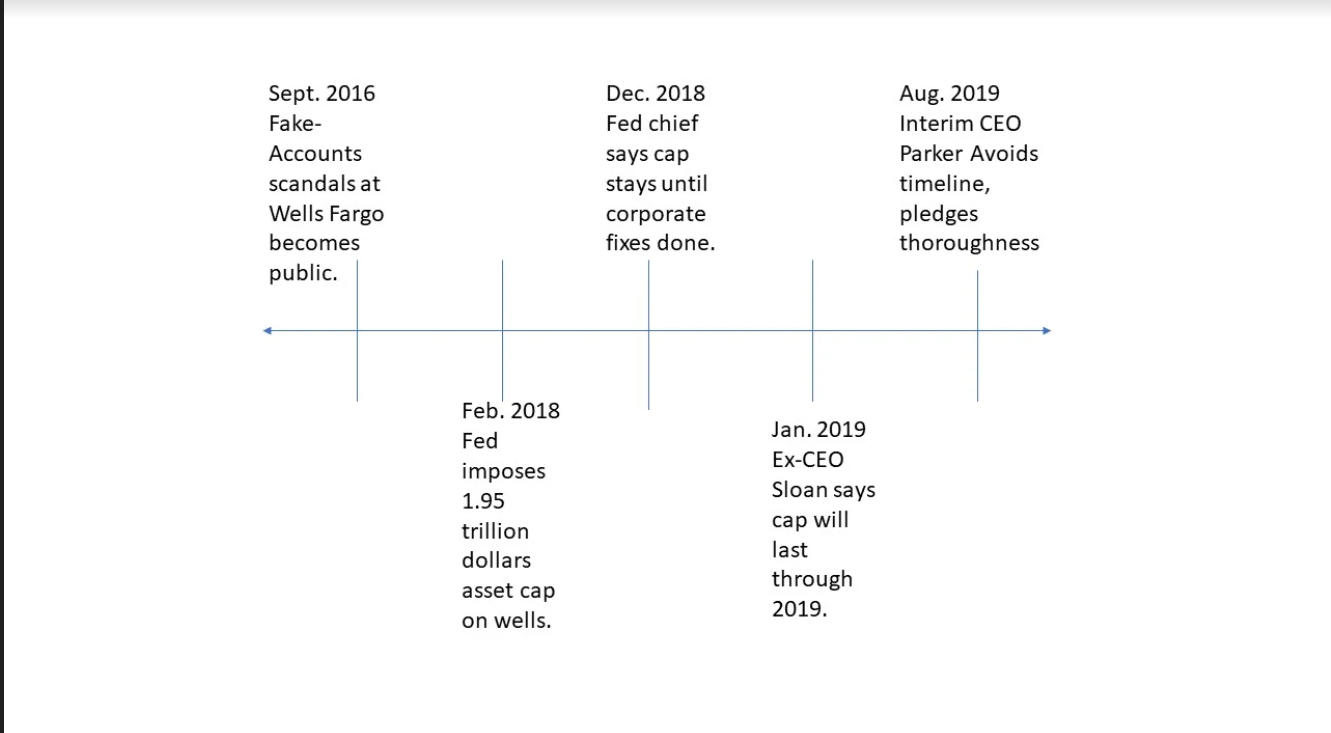
Wells Fargo has had many scandals throughout their company with employees making fake accounts for costumes to meet their company quotas. This was a big scandalous problem that all began in 2016 with them signing them up for loans and ruining their customers credits. This all became one of the biggest issues in banking history in 2020 because they had to pay 3 billion dollars in fees. Ethical theories would look at Wells Fargo as very unethical. Individualists theory would look at all of the manager’s and their ethical responsibility. They are supposed to increase the wealth of the owners within the law. An individualist wouldn’t hold  Wells Fargo responsibility for the ethics fallout. They would hold them responsible for the capital they lost due to their stupidity that they performed on customers. Utilitarians are to  require people maximize happiness for the most people. They would view Wells Fargo's issues as unethical on two problems. One problem is the lack of risk that they had when opening the accounts, and the second problem is that they had a lack of consideration for the stakeholders when they all opened up these accounts. Kantians would use actions by the way people make decisions. Also by people analyzing the motivations behind each one. Virtue Theory would cite the vices of a lack of moderation, disrespect, self-interest, greed and dishonesty. Particularly in Wells Fargo they had to pay 3 billion dollars in legal fees for their consciences of the issue that they had started. 

The Case Controversy 

Wells Fargo Company has fired 100-125 employees for going against the U.S. Small Business Administration (SBA) for taking out loans to help small businesses. There was another company that had the same issues with employees falsely taking out loans for Small businesses during COVID-19, this company was JPMorgan Chase. This source also talks about other additions to funding like the 670 billion dollars for the Paycheck Protection Program (PPP) to keep small businesses afloat. The federal government's CARES Act allocated another 10 billion dollars  to the existing Economic Injury Disaster Loan (EIDL) program also. JPMorgan chase had also fired 500 employees for similar acts like Wells Fargo have had. 

Borrowers  are now suing Wells Fargo for placing their home loans in forbearance during the coronavirus without their permission. Forbearance is a special agreement between the lender and the borrower to delay a foreclosure. The literal meaning of forbearance is "holding back". So what Wells Fargo was doing was they were putting the customers in this forbearance when they would call the bank if they were experiencing stress during covid and not being able to afford their monthly mortgage payments even when the customers didn't ask them too. During the coronavirus the federal Coronavirus Aid, Relief, and Economic Security Act would allow borrowers whose mortgages are backed by government-sponsored entities to opt for forbearance by requesting so from their banks. But the law doesn’t allow banks to do it for the. 

Troy Harlow, a man that always paid his mortgages on time he never missed a payment he said that “he pays it because he knows it needs to be paid”. He had to get a kidney transplant at the beginning of the Covid pandemic so with this it has halted his working and it also got affected by the Covid Pandemic. So what he did was contacted the bank of Wells Fargo and asked if they could stop it and they had other plans for him. This was they Wells Fargo has wrongly claimed that borrowers asked to pause their mortgage payments in forbearance plans. The lawyers have also found that the bank put through secondary requests for forbearance on behalf of homeowners who had asked to participate in the program initially but who no longer wanted to. In some cases, the bank withdrew the improper forbearance notifications after borrowers' attorneys alerted them to the errors. But Wells Fargo didn't take responsibility for the mistakes as the court documents show. This also talks about how in 2017 the bank was accused of  having made unauthorized changes to some borrowers' mortgages. Then it goes on and talks about other customers' loan issues.

Wells Fargo is one of our nation's fourth largest banks and is paying a 3 billion dollar fine to the Seattle civil lawsuit on the fake account scandals. These scandals were taking place all the way back to 2016 when they were opening up checking and saving accounts in the customers names. They were doing this so that they could meet their sales quotas, this all lasted for over a decade. It also had been carried out by thousands of employees there that ended up leading to multiple terminations. They were doing things like forging signatures and didn't let the other employees contact them for the surveys on how they liked it. It also says in the sources that none of this money that is being paid to the government is being given to the customers for compensation. Wells Fargo has separately made efforts to compensate victims for potential losses such as fees they might have been charged or harm to their credit ratings. The Justice Department agreed to not criminally prosecute the bank during the three-year term of the agreement only if Wells Fargo continues to cooperate with government investigations. Once the agreement was reached with the bank itself not with any individuals responsible for the fraud. But last month, the bank's former chief executive, John Stumpf, was fined 17.5 million dollars.

Wells Fargo website talks about all of the outcomes that happen to a person when they give out their information or have these phishing emails that are sent to the email and click on them because they think they are real. It tells you what wire transfers are, Money transfers, and checks are. These three things you should always look out for when you are reading a tempting email about your bank info because you couldn't just lose your money you can lose more valuable information. It also tells you what debit card and credit card scammers are doing and how they are getting into your accounts. You would read the source and ask yourself why are they telling us all this but still stealing peoples money and all their information.  


Wells Fargo to resume making emergency small business loans

Stakeholders

There is a future that is going to depend on how Wells Fargo's relationship with customers will have to increase. With all of the issues they had with the customers and taking their information from them they will need to work on their customer service and the security of the business. The people that were involved in the case are the CEO who resigned when all of the news broke out. The other people that were involved were the 100 plus employees that have gotten fired or asked to leave. The people that got most affected were the customers that are suing Wells Fargo for the fraud that they did and put them all in debt. 

Individualism  


Wells Fargo employees were stealing from their owners through this failure.  “Friedman argued that management was responsible for maximizing business profits and any action taken without considering profit is stealing from the owners of the company” (Salazar 17). The biggest failure in a company's business is when you are failing your customers and stealing their information to “maximize profit”. Wells Fargo wasted so much money in the long run with them stealing money,  they added to the long-term damage to their banking company. They wanted to meet their loan quotas; they did this by stealing other people's information. This is the failure to individualism by keeping the proper checks and balances was unprofessional to the company. The company has to pay about 3 billion dollars in law fees because of all of the fake accounts that they had set up for multiple people. 

This was unethical in all means because they were trying to beat out other banks by stealing information and making fake accounts. They had a lack of safety breaches that should be looked over so this doesn't happen again. The checks and balances should be overviewed by Wells Fargo so that they don't let this too keep happening in the company or eventually they will not have any customers that want to work with them with loans or any credit that they need help with. An individualist would be ethically responsible for wasting money by setting up fake accounts and putting people on a forbearance on mortgages. This will be ruining customer relationships by misleading their customers and wanting to go elsewhere because they were trying to “maximize their company profit”. 

Utilitarianism  

A utilitarian wants to maximize their happiness in Wells Fargo there by doing the opposite of that to their customers. The would view this Wells Fargo incident by looking over the ethical issues by the consequences of the company. Before Wells Fargo's controversy like right at the beginning of it they had employees that wanted to do the right thing and look into some of the people's accounts but the higher ups would tell them not to worry about it. How this works with the utilitarian: the employees wanting to do the right thing wanted to maximize the happiness and not watch customers get screwed over. This would also go against a utilitarian because they don't care about how the customers feel if they are doing this to them; they only care about the “profit and happiness” that the company was gonna have. In your case manual you said on page 17 that  “Business actions should aim to maximize the happiness in the long run for all conscious beings that are affected by the business action”. The company should have wanted to  maximize pleasure and minimize pain with a complete stakeholder approach. This is one of the main approaches in utilitarianism in my opinion. 

Actions surrounding these fraudulent acts caused the company to lose lots of employees. They have lost about 100-125 employees during all this including the CEO. They have had many lawsuits filed against them which are losing way more money in the long run for the company. So far they paid about 3 billion dollars in lawsuit fees. What a utilitarian wants to do is avoid short sighted thinking that will boost their profits momentarily but leads to a huge loss in the long term. Wells Fargo did the opposite of this that's why they would be going against a utilitarian.   

Kantianism  

Kantians would be concerned about the entire scandal that the bank that the bank did, they would also be concerned about the customers as well. There was a lack of informed decision making on all sides of the Wells Fargo scandal and when the incident hit social media they tried to eliminate it by firing lots of employees. The difference between a Kantian and utilitarian they would view on the issue by looking at the consequences. A Kantian would make a decision based on the consequences of the act. They like to make their decision in this case the CEO of Wells Fargo at this time. When Wells Fargo started to perform the scandalous acts they were going against many laws and they tried to hide it by not letting other people ask the “customers” for feedback on their accounts. In our textbook it said that “Kant tells us that we should act only according to those maxims that could be universally accepted and acted on” (DesJardins 38). In Kantianism this is the primary rule that they follow, they also use this as a question to themselves when they try to figure out consequences. 

They could have stopped all of these scandals by letting their people actually look at these acts and not let their boss or CEO scare them from looking into the issues. I think if they did this it would be impossible for a banking customer to sue a company. If this was put into play they wouldn't have to worry about the bank closing down in the near future for no one wanted to take out loans or open accounts. They also would have to pay so much in legal fees for all the mistakes that they have made. 

Virtues Theory 


Virtues Theory usually follows the same approach as a Kantian would they like when people are focusing on others. The only difference they focus on the ending more than a Katian would. In Wells Fargo for virtues theory they would care too much about the outcome of the issues they want it to come to the end with the right possible outcome. In your case manual you said “Act so as to embody a variety of virtuous or good character traits and so as to avoid vicious or bad character traits”. Wells Fargo had a terrible act with this because they were stealing the information of their employees to meet their mean. 

Wells Fargo had numerous violations to the Virtue Theory with the scandals that they performed on others. They were very unethical and unprofessional in business by trying to meet their quota deadlines. There was a lack of people wanting to take out loans and the bank felt like it was falling apart so they decided as a company to do the false acts. What comes into play here is the selfishness of their customers. When opening these accounts without the proper legal way they acted out of their own self-interest with zero respect for any of their stakeholders. Honesty and trustworthiness were also impacted here. Honesty was broke because they didn't let any of their employees find out that they were doing this and they wouldn’t let them investigate. Trustworthiness was affected because the people that gave them their information too actually opened up real loans for them; they used it to open up fake accounts for them and forged their signature. If you want to have a successful company and not have a bad reputation you want to build trust with customers now that you did all this too then they are going to refuse to sign up or tell their friends about the bank. 

Action Plan 


Wells Fargos has many problems that they are facing with being sued, legal fees, and firing employees. How the company can be ethical is they can follow the four values in a business these are Excellence, Empathy, Customer Well-being and Trust. With Excellence you can do things like work on how you are sending out the information to people so they know what you are trying to achieve and how it can benefit them. With empathy you can also work on the relationship with the customers in Wells Fargo they would send people feedback on how their accounts where and how they like the bank. I think that this was a good way to stay in good touch with the customers. What they can do to improve their feedback is ask them to recommend people that would be a good fit and get in contact with the bank to start a new relationship. The customer's well-being they need to work on how to fix what the customers don't want and improve on how the customer gets their information. If they can build more trust they shouldn't ask for more information than they need, I know you need to have a lot of information but once you get it made it disclosed so now one can get into it without a customer pin. How they can increase their profit is by not saving so much information they can give them pins so no one can log in besides them. This will help with the security and then more people will open up accounts and they will meet quotas and make more money in the long run instead of losing. This plan will be very confusing but with the pin being needed to open up someone's account that no one has besides them and their computer systems will really help with the security. This will also help with more people opening accounts because they will know that their information is going to be in a safe place and they won't have to worry about fraud. 

Self evaluation

This case has brought out many issues for the Wells Fargo company. I believe that it was morally and unethical of them to perform the stunts they did. I say this because they were taking other people's information and ruining their loans or putting them where they don't want to be. I believe in the near future that Wells Fargo will go bankrupt because of these acts, people will stop showing up and they will go to another bank that is better and has more secure issues for them. 


Reference


Desjardins, Joseph. An Introduction to Business Ethics. New York City: The McGraw-Hill Companies Inc, 2014. 

Morgenson, G. (2020, July 19). Troy Harlow has always made sure to pay his mortgage on time. Wells Fargo had other plans for him. Retrieved November 16, 2020, from https://www.nbcnews.com/business/personal-finance/troy-harlow-has-always-made-sure-pay-his-mortgage-time-n1233635 

Salazar, Heather. The Business Ethics Case Manual. N.d. 

Sonnemaker, T. (2020, October 14). Wells Fargo has fired more than 100 workers for lying in order to get COVID-19 relief funds. Retrieved November 16, 2020, from https://news.yahoo.com/wells-fargo-fired-more-100-222700075.html 

Staff, T. (2020, August 31). Wells Fargo Sued Over Mortgage Forbearance Policy. Retrieved November 16, 2020, from https://therealdeal.com/2020/08/31/borrowers-sue-wells-fargo-over-forbearance-policy/ 

Williams, P. (2020, February 22). Wells Fargo to pay $3 billion over fake account scandal. Retrieved November 16, 2020, from https://www.nbcnews.com/news/all/wells-fargo-pay-3-billion-over-fake-account-scandal-n1140541 

(n.d.). Retrieved November 16, 2020, from https://www.wellsfargo.com/privacy-security/fraud/bank-scams/


Youtube: Covid Conspiracy Theories

 The Case:

YouTube since its creation in 2005 has been rising in popularity not just in the U.S. but on an international level as well. With the general use of social media also on a steep increase since the early 2000’s they have become a host for a wide range of ethical debates surrounding topics such as privacy, ownership, usage, governmental control and many others. This case focuses specifically on the ethicality of conspiracy theorists using the massive platform during the global pandemic to promote radical misinformation surrounding Coronavirus.  Censorship and the First Amendment are terms often used together during debates such as this. The topic of what is and what is not covered by free speech in the United States has been part of heated debates and has been seen in various court cases. YouTube, a privately owned company, was deemed “not a public forum with guaranteed free speech” as of February of this year in a case ruled by San Francisco's Ninth Circuit appeals court (BBC). The court case was initiated by PragerU, a right-winged YouTube channel after YouTube censored its content. This leads into the concerning issue of the rapid widespread misinformation surrounding the coronavirus perpetuated by conspiracy theorists such as Robert F. Kennedy Jr., a notorious proponent of the anti-vaccination movement. 

After an interview between Patrick Bet-David, a popular financial YouTuber and Robert F. Kenedy, went viral on YouTube and in only two days gained over half a million views. Not only was the video monetized (limited ads) it also featured a catchy title promoting the “exclusive” interview and a link to his merchandise easily accessible in the description. The interview consisted of three separate videos, one of which was later removed by YouTube for violating its medical misinformation policies but not before over a million people had viewed it. Despite attempts from YouTube to censor and prevent the spread of misinformation, many health experts are concerned that this type of misinformation could still yield intensly dangerous outcomes even if content has been removed.

The Coronavirus outbreak was first declared a national emergency by President Trump March 13, 2020 and almost immediately conspiracy theories began to flood the internet and spread across social media platforms. Thus, as  2020 began so did the birth of coronavirus conspiracy theories. These original conspiracies claimed that billionaire Bill Gates created the virus, patented it, and would use vaccines to control people. These began floating around the internet when one went viral as soon as March 19, 2020 when a website called Biohackinfo.com falsely stated that Gates was intending to use a vaccine as a way to monitor people via microchip (Nature). Two days after a YouTube video surrounding this gained nearly two million views before being removed. This was the first warning sign that in addition to worrying about the Coronavirus itself, we may also have to fear the dangerous nature of this information. The reason it is such a concern not only for the platforms like YouTube but for researchers and health experts as well is because of the influence this medical misinformation has on people's actions and beliefs combined with the fact controlling and preventing the spread of misinformation is increasingly difficult. Within minutes a video can gain millions of views and according to a study from researchers at King’s College London those who get their news primarily from social media are much more likely to believe in these outlandish theories and additionally, break the rules of lockdown. It also showed that YouTube viewers are more likely to buy into COVID-19 conspiracies than people who get their news through other social media platforms. The research focused on potential public health risks posed by online conspiracy theories surrounding the pandemic. The research surveyed 2,254 people who live in the UK ages 16-70 in May of this year.  They asked participants if they believed in several different conspiracy theories. Some of the conspiracy theories include: that there is no hard evidence of a coronavirus and coronavirus is linked to 5G.  YouTube was found to be the most associated with these conspiracy beliefs (Business Insider).  

Since February, YouTube has reported that they have removed over 200,000 videos on the topic of dangerous and misleading information about coronavirus (Reuters). With the rise of misinformation spreading across social media these large companies have been more too quick to get involved to stop this. Labels, warnings, and links to quality news sources and public health organizers have been added to content throughout platforms such as YouTube, Facebook, Google, Twitter and Instagram. Lucky for the most part, ridiculous conspiracy theories have been managed and limited in popularity. In February of this year a number of these outrageous theories spread on YouTube, but more recently a hit video entitled “Plandemic” became popular which alleges that a cabal of elites is using the pandemic as a cover to profiteer and entrench their power. The video was quickly adopted and believed by groups like anti-vaccinators and the QAnon conspiracy group. The video features discredited scientist Dr. Judy Mikovis who became the star of coronavirus misinformation. Uploads of the “Plandemic” have over 8 million views across varying social media platforms. YouTube alone is the source of 7.1 million of those views before it was removed. Erin Gallagher, a social media researcher explains that, “The video spread from YouTube to Facebook thanks to highly active QAnon and conspiracy-related Facebook groups with tens of thousands of members which caused a massive cascade” (Verge). 

According to a BBC article the study published in the journal of Psychology Medicine found that, “There was a strong positive relationship between use of social media platforms as sources of knowledge about Covid-19 and holding one or more conspiracy beliefs," the study finds. "YouTube had the strongest association with conspiracy beliefs, followed by Facebook.” Interestingly, the research also found that those who left their homes with possible symptoms of COVID-19 were more than twice to three times as likely  than those who did not rely on Facebook and/or Youtube for news updates regarding the virus. A point emphasized from the study was that they held the opinion that social media companies like Facebook and Youtube need to do more to control this spread of false information. A spokesperson from Facebook said, “We have removed hundreds of thousands of Covid-19-related misinformation that could lead to imminent harm including posts…” (BBC). The opportunity for individuals to reach the masses with just a few clicks of a button is being abused by conspiracy theorists and are taking advantage of vulnerable audiences. 


Stakeholders:

With such a dense and complex case there are a variety of key stakeholders and decision makers at play. Stakeholders are those who may be affected or can affect company decisions. Firstly, the founders of the platform Chad Hurley, Steve Chen, and Jawed Karim, former PayPal employees. Google and it’s management are also important to mention as YouTube was bought by Google in 2006, just one year after it’s creation. YouTube has since operated as one of Google’s subsidiaries. This generally includes employees of Youtube (LLC) which is made up of managers, administrators, and other employees. 

Next, and arguably most important is the platform and internet users and creators. Copyright owners are also involved in this category in either the form of owners of copyrighted videos or music. Society and the platform audience are also part of those who may affect or be affected by YouTube decisions. 

Although YouTube is privately owned, the government is another thing to mention when discussing the topic. As mentioned previously, governmental and policy intervention is always at play or at least a topic of debate. This being said, other social media platforms and their owners and stakeholders can also be linked to those of YouTube not only because of how policies may impact YouTube as well, but the competitive aspect of business as well. 


Individualism: 

Individualism argues that the sole goal of business is centered around profit, thus meaning that the concern of business people is to maximize profits for the owner(s) and/or stockholders. When looking at the case from this perspective we would look at the way in which the conspiracy theorists are in a way stealing potential profit from YouTube. This is seen through the damage of the platform's reputation, combined with the need to spend more money on resources to control content coupled with any marketing and public statements from the company.  Milton Friedman, renowned Economist argues that the only social responsibility of business is to increase profits, “so long as it stays within the rules of the game, which is to say, engages in open and free competition, without deception or fraud” (DesJardins 54).  Friedman also views business should operate considering their desires which as a general desire is to make money and as much of it as possible. 

Applying this concept to the case we can see where an ethical argument arises, especially surrounding the principle that although business should maximize profits, it must do so in accordance with the law and free of deception. The key  conspiracy theorists involved in the case are clearly motivated by the desire of profit but in attempting to achieve this they use YouTube to spread deception. YouTube thus has the obligation to take this into consideration as they are going against the set terms and conditions of the site. Could YouTube ignore the problem based on a desire to maximize profits, of course, however when an ethical line is crossed it is their responsibility to consider this in alliance with individualism. While individualism is centered around personal and business profit it also clarifies that business must operate within the law. As seen with Tibor Machan’s individualism, business people can have other goals and they can be prioritized over the primary goal which is profit-maximizing. It is also important to consider that in the long run YouTube may actually zacheince the goal of maximizing profits through an indirect goal of creating a safe and reliable community of creators. 


Utilitarianism

When considering this case from a utilitarianism perspective it is inherently unethical because the goal is to maximize happiness in yourself and others. The spread of dangerous information to millions of vulnerable people throughout the world goes directly against this ideology. When looking at how YouTube addressed the situation it gets more complicated. There is a difficult balance between what is and what is not considered free speech and what type of content opposes the terms and conditions of the platform. YouTube in this case for the most part does align ethically with this perspective in the way that they are trying to ensure maximum happiness free of negative and dangerous content. 

According to John Stuart Mill on this ethical perspective happiness and pleasure are the only things of intrinsic value and in terms of morally there is no difference between individual happiness and that of others. Another important component of utilitarianism is that, “...we can determine the ethical significance of any action by looking at the consequences of that act...with the policy of “maximizing the overall good” or, in a slightly different version, of producing “the greatest good for the greatest number” (DesJardins 29). This is largely where the utilitarian perspective really aligns with the case because this is exactly how YouTube is reacting to the situation. The greatest good for the greatest number is exactly what is happening, as YouTube seems to prioritize how the negative content is impacting a large amount of people rather than focusing on how it may be affecting the few who are generating the content. 


Kantianism

A katianism perspective of this case would see YouTube as acting in line with the  kantian ethical principles, especially based on its emphasis on acting rationally. With the spike in Coronavirus cases and the connection between YouTube conspiracy viewers and those breaking quarantine restrictions, there is truly only one rational action which is to control and prevent the misinformation from being spread. 

More importantly YouTube, unlike many other big corporations, do not consider themselves exempt from rules. Infact, they actually hold themselves accountable in this case. It is not as if the government or other forces are instructing the company to remove the misinformation. Rather, YouTube has taken preventative measures such as adding warning labels to all coronavirus related content. These measures are in addition to their previous efforts to regulate, control, monitor, and remove content that goes against the terms of posting information. Another major principal of kantianism is to help individuals make rational decisions as well. So, not only is YouTube themselves acting both rational and consistent, they are attempting to help others do so as well. This is being done through the use of warnings and additionally providing reliable links to verified information. By engaging in these actions they are encouraging the platform audiences to be aware of potential misinformation and guiding them to factually accurate information on the virus and vaccines. 

The various different ways YouTube is attempting to control the content also aligns with respecting individual needs and differences. Because of the fact that a vast majority of the population with varying backgrounds and education levels has access to this free and easy to access information they are using not just one method of counteracting misformation.


Virtue Theory

The major concern embedded within virtue theory is how businesses are acting in the situation and not necessarily how it turns out. Whereas individualism focuses on the end goal of profit making there is less of an emphasis on final results and more so on character and actions. Virtue ethics, which is based on Aristotle's ethics looks at character traits and virtue that constitute a good and full human life (DesJardins 41). In this regard, looking at the case considering the ethical perspective of the virtue theory it seems that again YouTube does align ethically here for the most part. Just like with kantianism, rationality is a contributing aspect of the theory which states that people exercise rationality in order to function well and as a result live good lives. Once again we can see how YouTube complies with this in how they responded by deeming most of this harmful content against the rules of the platform. 

Virtue ethics is also based on the principle that those who function well and as a result live good lives will also lead happy lives. If these are all in line then one who lives a good life also functions well and is therefore happy. YouTube in this case demonstrates a skill in functioning both efficiently and functionally. Thus, according to virtue ethics the rest must also be true. YouTube since February has successfully removed over 200,000 of these videos which is an indicator of functioning well. Monitoring content on the abyss of the internet is not an easy task but they seem to be using their resources to engage in both rational and funcional means of removal. As explained with the Doctrine of the Mean there needs to be a balance  between extremes. If we apply this to the case YouTube does try and find a balance between allowing creators to continue to make content even if it is questionable while also removing those videos they deem to cross the line.  


Justified Ethics Evaluation: 

Although I am a firm believer in freedom of speech and the importance of having a platform where one is able to voice their opinions and share content, I also think YouTube is doing the correct things by censoring this type of misinformation. Coronavirus is a very serious problem and far too many people are being influenced by these conspiracy theories. As the study showed, especially those influenced by content found on YouTube they are more likely to violate the rules of lockdown. In the current age of mass media it is a near impossible task to monitor the content that spreads and once it's put on the internet it's there for good even if it has been removed by YouTube. 

I believe that the government should also take a more active role in counteracting the spread of this information. The more people that buy into this fake news, the worse off this country as a whole is. While I do believe that having a platform to be creative is important this is more so an issue of safety than freedom of speech 

I am overall impressed with the action taken on behalf of YouTube to combat the spread of this type of information. As previously discussed the conspiracy theorist and other creators who are hosting the content have sneaky, clever, and catchy ways of disguising the conspiracies as fact. With the existing YouTube algorithm and team which monitors the content they were able to successfully identify and remove many of the videos. The problem of the viral and lasting nature of the internet continues to exist and is making the job of YouTube and similar social media sites even harder especially at a time where doing so is much more vital. 


Action Plan:

Although YouTube has taken several steps to address the issues plaguing the platform, they are still lacking in several areas. The company successfully and most importantly has acknowledged and addressed the problem through various interviews and press statements. They have also additionally taken steps to remove and prevent misinformation. Since the increase in both coronavirus cases and the conspiracies that follow YouTube has announced its plans to further restrict and monitor the content. So, while these are good primary steps YouTube needs to not only give broad ways they are planning to change, but rather give specific steps and perhaps even alter their current business model. YouTube is known for its wide range of content and is often praised for the creation of a space that allows people to be creative and express their beliefs, opinions and passions. However, what is up for debate here is what the line needs to be drawn. 

Youtube's current mission statement is as follows,  “Our mission is to give everyone a voice and show them the world. We believe that everyone deserves to have a voice, and that the world is a better place when we listen, share and build community through our stories.” (YouTube). They also cite four freedoms that define who they are: freedom of expression, freedom of information, freedom of opportunity, and freedom to belong. While these are great business ethics and principles it does somewhat contradict the inherent nature of this case. One could argue that the conspiracy videos are in fact complying with YouTube’s business model. 

YouTube is a very profitable business however this type of negative news surrounding the company may be hurting them by deterring audience members while simultaneously encouraging groups with malicious intent to swarm the platform. In order for them to not only remain profitable but increase profits and favorable public opinions centered around good ethics they should adhere to some of the following guidelines. 

Redefine their values and change how they address the problem: 

  1. Define freedom - while this is a primary principle of YouTube, it seems as though a few too many people have pushed the limits of what this means. We see the discussion of freedom of speech a frequent topic of debate and this is just that. There will always be people who wish to do harm but if YouTube wants to extinguish that they need to be more clear in who they are and what they believe in.

  2. Creativity and media - this is one area that seems to be missing in the case despite YouTube being a major part of that. As an extremely influential media company they should use this to their advantage and engage in creative problem solving with their own platform. Yes, they are removing videos and adding warning labels, but they have not addressed the issue in their own creative platform. If their audience are those who use social media, specifically YouTube then perhaps that is the most effective way to get their attention.

  3. Audience - in business understanding one’s audience and consumer market is an essential component to profit making. It seems that in this case YouTube needs to focus on not the huge and diverse audience base but on the ones who are most likely to believe, watch, engage, and create the misinformation. This may also aid in a more financially efficient plan. 

In order to restore the company to better public opinion, ethics and profits it is important to have a strong action plan. As an active user of both YouTube and similar social media platforms I have noticed the warning labels on content related to COVID-19. I think another thing they may need to do is make stricter policies on misinformation. As we saw with the interview featuring David-Bet, only one of the three videos were removed because it did not technically violate their policies. At least temporarily conspiracies about coronavirus should be banned if they are being disguised as the truth. With this type of content, including fake news in general it is often believed because it looks believable and it is posted on reliable (or seemingly reliable) websites. Many of us depend on YouTube as a source of learning and with misinformation sprinkled in this is problematic. 

Youtube itself should post its own content that is creatively marketed to inform people of correct information about the virus and deter people from falling into the trap of believing conspiracies. While it's true that these videos can get a lot of views and generate both money and traffic towards YouTube in the long run they will be more financially benefited by building a source and audience base centered around the truth. 

The actions taken thus far by YouTube are great first steps, but with the expanding problem it is clear that more needs to be done. Nowadays image and reputation can make or break a company and a controversy like this definitely impacts public opinion. With some more focus on the problem YouTube should have no problem restoring both its reputation and financial. 


As depicted and explained throughout the case YouTube has taken extra precautions in monitoring the content that conflicts with their community guidelines.


The conspiracy video "Plandemic" produced by Mikki Willis, promoted and spread dangerous misinformation to millions of people before it was removed. 


Bibliography:

Ball, P., & Maxmen, A. (2020, May 27). The Epic Battle Against Coronavirus

Misinformation and Conspiracy Theories. https://www.nature.com/articles/d41586-020-01452-z


Culliford, E., & Dave, P. (2020, October 14). YouTube Bans Coronavirus Vaccine

Misinformation. https://www.reuters.com/article/health-coronavirus-youtube-int/youtube-bans-coronavirus-vaccine-misinformation-idUSKBN26Z21R


DesJardins, Joseph.An Introduction to Business Ethics.New York City:

The McGraw Hill Companies Inc, 2014


Easton, M. (2020, June 18). Coronavirus: Social media 'spreading virus conspiracy

theories'. https://www.bbc.com/news/uk-53085640


Hamilton, I. (2020, June 19). People Who believe wild coronavirus conspiracy theories

rely on YouTube for most of their information on the pandemic. https://www.businessinsider.com/youtube-coronavirus-conspiracy-theories-2020-6


Newton, C. (2020, May 12). How the 'Plandemic' video hoax went viral. https://www.theverge.com/2020/5/12/21254184/how-plandemic-went-viral-facebook-youtube


QAnon: YouTube moves to purge 'harmful conspiracy theories'. (2020, October 15).

https://www.bbc.com/news/technology-54562802